
VAPE FAQs
Will A Vape Explode In Water?
Aug
The question is straightforward, but the answer carries more nuance than a simple yes or no. It arises from a genuine concern: electronic devices contain lithium-ion batteries, and we have all seen alarming footage of batteries catching fire or venting under duress. The natural worry extends to what happens when a device is accidentally dropped into a pool, a sink, a toilet, or left out in heavy rain.
Let us address this directly: Under normal circumstances, a device submerged in water will not explode in the dramatic, cinema-style sense. The immediate risk is not a concussive blast. The sequence of events that unfolds inside a sealed electronic housing when it meets water is far more predictable, and while it is rarely catastrophic, it carries specific risks that every adult user should understand.
Understanding What “Explosion” Means in This Context
The term “explosion” is used loosely in consumer discussions. When people ask if a vape will explode in water, they are usually picturing a sudden, violent fragmentation of the device. In engineering terms, what they are really asking about is a thermal runaway event — the uncontrolled chemical reaction inside a lithium-ion cell that produces intense heat and gas, potentially rupturing the casing.
For this to occur, the battery must be placed under conditions that induce a hard short circuit or cause internal damage. Water, by itself, does not automatically trigger thermal runaway. The sequence is more specific:
Water enters the device through seams, charging ports, or airflow channels.
Water creates a conductive path between the battery terminals or across unprotected circuit board traces.
A short circuit occurs. The intensity of the short depends on the water’s purity and the voltage present.
If the short is sustained and the battery protection circuit is inadequate, the cell may heat beyond safe limits, leading to venting with flame or, in worst-case scenarios, casing rupture.
The key point: the short circuit is the immediate trigger, not the water itself. Pure, distilled water is a poor conductor. Tap water, pool water, seawater, and toilet water contain dissolved minerals and salts that make them highly conductive. The dirtier the water, the higher the risk of a problematic short.
The Real Danger: Immediate and Delayed Mechanisms
There are two distinct risk windows to consider: what happens in the first seconds of submersion, and what happens hours or days later.
Immediate Submersion (0–60 Seconds)
If a device is dropped into water and retrieved immediately:
The battery is unlikely to go into thermal runaway. The protection circuit built into modern lithium-ion cells (PCM or BMS) is designed to detect a short and disconnect the cell. In many devices, the current path is interrupted before enough heat accumulates.
The risk of a visible explosion is extremely low. The physical explosion requires a buildup of internal gas pressure to the point where the casing fails. This takes sustained heating, which usually does not occur within a few seconds.
What you will see: The device may stop functioning instantly. The display may flicker and die. The power indicator may behave erratically. If the device was actively being used, the heating element may continue to fire briefly due to shorted control circuits.
Prolonged Submersion or Improper Drying (Minutes to Days)
This is where the greater risk lies. A device that is submerged and not immediately dried, or that is dried insufficiently, can develop problems hours later.
Corrosion begins immediately. Circuit boards, solder joints, and contact pins are not designed to be wet. Electrochemical corrosion degrades connections and creates resistive paths that can generate heat during subsequent use.
Residual moisture activates latent shorts. A device that appears to function after drying may have moisture trapped inside the battery compartment or under the circuit board shield. When recharged, the applied voltage can drive electrochemical reactions that cause the cell to heat unpredictably.
Delayed thermal runaway is possible — not from the original submersion, but from a weakened protection circuit or corroded internal connections that fail under load during the next charge cycle.
What Actually Happens: Three Common Scenarios
| Scenario | Immediate Outcome | Long-Term Risk |
|---|---|---|
| Dropped in freshwater (tap, pool, rain), retrieved quickly | Device stops working. Battery disconnects via protection circuit. | Moderate. Corrosion will render internal electronics non-functional within 24–48 hours if not professionally dried. Recharging a wet device is risky. |
| Dropped in saltwater (ocean, chlorinated pool), retrieved quickly | Device stops working. Saltwater is highly conductive. Short may be more aggressive. Protection circuit may operate, but corrosion is rapid. | High. Salt residue accelerates corrosion even after drying. Internal shorts can form hours later as salt crystals dissolve in residual humidity. Do not attempt to recharge. |
| Device fully submerged for an extended period (minutes+) | Battery protection circuit may be overwhelmed if water bridges terminals effectively. Risk of the cell heating increases with time. | High. Battery may be compromised even if it appears intact. Internal cell damage from sustained short circuit can lead to delayed venting or fire, particularly during the next charging cycle. |
What To Do If Your Device Gets Wet
The correct sequence of actions is straightforward and based on practical risk management, not panic.
Retrieve the device as quickly as possible. Every second matters. Do not fish around aimlessly. Move decisively.
Do not press any buttons. Activating the heating element while the device is wet can create a hard short through the atomizer assembly.
Remove the battery if the device has a user-removable cell. For sealed units, this is not possible. For sealed units, the entire device must be treated as compromised.
Do not attempt to charge a wet device. Charging applies a steady voltage across the battery terminals. If moisture creates any conductive path, charging can trigger a slow thermal runaway that may not be apparent until the device is unattended.
Dry the exterior thoroughly with a clean, lint-free cloth.
Place the device in a container with a desiccant — silica gel packets are ideal. Do not use rice. Rice dust can infiltrate ports and create more problems than it solves.
Wait at least 48 hours before attempting to power the device on or recharge it.
If the device shows any signs of swelling, unusual heat, or distorted casing after drying, dispose of it properly. Do not attempt to use a physically damaged device.
The Honest Assessment
The likelihood of a vape exploding violently in water is extremely low in the consumer-grade devices available through reputable channels. The protection circuits, engineering tolerances, and quality control in factory-certified products are designed to mitigate precisely this kind of incident. The far more common outcome is that the device stops working, becomes permanently non-functional, and needs to be replaced.
However, low probability is not zero probability. The risk is not zero when:
The device is a counterfeit or unbranded unit with inadequate or absent protection circuitry.
The device has been physically modified or tampered with.
The device is dropped into saltwater or highly conductive water and then left wet for an extended period.
The user ignores the drying protocol and attempts to recharge a wet device.
In these edge cases, delayed battery venting — accompanied by flame and the forceful expulsion of hot gases — has been documented. This is not an explosion in the bomb-squad sense, but it is a genuine fire hazard that can ignite nearby materials.
Industry Context and Product Design
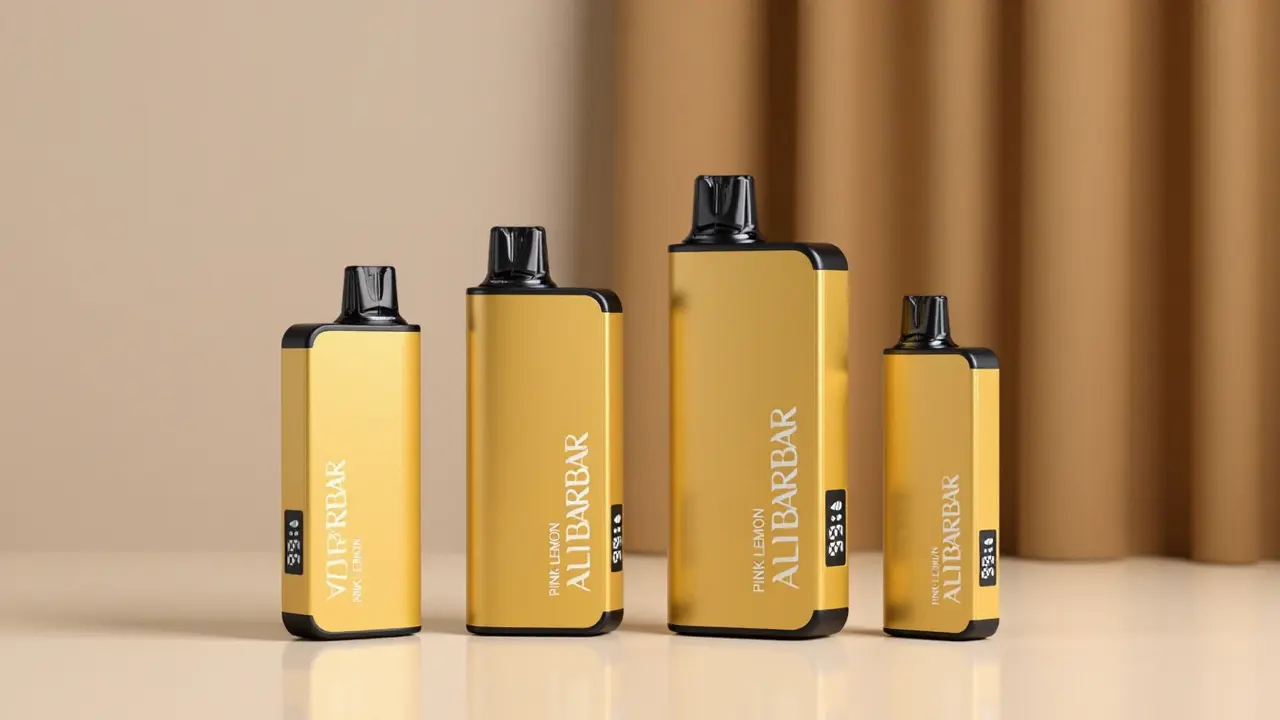
At OZVAPE Shop, every ALIBARBAR device we carry is sourced through authorized supply chains and built to documented specifications. Each unit undergoes factory-level quality assurance that includes battery protection circuit verification. This does not make them waterproof — no consumer electronic vape device is truly waterproof — but it means the protection mechanisms are present and tested.
If you accidentally drop an ALIBARBAR device into water, the expected outcome is that the device will cease to function and will require replacement. The engineering emphasis is on preventing the scenario from escalating into a safety incident, not on making the device survive immersion.
The market does contain devices with IP-rated water resistance, but these are rare in the vape category and typically involve specialized sealing around charging ports and airflow channels. Standard devices, including the entire ALIBARBAR family, are not designed for immersion. They are designed for everyday carry in dry conditions, with reasonable splash resistance around the mouthpiece and seam areas.
Frequently Asked Questions
Q: Will placing a vape in water to extinguish it cause an explosion?
A: If a device is already experiencing thermal runaway — venting gas and flame — submerging it in water can sometimes accelerate the reaction rather than stop it. The water can create a short across the compromised cell, intensifying the electrical load. If you have a device that is actively venting, the safest approach is to place it in a non-flammable container and move it outdoors, away from combustible materials. Do not dunk a burning lithium-ion device.
Q: Can I clean my vape by rinsing it under a tap?
A: No. Water and electronics do not mix. Cleaning should be limited to the mouthpiece and exterior surfaces using a dry or slightly damp cloth. Do not introduce water into the charging port, airflow adjustment ring, or battery compartment.
Q: What about rain while using a device outdoors?
A: Light rain or splash is generally manageable. Most devices have enough sealing around the charging port and seams to resist incidental moisture. However, heavy rain or direct water ingress through the mouthpiece can cause failure. If caught in a downpour, place the device in a dry pocket or bag.
Q: If my device falls in the toilet and I retrieve it quickly, can I safely reuse it after drying?
A: The water in a toilet is biologically contaminated and highly conductive. Even after thorough drying, there is a risk of corrosion, internal shorts, and recharging hazards. The manufacturer recommendation is to dispose of any device that has been submerged in unsanitary or conductive water. Do not attempt to reuse it.
Q: Do any vapes feature waterproof construction?
A: Some specialized outdoor or ruggedized devices include IP67 or IP68 ratings, meaning they can withstand submersion in shallow water for limited periods. These are exceptions, not the rule. ALIBARBAR devices, like the vast majority of consumer vapes, are not waterproof. They are designed for dry operation.
Q: What if my device gets wet and then works fine? Should I trust it?
A: An apparently functional device after water exposure can still have latent corrosion or internal shorts that only manifest during the next charging cycle. If the device was submerged, the safest course is to dispose of it and replace it. Do not risk recharging a device that has been immersed.
Q: Is it safe to use a device that was accidentally dropped in the ocean and dried?
A: No. Saltwater causes aggressive electrochemical corrosion that continues even after visible drying. Salt crystals can redissolve in humidity and create conductive paths weeks later. Devices exposed to saltwater should be treated as permanently compromised.
Q: Is there any scenario where a factory-certified device could explode in water due to a manufacturing defect?
A: It is theoretically possible but exceptionally rare. A manufacturing defect that compromises the battery separator or protection circuit could create conditions for thermal runaway under any conductive liquid exposure. This is why buying from authorized retailers like OZVAPE Shop matters — factory-certified units have documented quality assurance trails. Counterfeit or grey-market devices lack this accountability.
Final Consideration
Water and electronics are fundamentally incompatible at the component level. The question “Will a vape explode in water?” reflects a deeper concern about safety, which is entirely reasonable. The truthful answer is that explosive failure is a low-probability event in properly engineered devices, but the device will almost certainly be destroyed, and the process of drying or recharging it carries its own risks that must be taken seriously.
The most informed approach is prevention: keep devices away from water, use a waterproof carrying case near pools or the ocean, and assume that any device that gets wet is functionally dead until proven otherwise by a reliable source. This is not pessimism. It is the acknowledgment that the circuits inside these devices operate under precise electrical conditions, and water disrupts those conditions in ways that no consumer can fully predict.
At OZVAPE Shop, we believe in equipping users with clear, honest information. The ALIBARBAR range is engineered to high standards of safety and consistency, but no engineering can override physics. Water is the enemy of portable electronics. Treat it as such, and the question of explosion never needs to arise. For those looking to understand exactly how different ALIBARBAR models handle real-world conditions, the specifications are documented clearly on the OZVAPE Shop platform. Knowledge is the best protection against unnecessary risk.