
VAPE FAQs
What To Do If Your Vape Falls In Water?
Aug
It is a familiar moment of sudden, stomach-dropping dread. You reach into a pocket, your bag, or across a table, and there is a splash—your device is fully submerged. The immediate question is rarely calm and analytical; it is visceral: Is it ruined? What do I do right now? This article is not a product guide or a veiled sales pitch. It is a practical, technically grounded protocol for the moments after water exposure, built around how these devices actually function rather than wishful thinking. OZVAPE Shop has encountered enough post-immersion enquiries to understand that the first hour is critical, and that panic, if left unmanaged, often does more damage than the water itself.
What follows will give you a clear, step-by-step framework to maximise the chance of recovery, explain the engineering realities that decide whether a device survives, and help you evaluate future purchases through the lens of water resistance—a factor almost no one talks about until it is too late.
Why Some Devices Survive and Others Don’t: The Engineering Factors at Play
Survivability after water exposure is never a matter of luck alone. It is a direct consequence of design choices made long before you ever took the device out of its packaging. Understanding these factors will help you assess the likelihood of recovery and, later, choose devices that better tolerate the real-world accidents of daily life.
Internal Architecture and Moisture Ingress Paths
Most compact electronic devices are not hermetically sealed. They rely on tightly fitted housings, gaskets around buttons, and press-fit mouthpiece assemblies to keep out dust and light splashes. However, full submersion introduces hydrostatic pressure that can force water past any gap, no matter how small.
The critical variable is the layout of the circuitry relative to potential entry points. In well-designed devices, the main PCB (printed circuit board) is positioned away from seams and airflow channels, and internal barriers are used to compartmentalise the battery, control board, and sensor pathways. When water enters, it may flood an outer chamber without immediately shorting the logic board. Cheaper, less considered designs tend to place all components in a single open cavity with nothing to slow liquid migration. If you are assessing a device after immersion, knowing whether it has any internal compartmentalisation is a strong predictor of outcome—information rarely found on a spec sheet but inferable from teardowns and manufacturer engineering notes.
Power Management and the Danger of Residual Current
Even the purest tap water is conductive enough to create unintended circuit paths when it bridges contacts on a powered board. The most catastrophic failures occur not from simple wetness but from electrolytic corrosion accelerated by voltage. A device that remains idle while wet may survive if dried completely before voltage is reapplied; one that is fired while internal moisture is present can destroy its own microcontroller in a fraction of a second.
This is why immediate, decisive action matters. Devices with always-on microcontrollers, or those that auto-fire on draw without a physical lockout, present a higher risk because they may attempt to energise the coil before you have a chance to intervene. By contrast, systems that require a deliberate button press and have a definitive “off” state give you a window of control. Some manufacturers incorporate moisture-detection circuits that prevent firing when an unexpected resistance path is sensed—a feature that quietly prevents countless failures but is rarely advertised.
Physical Design, Materials, and Corrosion Resistance
Water damage does not stop once the device is dry. Residual minerals from tap water, salt from sweat or seawater, and even impurities from a puddle can leave conductive deposits on PCB traces. Over weeks, these deposits promote dendrite growth—filamentary metal structures that can cause intermittent shorts long after you thought the crisis was over.
The choice of PCB coating matters considerably. Conformal coatings, even thin ones, dramatically improve post-immersion prognosis. Stainless steel or gold-plated connector pins resist pitting far better than bare brass or zinc alloys. If you are examining a device’s construction after drying, look for any sign of surface treatment on internal contacts; its presence or absence tells you a lot about the manufacturer’s design priorities.
Modularity: The Accidental Advantage
A fully sealed, disposable device leaves you with no recourse: water enters one point, and the entire unit becomes a paperweight. Modular systems—those with removable pods, separate battery sections, and replaceable atomiser heads—offer a pathway to salvage. Water may ruin a pod but leave the battery module completely untouched. In such a case, replacing the pod restores full function at a fraction of the replacement cost.
This is not an argument that everyone should use modular devices, but it is an observation that modularity acts as a form of risk compartmentalisation. When a single point of failure is confined to a cheap, user-swappable component, the impact of an accident drops dramatically.
Applying These Principles to Real-World Device Choices
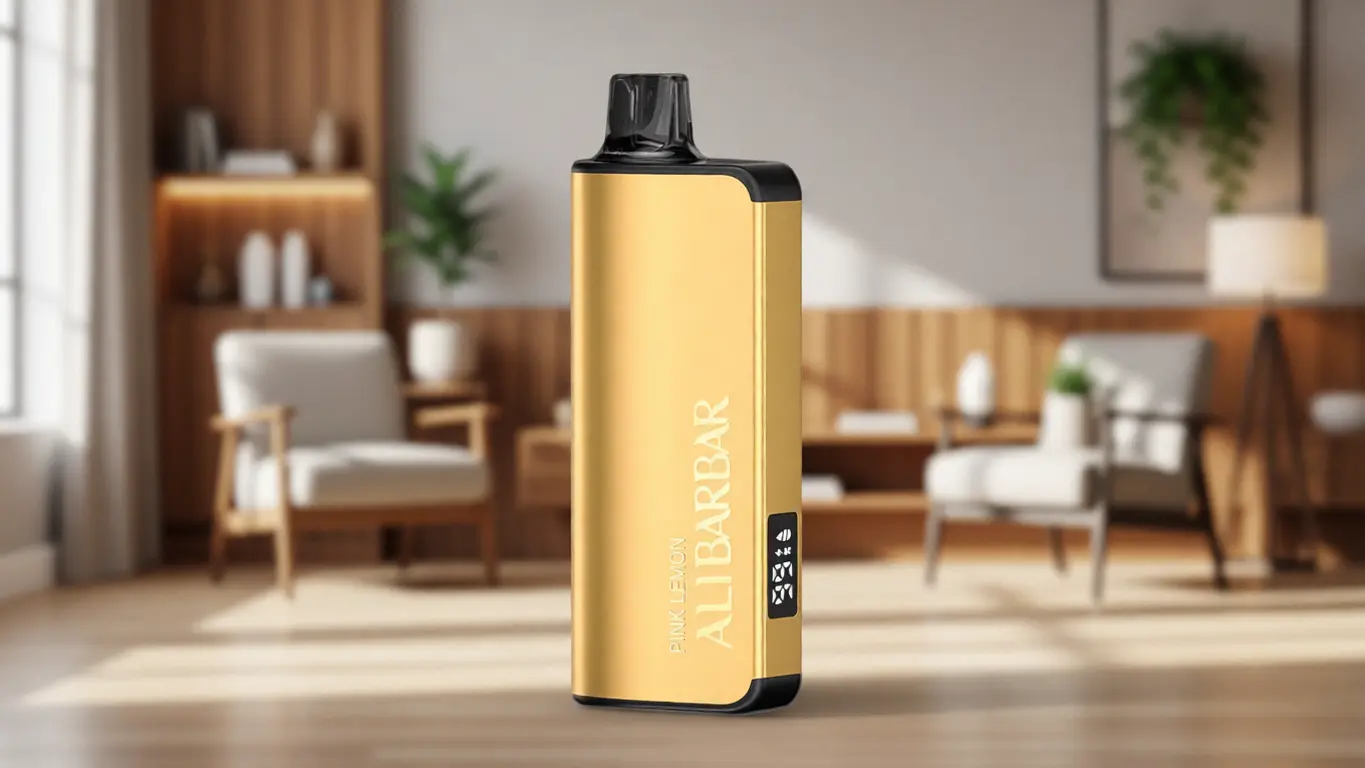
Some device families demonstrate, through their physical design, a degree of robustness that the market seldom quantifies. The ALIBARBAR INGOT series, for example, uses a unibody-style enclosure with tightly toleranced seam lines and a recessed charging port that minimises the chance of water entering through the most vulnerable aperture. While no manufacturer rates these devices for submersion, the engineering discipline visible in the chassis reduces the number of potential ingress paths relative to more loosely assembled alternatives. If you have an INGOT 9000 or 15000 and it takes an accidental dip, your immediate actions are the same as with any device, but the probability of internal moisture reaching the core PCB before you can intervene is meaningfully lower than with a snap-together casing.
Other systems, such as the ALIBARBAR Ice Adjust 12000, incorporate a removable pod architecture. Here, the risk is compartmentalised naturally: a dunking may flood the pod and airflow sensor, but the sealed battery-and-controller base often remains dry behind a silicone gasket that separates the pod bay from the electronics. Recovery may require a new pod, but the most expensive component—the power module—often survives with no intervention beyond external drying.
In both cases, these design traits were almost certainly driven by goals other than water resistance (manufacturing precision, user experience, product longevity). But they confer a real-world advantage that becomes apparent only when an accident occurs.
Immediate Response Protocol: A Practical Engineering-Based Framework
The following sequence is ordered by urgency and consequence. Do not skip steps because they seem obvious. Every minute matters.
Step 1: Remove and Isolate
Get the device out of the water immediately. If it is a modular unit, separate the pod or tank from the battery section right away. This is the single most important physical action you can take—it stops the battery from potentially discharging through wet circuits.
Step 2: Do Not Fire. Do Not Charge.
Resist the powerful temptation to test whether the device “still works.” Firing the heating element sends current through whichever paths are available, and if moisture has created a low-resistance bypass, the resulting surge can permanently damage the microcontroller or trigger the battery protection circuit into a latched-off state. Equally, plugging in a USB cable while the port is wet can cause pin corrosion that renders the device unchargeable even after everything else is dry.
Step 3: External Drying and Gravity-Assisted Drainage
Use a lint-free cloth or paper towel to remove all visible moisture. If water is trapped inside a charging port or airflow channel, orient the device so that gravity pulls it out, not deeper in. Do not shake vigorously—you may propel droplets onto previously dry internal surfaces.
Step 4: Controlled Desiccation
Place the disassembled components (if applicable) in a sealed container with a large quantity of silica gel packets. Rice is widely cited but is a poor desiccant, slow to act, and introduces starch dust. Silica gel is orders of magnitude more effective. Leave the device undisturbed for at least 48 hours, preferably 72. Patience is genuinely protective; re-powering too soon is the cause of most “delayed” failures.
Step 5: Inspection and Functional Test
After desiccation, examine the charging port and internal contacts (where visible) for any white, chalky residue. This indicates mineral deposition. If present, gently clean contacts with a cotton swab lightly moistened with isopropyl alcohol (≥90%) and allow to dry again. Reassemble and test with a pod you are willing to sacrifice. If it functions normally for a full charge cycle and displays no aberrant behaviour (auto-firing, inconsistent output, LED errors), the device will likely remain stable.
When to Accept Defeat
If the device was submerged in salt water, if it was left powered on for an extended period while wet, or if visible corrosion is already present on external contacts, the cost of a full teardown and PCB reconditioning usually exceeds the value of the device. Recognising this early avoids wasting time and risking battery instability.
Common Missteps and Industry Observations
Over the years, a handful of recurring mistakes have led to unnecessary device loss. These are worth naming explicitly because they are almost never discussed in official manuals.
Overweighting Visual Dryness. A device that looks dry externally can still harbour a droplet of water bridging two pins on a microcontroller. The external-to-internal drying time gradient is steep; a full 72 hours of desiccation is not excessive.
Using Heat Sources Aggressively. Hairdryers, radiators, and direct sunlight can cause casing deformation, damage lithium-ion cells, and push moisture vapour deeper rather than driving it out. Ambient temperature drying with desiccant is safer.
Assuming All Devices Are Equal in the Face of Water. Two devices that are visually the same size can have vastly different internal layouts. One may have a bare PCB floating in a plastic shell; the other may have conformal coating and compartmentalised chambers. The market almost never provides this information, but the consequences of this engineering gap are stark after an accident.
Ignoring Modularity as a Risk Strategy. Many users choose devices based on flavour, capacity, or aesthetics, without considering what happens when something goes wrong. An accident like water exposure reveals whether the device’s architecture works with you or against you. The ability to replace a soaked pod for a modest cost rather than discarding an entire device is a form of insurance embedded in the design itself.
Frequently Asked Questions
Q: Can I put my device in rice to dry it out?
A: Rice is a poor desiccant. Silica gel packets, often included with electronics packaging, are far more effective. If silica gel is unavailable, uncooked instant couscous is a slightly better alternative than rice, but nothing beats dedicated desiccant. Leave the device for a minimum of 48 hours.
Q: My device was only partially submerged for a second. Do I still need to wait 72 hours?
A: Surface tension can wick water inside almost instantly through capillary action, especially around the USB port or airflow inlets. A short submersion doesn’t guarantee a short drying time. Err on the side of patience; the risk of re-powering too soon is high.
Q: The device fires but tastes weak or the LED blinks erratically. What does that mean?
A: This typically indicates that the control board is receiving anomalous resistance readings, often due to residual moisture on the sensor or atomiser contacts. Do not continue using it. Dry further and clean contacts with isopropyl alcohol if accessible.
Q: Is there any way to make a device waterproof?
A: Aftermarket waterproof cases or silicone sleeves exist for some form factors, but they rarely seal critical seams completely. The most reliable approach is to choose devices with inherently tight construction and, for accident-prone users, prioritise modular systems where damage is contained to a replaceable component.
Q: My device has an internal battery and cannot be disassembled. Is it salvageable?
A: Possibly, if you follow the desiccation protocol immediately and for a full 72 hours. However, sealed devices carry the highest risk because you cannot disconnect the battery. If it was powered on when submerged, the likelihood of board damage is elevated.
Q: How can I verify whether a device I’m considering buying has good internal protection against minor water exposure?
A: Look for teardown videos or technical reviews that reveal internal construction. Pay attention to the presence of gaskets around connectors, conformal coating on the PCB, and any compartmentalisation. Retailers that provide detailed product specifications and honest assessments—such as the technical notes available through OZVAPE Shop—can be a useful filter.
Q: What should I do if my device was submerged in salt water or a sugary drink?
A: Salt and sugar leave conductive, corrosive residues. Rinse the affected components briefly in distilled water (not tap water) to dilute the contaminant, then follow the full drying protocol. If the substance reached the PCB, the prognosis is poor.
Q: Is it safe to use a device that has been through the drying process and appears to work?
A: If it holds a charge normally, fires consistently, and shows no unusual heat or error states over several charge cycles, it is likely stable. However, any device that has been wet should be monitored more closely thereafter. At the first sign of erratic behaviour, stop using it.
Returning Control to the User
A waterlogged device feels like a disaster in the moment, but the outcome is shaped far more by your immediate actions and by design decisions you can evaluate before your next purchase than by chance. The protocol is straightforward: isolate power, be ruthlessly patient with drying, and recognise when salvage is no longer sensible.
The broader lesson is that accidents like this expose the gap between products designed to a cost and products engineered with an understanding of how adults actually live—where spills happen, where pockets get caught in the rain, and where a moment of clumsiness shouldn’t mean total loss. When you shop through a source that prioritises transparent information, such as OZVAPE Shop, you gain not just access to thoughtfully built devices like those in the ALIBARBAR range, but also the background knowledge to handle the unexpected with confidence.
No device is invincible. But with the right response and a clear-eyed understanding of what matters, you can turn what feels like a catastrophe into a manageable inconvenience—and make a smarter choice next time.