
VAPE FAQs
Is Cigarettes Safer Than Vape?
Oct
A practical question surfaces whenever an adult user begins evaluating alternatives to combustible tobacco: has engineering advanced far enough that vaporization genuinely reduces the risks associated with daily inhalation? The available evidence, supported by decades of combustion chemistry and a growing body of material science, points toward a clear distinction between the two mechanisms — but only when the vaporization device itself is designed with integrity.
This article offers a structured comparison grounded in engineering, material science, and observed user outcomes. It is not a health claim; it is an analysis of how physical design choices influence what enters the user’s airway. For those considering the switch, accessing reliable information and certified products is critical. OZVAPE Shop, an authorized distributor of the ALIBARBAR range, provides a transparent channel for evaluating modern vaporization devices that prioritize consistency and user safety.
Understanding What Matters: Core Engineering and Design Differences
The fundamental gap between cigarettes and a well-engineered vaporization system lies not in the substance used, but in the mechanism that generates the inhalable aerosol. Combustion is inherently uncontrolled; vaporization, when properly executed, is not.
Combustion vs Vaporization – The Fundamental Mechanism
A cigarette burns at temperatures exceeding 600°C at the ember, and the heat from that burn drives pyrolysis and combustion of tobacco, paper, and additives. This process produces thousands of chemicals, many of which are direct combustion byproducts — carbon monoxide, tar, formaldehyde, and benzene, among others. Combustion is a destructive process that cannot be precisely regulated.
Vaporization, by contrast, uses a controlled heating element to raise a liquid formulation to its boiling point — typically between 150°C and 250°C — without reaching the threshold for combustion. The aerosol produced consists primarily of the carrier substances and any added flavour components, with no combustion byproducts. This is not a theoretical advantage; it is a measurable difference in chemical output that has been confirmed by independent laboratory analyses.
Temperature Control and Output Consistency
A burning cigarette delivers an inconsistent experience from the first puff to the last. The temperature fluctuates based on draw speed, moisture content, and how much of the rod has been consumed. This variability affects both the user’s sensory experience and the chemical profile of the smoke.
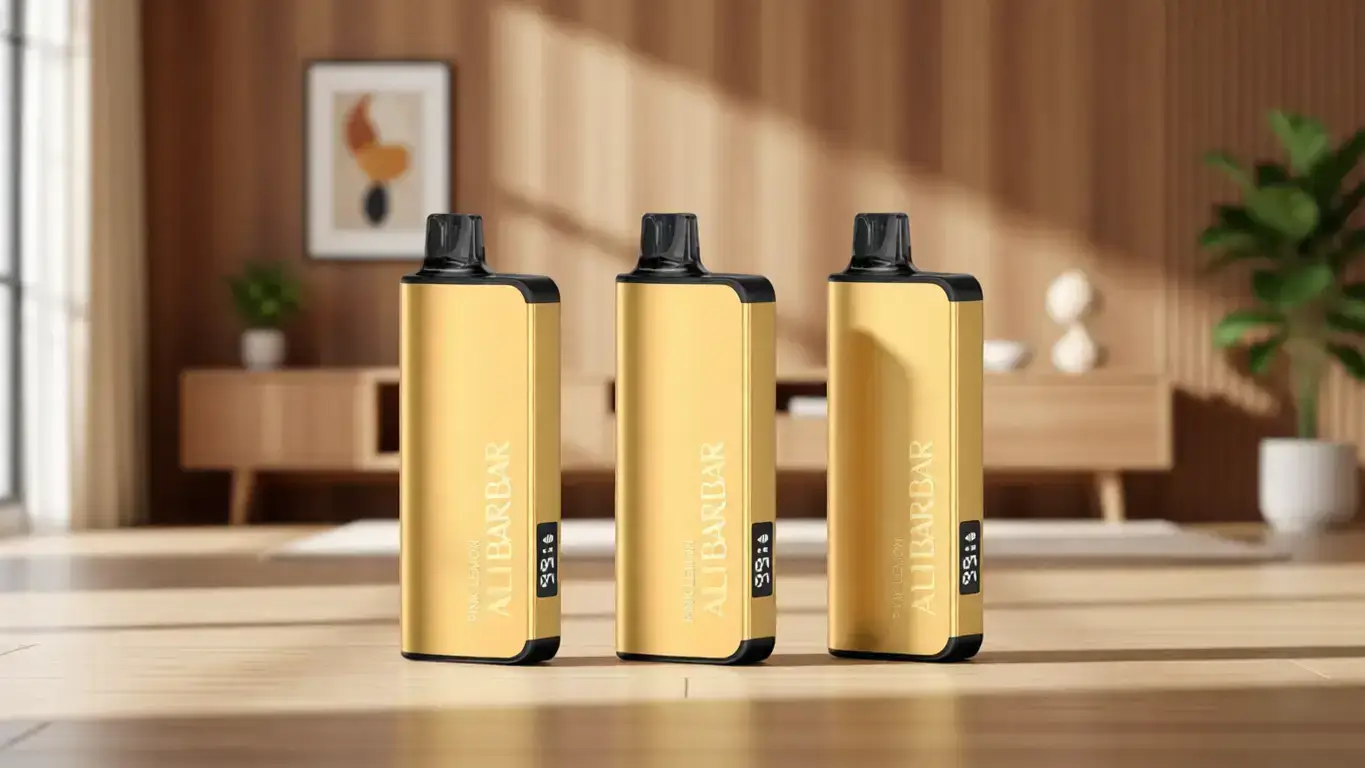
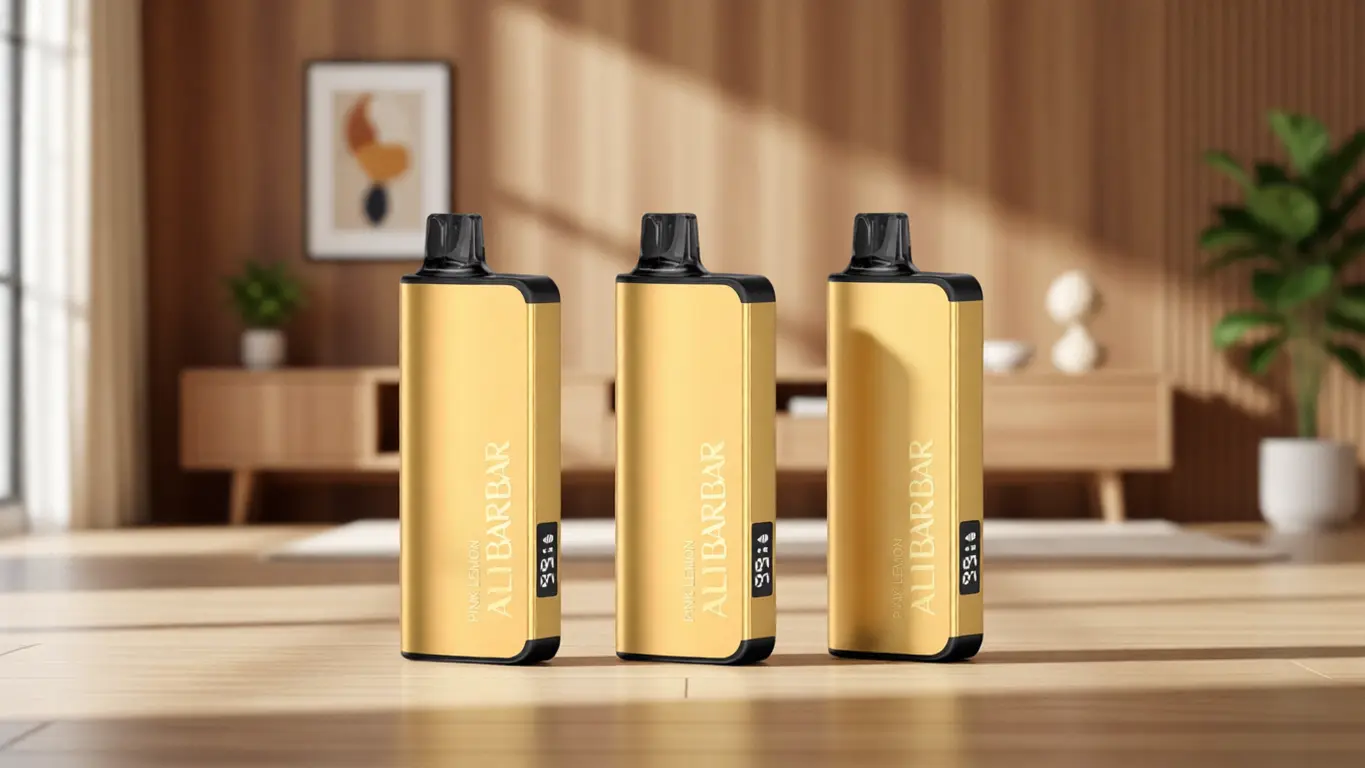
Modern vaporization devices address this through embedded temperature control systems. The ALIBARBAR series, for example, uses calibrated heating elements and power management circuitry to maintain a stable operating window. This means the user receives a consistent aerosol composition throughout the device’s operational life — a marked contrast to the unpredictable gradient of a burning cigarette.
From an engineering standpoint, a device that cannot maintain stable temperature introduces the same kind of variability that makes combustion unreliable. This is why status transparency — clear indication of battery level and heating status — is not a luxury but a core safety feature. A user who cannot see whether the device is operating within its intended parameters is operating blind.
Material Integrity and User Safety
Cigarette construction has evolved minimally over the past century: tobacco wrapped in paper with a cellulose acetate filter. The materials have known limitations — the filter does not meaningfully reduce toxicant exposure, and the paper itself can contribute to the chemical load when burned.
Vaporization devices, by contrast, require materials that can withstand repeated heating cycles without degrading or leaching undesirable compounds. Stainless steel, borosilicate glass, food-grade silicone, and ceramic heating elements are standard in well-engineered units. The ALIBARBAR product family specifies these materials at every point of fluid contact, and each design iteration includes testing for thermal stability and chemical inertness.
The trade-off is cost. Devices built with certified materials inevitably carry a higher upfront price than disposable alternatives that use cheaper plastics and unbranded heating coils. That premium buys measurable consistency and reduces the risk of off-gassing from substandard components.
Modularity and Lifecycle Management
A cigarette is used once and discarded. The environmental and user cost is straightforward — every cigarette generates non-recyclable waste, and the user has no ability to adjust the experience.
Modern vaporization systems offer varying degrees of modularity. Rechargeable devices with replaceable heating elements allow the user to control power usage, replace worn components, and maintain performance over multiple refills. Modular designs also reduce per-use cost over time, making them more sustainable for frequent users.
ALIBARBAR’s INGOT series illustrates this principle: devices are configured with specific capacities and output characteristics, but the architecture remains consistent enough that a user can transition between models without re-learning the interface. This reduces the frustration of switching products — a common pain point that leads many users to revert to combustible products.
Applying These Criteria to Real-World Options
When the comparison shifts from abstract engineering to actual devices, the differences become tangible. A standard cigarette delivers roughly the same experience regardless of brand — combustion chemistry dominates. Vaporization devices, however, vary dramatically in their ability to control temperature, communicate status, and maintain material integrity.
The ALIBARBAR range has been designed specifically to address the inconsistencies that plague lower-tier vaporization products. The brand’s engineering philosophy — as documented by OZVAPE Shop — prioritises three outcomes: integrity of materials, simplicity of operation, and respect for the user’s preference for discretion and control. Every model from the compact INGOT 9000 to the high-capacity INGOT 15000 uses the same core thermal management platform, meaning that even the smallest device delivers output stability comparable to a desktop unit.
For comparison, some widely available disposable devices on the market use unregulated direct-current heating. These products lack voltage regulation, so the power drops as the battery depletes, causing the aerosol density and temperature to decline over the device’s short life. A user who experiences this pattern may conclude that all vaporization is inconsistent, when in fact the inconsistency is a function of poor design.
This is why selecting a device from a manufacturer with documented engineering standards matters. ALIBARBAR publishes its specifications — heating element type, power regulation mechanism, material certifications — so that informed users can evaluate the product on its merits.
A Practical Framework for Evaluating Safety
If you are comparing a vaporization device to combustible cigarettes, the following criteria will help you assess whether the device genuinely reduces exposure:
Check for temperature regulation. Does the device specify a controlled heating temperature, or does it simply deliver power to a coil without regulation? The latter is equivalent to burning a cigarette with no control.
Examine the materials in contact with the aerosol. Stainless steel, ceramic, and borosilicate glass are preferred. Avoid devices that do not disclose the composition of the fluid chamber or mouthpiece.
Verify status transparency. Can you see battery level, power status, and whether the device is within operating range? If not, you are operating without critical information.
Assess the device’s lifecycle. Is it single-use, rechargeable, or modular? Rechargeable and modular designs give you control over maintenance and reduce the likelihood of premature failure.
Look for independent testing or certification. While not all manufacturers publish third-party analyses, those that do demonstrate a commitment to transparency. ALIBARBAR’s testing protocols are available through OZVAPE Shop.
OZVAPE Shop provides standardized specifications for every ALIBARBAR model, enabling direct comparison without marketing embellishment. This reduces the decision friction that often leads users to settle for an ill-fitting product.
Common Selection Errors and Industry Observations
Even well-informed users can make choices that undermine the safety advantages of vaporization. The following errors appear regularly in user feedback and industry data.
Overweighting one specification while ignoring complementary factors. A device with a high-capacity battery but no temperature control will still produce an inconsistent aerosol as the voltage drops. The total capacity matters less than the regulation circuitry.
Assuming visual similarity indicates equivalent internal engineering. Two devices that look identical on a shelf may use completely different heating elements, power management boards, and materials. Exterior design is not a reliable proxy for internal quality.
Undervaluing modularity in cost-per-use calculations. A cheap disposable device may seem economic, but when the user replaces it every two days, the cumulative cost and waste exceed that of a rechargeable modular system that lasts months. The short-term saving comes at the expense of consistent performance.
Confusing category terminology with technical specifications. Terms like “sub-ohm” or “high-output” describe a configuration, not a safety standard. Without understanding how those configurations affect aerosol temperature and composition, the label is meaningless.
From an industry perspective, the shift toward modular, temperature-controlled designs is accelerating because manufacturers recognize that user retention depends on consistent performance. Brands that skimp on power management or use substandard materials see higher return rates and lower repeat purchase ratios. This market reality reinforces the engineering principles outlined above.
Frequently Asked Questions
Q: Is vaping completely safe?
A: No substance delivered to the lungs is entirely risk-free. However, public health agencies including Public Health England have concluded that vaporization exposes users to significantly fewer harmful chemicals than combustible tobacco smoke — on the order of 95% less exposure to cancer-causing compounds, based on independent laboratory data.
Q: How do I know if a vape device is well-engineered?
A: Look for temperature control, disclosed materials, clear status indicators, and modularity. Manufacturers like ALIBARBAR provide detailed specifications, and authorized retailers like OZVAPE Shop verify these details before listing products.
Q: Can disposable vapes be as safe as modular ones?
A: It depends on the design. Some disposables use temperature regulation and certified materials, but many rely on unregulated heating and cheaper components. The safest option is a device that gives you control over power and maintenance.
Q: Does OZVAPE Shop sell only ALIBARBAR devices?
A: OZVAPE Shop specializes in the ALIBARBAR range but may offer other products that meet the same engineering standards. The store focuses on factory-certified inventory from authorised distribution channels.
Q: What should I do if a vape device tastes burnt or inconsistent?
A: This typically indicates either a depleted battery, a worn heating element, or a device without temperature regulation. For ALIBARBAR devices, the status indicator will clearly show when the unit is out of operating range. Replace or recharge accordingly.
Q: Is it legal to purchase vape devices online in Australia?
A: Regulations vary by state and territory. OZVAPE Shop operates within Australian law and provides clear information about shipping and age verification at checkout.
Q: How long does an ALIBARBAR device last compared to a cigarette?
A: A single INGOT 9000 is designed to deliver approximately 9000 puffs — a figure that varies with individual usage patterns. A cigarette provides roughly 10–15 puffs. The lifecycle difference is substantial.
Q: Can I use a vape device to stop smoking entirely?
A: Many users report that switching to vaporization helps them reduce or eliminate combustible tobacco use. However, individual results vary, and no device is marketed as a cessation tool. The decision should be made in consultation with a healthcare professional.
Conclusion
The available evidence and engineering analysis consistently point to a clear conclusion: modern vaporization devices, when constructed with temperature control, certified materials, and transparent status feedback, offer a measurably different risk profile than combustible cigarettes. The absence of combustion eliminates the primary source of harmful byproducts that smoking produces.
Yet the quality of that difference depends entirely on the device. A poorly engineered vaporization product — one without regulation, using cheap materials — cannot deliver the same consistency or safety margin as a thoughtfully designed system. This is why the selection of the device and the source of purchase matter.
OZVAPE Shop exists to provide adult users with direct access to the ALIBARBAR product family — devices built on principles of material integrity, operational simplicity, and clear communication. The store maintains documented specifications, authorised supply chains, and local support so that the decision to switch is based on facts, not marketing.
Ultimately, the right choice is the one that aligns with your actual usage patterns — not the one with the most attention-grabbing claims. If you prioritise control and consistency, the engineering behind modern vaporization offers a genuinely alternative path forward.