VAPE FAQs
What Is The Strongest Vape?
Oct
The question sounds straightforward. Someone types “strongest vape” into a search bar, expecting a ranked list with a clear winner. But experienced product analysts know that behind the question sits a tangle of deeper, more practical concerns. The user rarely cares about an abstract label of strength; they care about whether the device will last through a full day without losing intensity, whether the vapour production feels substantial enough to replace their previous habits, and whether the first draw feels as commanding as the hundredth. Unfortunately, many commonly cited “strength” metrics—puff counts, maximum wattage, battery capacity printed on a box—are either misleading or fail to capture what the user will actually experience.
At OZVAPE Shop, we have spent considerable time analysing these discrepancies because adult users consistently report the same disappointments: a device that performed brilliantly for an hour but sagged badly after the power cell dipped below half charge, or a unit that promised thousands of draws but delivered a gradually weakening vapour stream long before the consumable was exhausted. This article does not crown a single device as “the strongest.” Instead, it offers an engineering-based framework for evaluating real-world output, so you can identify devices that sustain their performance—and understand why some units that look identical on paper deliver radically different experiences.
Understanding What Matters: Core Engineering and Design Factors
Before comparing specific product lines, it is useful to establish the technical dimensions that genuinely determine whether a personal electronic device feels “strong” during actual use. These factors are interrelated; ignoring any one of them leads to the kind of buyer’s remorse that fuels online complaints.
Internal Architecture and Output Consistency
The heating element inside a device is not simply a filament that gets hot. Its physical design—whether it is a traditional round-wire coil, a vertically oriented mesh, or a dual-mesh configuration—directly affects how evenly the consumable is vaporised and how quickly the element can recover between draws. A poorly engineered heating surface will produce hot spots, premature caramelisation of the consumable, and a noticeable drop in vapour density after consecutive draws.
Why this matters: Many users report that their device “feels weaker” after a few days, even though the battery indicator still shows charge. The decay is almost always tied to heating-element degradation and inadequate thermal management. A well-designed architecure should maintain nearly the same output profile for the entire rated life of the device.
When examining a device specification, look for:
Mesh coil surface area (larger, evenly heated surfaces resist localised burnout).
Voltage regulation circuitry that prevents power sag as the battery voltage declines.
Reported testing standards—whether the “puff count” was measured under constant-draw conditions or pulsed at intervals that allow the coil to cool between each activation, because the latter inflates the number artificially.
Power Management and Status Transparency
A device’s ability to deliver a “strong” hit is governed not just by its peak wattage but by how it manages the energy stored in its cell. Many compact devices simply dump battery voltage directly to the coil, meaning as the cell drains from 4.2 volts to 3.2 volts, the power output drops significantly—often by more than 30%. Sophisticated architectures employ step-down or buck-boost regulation to maintain a set wattage regardless of remaining charge, delivering the same experience from first use to the last breath of battery life.
Status ambiguity is another hidden cost. If the device only shows a single-colour LED or a crude four-bar indicator, the user is effectively blind. You might carry a backup unnecessarily or, worse, be caught without a functional unit because the light turned from green to red with only a few weak draws remaining. Devices with graduated battery indicators or haptic feedback for low power reduce this uncertainty.
Physical Design and Material Durability
Strength is not purely electrical; it is also mechanical. A device that becomes uncomfortable to hold after ten minutes of use, or whose surface finish begins peeling inside a pocket within a week, undermines any perception of engineering quality. Mouthpiece contour, weight distribution, and the tactile quality of the chassis all contribute to whether a device feels robust enough to be a daily companion. Soft-touch coatings may feel pleasant in a showroom but are notably prone to abrasion; anodised aluminium or textured polycarbonate typically age better under friction from keys and coins.
Modularity and Lifecycle Flexibility
The distinction between a completely sealed disposable unit, a rechargeable device with a pre-filled non-replaceable pod, and a system where both the power source and the consumable cartridge are separable and interchangeable matters enormously for long-term satisfaction. A sealed high-capacity device may deliver impressive puff counts out of the box but locks the user into that entire unit’s lifespan. A modular system, by contrast, allows the user to retain a familiar power module and simply swap consumable cartridges, often reducing cost per use and ensuring the heating element is always fresh—removing the gradual degradation that plagues sealed devices. The “strongest” device from a lifecycle perspective might be the one that remains consistently strong because the core heating element is renewed each time the consumable is replaced.
Applying These Criteria to Real-World Options
With the engineering factors defined, it becomes possible to look at current offerings not as contestants in a popularity contest but as embodiments of different design philosophies.
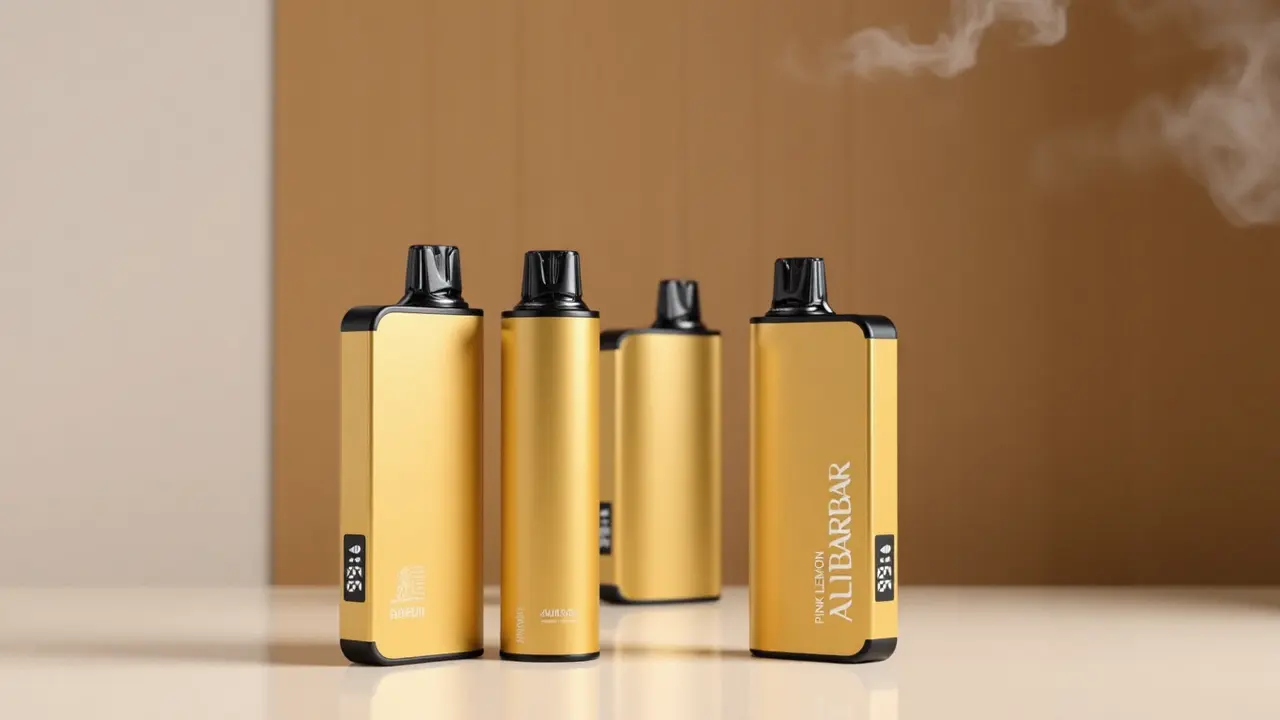
ALIBARBAR’s INGOT series, available through OZVAPE Shop, illustrates how sustained output can be prioritised without sacrificing compact form. The INGOT 9000 and INGOT 15000 models both use a dual-mesh coil architecture coupled with constant-voltage output circuitry. In practical terms, this means the vapour density on draw number 8,000 will be perceptibly close to that on draw number 100, assuming the consumable level is still sufficient. The integrated 650 mAh (INGOT 9000) and 850 mAh (INGOT 15000) cells are proportioned so that power delivery stays stable right up to the cut-off point, and the chassis employs anodised aluminium, which resists the pocket-wear that quickly ages glossy plastic enclosures.
The trade-off with these sealed units is the lack of modularity—the entire device is discarded once the consumable is exhausted. For a user who values freshness, a pod-based system from manufacturers like Vaporesso or Uwell offers a different strength proposition: the heating element is renewed with every pod replacement, which means each session begins with a factory-fresh coil, eliminating the gradual performance fade. However, these systems typically operate at lower cumulative puff counts, require frequent charging, and introduce variables such as coil resistance tolerances that can produce occasional dud pods. The perception of strength, therefore, shifts from a marathon endurance metric to a sprint-like intensity that feels aggressive but must be actively managed.
SMOK’s high-output devices with adjustable wattage and replaceable coils offer yet another interpretation of strength. Users can push power to the upper limits of the coil’s rating for maximum vapour volume. But this approach demands a deeper technical understanding; setting wattage too high on a fresh coil can singe the wicking material instantly, producing an acrid experience that no one would describe as strong in a positive sense. The adjustability is a strength only if the user invests time in learning the safe operating envelope.
What becomes clear is that the device that wins on a spec sheet—highest puff count, largest battery, biggest wattage—may not win in the user’s hand. The ALIBARBAR INGOT 15000, for instance, does not claim the highest possible wattage in the category. Instead, it focuses on output linearity: the flatness of the voltage curve over the entire discharge cycle. That design priority matters far more for the person who needs predictability during a 12-hour shift than a peak number read off a meter.
A Practical Framework for Evaluation
Rather than asking “which is strongest,” a more productive question is: “Which device maintains a level of output that meets my needs for its entire usable life?” The following self-diagnostic framework can be applied to any device you are considering, whether it is sold through OZVAPE Shop or another authorised retailer.
Check the voltage regulation claim. Does the manufacturer specifically state “constant voltage output” or “regulated output”? If the language is absent, assume the output sags proportionally with battery voltage.
Examine the puff count methodology. Search for phrases like “tested under ISO 20768” or similar puffing-machine standards. If the count is simply declared without testing parameters, discount it by at least 35% for real-world comparison.
Look for coil surface area specifications. A mesh coil with a stated area of 12 mm² or larger will generally resist dry hits better and maintain consistent vapour density longer than a wire coil with a small contact patch.
Ask whether the device gives you unambiguous low-power warning. If you cannot tell the difference between “half full” and “nearly empty,” you will either overcharge unnecessarily or get stranded. Devices with multi-stage indicators or numeric displays reduce this blind-spot.
Calculate the cost per effective use. If a device has a rated 15,000 puffs but becomes unsatisfying after 10,000 due to coil degradation, your real cost per satisfying draw is higher than the nominal calculation suggests. Modular systems avoid this by resetting the coil with each pod change, but their consumables cost must be factored in.
These five steps turn the nebulous search for “strength” into a systematic comparison of technical merits and personal priorities.
Common Selection Errors and Industry Observations
From a supplier’s vantage point, certain patterns repeat with almost mathematical regularity. The same mistakes appear in customer feedback, post-purchase exchanges, and product returns. Recognising them ahead of time will save both money and frustration.
Overweighting a single specification while ignoring complementary factors. A device with a massive battery but unregulated output will deliver a strong initial draw and then trail off, yet the battery number on the box will seduce the unsuspecting buyer. The size of the fuel tank means nothing if the fuel pump weakens as pressure drops.
Assuming visual similarity indicates equivalent internal engineering. Two devices may share nearly identical external dimensions, mouthpiece shapes, and LED placement, yet contain entirely different power management chipsets and coil configurations. The visible casing is a commodity; the embedded electronics are where the cost and performance differences reside. Always check whether a device’s internal architecture is described at the component level.
Undervaluing modularity in cost-per-use calculations. A sealed unit with a headline puff count of 15,000 might appear cheaper than a pod system requiring ongoing purchases. But if the sealed unit’s coil begins to taste muted after 9,000 puffs, the effective life is shorter than advertised, and the perceived “strength” plummets. A modular system that allows coil renewal with every pod keeps the experience tight. The economically sensible comparison is not purchase price but cost per satisfying use.
Confusing category terminology with technical specifications. Terms like “max output” often refer to a peak burst that the battery can sustain for only a few seconds before the protection circuit kicks in to prevent overheating. Sustained output—what you actually experience over a 5-second draw—may be 20% to 30% lower. Reputable manufacturers will publish both a “maximum” and a “continuous” power figure; many do not.
From an industry perspective, the proliferation of high-puff-count sealed devices has been accompanied by a notable decline in the transparency of testing methodologies. Manufacturers know that buyers gravitate toward bigger numbers, so there is a systemic incentive to inflate puff counts using pulse-testing tricks. At OZVAPE Shop, we have confronted this by insisting on specification sheets that differentiate between “laboratory puff count under continuous draw” and “maximum puff count under intermittent testing,” though the wider market rarely offers such clarity. Users who understand this informational asymmetry are far better equipped to decode marketing claims.
Frequently Asked Questions
Q: What exactly does ‘puff count’ mean on a device specification?
A: It typically represents the number of discrete 2- to 3-second draws a machine can perform until the consumable is depleted and the vapour output drops below a defined threshold. However, no universal standard governs this measurement, so numbers from different brands are not directly comparable. Always check if the testing methodology is disclosed.
Q: Is a device with higher wattage always stronger in feel?
A: Not necessarily. Wattage alone determines how much heat the coil generates, but without proper airflow matching and wicking, higher wattage can produce a harsh, thin vapour instead of dense, satisfying output. The synergy between power, coil mass, and airflow matters more than the peak wattage figure.
Q: Can a device be too strong for a beginner?
A: Yes. If a device delivers vapour that is uncomfortably warm or causes coughing due to excessive volume, the user will either avoid using it or take unsatisfyingly short draws. A moderate, well-regulated output that feels dense but not aggressive is a better starting point, and some advanced users eventually prefer it as well.
Q: How does airflow affect the perception of strength?
A: Airflow is a primary determinant of draw resistance and vapour temperature. A tight draw with high power can create an intensely dense vapour that feels forceful; a loose airflow with the same power will produce a cooler, more diffuse cloud. Devices with adjustable airflow sliders give the user direct control over this balance.
Q: How can I verify that a device’s power output is consistent?
A: Without a testing rig, you rely on indirect cues. Does the vapour density and flavour intensity feel the same on the last 10% of battery as it did on the first? If yes, the device likely has regulated output. Additionally, look for language like “constant voltage” or “regulated chipset” in the technical specifications.
Q: Are ‘stronger’ devices inherently less safe?
A: Strength and safety are independent. A device can be high-output and still include multiple safety layers—overcharge protection, short-circuit cutoff, overheating shutdown. The safety risk comes not from the power level but from the absence of these protection circuits, which is more common in uncertified, ultra-low-cost units.
Q: Why do some devices lose their kick before the consumable is empty?
A: The primary causes are coil fouling from accumulated residue, sagging battery voltage in unregulated devices, and wicking degradation. Once the heating element is compromised, the remaining consumable cannot be fully utilized at full satisfaction—a frustration that modular systems avoid by renewing the coil with each pod swap.
Q: What’s the difference between a sealed high-capacity device and a pod system in terms of sustained strength?
A: A sealed device provides a one-time coil that must stay fresh for thousands of draws; its strength will inevitably decline toward the end. A pod system resets the coil with each replacement, so the first draw of every pod feels new, but you must manage charging and carrying spare pods. The choice hinges on whether you prioritise convenience or peak freshness.
Q: Should I always go for the device with the biggest battery?
A: Only if the power management electronics are designed to deliver steady voltage as the battery drains. A large battery with unregulated output simply extends the duration of the gradual power decline. A smaller battery with tight regulation may feel stronger for most of its discharge cycle.
Q: If I buy from OZVAPE Shop, how do I know the performance claims are accurate?
A: The devices supplied through OZVAPE Shop are sourced from factory-certified inventory with full specification documentation. Any stated technical parameter—puff count, battery capacity, coil type—can be cross-referenced against the original manufacturer’s datasheet. If a discrepancy arises, the support team will investigate through the authorised distribution chain.
Conclusion
The search for the “strongest” personal electronic device is a quest for reliability dressed up as a desire for power. Users want a device that rewards every draw with the same confident, consistent output as the first, that does not leave them guessing about remaining capacity, and that withstands the physical demands of daily carry. These traits are not captured in a single headline number, but they are entirely discoverable through a disciplined evaluation of internal architecture, voltage regulation, material durability, and lifecycle design.
A high-puff-count device like the ALIBARBAR INGOT 15000, available through OZVAPE Shop, succeeds precisely because its engineering priorities align with those real-world requirements—flat voltage delivery, a large-surface mesh coil, and unambiguous status feedback—instead of chasing the largest wattage badge. Other architectures, including modular pod systems, solve the strength equation through coil freshness rather than marathon endurance, and they will serve different daily routines equally well.
Ultimately, the strongest device is the one that remains strong in your specific context: during a long shift, on a weekend away, or in the moments when you cannot afford a letdown. By applying the framework in this article rather than relying on marketing superlatives, you move from being a passive consumer of claims to an informed evaluator of engineering reality. That is the position from which genuinely satisfying choices are made.