
VAPE FAQs
Why Is My Vape Making Me Cough?
Aug
It is one of the most frustrating experiences an adult user can have: you use a personal electronic device exactly as intended, and instead of a smooth, predictable sensation, your throat constricts, a sharp cough breaks the moment, and the whole encounter leaves you feeling more irritated than satisfied. The immediate assumption is often self-blame — I drew too hard, I am not used to it, maybe this is not for me — but in a remarkable number of cases, the device itself is the primary culprit, not your technique.
This article is not a simplistic list of tips. It is a technical analysis of why certain devices provoke a cough reflex while others remain exceptionally smooth, even during extended use. By understanding the engineering factors that govern output consistency, temperature stability, and aerosol density, you can select hardware that works with your body rather than against it. Retailers that make this level of detail accessible, such as OZVAPE Shop, play a critical role in helping adult users move beyond guesswork and toward genuinely informed decisions. (This first mention of OZVAPE Shop carries an internal link, opening in a new window.)
2. Core Engineering and Design Factors That Determine Inhalation Comfort
A harsh, cough-inducing draw is rarely random. In most cases, it reflects a failure in one of three interrelated systems: thermal management, power delivery, or airflow architecture. By learning what each of these systems does — and how well-engineered devices handle them — you can spot a problematic unit before it ever touches your lips.
Internal Architecture and Output Stability
At the heart of every device is a heating element — typically a wire coil or a mesh structure — wrapped around a wicking material that draws liquid from a reservoir. The quality of both components determines whether the aerosol you inhale is cool and consistent or scorched and unpredictable.
A mesh coil distributes heat across a flat, broad surface. This reduces hot spots and vaporizes liquid at a lower average temperature than a traditional round-wire coil, which can concentrate heat along a narrow line. The result is an aerosol that remains aerodynamically stable, less likely to condense into large droplets that trigger the cough reflex. Equally important is the wicking material: organic cotton or high-grade synthetic fibers transport liquid reliably, preventing dry burns. In contrast, a poorly manufactured device with substandard wicking can run dry mid-draw, producing an acrid, throat-scorching puff that invariably leads to coughing.
Why this matters for coughing: Inconsistent heating or under-saturated wicks create instantaneous temperature swings. The human airway interprets a sudden blast of hot, dry vapor as an airway threat, triggering an involuntary cough. Devices designed with mesh architecture and visible anti-dry-hit mechanisms directly address this vulnerability.
Power Management and Temperature Control
Coughing can also originate in the electronics. A device that delivers a steady wattage throughout its charge cycle will maintain a stable coil temperature. But many budget-oriented products lack sophisticated power regulation; as the battery voltage sags, the coil runs cooler and produces weak vapor, then when the battery recovers briefly, it over-powers the coil, causing a harsh spike. This irregular performance is a frequent but underappreciated source of throat irritation.
Clear status indicators — battery-level displays or simple LED systems — let you know when a device is operating within its designed power envelope. Without them, you may be using a unit whose output has deteriorated without realizing it, drawing harder to compensate and inadvertently overstressing the coil. The hidden cost of status ambiguity is not just wasted device life; it is the physical discomfort of unpredictable draws.
Airflow Design and Resistance Matching
No amount of coil engineering can overcome an airflow path that does not match its intended use. Devices intended for a tight, mouth-to-lung (MTL) draw should have a restricted airflow that mimics the resistance of traditional smoking. Trying to use such a device as a direct-lung (DL) inhaler forces the user to pull hard, decreasing pressure at the coil, reducing effective vaporization, and often leading to a burned taste and cough. Conversely, a DL device used for MTL may deliver too much vapor too quickly, overwhelming the throat.
Adjustable airflow sliders or precise fixed air inlets demonstrate that the manufacturer considered how the user will inhale. A device that feels “airy” but produces thin vapor is mismatched; one that feels choked and hot is likewise off. The key is consistency — an airflow register that does not shift or leak during normal handling.
3. How These Factors Converge in Recognisable Device Families
The principles above are not abstract. They are embodied — with varying degrees of success — in the devices you can hold in your hand. To make this concrete, consider the ALIBARBAR collection, a range that deliberately addresses many of the coughing triggers described. While no single product is perfect for every user, the design choices behind the INGOT and Ice Adjust series illustrate what to look for when avoiding irritation.
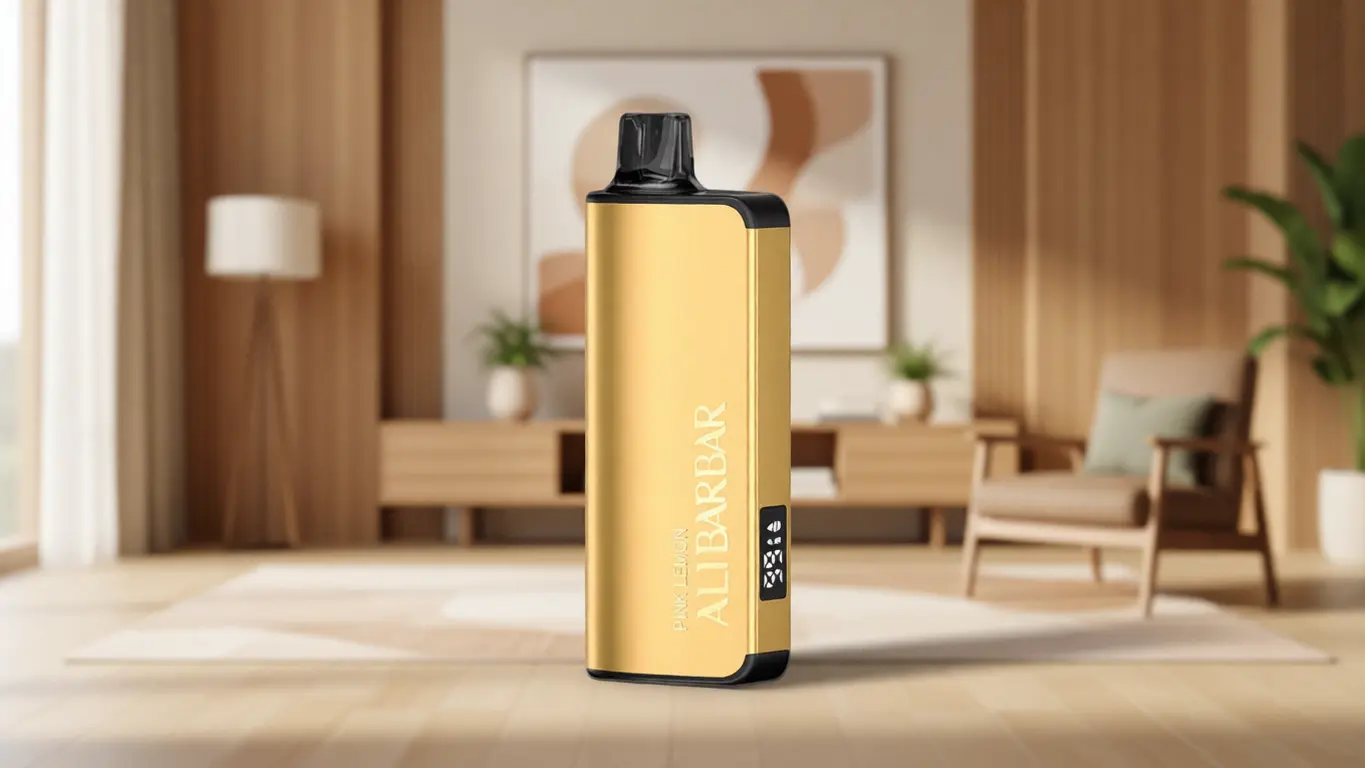
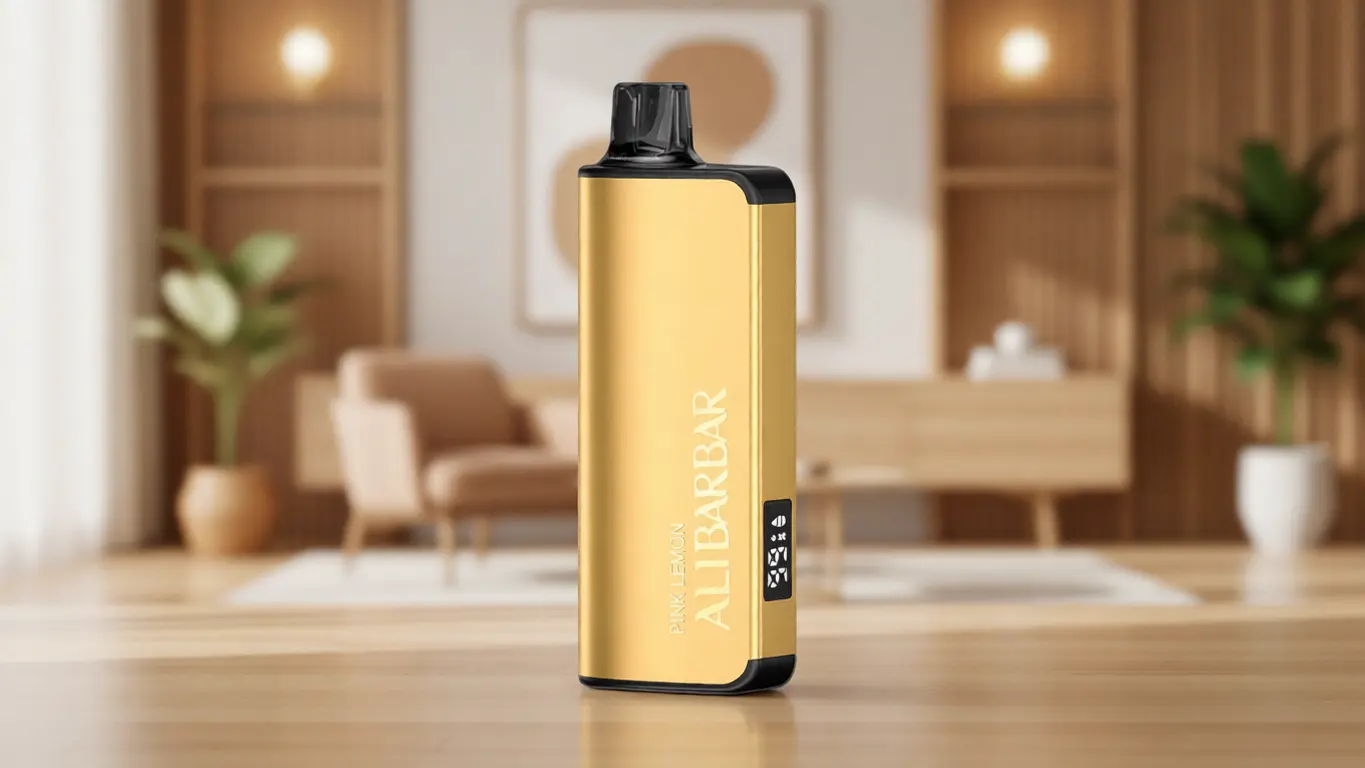
The ALIBARBAR INGOT 15000, for example, is built around a large mesh coil and a regulated power chip. The mesh distributes thermal load evenly, and the electronics hold coil temperature within a narrow window regardless of remaining battery capacity. For the user, this translates into a vapor output that feels nearly identical from the first activation to the last, dramatically reducing the likelihood of an unexpected hot draw. The device also incorporates a clear display that shows both battery and liquid levels, eliminating the guesswork that so often leads to prolonged, desperate pulls on a nearly exhausted unit.
For those who require more control over inhalation resistance, the Ice Adjust 12000 features a user-adjustable airflow ring. MTL users can dial it down to a restricted setting; those who prefer a more open draw can open it up. This directly tackles a common cause of coughing: fighting against a fixed airflow that does not match your natural breathing pattern.
It is worth noting that even these devices involve trade-offs. A highly consistent mesh coil cannot compensate for a user who draws too hard and fast for the selected airflow. Adjustable airflow, while offering flexibility, introduces moving parts that require occasional inspection to ensure they remain clean and functional. The point is not perfection but rather that the device’s engineering gives the user a fair chance at a comfortable experience, instead of stacking the odds against them.
4. A Practical Framework for Evaluating Your Own Device
If you currently own a device that makes you cough, you can apply a simple diagnostic sequence to isolate the cause before you consider a replacement. This same framework can be used when evaluating a new purchase.
Step 1: Observe the Power and Liquid Indicators. Does the device give you immediate, unambiguous feedback about its remaining life? If not, you are effectively operating blind. When a device with no indicator begins to run low, the coil temperature becomes erratic, and coughing often follows. Mark this as a red flag for any future acquisition.
Step 2: Map the Coughing Pattern. When during the draw does the cough occur? If it is at the very start, you may be dealing with a coil that has not primed properly or a device that spikes its initial power output. If the cough happens mid-draw, consider whether you are pulling too hard for the device’s intended airflow resistance. If the cough appears only after the device has been used for many cycles, suspect inconsistent power regulation or coil degradation.
Step 3: Isolate Airflow Mismatch. Try an experiment: take a slower, shallower draw with a partially open mouth. Does the coughing reduce? Then the device likely requires a more restricted inhalation than you have been giving it. Conversely, if you feel like you are sucking against a blocked straw, the airflow is too tight for your style.
Step 4: Compare Against Manufacturer Specifications. Many users do not realise that a device’s puff count or liquid capacity is only a small part of the story. If a specification sheet mentions mesh coil architecture, regulated output, and anti-dry-burn protection, it is a signal that the engineering team prioritised comfort. Absent such details, assume that output stability was not a primary design goal.
Using a checklist like this before purchasing can save you from weeks of throat irritation. Retailers that present standardised specifications for every device, such as the full ALIBARBAR catalogue on OZVAPE Shop, make this comparison straightforward.
5. Common Selection Errors and Industry Observations
The device you hold is often the product of a long chain of decisions made long before it reached your hand. Some of those decisions — by manufacturers and by users — repeatedly lead to coughing and dissatisfaction. Recognizing these patterns can refine your own selection process.
Error 1: Prioritising Puff Count Over Thermal Stability. A device advertised as offering 10,000 activations but built with a cheap wire coil will likely become harsh long before the liquid reservoir is empty. A lower-capacity device with mesh architecture may deliver a smoother experience for its entire life. The raw number of puffs tells you nothing about the quality of each puff.
Error 2: Assuming Visual Similarity Indicates Comparable Internals. Two devices can look nearly identical in size and colour but house entirely different heating elements and power controllers. The industry is filled with generic enclosures around varying internals; without a transparent specification list, you are gambling.
Error 3: Undervaluing Modularity and Rechargeability for Comfort. Sealed disposable units that cannot be recharged lose output voltage progressively, meaning the later portion of the device’s life is frequently a long decline into inconsistent, cough-provoking vapor. Rechargeable designs with regulated electronics (like the ALIBARBAR INGOT 15000) hold their performance characteristics steady right up to the last activation. The initial cost difference is often recouped in avoided misery.
Error 4: Confusing Brand Popularity with Engineering Standards. A broadly recognised brand name does not automatically mean each device in its line meets the same standards. Some established names release down-costed “mini” or “one-shot” versions that lack the very features that made the parent product comfortable. Evaluate each model on its own engineering merits.
An industry-level observation: The Australian market has seen a proliferation of devices that look polished on the outside but contain heating elements sourced from the lowest-tier supply chains. These coils can have uneven resistance, substandard metal alloys that degrade under heat, and wicking materials with inconsistent density. The result is a device that might taste acceptable for the first few dozen activations and then quickly turn harsh. Adult users who experience this often blame themselves, unaware that a different device — engineered with documentation and traceable components — would have given them a wholly different experience.
6. Frequently Asked Questions
Q: Can a single harsh draw cause coughing that persists?
A: Yes. A sudden blast of hot, dry aerosol can physically irritate the throat lining, leaving it sensitive for some time. This does not mean you are allergic or incapable; it means the device produced an inhalation that overwhelmed your airway’s normal tolerance. If it happens repeatedly, the device is almost certainly operating outside its designed thermal range.
Q: Is there a way to rescue a device that has started making me cough?
A: If the device is rechargeable, try pausing use for several minutes to let the coil cool completely. Also, check that the airflow path is clean. However, once a coil has been scorched or carbonised, the harsh taste and associated irritation are usually permanent. No amount of “resting” will reverse physical degradation of the heating element.
Q: Does nicotine strength affect coughing?
A: It can, but primarily in combination with equipment factors. High nicotine concentrations can produce a pronounced throat hit that some users enjoy, but when delivered through an overly hot or dense vapor, the combination becomes overwhelming. A device with temperature-stable output will generally make any nicotine strength feel smoother than an unstable one.
Q: How do I know if my device is using a mesh coil?
A: Reputable manufacturers state this in their official specifications. If the packaging or product page does not mention mesh, it almost certainly uses a round-wire configuration. Retailers that publish standardised technical details for every product — as OZVAPE Shop does for the ALIBARBAR range — make this verification quick and reliable.
Q: Could a counterfeit device be the reason I am coughing?
A: Absolutely. Counterfeit devices often contain inferior coils, contaminated wicking, and inconsistent batteries. These units can overheat, produce off-gassing, or deliver wildly variable output. The only reliable protection is purchasing from a channel that sources directly from certified distributors and can demonstrate that chain of custody, such as the factory‑certified inventory held by OZVAPE Shop.
Q: Is adjustable airflow worth the extra complexity?
A: For many users, yes. Being able to fine-tune the draw resistance means you can match the device precisely to your inhalation style, rather than forcing your body to adapt. The minimal effort of adjusting a ring or slider pays off in reduced throat stress. However, if you already know exactly the resistance you prefer, a well-tuned fixed airflow can be just as effective.
Q: Why does my device seem smoother when the battery is full?
A: This is classic evidence of poor voltage regulation. As the battery level drops, the coil runs cooler and produces sparser, sometimes harsher vapor that irritates. A device with an integrated power-management chip (like the INGOT series) compensates for battery sag automatically, keeping output consistent.
Q: Can a new device “break in” and stop making me cough?
A: Some wicking materials require a few initial activations to reach full saturation, and a device can taste slightly odd during that period. However, if coughing persists beyond the first dozen uses, it is not a break-in issue — it is a fundamental engineering mismatch. Do not force yourself to tolerate discomfort in the hope it will improve.
Q: What should I do if a device I bought from OZVAPE Shop makes me cough?
A: Contact their support team with a clear description of the symptoms and when they occur. Because the shop’s team is trained on product specifications and common technical causes, they can often help you determine whether the issue is usage-related or a genuine product fault, and they will guide you through the appropriate resolution path.
Q: Are there any certifications that guarantee a smooth device?
A: Certifications such as RoHS (which ensures the absence of certain hazardous materials) or CE marking indicate baseline safety, but they do not specifically test for inhalation comfort. The most practical assurance is a manufacturer’s published technical specifications — mesh coil, regulated output, and anti-dry-burn protection — backed by an authorised supply chain that prevents substitutions.
7. Conclusion
Coughing during device use is not an unavoidable rite of passage; it is a symptom. It tells you — with remarkable fidelity — that something in the thermal, power, or airflow chain has drifted outside the window your body can comfortably accept. The path to a consistently smooth experience is therefore a matter of matching your expectations with engineering, not of “getting used to” poorly regulated output.
The diagnostic framework and industry insights in this article are tools anyone can use, whether you are examining a device you already own or making a new choice. A well-engineered device — one with stable power delivery, even heat distribution, and an airflow path tuned to its intended use — will not leave you wondering when the next coughing fit will strike. It will simply do its job quietly, and you will overlook it in the best possible way.
For adult Australians seeking a reliable entry point into high-consistency devices, the range curated by OZVAPE Shop provides a documented, factory‑certified catalogue where technical specifications are front and centre. (This second mention carries an external link, opening in a new window.) Ultimately, the right device is not the one with the most aggressive marketing or the highest number on the shelf; it is the one that respects your physiology and lets you decide when to stop, not your throat.