
VAPE FAQs
How To Fix A Vape?
Aug
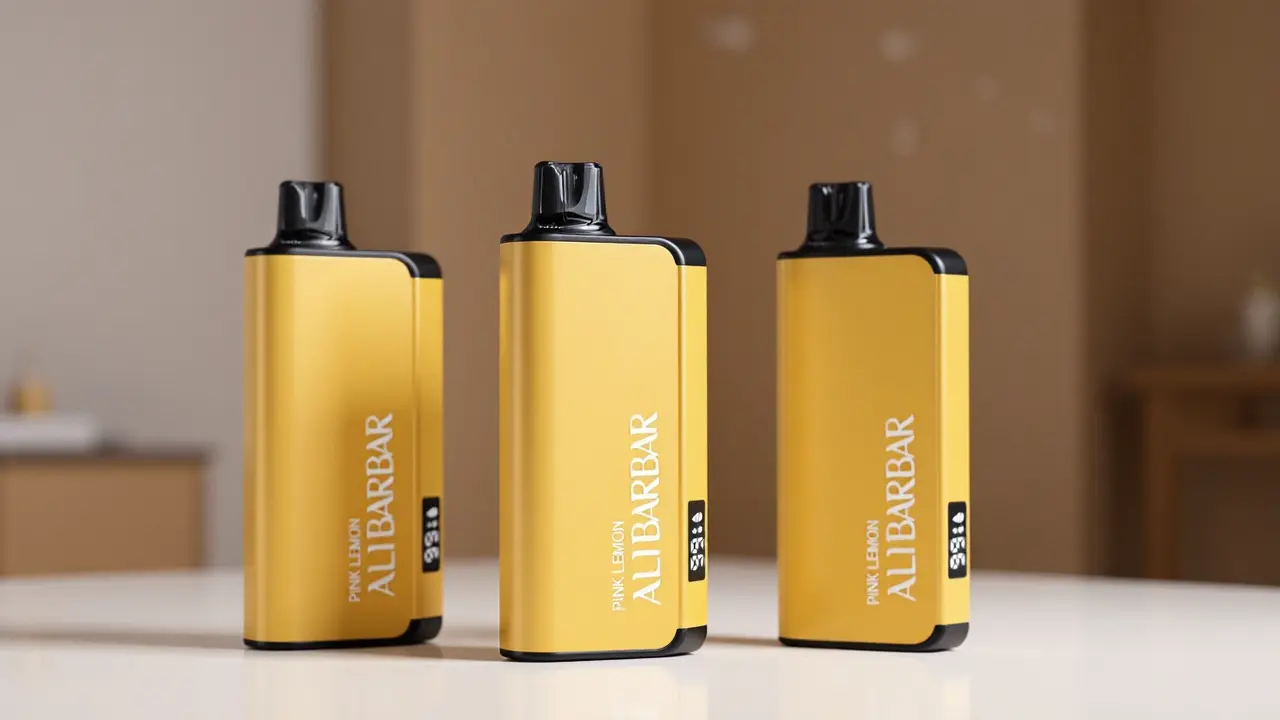
It’s a familiar moment: you reach for your device, and nothing happens. No light, no familiar warmth. Or you take a draw and encounter a harsh, acrid taste that was never there before. The immediate assumption is often that the unit is finished, destined for the bin. But a surprising number of these failures have straightforward explanations — and, sometimes, straightforward remedies. This article is not about encouraging users to dismantle sealed power cells or ignore manufacturer safety warnings. It is about equipping you with the diagnostic thinking that separates a minor external obstruction from a genuine end-of-life event. When a device is designed with transparency and modularity in mind, many apparent malfunctions are temporary, and understanding the engineering can save you from throwing away a unit that still has life left. OZVAPE Shop sees this pattern daily: adults who assume the worst, when a simple inspection would have restored normal operation. The following guide draws on the mechanical principles that govern almost every portable device on the market, with concrete references to designs — including those in the ALIBARBAR range — that have been engineered to be user-legible and, where appropriate, maintainable.
Understanding What Matters: The Engineering Behind Your Device’s Reliability
Before you can fix something, you need to understand what it is you’re holding. The internal architecture of modern portable electronic devices is not uniform, and the degree to which you can intervene depends heavily on choices made at the design stage. Below are the key factors that determine whether a unit is repairable, and what typical failure symptoms actually mean.
Internal Architecture and Vapour Delivery Consistency
The heating element — often a mesh, wire coil, or ceramic substrate — is the heart of the device. Its physical arrangement and the material of the wicking medium determine how liquid is absorbed and converted. When a device begins to produce an inconsistent or burnt sensation, the cause is almost always a breakdown in that capillary action: the wicking material may have been compressed, the heating element may have accumulated residue from prolonged use, or the liquid itself may have thickened due to temperature changes. In sealed, disposable designs, this is a terminal condition; the pathway is integral to the power cell and cannot be accessed. In contrast, devices built around replaceable pods or coils (such as some high-capacity ALIBARBAR configurations) allow you to isolate the issue: a burnt taste can often be traced to a single exhausted pod, and swapping it out restores the full experience without wasting the power cell. Knowing your architecture is the first layer of diagnosis.
Power Management and Status Transparency
The single most preventable source of user frustration is a device that stops functioning without warning. This typically happens because the integrated circuit responsible for regulating voltage either fails to communicate residual capacity, or cuts out abruptly as a safety measure. Well-engineered units incorporate status indicators that go beyond a simple blinking light: a graduated LED sequence, haptic feedback, or a multi-colour system that reports not just “low power” but also fault states (short-circuit, overheat, end-of-life). If your device shows no sign of life at all, the first check should always be the charging contacts. Compressed pocket lint, moisture, or corrosion on the terminal pins can completely interrupt the circuit. A gentle cleaning with a dry cotton swab often revives a unit that appears dead. This is not a manufacturing defect; it’s a contact issue, and it’s entirely resolvable at home.
Physical Design and Material Durability
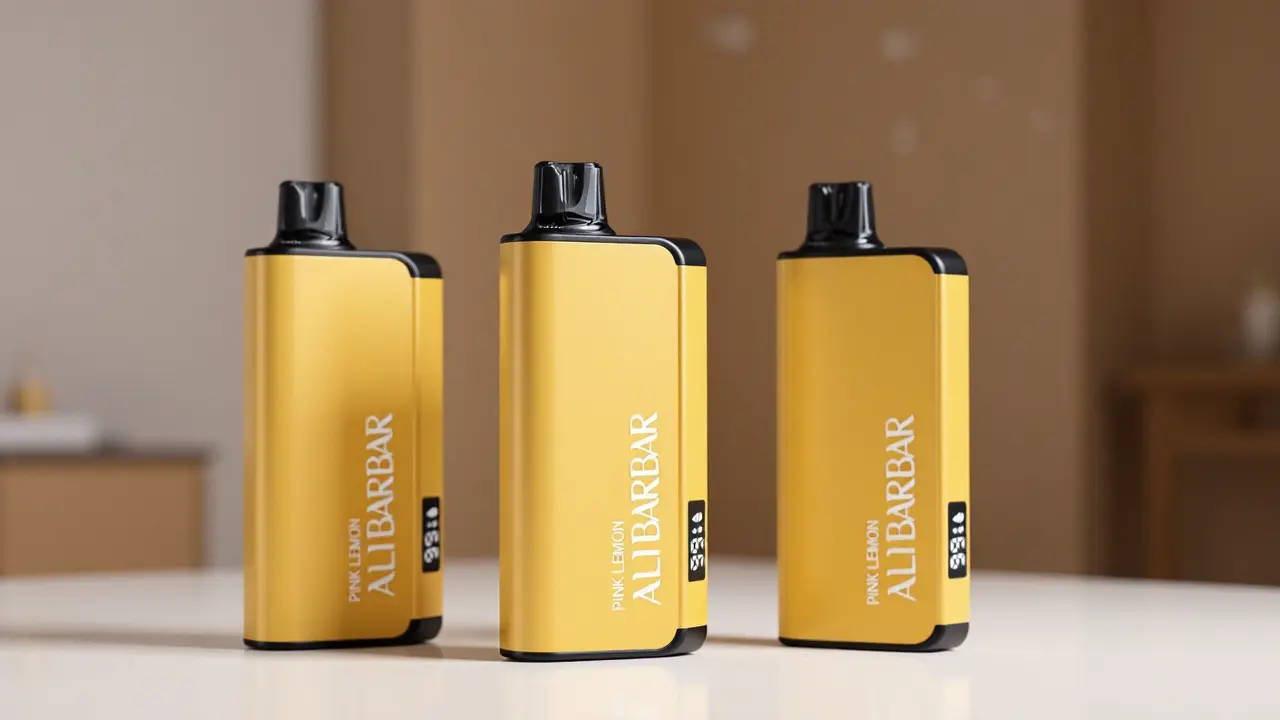
The way a device is constructed determines its resilience under daily conditions. Surface treatments that chip, mouthpieces that accumulate micro-cracks, and chassis materials that deform under body heat — these are not cosmetic issues; they can create pathways for air leaks, disrupt the internal vacuum that controls liquid flow, and ultimately produce the spitting or gurgling that many users interpret as catastrophic failure. When a device that was working perfectly suddenly starts flooding, inspect the mouthpiece seal and the seam where the pod meets the body. Even a minute gap, invisible to the naked eye, can admit enough air to unbalance the system. Repositioning the pod firmly, or replacing a worn silicone plug, can silence the problem instantly. Manufacturers like ALIBARBAR invest in precise moulding and material consistency precisely to minimize these variance points, but even the best designs can be compromised by a drop onto a hard surface.
Modularity and Lifecycle Flexibility
A sealed, all-in-one device is a black box. When something goes wrong inside, you have no option but disposal. A modular system, on the other hand, allows you to treat the power source, the e-liquid reservoir, and the heating element as separate, replaceable subsystems. This doesn’t just change the cost-per-use calculation; it changes the diagnostic process. If the device won’t activate, you can test the power unit with another pod. If the flavour is off, you can inspect the coil independently. The user frustration logs we maintain at OZVAPE Shop consistently show that the most common point of failure in sealed units is the depletion of the heating element’s life cycle before the power cell is exhausted — a wasteful outcome that modular architecture completely avoids. When evaluating your own device, ask yourself: can you isolate the symptom to a single, swappable component? If not, your repair options are limited to external troubleshooting.
Diagnosing Real-World Failures: A Symptom-Based Map
What follows is not abstract theory; it matches the issues that actual users report with the engineering factors above. Use this map before you conclude a device is unrecoverable.
Device Does Not Activate (No Light, No Heat)
Probable Engineering Cause: Power circuit interruption or battery protection trigger.
User-Visible Clues: The draw-activated sensor may be blocked. The charging port may be filled with debris. The device may have been fully drained below the safe discharge threshold.
Actionable Sequence:
Clean the charger connection pins and the port with a dry brush or compressed air.
Try a different, known-working charging cable and power source.
If the device has a physical button, press it five times rapidly to exit any lock mode.
For draw-activated models, cover the airflow inlet with your finger and take a gentle pull; sometimes a stuck sensor resets with a pressure change.
If none of this works and the unit is a sealed disposable, the internal protection circuit has likely engaged permanently — this is a engineered safety limit, not a fixable fault.
Burnt or Dry Taste on Inhale
Probable Engineering Cause: Insufficient wicking or coil overheating.
User-Visible Clues: The pod is low on liquid, has been used in extreme temperatures, or has exceeded its designed puff count.
Actionable Sequence:
Check the liquid level. If the window shows liquid below the wicking ports, tilt the device and wait ten minutes to allow saturation before the next draw.
If the pod is replaceable, install a new one and compare the taste immediately. If the fresh pod tastes clean, the old one was depleted.
Never fire a device immediately after charging when the coil is still warm — let it rest for five minutes; this simple habit dramatically reduces premature coil degradation.
Leaking, Spitting, or Gurgling
Probable Engineering Cause: Air pressure imbalance or seal failure.
User-Visible Clues: Liquid visible around the base of the pod, condensation on the contacts, unusually loud airflow sound.
Actionable Sequence:
Remove the pod and dab the contacts dry with tissue.
Check the O-rings and silicone gaskets; if they appear pinched or displaced, reseat them carefully.
Avoid leaving the device in a hot car or direct sunlight — pressure changes force liquid out of the reservoir.
Draw more gently; aggressive, sharp inhalations can pull excess liquid into the chimney faster than it can be vaporised.
Device Activates But Produces Minimal Output
Probable Engineering Cause: Low voltage or high-resistance circuit.
User-Visible Clues: The battery indicator shows adequate charge, but vapour volume is weak.
Actionable Sequence:
Clean the contact points between the pod and the battery with isopropyl alcohol. Oxidation adds resistance, mimicking a dead battery.
If the device has adjustable airflow, open it fully to eliminate a choke point.
In cold environments, warm the device in your hand for a minute before use; liquid viscosity increases in the cold, slowing wicking.
A Practical Framework for Self-Reliance
Equip yourself with a simple mental checklist that costs nothing and prevents premature disposal. Before you discard any device, ask:
Is the problem replicable? If it only happened once after charging, the issue was transient.
Can I isolate the component? On a pod system, swap the pod. On a disposable, this isn’t possible — but you can still rule out charging and contact issues.
What is the device telling me? Learn the meaning of its LED colours and blink patterns. Many users who report a “dead” ALIBARBAR device simply haven’t consulted the manual to interpret a purple light signalling auto-shutoff after a period of inactivity.
Is this a safety feature, not a failure? Short-circuit protection, over-discharge lockout, and end-of-life cutoffs are deliberate engineering decisions to prevent hazards. Bypassing them is dangerous and never recommended.
This framework shifts your role from passive consumer to informed operator. When a device is well-documented — as those stocked by OZVAPE Shop are, with clear specification sheets — the barrier to becoming self-sufficient is low.
Industry Observations and Selection Mistakes That Undermine Repair
A significant portion of “repair” frustration originates not in the device but in the purchase decision that preceded it. Over years of analysing support inquiries, we’ve identified patterns that lead users to believe they have a fixable problem when in reality they have a design limitation.
Mistaking Visual Similarity for Internal Parity
Two devices can look nearly identical in a product photo yet employ wholly different circuits, wire gauges, and quality controls. A low-cost unit might use a thinner heating wire that operates right at the edge of its thermal tolerance, whereas a precision-engineered alternative like the INGOT 15000 from ALIBARBAR uses a temperature coefficient that provides a consistent output range across its entire life. When the cheaper unit degrades after a few days, the user attempts the same cleaning and contact maintenance that works on a robust device, to no avail — the core is simply underspecified. No amount of external fiddling can compensate for a component that was never designed for longevity.
Overvaluing Single Specifications
“Puff count” on a disposable is a seductive number, but it’s meaningless outside the context of power delivery and e-liquid volume. An extremely high puff count matched with a small reservoir means the device is tuned to produce tiny, unsatisfying draws, or it will start burning the wick long before the power cell is empty. Users who fixate on that number often conclude their device “failed early” when it actually operated exactly to its physical limits. A modular system, where you can see the liquid level and replace the coil independently, eliminates this ambiguity.
Undervaluing Modularity in Long-Term Cost
When a sealed disposable stops working, the entire unit — battery, housing, heating element — becomes electronic waste. Many users treat this as inevitable, but a modular alternative can reduce cost per use by over 60% while generating significantly less waste. The mistake is viewing the upfront cost of a rechargeable pod system as higher when, over the same usage period, replacing only the pods is cheaper and more sustainable. This is a direct consequence of failing to calculate lifecycle cost, and it leads users to keep re-buying sealed units that they then try to “fix” with unsafe workarounds.
Confusing Category Terminology with Technical Reality
Terms like “disposable” suggest a temporary, throwaway nature, while “rechargeable” can be misinterpreted as “permanent.” In truth, every heating element has a finite lifespan. A “rechargeable disposable” — a device with a charging port but a non-replaceable pod — extends life by perhaps one or two recharges, but the coil will still fail when its designed cycle count is exhausted. Attempting to force it past that point by re-wicking or exposing the circuit is a fire risk. Recognition of these category boundaries is the first step toward safer, more effective maintenance.
Frequently Asked Questions
Q: My device blinks three times and won’t fire. Is it repairable?
A: Three blinks typically indicate a short circuit detected at the atomiser connection. Remove the pod, clean the contacts, and reinsert. If the blink pattern persists with a different pod, the issue is internal to the battery unit’s circuit protection and is not user-serviceable.
Q: Can I clean the inside of a sealed disposable vape?
A: Sealed disposables are not designed to be opened. Attempting to access the heating chamber risks damaging the battery wrap or piercing the lithium cell, which can lead to thermal runaway. If the taste has degraded, the device has reached the end of its safe operational life. Dispose of it through appropriate electronic waste channels.
Q: Why does my device get hot while charging?
A: A mild temperature rise is normal due to internal resistance. However, if the casing becomes uncomfortably warm, disconnect immediately. This could indicate a mismatched charger (always use a 5V/1A output, not a fast-charging adapter), a failing battery, or blocked ventilation. Never leave a charging device on a flammable surface.
Q: Is it safe to use a bent or damaged pod?
A: No. A deformed pod can leak liquid into the battery compartment, causing a short and potentially a fire. Replace damaged pods immediately, regardless of how much liquid remains. Physical damage is a definitive end-of-life signal for that component.
Q: Will a firmware update fix my device?
A: The vast majority of portable devices on the market, including the entire ALIBARBAR family, operate on fixed integrated circuits with no update capability. If a brand advertises firmware updates, it generally applies only to advanced box mods with display screens and Bluetooth. For standard auto-draw units, all operational logic is hard-coded at the factory.
Q: The draw seems harder than when it was new. Can I clear the airway?
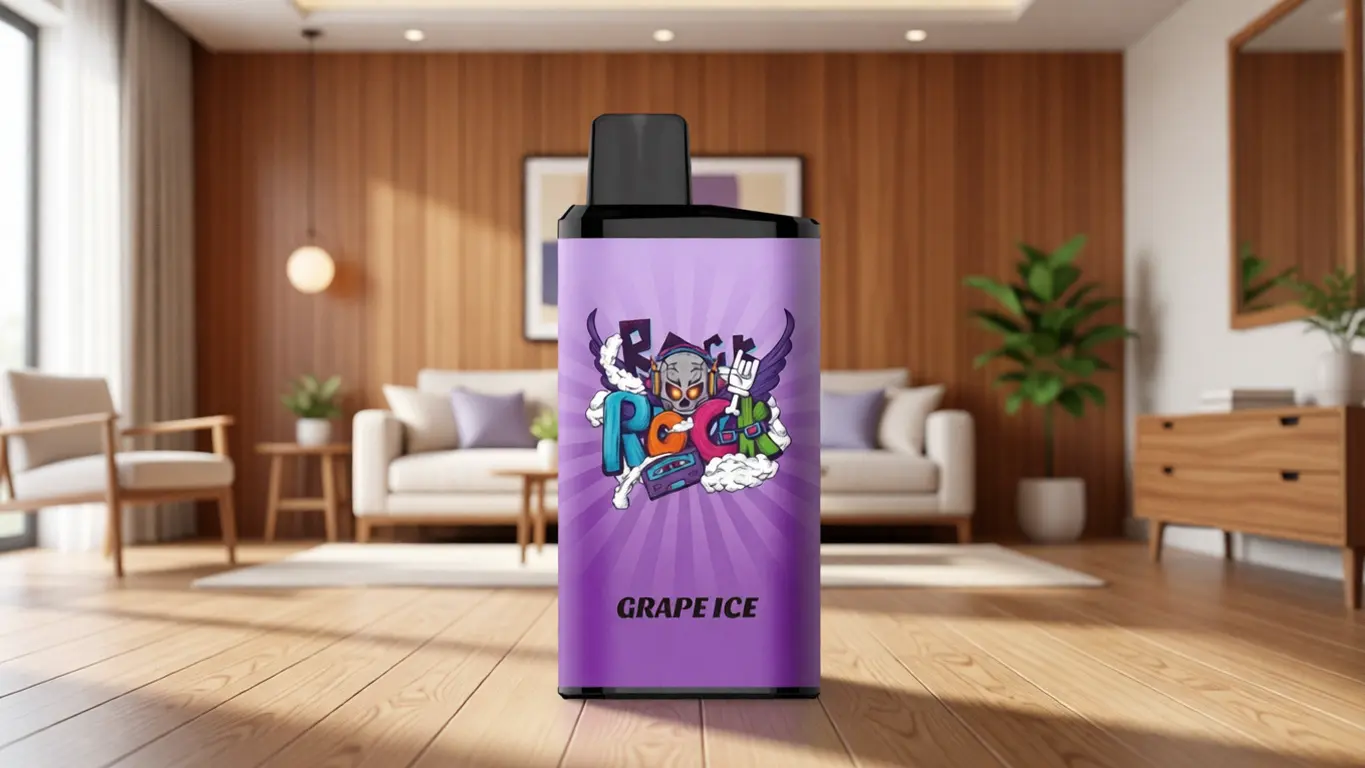
A: Yes, this is often the most overlooked maintenance task. Over time, condensation and microscopic particles can narrow the internal chimney. For devices with a removable mouthpiece, rinse the mouthpiece in warm water and dry thoroughly. For integrated mouthpieces, use a thin, non-conductive pick (such as a plastic dental tool) to gently clear the opening. Do not insert anything metal into a live device.
Q: I bought a device that doesn’t match the packaging. Does that affect performance?
A: Counterfeit products use inferior components that fail unpredictably and lack safety protections. A unit that looks similar but has no scratch-off verification code or misspelled branding is likely not authentic. Authenticity directly impacts safety, not just brand reputation. OZVAPE Shop sources exclusively from factory-certified distribution chains to ensure every unit matches its documented specifications.
Q: How do I know when a rechargeable device has genuinely reached the end of its life?
A: The most reliable indicators are a persistent drop in vapour volume even after a full charge and cleaning, a battery that no longer holds any charge, or a charge port that fails to make a solid connection. When two or more of these signs appear concurrently, the energy cell has reached its cycle limit. Do not attempt to replace a soldered-in battery; recycle the device through an authorised e-waste facility.
Q: Can extreme cold permanently damage my vape?
A: Extended exposure below 0°C can cause the e-liquid to separate or thicken beyond the wick’s ability to move it, and it can also lower the battery’s effective voltage temporarily. Warm the device gradually to room temperature before use. If performance does not recover after 30 minutes, the cold may have caused the liquid’s components to crystallise and block the wick permanently — a pod replacement is necessary.
Q: My device has no visible problem but tastes slightly off. Is it psychosomatic?
A: Not necessarily. Taste sensitivity changes with hydration, recent foods, and even room humidity. However, a genuine off-taste can come from e-liquid that has been exposed to light and heat, causing oxidation and a gradual change in flavour profile. Try a fresh pod from a sealed package. If the taste normalises, the original pod had simply aged past its peak. Store unused pods in a cool, dark place to slow this process.
Returning to First Principles
Every device has a finite window of reliable operation, but that window can be significantly extended by acting on observable symptoms rather than reacting to anxiety. The fixes that work most reliably are also the simplest: cleaning contacts, seating pods correctly, interpreting status signals, and respecting the designed limits of a sealed unit. Where a device is modular, knowing which part to swap returns you to full function in seconds.
The adult users who get the most satisfaction from their personal electronics aren’t necessarily those with the most expensive hardware — they’re the ones who understand the engineering language their device speaks. When a tool is built to be legible, as the ALIBARBAR range demonstrates, support becomes a matter of observation, not guesswork. And should a problem ever sit outside the boundaries of safe home intervention, a transparent supply chain with accessible support becomes the difference between a dead end and a straightforward resolution. That is the standard OZVAPE Shop has structured itself to meet: not as a distant retailer, but as an accountable local partner for adults who expect clear answers and authentic equipment. The right fix is the one that keeps you in control of your experience, without compromise and without unnecessary risk.