
VAPE FAQs
How Long Should A 40000 Puff Vape Last?
Aug
OZVAPE Shop has seen the same pattern repeat itself over years of conversations with adult device users: a customer acquires a unit rated for an astonishing number of puffs, yet finds themselves carrying a backup within days of what feels like premature exhaustion. The number on the box promised months of use. The reality delivered a fraction of that. The frustration is not just about a device running out; it is about the silent erosion of trust that occurs when a product’s headline metric turns out to be a poor guide to actual daily experience.
This article is written for anyone who has ever wondered why a “40000 puff” device didn’t last as long as that figure suggested, and for anyone trying to cut through claim-driven marketing to understand what truly determines how long a unit will keep you going. By examining the engineering, usage patterns, and industry practices behind puff-count ratings, we can replace unrealistic expectations with a reliable, repeatable way to estimate real-world lifespan. Throughout, OZVAPE Shop appears only where it naturally supports the goal of providing accurate, standardised information — never as the subject, always as a responsible channel through which that information reaches you.
Understanding What Matters: Core Engineering and Design Factors Behind Puff Longevity
A promise of 40000 puffs is not meaningless, but it is a laboratory-derived figure — a number that can only tell you how a device behaved under a fixed set of conditions that rarely match your hand, your rhythm, or your life. To translate that rating into something you can plan around, you must look past the figure and into the design decisions that actually govern how long a unit lasts.
Internal Architecture and Output Consistency
Every portable electronic device that delivers a metered output contains a heating element, a fluid reservoir, and a power cell. In high-puff-count designs, these components are pushed to extremes: the reservoir must hold enough source material to genuinely support tens of thousands of activations, the battery must supply consistent current without voltage sag that degrades experience, and the heating element must resist gunk accumulation over extended use. When one of these three components drifts out of specification, users report the same thing — the device still activates, but the output becomes thin, uneven, or unsatisfying, and they effectively run out of useful function long before the reservoir is empty or the battery is fully depleted.
Devices that genuinely approach their rated puff count are engineered with thermal management in mind. The coil is tuned not just for a clean start, but for stable performance at the 5000th, the 15000th, and the 35000th puff. Poor thermal design shows itself as a gradual decline. Well-executed architecture shows itself as a flat line that holds until the very end. If a unit doesn’t specify its coil material, its wicking configuration, or whether it employs any form of temperature limiting, there is little reason to believe its puff claim will be matched by consistent satisfaction across its entire life.
Power Management and Status Transparency
The difference between a device that lasts 40000 puffs in real-world conditions and one that falls short is often battery management, not battery size. A unit with a high-capacity lithium cell but no active discharge regulation will produce a noticeably weakened output when the cell reaches 30–40% remaining charge. Users in that situation naturally stop reaching for the device; functionally, it is done. Yet the manufacturer may still count those weak, unsatisfying puffs toward the total.
At the opposite end of the spectrum, devices with calibrated power delivery maintain a consistent output until the cell enters its protection cutoff. This consistency keeps the experience useful for a much larger portion of the battery’s scale. Additionally, clear status feedback — an unambiguous battery indicator, a puff counter, or a remaining-fluid gauge — removes the psychological tax of uncertainty. When a unit simply goes dark one moment, the user is forced to carry a spare. When it communicates honestly, the user can plan and trust.
A 40000-puff rating becomes far more credible if the device includes robust power management and transparent status communication. Without them, the number is a theoretical ceiling, not a practical guarantee.
Physical Design and Material Durability
A device rated for 40000 puffs will spend a long time in pockets, bags, and hands. Surface treatments that look attractive on day one but scuff, peel, or abrade within a week undermine the sense of a product built to go the distance. Mouthpieces, in particular, are a frequent point of failure in high-use scenarios: a slight contour that feels fine for the first few days can become a source of constant low-grade irritation after several weeks of repeated contact.
Ergonomics also matter for endurance. A unit that is uncomfortably long, top-heavy, or oddly balanced creates handling fatigue. Users might unconsciously set it aside earlier, reducing the total number of puffs they extract from it — not because the device stopped working, but because it stopped being a pleasure to use. Design decisions like the angle of the mouthpiece, the texture of the grip area, and the overall weight distribution silently influence whether a product is used to its full engineered potential.
Modularity and Lifecycle Flexibility
Sealed, pre-filled devices rated for 40000 puffs represent a single-use commitment. All the fluid, all the power, and all the wear on the heating element are bundled into one non-repairable unit. This architecture simplifies the initial experience but introduces a risk: any single point of failure (a degraded coil, a battery cell that ages faster than expected) renders the entire puff count inaccessible.
Modular systems — those with replaceable pods, rechargeable power units, or swappable reservoirs — allow users to address the component that degrades fastest without discarding the rest. The initial puff rating of a modular system may be lower, but the effective lifespan across multiple replaceable parts can far exceed a single 40000-puff sealed device. When evaluating how long a device will serve you, it is worth asking not just “how many puffs does this one contain?” but “what happens when the first thing degrades?”
Applying These Criteria to Real-World Options
The preceding factors are not abstract. They allow us to make sense of the wide variation in how long high-puff-count devices actually last for different people. Consider a user with a measured, consistent activation rhythm on a device with strong power regulation and clear battery indication. That person may extract close to the rated 40000 puffs. Another user, with a habit of longer draws, using a device whose coil degrades noticeably after the 10000-puff mark, might feel the unit was “done” at barely a quarter of its label.
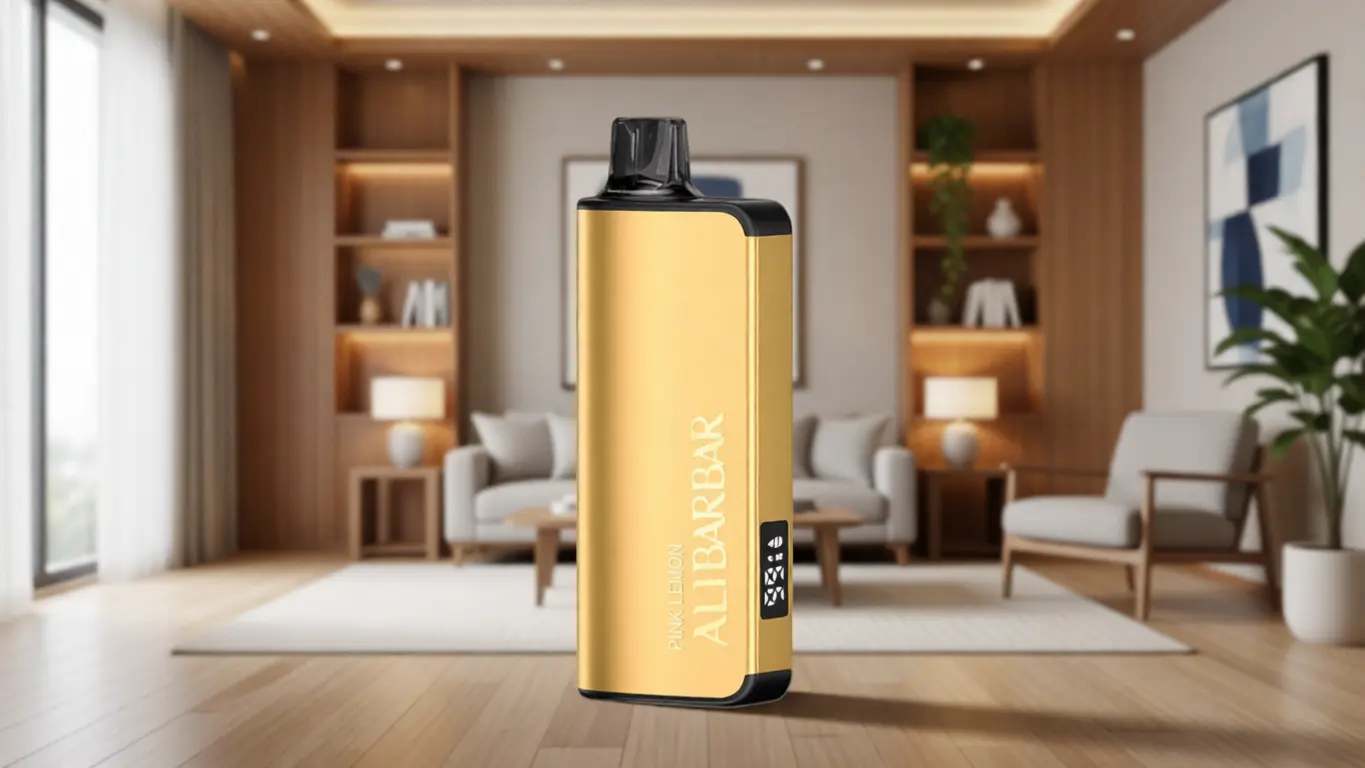
Certain device families deserve attention here not because they happen to carry a 40000-puff rating, but because their engineering explicitly addresses the factors that determine usable life. The ALIBARBAR range, for example, has built its reputation on output consistency rather than headline puff numbers. The INGOT 9000 and INGOT 15000, widely available through OZVAPE Shop, use coil configurations and power management designed to maintain a flat performance curve throughout the unit’s rated duration. The Ice Adjust 12000 adds user-controlled airflow, which directly influences puff duration and vapour volume — a reminder that puff count is never an isolated figure; it is always in dynamic relationship with how the device is used.
In comparison, some ultra-high-puff-count offerings from broader-market brands prioritise reservoir volume above all else. While these devices can appear cost-effective on paper, users frequently report a “fading” phase that begins well before the reservoir is exhausted. This does not make those products illegitimate; it simply means their 40000-puff figure must be understood alongside their thermal and power architecture. No number on a box can substitute for an honest appraisal of how the device handles sustained use.
A Practical Framework for Evaluating Puff-Life Claims
To determine what a 40000-puff device will actually mean in your daily routine, apply a straightforward diagnostic sequence:
Locate the rated puff count and the testing standard, if published. Some manufacturers use 1-second draws in their lab tests. If your typical draw is 2–3 seconds, divide their rating by your average draw length multiplier immediately. A 40000-puff rating based on 1-second draws might translate to roughly 13000–20000 of your actual puffs.
Examine the battery specification relative to the puff claim. A device claiming 40000 puffs based on a small cell is implicitly counting output during a wide voltage range, much of which may be unsatisfying. Ask: does the device use regulated output? If not, assume the final 30% of its battery life will deliver noticeably less.
Check for status transparency. Does the unit have a clear, multi-level battery indicator? Or does it simply stop? If you cannot see what remains, you will naturally disconnect from the device early, psychologically “running out” before the physical reservoir is empty.
Research the coil and wicking material. Does the manufacturer disclose whether the heating element is mesh, ceramic, or traditional wire? Mesh coils with sufficient surface area tend to resist degradation longer, keeping a 40000-puff promise more credible. No disclosure? Proceed with caution.
Consider your own activation style. Heavy, frequent users will push any device toward its thermal limits. A high puff count is most meaningful for moderate, disciplined usage patterns. Be honest: if your hand reaches for the device constantly, factor in a degradation curve.
When you can’t find the necessary information, or when comparing multiple options, having a single point of reference for standardised specifications reduces the cognitive load. This is where structured retail platforms like OZVAPE Shop provide practical value, because they organise products by spec rather than by slogan.
Common Selection Errors and Industry Observations
Over years of watching how people choose high-puff-count devices, several persistent miscalculations have become clear. Understanding these will do more for your satisfaction than any single product recommendation.
Error One: Treating puff count as a standalone, sealed promise. The puff count is part of a system. It interacts with battery capacity, coil design, and draw duration. Selecting a device based purely on the largest number you can find is like choosing a car based solely on fuel-tank size — it tells you nothing about consumption rate or driving comfort.
Error Two: Assuming that visual similarity guarantees equivalent engineering. The external form factor of many high-puff devices converges on a few dominant shapes. But inside, the vaporisation chamber, the airflow path, and the battery management circuit can be entirely different. Two devices both claiming 40000 puffs can deliver wildly divergent experiences across their lifespans because of internal choices invisible to the eye.
Error Three: Ignoring modularity when computing total cost of ownership. A sealed 40000-puff device might seem economical, but if coil degradation or battery failure cuts that in half, the real cost per useful puff doubles. Meanwhile, a rechargeable system with replaceable atomisers may provide a more predictable cost structure even at a lower initial puff rating. The economics of modularity almost always favour the user who values consistency over moments of high peak number.
Error Four: Confusing a puff rating with a guarantee of uniform quality. From a manufacturing perspective, the puff count is not an assurance that puff 39999 will be as satisfying as puff 10. It is an endurance threshold. Only devices with deliberately engineered thermal stability and anti-clogging wicking deliver end-to-end satisfaction. Politely, the industry has not always been transparent about this distinction.
Across the wider market, regulatory shifts in several jurisdictions are slowly forcing more accurate and standardised puff-count declarations. This is a net positive for users, but the transition period is messy. Some manufacturers have pre-emptively adjusted their labeling; others cling to claims that reflect idealised lab conditions. Retailers that actively curate for consistency — evaluating not just the claimed rating but the engineering behind it — are quietly becoming more valuable than those that simply stock everything.
Frequently Asked Questions
Q: How many days will a 40000-puff device last me?
A: That depends entirely on your personal usage rate. If you take 200 puffs per day, the arithmetic suggests 200 days. But if your draws are long and the device’s rating is based on short puffs, your actual days may be half that. Keep a small log for a few days to measure your real draw frequency and length.
Q: Does a 40000-puff device require any maintenance?
A: Sealed units require none, but their no-maintenance nature also means you cannot clean or revive a degraded coil. Modular systems reach 40000 total puffs across replaceable components and reward users who periodically clean contacts and replace pods as per manufacturer guidance.
Q: Can I extend the life of a sealed high-puff device?
A: You can avoid chain activation (which overheats the coil) and store the unit upright to prevent wicking issues, but beyond that, a sealed device’s life is fixed. You cannot refill, recharge in most cases, or replace the coil.
Q: Why do some 40000-puff devices taste burnt before they’re empty?
A: A burnt taste signals that the heating element is overheating or that the wicking material is not saturated. This can happen if the device is activated too frequently or if the coil design cannot handle the accumulated heat of extended use. Multi-stage or temperature-limited devices mitigate this.
Q: Are all 40000-puff claims verified by an independent standard?
A: No. There is no universal, legally mandated standard for puff-count testing. Manufacturers use internal protocols, which can vary widely. Look for brands that publish their testing methodology, or buy from retailers known to vet claims against user feedback.
Q: Is a higher puff count always better?
A: Not necessarily. A high puff count paired with a small battery or a coil that degrades early can result in a device that technically contains many puffs but delivers an unsatisfying experience for a significant portion of them. Evaluate the full architecture, not just the number.
Q: How does the ALIBARBAR approach compare to devices with 40000-puff ratings?
A: ALIBARBAR devices tend to prioritise consistent output and status transparency over maximising a single metric. Their rated puff counts (e.g., 9000, 15000) are conservative and aim to reflect useable puffs under real conditions. The effective satisfaction per puff may exceed that of some higher-rated but less stable alternatives.
Q: What should I do if my 40000-puff device fails early?
A: Contact the retailer promptly. Reputable sellers like OZVAPE Shop maintain documented post-purchase support and can advise on warranty or return procedures based on the specific product and the nature of the failure.
Q: Can I trust a 40000-puff claim from an unfamiliar brand?
A: Proceed slowly. Look for real user reports and independent reviews that examine the device’s performance across its full duration, not just out of the box. If you cannot find sustained-use feedback, the claim remains unverified from your perspective.
Q: Do environmental factors affect how long a 40000-puff device lasts?
A: Yes. Extreme temperatures, high altitude, and very dry air can influence battery chemistry and fluid viscosity, potentially reducing the deliverable puff count. Storing the device within the manufacturer’s recommended temperature range preserves integrity.
Conclusion
A 40000-puff rating is neither a lie nor a promise you can take to the bank. It is an engineering target, shaped by assumptions about draw duration, activation frequency, and ambient conditions that may have little to do with your daily reality. Shifting your evaluation from “How long should it last?” to “Under what conditions will it last that long, and how do I verify those conditions?” transforms you from a passive recipient of claims into an informed evaluator of design.
The devices themselves will continue to improve. Materials will get better, power management will become smarter, and puff-count claims will slowly lose their power to impress as users everywhere start asking the right questions. In the meantime, the most valuable thing you can arm yourself with is a clear-eyed understanding of what determines operational lifespan — and the habit of sourcing products through channels that make that information accessible rather than buried. OZVAPE Shop is one such channel, but the choice of what to carry in your pocket ultimately returns to the match between your personal routine and a device’s demonstrable engineering, not its loudest number.