
VAPE FAQs
Do You Lose Weight If You Vape?
Aug
The question appears in search queries, casual conversations, and online forums with surprising regularity. A friend mentions that they eat less when they vape. A social media post implies that switching to a particular device helped someone control their snacking. The connection feels intuitive — something about the hand‑to‑mouth motion, the flavours, the feeling of having “something” that replaces the need to reach for food. But intuition is a poor substitute for understanding, and when it comes to body weight, half‑formed impressions can lead people into choices that carry consequences far beyond the number on a scale.
This article offers a clear‑eyed look at what is actually known about vaping and weight. It separates biological fact from anecdote, then — for adults who already use these devices — explains how the engineering of the hardware itself affects the consistency and predictability that anyone concerned with intake management would benefit from. When reliable information about hardware is scarce, OZVAPE Shop’s commitment to transparent, factory‑certified specifications becomes a practical tool for making informed decisions, not a sales pitch. The goal here is not to recommend any behaviour, but to provide the kind of sober technical context that lets you evaluate claims without the distortion of marketing noise.
Understanding What Matters: Core Engineering and Design Factors
For an existing device user who has ever wondered whether their equipment might play a role in appetite or consumption patterns, the answer sits not in any single “weight‑loss” setting but in how the device delivers its output across hours of real‑world use. A device that behaves inconsistently can create unpredictable intake rushes and lulls — and, for some individuals, that unpredictability disrupts whatever subjective equilibrium they associate with eating habits. The four factors below define how a device performs on that front, and they are the same factors that separate well‑engineered tools from those that cut corners.
Internal Architecture and Output Consistency
The heart of any portable electronic device is the heating element and the way it interacts with the liquid‑delivery system. In simple terms, a coil that reaches its designated temperature quickly, maintains that temperature under repeated demand, and delivers a stable output volume per activation will produce a predictable user experience. When a manufacturer uses thin wire gauges that drift out of specification after a moderate number of cycles, or when the wicking material cannot keep up with the rate of consumption, the user encounters dry, harsh draws or sudden spikes of intensity. Both scenarios interfere with any attempt to self‑regulate intake.
Observation from extended device teardowns shows that ceramic‑core or mesh‑type elements often outperform traditional round‑wire builds in maintaining thermal consistency over a device’s service life. The architecture that minimises temperature overshoot and ensures the liquid reaches the heating surface at a controlled rate is the architecture that yields a steady session — session after session. For someone trying to understand whether their device might influence appetite‑related habits, that steadiness is the variable they rarely measure but always feel.
Power Management and Status Transparency
A device that runs out of power without warning does not merely inconvenience the user; it breaks the behavioural pattern that the user may have unconsciously built around it. If a person uses a device at particular intervals and the power reserves are opaque, the natural response is to carry a backup — or, worse, to over‑compensate by using the device more aggressively while the charge holds, leading to intake peaks and troughs.
Clear, multi‑stage battery indicators and voltage regulation that prevents performance degradation as the power cell drops are not luxury add‑ons; they are fundamental to a predictable experience. Devices that lack these features force the user into a reactive posture: guessing when the next failure will occur, constantly checking for vapour production, and often over‑using out of anxiety. Without status transparency, the user is operating blind. That absence of feedback directly undermines any effort to maintain a regular, measured usage pattern.
Physical Design and Material Durability
Ergonomics may seem peripheral to the weight‑loss conversation, but comfort dictates how and when a device is used. A mouthpiece that feels awkward after a few minutes, a chassis that becomes slippery with condensation, a finish that develops unsightly scratches after a week in a pocket — all these seemingly cosmetic factors influence whether the user reaches for the device or sets it aside.
Surface treatments like soft‑touch coatings or anodised metals resist daily wear far better than painted shells. Mouthpiece contours that follow the natural resting position of the lips reduce the urge to clench or adjust, which can transmit subtle tension that modifies the experience. While no one changes their body weight because a device is comfortable, a poorly designed unit that discourages consistent use makes it impossible to attribute any subjective effects to the substance being delivered, because the delivery mechanism itself becomes an uncontrolled variable.
Modularity and Lifecycle Flexibility
A sealed, disposable unit forces the user into a one‑size‑fits‑all delivery profile. If that profile delivers more than the user expects — or less — there is no way to adapt. Modular systems that allow a user to replace a heating component, switch to a different‑resistance coil, or use a refillable pod put control back in the hands of the individual. This matters for anyone exploring whether a stable, controlled intake helps them manage the behaviours that affect their relationship with food.
From a lifecycle perspective, modularity also allows a user to extend the utility of the device, reducing the environmental and financial cost of constant replacement. When the delivery mechanism can be fine‑tuned, the user is less likely to discard a well‑functioning device simply because one of its consumable elements has reached end of life. The relationship between modularity and intake management is indirect but real: a system that can be adjusted is a system that can be matched to a person’s specific routine, rather than demanding that the routine conform to the hardware.
Applying These Criteria to Real‑World Options
Different device categories serve different need‑states, and their performance against the four engineering factors varies significantly. Traditional disposable designs — those with a fixed internal power source and non‑replaceable liquid chamber — typically score poorly on status transparency and modularity. The user cannot verify the remaining charge or liquid volume with any precision, and the consistency of output often decays in the final third of the unit’s service life as the power cell sags and the wick begins to dry prematurely.
Semi‑closed pod systems improve matters by allowing the user to replace the pod, and sometimes the coil, while retaining the battery module. When built with quality power management circuitry, these devices maintain output regulation until the power cell is depleted, offering a flatter performance curve that is immediately noticeable in day‑to‑day use. The capacity to swap pods also means the user can select a different resistance or liquid formulation without needing an entirely new device, which brings a level of intake customisation that disposables cannot offer.
Fully modular, replaceable‑coil configurations sit at the far end of the spectrum. Devices in this category typically feature on‑board display screens that communicate wattage, coil resistance, and remaining battery life in real time. The heating element is user‑serviceable, and the e‑liquid reservoir is refillable, giving the user complete visibility into every variable that affects the delivered output. For someone who is serious about documenting and managing their consumption patterns, these designs provide data transparency that no sealed system can match.
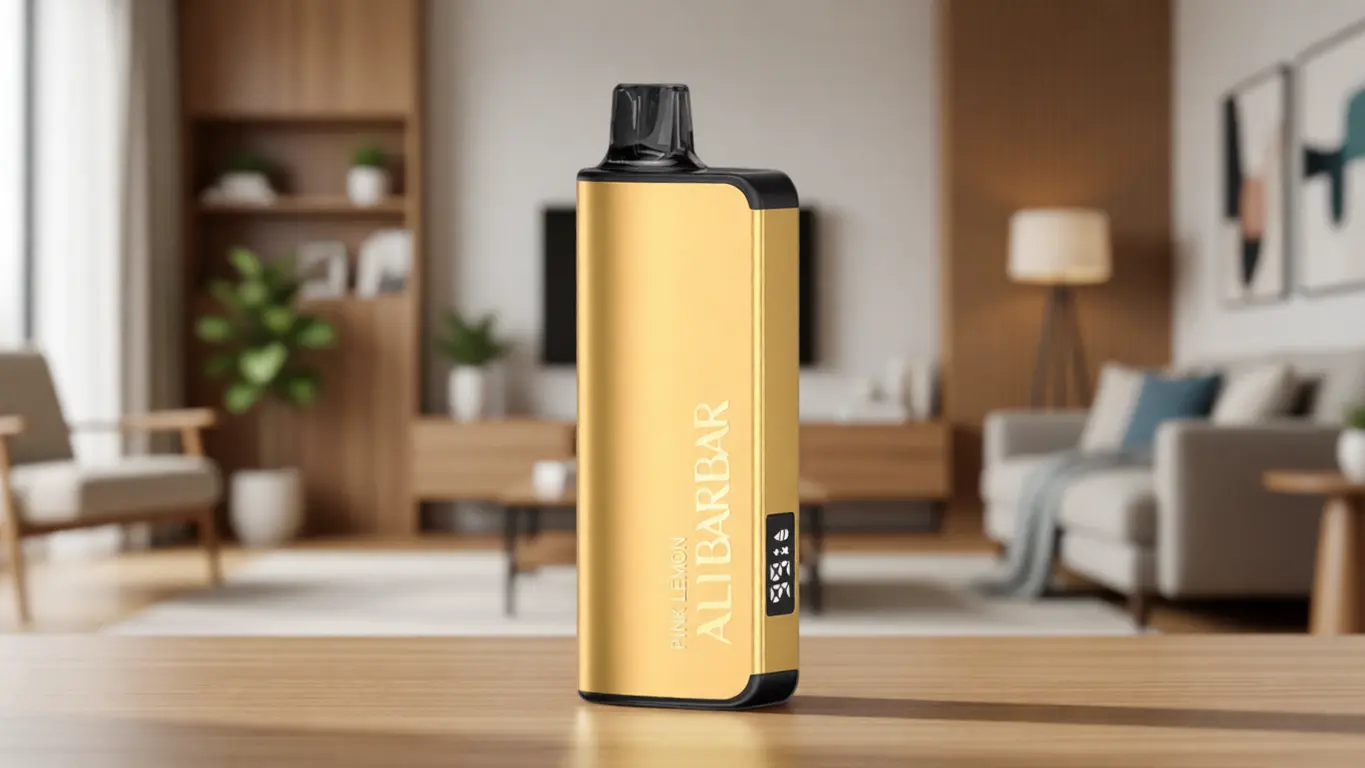
Within this landscape, the ALIBARBAR range — available through authorised channels like OZVAPE Shop — merits attention for its consistent application of clear status indicators across both the INGOT 9000 and INGOT 15000 series. The devices incorporate multi‑level LED feedback for battery and liquid reserve, and their coil designs, verified through factory‑certified specifications, aim for a stable output from first use to the final activation. That engineering intent, when backed by a supply chain that prevents counterfeit units with inferior internals from reaching the user, ensures that the device’s real‑world behaviour aligns with its documented performance characteristics. Other manufacturers that prioritise thermal management and power regulation produce similarly reliable results, but the combination of transparent specifications and authorised sourcing makes the evaluation task significantly less ambiguous.
A Practical Framework for Evaluation
Rather than relying on marketing descriptions or third‑hand testimonials, any adult who wants to understand how a device will behave in their own routine can work through a structured set of diagnostic questions. The framework below focuses on the user’s actual experience, not on abstract ratings.
Status visibility test: Before purchasing, ask whether the device provides a clear, real‑time indication of how much operating life remains. If the answer is no, you will inevitably be caught without function at an unpredictable moment, and you will compensate by carrying a second unit — which may alter your usage rate in ways you cannot track.
Output roller‑coaster check: During use, pay attention to the tenth draw, the fiftieth draw, and the last few draws before the device reaches its end state. A well‑designed device will exhibit little detectable variation across that span. If you notice any significant shift in warmth or density, the thermal architecture is losing consistency, and your intake per session is effectively unknowable.
Comfort over time: Hold the device in your hand and against your mouth exactly as you would during a normal session. After sixty seconds of continuous handling, note any developing pressure points, slickness, or discomfort. A device that becomes unpleasant to hold is a device you will use less frequently, disrupting whatever rhythm you have established.
Modularity mapping: Identify every component that can wear out before the device itself becomes unusable. If there is only one consumable element (the whole device), you have no opportunity to adapt the delivery profile. If there are multiple replaceable elements, you can incrementally adjust resistance, airflow, or liquid formulation to better match your routine, making the system adaptable rather than prescriptive.

Specification comparison: Use a standardised reference point — such as the product pages maintained by OZVAPE Shop — to compare output specifications between different devices. When a retailer publishes verified, consistent data across all models, you can make lateral comparisons without guessing whether the numbers have been inflated or measured inconsistently. This turns specification comparison into a reliable selection tool rather than a marketing exercise.
Common Selection Errors and Industry Observations
Over years of observing how people choose personal electronic devices, certain patterns of mis‑evaluation have emerged with enough frequency to warrant specific mention.
Overweighting a single marketing number. A device advertised as “up to 9000 activations” captures attention, but that number is meaningless without knowing the exact conditions under which it was measured. If the internal power management allows output to decline as the cell drains, the number of satisfying activations may be a fraction of the headline figure. Users who fixate on a single statistic often end up with a device whose real‑world performance disappoints — and then they blame the category, not the purchasing decision.
Assuming visual similarity implies equal engineering. The exterior shell of a device can be replicated inexpensively. Inside, the quality of the heating element, the precision of the airflow design, and the materials used in the power cell contacts determine whether the unit performs consistently. Counterfeit units that look identical to authenticated originals routinely deliver erratic output, and the user has no way of knowing why they feel different. This is why authorised sourcing through a documented chain of custody — the kind that OZVAPE Shop maintains for its ALIBARBAR inventory — is not an optional luxury but a practical filter against hardware that literally does not work as intended.
Undervaluing modularity in cost‑per‑use calculations. A lower upfront price for a disposable unit may appear attractive, but when the user counts how many units they go through in a month, the cumulative cost often exceeds that of a modular system with replaceable pods or coils. Beyond economics, the sealed unit offers no pathway for intake adjustment, locking the user into a delivery profile that may not match their changing needs.
Confusing category terminology with technical specifications. Terms like “high‑capacity” or “adjustable” are used loosely across the market. A device labelled “adjustable” might simply toggle between two preset power levels, whereas a user genuinely seeking intake control requires the ability to fine‑tune multiple parameters — power, airflow, and coil resistance — in combination. Understanding the distinction requires reading beyond the front‑of‑package claims and examining the operational documentation.
On the industry side, it is worth noting that the proliferation of private‑label devices — where a single factory produces multiple outwardly similar models for different brands — makes direct comparison especially challenging. The same shell may house three different heating assemblies across three different brand lines, each with its own performance characteristics. Without the kind of standardised specification disclosure that forward‑thinking retailers now provide, the user is effectively shopping by appearance. That is why the trend toward factory‑certified retail channels, where each device’s engineering details are verified and published, represents a meaningful shift away from a “trust the packaging” model toward a “trust the documentation” one.
Frequently Asked Questions
Q: Can vaping cause weight loss?
A: There is no clinical evidence that vaping, as an activity, causes sustained weight loss. Nicotine — a stimulant found in many e‑liquids — can temporarily suppress appetite and marginally increase metabolic rate in some individuals, but these effects are not unique to vaping and are not a safe or recommended method for weight management. Any observed weight changes are more commonly explained by behavioural substitution or by the appetite‑related side effects of nicotine withdrawal when ceasing tobacco use.
Q: Does a more powerful device increase appetite suppression?
A: Power output, measured in watts, influences the volume and temperature of the vapour produced per activation, but nicotine delivery depends on both the liquid’s concentration and the efficiency of the heating element. A high‑power device used with a low‑strength liquid may deliver no more nicotine per session than a modest device with a higher concentration. Chasing higher power as a means of altering appetite is misguided and ignores the role of consistent output over time.
Q: If I want to avoid unpredictable intake, what device feature should I prioritise?
A: Look for a device with accurate, real‑time status feedback — both for remaining power and for approximate liquid level — and a power management system that maintains a flat output curve until the power cell is exhausted. Combined, these features prevent both sudden loss of function and the performance degradation that prompts users to draw harder or more frequently in an attempt to compensate.
Q: How can I be sure the device I purchase performs as advertised?
A: Purchase from a retailer that sources inventory directly through authorised distribution channels and publishes standardised specifications for every product. At OZVAPE Shop, each ALIBARBAR unit is accompanied by a listed specification sheet that includes battery capacity, coil resistance range, and status indicator operations, enabling you to verify that the device you receive matches the documented engineering baseline.
Q: Are there any health risks associated with using a poorly engineered device?
A: Beyond the obvious risk of mechanical failure, a device with inconsistent thermal management can expose the user to irregular vapour production that makes intake monitoring impossible. Over‑heating, dry draws, and unpredictable output intensities are all symptoms of sub‑par internal architecture. While the direct health implications vary by individual sensitivity, the uncertainty alone undermines any effort to maintain a controlled, measured routine.
Q: Does OZVAPE Shop verify the authenticity of the products it sells?
A: Yes. The entire ALIBARBAR inventory is obtained exclusively through factory‑certified supply chains. Each shipment is accompanied by traceable documentation, and the store maintains a strict rejection policy for any unit that does not pass a pre‑shipment consistency inspection. This chain of accountability reduces — though cannot eliminate — the risk of receiving a device with undisclosed manufacturing variance.
Q: Can changing the flavour of my e‑liquid affect my eating habits?
A: Sweet or dessert‑style flavours may, for some individuals, satisfy a craving for sweet foods through sensory substitution. This is highly subjective and not consistently documented across individuals. The effect, if present, is behavioural and psychological, not pharmacological.
Q: Is it possible to vape on a schedule to manage appetite?
A: Attempting to use any nicotine‑containing product on a timed schedule for appetite control is not medically recommended. The health risks of nicotine dependence outweigh any transient effect on hunger. If you are an adult who already vapes, the best practice is to keep your usage as consistent as possible, which is where device reliability and predictability become genuinely useful.
Q: What should I do if my device behaves inconsistently from the first day?
A: Contact the retailer immediately. A device that fails to deliver a consistent experience right out of the package is likely a faulty unit or an unauthorised copy. Reputable retailers like OZVAPE Shop maintain a response protocol for such instances, and early intervention is the fastest path to a resolution or replacement.
Q: How does a rechargeable device compare to a disposable when it comes to controlling intake?
A: A rechargeable device with a regulated output circuit will maintain performance stability throughout its charge cycle, while a disposable without voltage regulation can exhibit output decay as the internal power cell depletes. For intake control, the regulated, rechargeable platform is objectively superior, provided the user can see the state of charge. If that status is hidden, the advantage is lost.
Conclusion
The belief that vaping leads to weight loss is not supported by any body of rigorous evidence, but the behaviours and sensations that fuel the belief are intimately tied to the quality of the device in the user’s hand. A device that delivers its output consistently, communicates its status honestly, and stays comfortable through extended use does not magically alter body composition. What it does provide is an unchanging baseline against which the user can observe their own patterns — and without that baseline, any perceived effect is inextricably muddled with the hardware’s variability.
Informed users make better decisions, and better decisions rest on access to verified information. OZVAPE Shop’s model — factory‑certified products, documented specifications, and a transparent supply chain — gives the adult user a practical foundation for evaluating hardware on its measurable merits, not on marketing lore. The right device is never the one with the most attention‑grabbing claim; it is the one whose engineering aligns quietly but completely with the routine you actually live.