
VAPE FAQs
Why Does My Vape Taste Burnt With New Coil?
Jun
It’s a uniquely frustrating moment. You’ve just fitted a fresh coil, waited patiently for the wick to saturate, taken that first careful draw — and instead of clean flavour, you’re met with a harsh, charred taste that suggests something is already scorched. The instinct is to blame the coil itself. But nine times out of ten, a burnt hit on a brand-new coil has nothing to do with a manufacturing defect, and everything to do with the chain of tiny events that happen between unboxing and inhaling. Understanding why these events matter can save you money, protect your device, and restore the experience you originally sought.
At OZVAPE Shop, we’ve seen countless repeat patterns in user reports. Sourcing authentic, factory‑certified components eliminates one layer of unpredictability, but even a perfectly genuine coil will produce a burnt taste if the user’s priming routine, power settings, or draw technique don’t respect the way wicking and heat exchange actually work. This article unpacks the engineering behind the burnt taste — not to sell you a particular coil, but to give you a framework you can use to diagnose and prevent it, regardless of brand.
Understanding What Matters: Why a New Coil Tastes Burnt
Every coil is a compromise between wick saturation speed, heating surface area, and the energy supplied. A burnt taste occurs when some part of the wicking material — usually organic cotton — is heated beyond its tolerance while dry, or almost dry. That threshold is remarkably low: cotton begins to singe at around 232°C, and many modern devices can easily deliver peak coil temperatures that exceed that. Once singed, the material never fully recovers; the acrid note lingers until the coil is replaced. Here’s how it happens, even with a coil that just left its foil pouch.
Priming and Capillary Flow — The First 60 Seconds
When you install a coil and fill the tank, you are betting that e‑liquid will travel from the tank reservoir, through the wick ports, and fully saturate the cotton core without assistance. That assumption is optimistic. Cotton is not a pump; it relies on capillary action, which is driven by the microscopic spaces between fibres. In a dry coil, those spaces are initially filled with air, creating a hydraulic barrier.
The critical mistake: taking a draw or, worse, applying power before the cotton at the centre of the coil — the part wrapped around the heating wire — is fully wet. Liquid may visibly dampen the exterior ports, while the centre remains bone‑dry. The very first heat pulse then chars that dry cotton, and the burnt flavour is locked in.
Real‑world tell‑tale: If you see bubbles rising from the wick ports after you fill but before you draw, that’s a sign liquid is gradually replacing air. A long soak — five to ten minutes — is cheap insurance. Applying a few unpowered draws with the airflow closed can draw liquid deeper in, but only if the tank’s vacuum balance allows it.
Power Misapplication — Wattage and Ramp‑Up Speed
Not all “recommended” wattage ranges printed on a coil are equally safe during the break‑in period. A coil rated for 50‑70W will survive a 70W hit once the cotton is seasoned and the wicking has stabilised, but if you start at 70W from the first fire, you risk a micro‑singe that you’ll taste for the coil’s remaining life.
The culprit is thermal shock. Heating wire temperature does not rise linearly; many regulated mods deliver a rapid initial surge to reach the set wattage quickly. If the cotton inner layer is only partially saturated, that surge can push the local temperature well past cotton’s scorch point in less than a second. Starting at a fraction of the intended wattage — say 30% below the minimum recommended — and creeping up in small increments over the first dozen draws allows the wick to “run in” gradually.
Vacuum Lock and Wicking Starvation
Some of the most persistent burnt‑coil problems are misattributed to coil quality when the real issue is vacuum lock. A tank relies on a slight negative pressure inside the reservoir to prevent flooding while allowing liquid to enter the coil chamber as pressure equalises after each draw. If the fill port seals too tightly, or if the tank’s pressure relief system is obstructed, the vacuum inside the reservoir can become too strong to allow liquid to escape. The wick then starves, even though the tank is full.
Signs you’re dealing with vacuum lock:
The first few draws after filling are fine, then flavour becomes progressively more muted and finally burnt.
Opening the top cap briefly causes a rush of bubbles and restores flavour temporarily.
Coils burn out much faster than expected even at modest power levels.
This isn’t a coil defect — it’s a tank engineering problem. Some tank designs are inherently more prone to it, particularly those with sliding top‑fill mechanisms that can pressurise the tank when closed. The only lasting fix is to address the seal, but understanding the physics means you won’t keep throwing away coils that were never the root cause.
Counterfeit and Poorly Authenticated Coils
If your sourcing is through unauthorised online marketplaces, the “new” coil you received may contain materials that were never designed to meet the thermal and wicking specifications of the genuine article. Counterfeit coils frequently use inferior wicking paper blends, thinner gauge heating wire, and inconsistent internal diameters. These unverifiable materials can scorch at temperatures that a genuine coil would comfortably handle, and inconsistency from one blister pack to the next makes systematic troubleshooting impossible.
This is why authentication matters in a way that no priming technique can fully compensate for. A coil verified through the manufacturer’s security system, supplied through a documented chain, eliminates a whole category of invisible problems. OZVAPE Shop’s practice of sourcing exclusively from authorised distribution networks is a direct response to this issue — not for marketing leverage, but because removing that variable from a user’s diagnostic process is fundamentally useful.
Applying These Criteria to Real‑World Options
The principles above hold true across almost any refillable pod, tank, or coil‑head system, but the way they manifest differs depending on the device’s architecture.
Examples from widely available families:
Low‑resistance mesh coil tanks (commonly in 0.15‑0.3Ω range): These have large surface area and can wick quickly, but they are also extremely sensitive to dry hits if power is applied before full saturation. Their mass of cotton takes longer to prime than appearance suggests. A 15‑minute soak is not excessive.
Vertical‑coil pod systems (replaceable pods with integrated coil): Many of these need a gentle break‑in — low‑power primer puffs — but users often skip this because the pods seem “simple.” The lack of adjustable airflow can hide early vacuum‑lock symptoms.
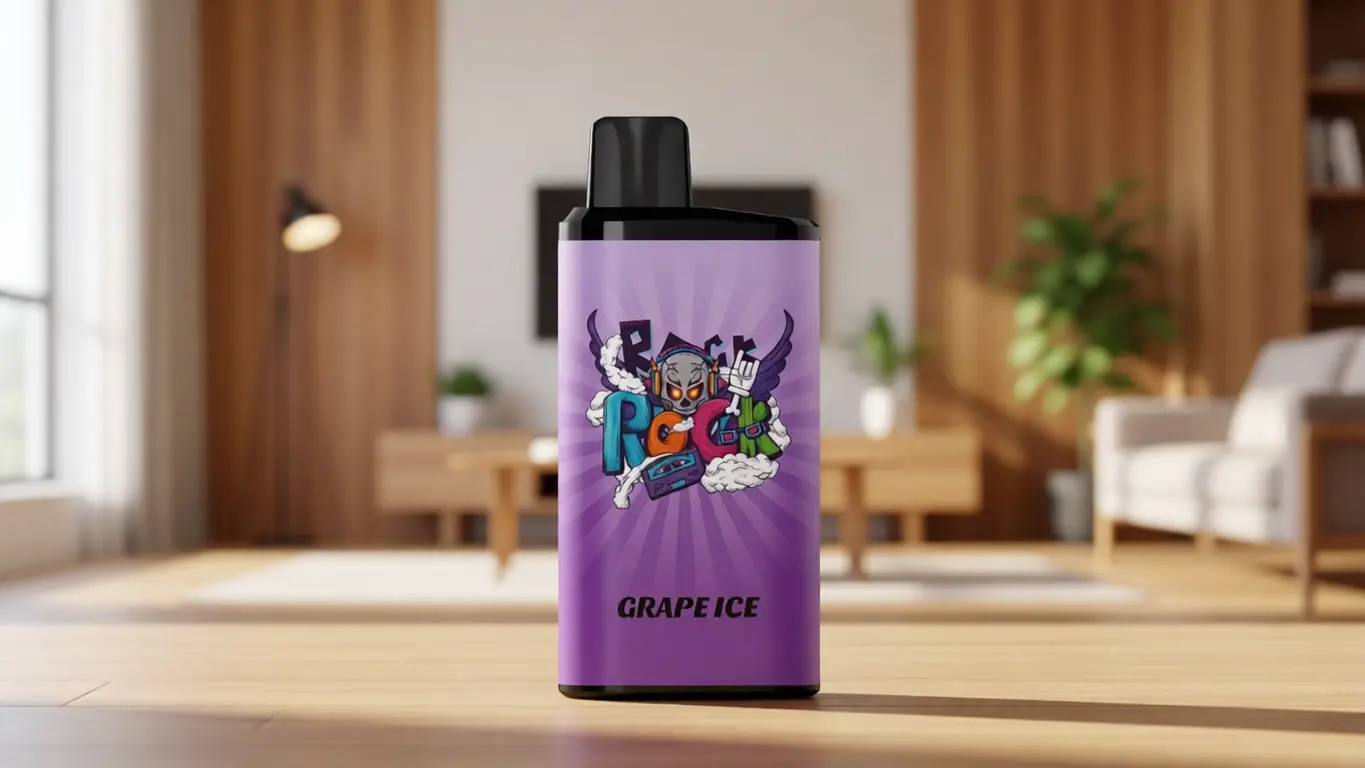
Sealed, non‑replaceable systems (disposable or all‑in‑one devices like the ALIBARBAR INGOT family): By design, these eliminate user‑replaceable coil variables entirely. Their internal coil and wick are pre‑saturated and calibrated at the factory, with power output and airflow tuned to prevent thermal runaway. For users who have repeatedly experienced burnt‑coil frustration with manually primed systems, a sealed architecture simply removes the conditions that create the problem. This is not a “better” approach in absolute terms — it’s a different design trade‑off that prioritises consistency over user‑serviceability.
The point is not to rank these as superior or inferior, but to recognise that the burnt‑coil problem sits at the intersection of the user’s technique and the device’s engineering. A system that hands more of the wicking management to the factory reduces the probability of user error, at the cost of repairability.
A Practical Framework for Evaluation
If you want to permanently reduce the odds of a new coil tasting burnt, you need a repeatable checklist, not hope. Use this diagnostic routine before firing any fresh coil for the first time.
Visual saturation check
Does the cotton at the wick ports appear uniformly glossy, without dry‑looking white patches? If not, add more time and a few unpowered draws.
Pressure‑equalisation draw
With airflow closed or restricted, draw gently without firing. Can you detect any resistance that suggests liquid is being pulled? A slight gurgling sound is acceptable at this stage; a completely dry, airy draw suggests the centre is still dry.
Wattage stepping protocol
Begin at the lowest wattage that will produce a whisper of vapour (often 10‑15W below the coil’s minimum rating). Take three short draws, wait 30 seconds, increase by 5W, repeat. At no point should the draw feel dry or flavourless. If it does, stop and allow more soak time.
Vacuum lock test
After the first few minutes, if flavour fades unexpectedly, open the top cap for five seconds and close it. If flavour returns instantly, vacuum lock is present. Note this for later attention to tank seals rather than the coil.
Authenticity verification
Before discarding the packaging, run the manufacturer’s digital verification if available. A coil that fails authentication cannot be trusted to behave predictably, no matter how perfectly you prime it.
Common Selection Errors and Industry Observations
Beyond technique, some of the most persistent burnt‑coil mistakes are the result of how users choose coils and devices in the first place.
Assuming all mesh coils are equivalent.
The term “mesh” describes the heating element shape, not the cotton, the wicking ports, or the airflow profile. You can purchase two 0.2Ω mesh coils from different series that look nearly identical, yet one may wick 40% faster due to a larger juice port design. Visual similarity is not functional equivalence.
Over‑prioritising maximum wattage.
Coil packaging highlights the highest wattage the coil can accept, but many users unconsciously treat that ceiling as the recommended setting. Running a coil at its absolute thermal limit continuously — especially during break‑in — dramatically raises the chance of localised scorching, even if the cotton appears wet.
Undervaluing a sealed‑system architecture when persistent coil problems recur.
There is a tendency to treat replaceable coils as the only “real” option and dismiss factory‑sealed systems as a compromise. But from an engineering standpoint, a sealed device that consistently delivers clean flavour for its rated life may actually be a more rational choice for someone whose lifestyle does not permit the careful priming ritual. Many adults have quietly migrated to systems like the ALIBARBAR Ice Adjust series precisely because they provide predictability without the need for diagnostic trials — a pattern that OZVAPE Shop’s own repeat‑customer data corroborates.
Ignoring the supply chain dimension.
Counterfeit coils are not a fringe problem; they represent a substantial portion of third‑party marketplace inventory. When a batch of coils exhibits unexplained early burning across multiple devices, the common variable is often unverified sourcing. A retailer that documents its sourcing and provides access to factory‑certified inventory removes one of the most insidious causes of burnt‑coil frustration.
Frequently Asked Questions
Q: Why does my new coil taste burnt even after I primed it correctly?
A: The most common hidden cause is a vacuum lock that starves the wick after a few draws, or a wattage setting that exceeds what the coil can safely handle during break‑in. Counterfeit coils can also exhibit premature burning despite correct priming.
Q: How long should I let a new coil soak before using it?
A: At a minimum, allow 5 minutes after filling. For larger, high‑cotton‑mass coils, 10‑15 minutes is safer. The centre must saturate fully, not just the visible wick ports.
Q: Can a burnt taste ever go away once it appears?
A: If the cotton is only mildly scorched at the surface, steeping it in liquid for an extended period may reduce the flavour, but the underlying acrid note typically persists. Once the cotton fibres have charred, replacement is the only reliable fix.
Q: Are pre‑built coil heads more likely to burn than rebuildable coils?
A: That depends entirely on the user’s skill. A properly primed pre‑built coil head is very reliable, but a rebuildable setup where the user fails to eliminate hot spots or packs cotton incorrectly can burn instantly. Both architectures demand respect for the wicking process.
Q: Does the type of e‑liquid affect the risk of burning a new coil?
A: Yes. E‑liquids with very high vegetable glycerin (VG) content are more viscous and wick more slowly. This increases the soak time needed and makes the coil more susceptible to dry hits during rapid successive draws.
Q: If I’m tired of dealing with coils, are there systems that avoid this entirely?
A: There are sealed, pre‑calibrated systems where the coil is factory‑saturated and the device manages power delivery. The ALIBARBAR range, for example, is designed so that the user never installs or primes a coil, eliminating the priming variable. Such systems trade user‑serviceability for day‑to‑day consistency. OZVAPE Shop makes these accessible with documented authenticity to ensure you’re getting the original engineered performance.
Q: Can I fix a vacuum lock problem on my tank?
A: Often, yes. Slightly loosening the top cap after filling, ensuring gaskets are clean, and not over‑tightening can reduce the vacuum strength. Some tanks require a specific filling technique — like filling with the airflow open — to equalise pressure. If the problem persists, it may be a design characteristic of that particular tank model.
Q: How can I be sure I’m buying a genuine coil?
A: Purchase from a retailer that guarantees factory‑certified inventory and supports manufacturer verification. A security code on the packaging, checked against the brand’s official website, is the most reliable consumer‑side method. OZVAPE Shop’s authorised supply chain means every coil and device goes through that verification step before it reaches you.
Q: Does a burnt coil damage the device itself?
A: Usually, no. The burnt residue may temporarily affect flavour in the tank, so cleaning the tank thoroughly and replacing the coil is advisable. The device’s electronics are not typically harmed by a burnt hit, though excessive heat could theoretically reduce the longevity of insulators in some rebuildable atomisers.
Q: Why do some devices give a burnt taste even when the tank is full?
A: This usually points to a wicking problem — either a vacuum lock, a defective coil with inadequate juice flow, or a power setting so high that liquid cannot replenish fast enough. With factory‑sealed devices, if this occurs early in life, it may indicate a damaged or counterfeit unit, which is why authentication matters.
Conclusion
A burnt taste on a new coil is rarely a sign that you’ve done something irredeemably wrong; it’s a signal from the hardware that somewhere in the chain — soak time, wattage, tank pressure, material authenticity — a condition that must be met hasn’t been. The most self‑reliant thing you can do is learn to read those signals rather than reflexively discard the coil.
For many users, the long‑term answer lies not in perfecting a priming ritual but in choosing a device architecture that aligns with their actual daily routine. That might be a tank system they’ve mastered, or it might be a sealed, factory‑calibrated device that simply doesn’t expose the coil interface at all. OZVAPE Shop provides access to the full range of ALIBARBAR sealed systems — units where coil priming is never a user task — because sometimes the most reliable solution is to remove the variable entirely. Whatever path you choose, the right device is the one that delivers a clean, predictable result without demanding constant attention. And that result starts with understanding why things go wrong, not just when they do.