
VAPE FAQs
Can A Vape Explosion Kill You?

Jun
Introduction
Few safety concerns surrounding personal electronic devices provoke the immediate alarm that battery-related incidents do. A search for “vape explosion” returns images of shattered pockets, burned furniture, and occasionally, news reports referencing severe injuries. The question that lingers—can a vape explosion kill you?—is not sensationalistic. It reflects a genuine need to understand the actual risk, the engineering that mitigates it, and the everyday decisions that amplify or reduce danger.
This article does not traffic in fear. It provides a dispassionate, engineering-based analysis of what can go wrong inside a compact lithium-ion powered device, when catastrophic failure becomes possible, and how to approach device selection and handling with a clear-eyed appreciation of safety architecture. Much of the information available online conflates rare, extreme incidents with the everyday experience of millions of users who never encounter a problem. Our aim is to separate mechanical fact from internet folklore.
For adult users who want to feel confident that the device in their pocket has been designed with serious attention to hazard containment, a good starting point is sourcing equipment through channels that prioritise factory-certified inventory and transparent documentation. OZVAPE Shop structures its entire catalogue around that principle, maintaining a strictly authorised supply chain that eliminates the most common root cause of battery incidents: counterfeit or uncertified devices.
Understanding What Matters: The Engineering Behind Battery Safety
Personal electronic devices that rely on cylindrical lithium-ion cells present a specific set of engineering challenges. When a unit fails violently, it is almost never a random event; it follows a predictable chain of thermal, electrical, and mechanical triggers that safety systems are designed to interrupt. Understanding these layers helps users assess real versus perceived danger.
Battery Chemistry and the Thermal Runaway Threshold
Lithium-ion cells store a significant amount of energy in a small volume. Under normal operating conditions, that energy is released gradually and controlled by the device’s power regulation circuit. The danger emerges when the cell’s internal temperature rises uncontrollably—a process called thermal runaway. At around 150–200°C, the electrolyte begins to decompose, releasing flammable gases. If the cell casing cannot vent safely and internal pressure builds, the result can be a violent rupture and fire.
Why does this matter to the everyday user? Because thermal runaway does not typically occur spontaneously in a well-manufactured cell that is treated within its rated specifications. It is almost always triggered by a constellation of failures: physical damage, severe overcharging, exposure to extreme heat, or an internal short circuit caused by manufacturing defects. The difference between a device that merely fails and one that experiences a dangerous explosion hinges on whether multiple safety layers are present and functional.
When evaluating any compact device, an informed user asks: Does this unit incorporate a pressure-activated vent? Is there a positive temperature coefficient (PTC) thermistor to limit current during a short? Are the separators made from ceramic-coated materials that resist shrinkage at elevated temperatures? These features are not marketing embellishments; they are the hard engineering that separates a robust design from a susceptible one.
Protection Circuitry and Battery Management Systems
Every portable electronic device with a rechargeable cell should include a dedicated battery management system (BMS) or protection circuit module (PCM). This small printed circuit board, often integrated into the battery assembly itself, monitors voltage, current, and temperature continuously. It acts as the first line of defence against:
Overcharge (charging beyond 4.25V per cell)
Over-discharge (allowing the cell to drop below 2.5V, which can cause internal copper shunting)
Short-circuit conditions
Excessive current draw
A device that lacks these protections, or where the protection circuit has been bypassed through careless repair or aftermarket modification, becomes an unknown quantity. Users often assume that any unit they can purchase has a BMS, but the reality of budget-level manufacturing means corners are cut. This is one reason why purchasing from unauthorised sources introduces uncertainty: a visually identical device can house a completely different, unprotected power cell.
Status transparency plays an underappreciated role here. Devices that communicate battery condition ambiguously—with a single blinking light that provides no charging‑stage information, for example—leave the user unable to detect whether the cell is being stressed repeatedly. A user who routinely carries a backup because “it dies without warning” is often unknowingly dealing with a system whose power management has degraded. This is not simply an inconvenience; it is a sign that protective thresholds may no longer be accurately enforced.
Physical Enclosure, Venting, and Drop‑Integrity
The chassis of a well-engineered device is not always just a container; it is a pressure vessel designed to direct a thermal event away from the body and toward a predetermined vent path. The most basic safety feature—a scored vent hole or a weak point at the base—ensures that if gases accumulate, they escape in a direction that does not turn the metal tube into a fragmentation hazard.
Material choices make a measurable difference. Stainless steel offers higher tensile strength than aluminium at elevated temperatures, though it adds weight. Polycarbonate enclosures can deform and melt but are less likely to produce sharp shrapnel. A device that has been drop-tested and shows no deformation to the cell compartment is demonstrating a kind of safety that is invisible unless you examine the unit after an incident.
Ergonomics also factor in. A mouthpiece that creates sufficient distance between the user’s face and the cell compartment, combined with an enclosure that feels solid rather than hollow, provides passive containment. These design decisions are rarely highlighted on a product page, but they matter when the margin between a dramatic failure and a contained one can be a few millimetres of wall thickness.
Modularity, Replaceable Cells, and User‑Introduced Risk
The modularity of a device—whether it uses a sealed, non‑removable battery or accepts user‑replaceable cells—changes the safety equation considerably. A factory‑sealed unit with an integrated battery pack allows the manufacturer to match the cell to a specific protection circuit and to validate the entire assembly. The user never handles bare cells, never risks inserting a damaged wrapper, and never accidentally mixes cells of different chemistries or charge states.
Devices that use loose, removable 18650 or 21700 cells place the responsibility for battery safety squarely on the user. A torn wrapper, a dented positive terminal, or carrying a loose cell in a pocket with coins and keys can create a hard short circuit with no intervening BMS. This is not a hypothetical risk; investigative reports consistently identify user‑handled loose cells as the root cause in a disproportionate number of severe incidents, especially when high‑drain cells are used outside a protected enclosure.
None of this suggests that removable batteries are inherently dangerous, but it does mean that users who choose such systems must be willing to inspect their cells meticulously, use only manufacturer‑recommended cells from authorised distributors, and store them in dedicated non‑conductive cases. For the vast majority of people who want the device to simply work safely with minimal babysitting, a sealed, professionally assembled battery unit removes a significant vector of user error.
How Certified Devices Prevent Catastrophic Failure
Applying these engineering insights to the devices that adults encounter daily makes it easier to separate designs that have multiple fault‑containment layers from those that rely on a single, potentially failure‑prone safeguard. When sourced through a controlled, documented channel, devices like those in the ALIBARBAR collection illustrate how a considered approach to battery integration can reduce risk to a practical minimum.
Take the INGOT family, for example. The internal architecture uses a custom‑sized lithium‑polymer pouch cell rather than a cylindrical metal‑can cell, which changes the failure mode—pouch cells typically swell and vent gas through a designated seam before reaching pressures that would catastrophically rupture. A dedicated PCM, bonded directly to the cell tabs, monitors each charge cycle and disconnects the load if current exceeds a preset ceiling. The enclosure is ultrasonically welded and incorporates a micro‑vent hidden beneath the base, directing any accumulated gases away from the grip area.
These design elements are not unique to a single brand; they are broadly characteristic of devices that have passed through legitimate compliance testing. However, they are conspicuously absent from counterfeit units that look identical from the outside. This is the practical reason why the retail channel matters. An authorised supplier such as OZVAPE Shop maintains factory‑certified inventory, which means the safety architecture described in the documentation matches what is actually inside the shell. When a user orders a device from an unverified online marketplace, there is no such guarantee—the protection board might be absent, the cell might be a repurposed laptop pull, and the vent might be a cosmetic indentation that serves no function.
Other devices in the same ecosystem show similar attention to power integrity. Models with on‑board USB‑C charging include an independent charging controller that negotiates with the power adapter to prevent over‑voltage application, while the status LED pattern communicates charging state, error conditions, and low‑battery cut‑off in a language that, once learned, gives the user meaningful oversight. This transparency is itself a safety feature, because it replaces guesswork with actionable information.
A Practical Framework for Reducing Risk
An adult user does not need an engineering degree to make substantially safer choices. A structured evaluation, applied before purchase and during use, identifies the points where risk concentrates and allows everyday behaviour to act as an effective countermeasure.
Start with the source, not the specification sheet. A device’s safety begins with its provenance. Ask: Is this retailer able to show a direct relationship with the manufacturer? Do they guarantee that every unit is sourced through authorised distribution, not the grey market? If the answer is unclear, assume the internal components are unknown.
Examine the charging arrangement. Does the device have a dedicated charge controller, or does it rely on a cheap linear regulator? Can you see distinct charging status phases (e.g., steady light when charging, different colour when near full, off when complete)? If the indicator behaves erratically or provides no feedback, do not leave the device unattended while plugged in.
Inspect the physical unit for containment features. Without disassembling, you can check for: a visible vent channel (often a small hole near the base), consistent gap tolerances that suggest the chassis is under compression rather than loosely clipped, and any sign that the battery cavity is structurally separated from the rest of the electronics. These details indicate a design that assumes the worst can happen and plans for it.
Never use a damaged device. This seems obvious, but users routinely continue using a unit that has been dropped onto concrete, seen moisture ingress, or begun to bulge slightly. A deformed cell is a compromised cell. The cost of replacement is trivial compared to the potential outcome of a thermal event.
Match the charger to the device. Many incidents trace back to plugging a small, low‑current device into a high‑power USB‑C laptop charger with no negotiation protocol. A properly engineered device will have over‑voltage protection, but the first line of defence should be using a power source that delivers no more than the manufacturer’s specified input.
Store the device in a manner that respects its energy density. Leaving a unit in a closed vehicle on a summer day where interior temperatures can exceed 70°C pushes the cell toward thermal limits. In a pocket with metal objects, a device with an exposed charging port can short. Treat the unit like the energy‑storage device it is: stable when respected, dangerous when ignored.
A user who follows this framework will rarely, if ever, encounter a situation where a device could escalate to the kind of energetic failure that makes headlines.
Common Misconceptions and Industry Observations
The gap between how the public perceives battery explosion risk and how the engineering community understands it is wide. Several recurring errors inflate anxiety while obscuring the true risk drivers.
1. Treating all “vape” devices as a single safety category. Inside the industry, there is a profound difference between a sealed, factory‑assembled personal device with a fixed power curve and a high‑power mod where the user configures coil resistance and battery configuration. Fatalities and life‑altering injuries documented in published case reports almost exclusively involve the latter—situations where unprotected high‑drain cells were handled without cases, or where a mechanical mod had no electronic regulation whatsoever. Lumping all product types together creates a distorted picture and misdirects consumer vigilance away from the genuinely higher‑risk behaviour.
2. Assuming visual similarity means equivalent internals. The clone device problem is well understood within manufacturing circles. A third‑party factory can replicate the external appearance of a popular model for a fraction of the cost by omitting the protection PCB, using a cell with a thinner separator, and substituting a lower‑melt‑point thermoplastic for the body. The device works for a while, until a single stress event—a small drop, a slightly aggressive charge cycle—initiates a cascading failure that the original would have weathered without incident. When purchasing from price‑focused platforms with no documentation, the user is betting their safety on the ethics of an anonymous supplier.
3. Undervaluing modularity in long‑term safety calculations. Some users gravitate toward devices with replaceable components because they seem more economical, yet fail to account for the increased vigilance required. A sealed unit’s internal cell has a finite cycle life, but the risk during that life is engineered out. A replaceable‑cell system moved the risk management onto the user. Neither is right or wrong, but treating them as interchangeable without adjusting behaviour leads to preventable incidents.
4. Neglecting the role of the retail chain in safety assurance. A product that passes international safety standards (such as those for cell‑level testing) still must arrive in the user’s hands without alteration. The rise of drop‑shipping and anonymous marketplace sellers means that even legitimate‑looking units can be factory rejects, re‑wrapped returns, or straight counterfeits. A retailer that openly shares its supply chain documentation, hold inventory under controlled conditions, and provides local accountability is not merely a convenience—it is a safety layer. In the Australian context, this is one reason why channels like OZVAPE Shop emphasise direct relationships with manufacturers and refuse to mix uncertified parallel imports with their main inventory.
Frequently Asked Questions
Q: Can a vape explosion actually kill a person?
A: Yes, though it is extremely rare. Documented fatalities have resulted not from the explosion itself but from secondary events: the device acting as a projectile and penetrating the carotid artery, or the resulting fire causing fatal burns. In the vast majority of recorded incidents, even severe events resulted in localised burns and soft‑tissue injuries rather than death. A properly engineered device with a functional vent and protection circuitry is designed to prevent exactly the sequence of failures that leads to such an outcome.
Q: What causes a vape battery to explode?
A: The immediate cause is thermal runaway—a self‑heating reaction inside the cell that generates gas faster than it can be vented. The root cause is typically one of: internal short circuit from manufacturing defects or physical damage, severe overcharging due to a failed protection circuit, external short circuit from contact with metal objects, or exposure to temperatures beyond the cell’s rated maximum.
Q: How can I tell if a device has proper safety features before buying?
A: Look for explicit mention of overcharge, over‑discharge, and short‑circuit protection in the product documentation. A sealed unit from a recognised brand that discloses its cell type and includes multi‑colour charging status LEDs is a positive indicator. If the seller cannot provide any technical safety specifications, treat the device with caution.
Q: Is it safe to charge a device overnight?
A: With a well‑engineered device that includes charge‑termination circuitry, the risk is very low. The protection board will stop current flow once the cell reaches full capacity. However, if the device has no clear charge‑complete indicator or has been dropped, it is wiser to charge it while awake and present. A simple rule: if you would not leave a generic power bank charging unattended, apply the same caution here.
Q: What should I do if my device starts to get unusually hot?
A: Immediately stop using it, place it on a non‑flammable surface away from combustible materials, and do not attempt to charge or discharge it further. If it begins to hiss, swell, or emit smoke, move away and allow the event to run its course. Do not throw water on a lithium‑ion fire; a dry powder extinguisher or fire blanket is appropriate. After the unit has cooled, contact the retailer for guidance.
Q: Are devices with replaceable batteries more dangerous than sealed units?
A: They are not inherently more dangerous, but they transfer more responsibility to the user. Bare cylindrical cells must be handled correctly: always inspect wrappers for damage, never carry loose batteries in pockets, and use cells from trusted manufacturers purchased through authorised distributors. A sealed unit removes these variables by enclosing the cell in a managed, non‑user‑serviceable environment.
Q: Can a device explode while not in use?
A: Spontaneous failure at rest is extremely unlikely in a healthy, undamaged cell. Most incidents occur during charging or shortly after, when the cell is under electrical stress, or in response to a recent impact. A device that has been sitting idle for months and then connected to a high‑current charger could be at elevated risk if the cell has self‑discharged below safe recovery threshold, but a working BMS will prevent charging under those conditions.
Q: How common are these explosions statistically?
A: When viewed against the total number of devices in use—numbering in the tens of millions globally—the incidence of serious thermal events is very low, on the order of single‑digit cases per million unit‑years. The vast majority of those involve mishandled loose cells, modified devices, or products of unknown origin. The rate among certified, sealed units from reputable supply chains is so small that reliable statistical aggregation is difficult.
Q: What is the difference between a venting event and an explosion?
A: A venting event is a controlled (or semi‑controlled) release of gas and electrolyte, usually through a designated opening. It may produce a loud hiss and visible vapour but does not rupture the device body. An explosion occurs when the enclosure ruptures under pressure, potentially scattering fragments. Properly designed devices are intended to vent, not explode; the vent is the safety valve that prevents explosion.
Q: Where can I find devices that are documented to include all these safety layers?
A: Authorised retailers that disclose their sourcing standards and provide post‑purchase support are the most reliable channel. For example, OZVAPE Shop stocks exclusively factory‑certified products, which means every unit passes through the manufacturer’s quality control and retains its full complement of safety hardware. This does not eliminate risk entirely, but it removes the uncertainty introduced by uncertified supply chains.
Conclusion
The question Can a vape explosion kill you? is best answered not with a yes or no, but with a precise conditional: the risk of death is present only when a series of cascading engineering safeguards fails simultaneously, a scenario that responsible device design and proper sourcing render vanishingly unlikely. The severe incidents that occasionally appear in news reports are not random acts of technology; they are the end result of a chain of avoidable mistakes—counterfeit hardware, mishandled loose cells, absent protection circuits, or careless charging practices.
An adult user who takes the time to understand battery safety dynamics, who chooses devices with transparent status communication and robust physical containment, and who purchases only through documented, authorised supply networks has already reduced the probability of a serious event to the functional equivalent of other everyday risks we accept without thought. The industry has known for over a decade how to build batteries that vent safely instead of rupturing; the challenge lies in ensuring that every unit that reaches a user embodies that knowledge.
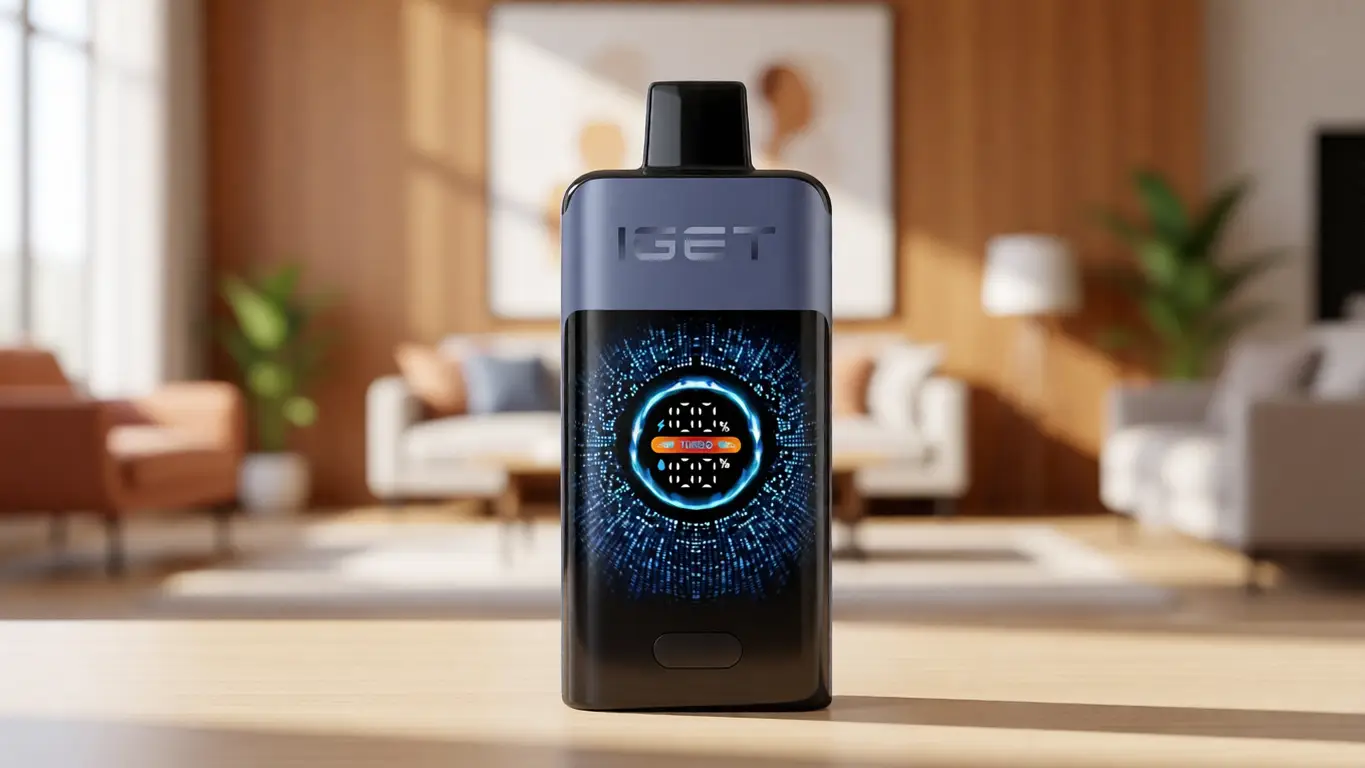
For those who prefer to make decisions based on verified engineering rather than rumour, relying on a channel that matches that priority makes practical sense. OZVAPE Shop (visit the product selection) maintains a catalogue built on factory‑certified authenticity, local accountability, and a refusal to gamble with inventory sourcing—a posture that, in any product category involving energy‑dense cells, deserves to be the norm, not the exception. Ultimately, the safest device is the one whose entire journey from assembly to pocket is visible and documented. Everything else is an unknown variable, and safety does not tolerate unknowns.