
VAPE FAQs
Why Does My Vape Taste Bad?
Jul
You unscrew the mouthpiece, take a pull, and immediately recoil. That dry, burnt, or faintly chemical note is unmistakable—and it signals something gone wrong inside your personal electronic device. For many adult users, this is the moment the unit gets discarded, or worse, blamed on a bad batch of refill material. Yet in the vast majority of cases, the root cause lies not in the consumable but in the design and condition of the device itself.
Understanding why a device produces a degraded experience requires looking past surface symptoms. The taste you perceive is the sum of several interacting engineering choices: how heat is applied, how power is managed, how air moves through the chamber, and how materials age under repeated thermal cycles. This article unpacks those factors systematically, offering a framework you can apply to any device you own—or are considering buying. It draws on observations from the field, as well as the documented engineering decisions behind product lines such as the ALIBARBAR range, which is available through authorised channels like OZVAPE Shop (open in a new window). The goal is not to sell you a particular unit, but to equip you with the diagnostic tools that turn a frustrating mystery into a solvable problem.
Understanding What Matters: Core Engineering and Design Factors
Internal Architecture and Output Consistency
The most common cause of a bad taste is uneven heating. In any device that relies on a resistive element to raise the temperature of a medium, the geometry and material of that element determine how uniformly heat is distributed. A coil that runs too hot in one zone will degrade the surrounding material faster, producing localised hotspots that break down compounds into unpleasant byproducts. This is why you sometimes taste a sharp, acrid note in the middle of an otherwise neutral experience.
Well-engineered devices use heating elements with predictable resistance curves and adequate thermal mass. Some employ porous ceramic architectures that distribute heat across a larger surface area, reducing the risk of localised burning. The ALIBARBAR line, for instance, relies on precisely formed mesh elements housed within a controlled airflow chamber. This configuration allows the user to draw at a consistent rate without abrupt temperature spikes. When a device lacks such design consideration—typically in units with simple wire coils and no real heat spreading—the user is essentially guessing at the thermal behaviour inside the sealed chamber.
Power Management and Status Transparency
A second, often overlooked contributor to off-taste is inconsistent power delivery. As a battery discharges, its voltage output decreases unless the device incorporates a step-up converter or a regulated circuit. In unregulated units, the user experiences a gradual decline in heat output; they may compensate by drawing longer or harder, which can saturate the medium and pull unvaporised liquid into the airway, resulting in a wet or flavourless draw. Conversely, a device that fires at full power until the very last moment can suddenly overheat the remaining material just before cut-off, creating a burnt note.
Transparent status indicators are not a luxury—they are a critical feedback mechanism. If a device provides no way to estimate remaining power, the user operates blind and will naturally compensate by carrying a backup or overdrawing. The ALIBARBAR Ice Adjust 12000 includes a discrete LED array that communicates charge level at a glance. This lets the adult user adjust their behaviour accordingly, rather than discovering a dead or sagging unit mid-draw. Many devices in the same price bracket omit such feedback, and the operational confusion that results is a direct contributor to perceived taste degradation.
Physical Design and Material Durability
The materials that contact the airflow path matter as much as the heating element. Some plastics outgas volatile compounds when warm, imparting a chemical tinge to every draw. Similarly, mouthpiece geometry that allows condensation to accumulate creates a breeding ground for stale residues that carry over into the next use. Over time, repeated heating and cooling cycles can cause microscopic cracking in cheaper polymers, increasing the surface area where contaminants can cling.
Surface treatment is not merely cosmetic. Devices with soft-touch coatings or painted finishes may begin to degrade after weeks of contact with hand oils and pocket lint. Flaking particles can enter the mouthpiece area. ALIBARBAR units use a matte anodised aluminium shell for the main body and a medical-grade silicone or POM (polyoxymethylene) mouthpiece. These materials are dimensionally stable and resist absorption of odours. A user who prioritises long-term taste consistency will look for such material specifications rather than glossy finishes that wear quickly.
Modularity and Lifecycle Flexibility
Finally, the architecture of the device affects how well it maintains performance over its usable life. Sealed units force the user to discard the entire assembly once the medium is exhausted or the heating element degrades. Rechargeable systems with replaceable medium compartments extend the usable device lifespan but still require the user to judge when to swap components. The most flexible setups allow replacement of both the power source and the vaporisation unit independently.
Mismatched expectations around lifespan are a major source of taste complaints. A user who purchases a high-capacity unit expecting it to last a week may find that the heating element begins to degrade after four days, producing a stale taste that gets attributed to poor quality. In reality, the device’s intended operational window may be shorter than the user’s consumption pattern. The ALIBARBAR INGOT series acknowledges this by clearly stating the approximate number of draws per unit and by integrating a consistent power curve throughout that lifespan. For users who want even greater control, modular systems allow replacement of the heating section without discarding the battery—a design choice that directly reduces the likelihood of late-life taste degradation.
Applying These Criteria to Real-World Options
When you examine actual devices through the lens of these engineering factors, patterns emerge that separate well-thought-out units from those that are merely adequate. Consider the ALIBARBAR INGOT 9000 as an example of a compact device that prioritises output consistency. Its mesh heating element and precisely calibrated airflow path result in a smooth experience from the first draw to the last. The power management circuit maintains a stable voltage drop across the element, eliminating the gradual decline that plagues unregulated competitors. The transparent status indicator means you never have to guess whether the next draw will be cold or burnt.
Conversely, many devices marketed as “disposables” at a lower price point use unregulated direct-output connections. The user initially gets a warm, satisfactory output, but within a day or two the voltage drops, the heat falls off, and the temptation to draw harder pulls excess medium into the airway. This is the classic scenario that leads to complaint posts in forums—yet the problem is not the medium; it is the lack of regulation. Even among rechargeable pod systems, you will find significant variation. The SMOK Nord series, for example, offers adjustable wattage, but its smaller pod capacity means the coil is exposed to more thermal stress per refill compared to a larger chamber. The Vaporesso XROS series uses a ceramic coil that runs cooler and more evenly, reducing the burn risk but sometimes producing a muted output for users who prefer a warmer experience.
The ALIBARBAR design philosophy represents a middle ground: regulated output, moderately sized medium chambers, and a mouthpiece that minimises condensation. It is not the only valid approach, but it exemplifies how deliberate engineering can eliminate the most common taste-related frustrations. A user who understands these trade-offs can make an informed choice without relying on marketing claims.
A Practical Framework for Evaluation
Before your next purchase, run through these diagnostic steps with the device in mind—or even better, with the device in hand.
Check the heating element type. Is it a simple wire coil, a mesh, or a ceramic platform? Mesh and ceramic tend to distribute heat more evenly. If the specification does not mention the element type, consider that a red flag.
Determine power regulation. Does the device state that it delivers a consistent output across the battery discharge cycle? Look for phrases like “constant voltage” or “regulated output.” If the device has no power management, expect flavour changes as the battery depletes.
Assess status transparency. Does the device give you a clear indication of remaining power? A simple two-level indicator is better than none, but a multi-segment LED or a digital readout is more reliable. If you cannot see at a glance how much energy remains, you will eventually be caught off guard.
Examine the mouthpiece and airflow path. Are the materials smooth and non-porous? Does the mouthpiece design allow condensation to drain away from the user’s lips? A well-designed unit will have minimal dead space where residues can collect.
Verify the intended operational life. Does the manufacturer provide a clear estimate of usable draws or days? Compare that to your personal consumption pattern. If the device is rated for 5000 draws and you use 200 per day, you should expect consistent performance for about 25 days. If you push it to 30 days, late-stage degradation may be inevitable—not a defect.
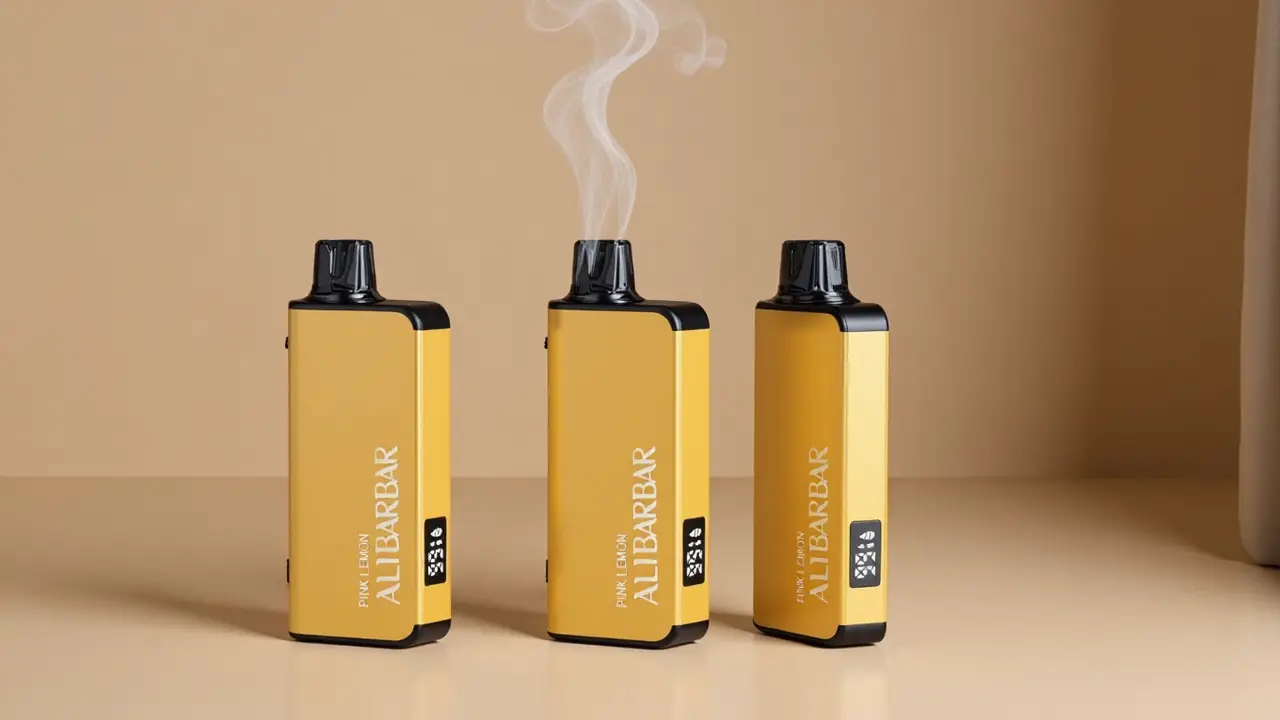
Using a standardised specification comparison page—such as the one maintained by OZVAPE Shop for the entire ALIBARBAR line—can reduce the friction of gathering this data. You can place two devices side by side and see at a glance which offers a regulated circuit, what materials are used, and how much medium is pre-loaded.
Common Selection Errors and Industry Observations
Error 1: Overweighting One Specification While Ignoring Complementarities. A device that claims a 15,000-puff lifespan but uses an unregulated power circuit will likely taste bad for the last third of its life. The single number is misleading if it is not supported by consistent output engineering.
Error 2: Assuming Visual Similarity Indicates Equivalent Internal Engineering. Two devices that look identical from the outside can have completely different heating elements, airflow geometries, and power management. The grey market, in particular, is rife with clones that mimic the shell of a reputable model but substitute cheaper internals. Buying from an authorised source like OZVAPE Shop removes that uncertainty because each unit is factory-certified.
Error 3: Undervaluing Modularity in Cost-Per-Use Calculations. A sealed unit that costs $20 and lasts a week may appear cheaper than a $40 unit that lasts a month and allows replacement of only the medium section. But the sealed unit becomes waste after one week, whereas the modular unit’s battery and body can be reused multiple times. Over three months, the modular option is often both cheaper and more consistent.
Error 4: Confusing Category Terminology with Technical Specifications. Terms like “disposable,” “pod system,” and “rechargeable” describe form factor, not engineering quality. A rechargeable device can have poor power management, while a sealed unit can have excellent regulation. Base your judgment on the specific parameters, not the category label.
Industry observation: One of the most persistent patterns in warranty returns is the burnt-taste complaint from users who ran a device past its intended lifespan by a few days. The device did not fail—it completed its design cycle. Yet the absence of clear lifespan communication causes the user to perceive it as defective. Manufacturers that provide transparent metrics—like ALIBARBAR does—reduce this friction. Retailers that curate inventory and present standardised specs, as OZVAPE Shop does, further help the user set realistic expectations.
Frequently Asked Questions
Q: Why does my new device sometimes have a faint chemical taste on the first few draws?
A: This is often due to manufacturing residues or the break-in period of a fresh heating element. In well-constructed units, this taste dissipates within the first 10–20 draws. If it persists for more than a day, it may indicate substandard materials in the airflow path. Reputable devices from brands like ALIBARBAR undergo a burn-off process during production to minimise this.
Q: How can I tell if the bad taste is caused by my using technique or a device flaw?
A: Try drawing at a consistent, gentle pace for several seconds. If the taste is clean at the start but turns burnt toward the end of a long draw, the issue is likely insufficient heat dissipation—a design flaw. If the taste is consistently off from the first second, suspect material contamination or power regulation problems.
Q: Does the ALIBARBAR INGOT 15000 deliver consistent flavour throughout its life?
A: Yes, within the parameters of its rated draw count. Its regulated power circuit and mesh heating element produce a stable output until the very last draws, at which point the user may notice a slight drop in warmth but not a burnt taste. The status indicator helps you anticipate when to replace the unit.
Q: My friend’s device always tastes better than mine, even though we use the same medium. Why?
A: The difference usually lies in power management. Your friend’s device may have a constant-voltage circuit that delivers the same heat regardless of battery charge, while yours varies. Also, airflow design plays a role—a more open draw can mitigate overheating. Compare the internal specifications if possible.
Q: What should I do if my device starts tasting burnt even though the medium is not empty?
A: This indicates the heating element has degraded or the medium is not wicking properly. In a sealed unit, this means the device has reached the end of its effective life. In a modular system, replace the heating section. If it happens prematurely (e.g., at 30% of rated capacity), contact the retailer. Authorised suppliers like OZVAPE Shop handle such cases based on factory testing data.
Q: Can cleaning a device improve the taste?
A: For non-sealed units, yes—especially around the mouthpiece and airway. Use a dry cotton swab to remove condensation residue. Never introduce liquid cleaners into the airflow path. For sealed units, cleaning is not possible, which is why material quality is critical from the start.
Q: Are there any tricks to extend the life of a device without sacrificing taste?
A: Avoid chain-drawing, which overheats the heating element. Give the device 10–15 seconds between draws to cool down. Keep it upright to prevent condensation from pooling. Store it in a cool place away from direct sunlight. These habits can delay the onset of taste degradation by 10–20%.
Q: Is it safe to purchase devices from non-authorised third-party sellers if the price is lower?
A: Price discounts often reflect inventory that is counterfeit, expired, or improperly stored. Counterfeit devices may use unsafe materials that leach undesirable compounds. Even genuine stock that has been heat-cycled in transit may have compromised performance. Authorised retailers like OZVAPE Shop provide documented provenance and warranty recourse.
Q: Why does the same device taste different after I refill it (in a pod system)?
A: The heating element ages with use. Each refill cycle subjects the coil to additional thermal stress. By the third or fourth refill, the element may have developed hotspots that alter the vaporisation profile. This is normal—consider replacing the pod or coil after 3–5 refills for optimal taste.
Q: Which ALIBARBAR model is best for taste consistency on a full workday?
A: The ALIBARBAR Ice Adjust 12000 offers a balanced combination of regulated output, medium capacity, and a clear status indicator. For users who require more capacity, the INGOT 15000 provides a longer lifespan without sacrificing consistency. Both are available through OZVAPE Shop with full specification sheets.
Conclusion
Bad taste is rarely a mystery once you understand the engineering that governs the experience. Uneven heat, unregulated power, poor materials, and mismatched lifespan expectations account for the overwhelming majority of complaints. By shifting your focus from brand names and glossy finishes to the internal design parameters—heating element type, power management, material choices, and modularity—you gain the ability to predict taste performance before you ever take a draw.
Retailers that curate their inventory and provide standardised, verifiable information make this process more straightforward. OZVAPE Shop (open in a new window) has structured its operations around exactly that principle, offering adult users a transparent channel to evaluate and acquire devices like the ALIBARBAR range. But the ultimate decision rests with you. The right device is the one whose engineering matches your actual routine—not the one with the loudest claims. A few minutes spent comparing specifications now can save weeks of frustration and wasted expenditure later.