
VAPE FAQs
Why Do So Many People Vape?

Oct
It is difficult to spend time in a city, scroll through a feed, or talk to a cross‑section of adults without encountering the same question: why have these compact electronic devices become so deeply embedded in daily routines? The curiosity often arises from outside the community of users — a partner, a family member, or a colleague trying to make sense of a behaviour that seems to emerge everywhere at once. Understanding the answer requires setting aside simple narratives and looking instead at an intricate layering of behavioural psychology, product engineering, and social context.
At OZVAPE Shop, we see this curiosity every day. People walk in not only to compare devices but to understand what they are actually engaging with. This article is written for the inquisitive outsider and the reflective user alike. It unpacks the real drivers — not marketing slogans — and they turn out to be far more nuanced than “it looks cool” or “everyone does it.”
The Shift from Simple Habit to Embedded Behavioural Routine
A large part of the answer has nothing to do with chemical dependence and everything to do with the way human beings construct rituals. We are creatures of rhythm. The morning coffee, the post‑lunch walk, the few minutes of quiet before bed — these small, repeated actions anchor our days. Portable electronic devices slot into this architecture of ritual with remarkable ease.
Sensory Satisfaction and Immediate Feedback
There is a neurological reality at work. Devices deliver a form of instant, predictable sensory feedback — a combination of tactile sensation, visual cue (a small LED indicator, a wisp of output), and often a familiar flavour or aroma. The brain interprets this sequence as a completed loop, and completed loops feel satisfying. This is not unique to one product category; it is the same principle that makes fountain pens, mechanical keyboards, and well‑weighted door handles pleasing to use.
For many users, the actual substance involved is secondary to the experience of a device that responds consistently. A poorly designed unit that sputters or delivers uneven output breaks the ritual, which is why repeat purchasers gravitate toward engineering that protects that consistency.
The Role of Portability and Discreet Use
Modern life is dense with micro‑moments: the wait for a bus, the five minutes before a meeting, the walk from the car park. A device that fits in the palm, doesn’t require preparation, and won’t draw attention gives people a way to occupy those gaps without pulling out a phone for the tenth time in an hour. The unspoken appeal is that it fills transition time without creating a new obligation.
Discreet use matters enormously. Many older alternatives are inherently social or location‑dependent. The ability to step aside, use a device for a moment, and continue without generating a smell, smoke, or waste that implicates others, shifts the product from a communal act to a personal one. This privacy is part of the draw.
Ritual and Routine in Daily Life
Ask any long‑time user about their patterns and you’ll hear a catalogue of small routines: the first moment of the day paired with a specific flavour profile, the switch to a different intensity in the evening, the check of the device’s power indicator before leaving the house. These aren’t addictions; they are micro‑ceremonies. The device becomes a companion that marks time.
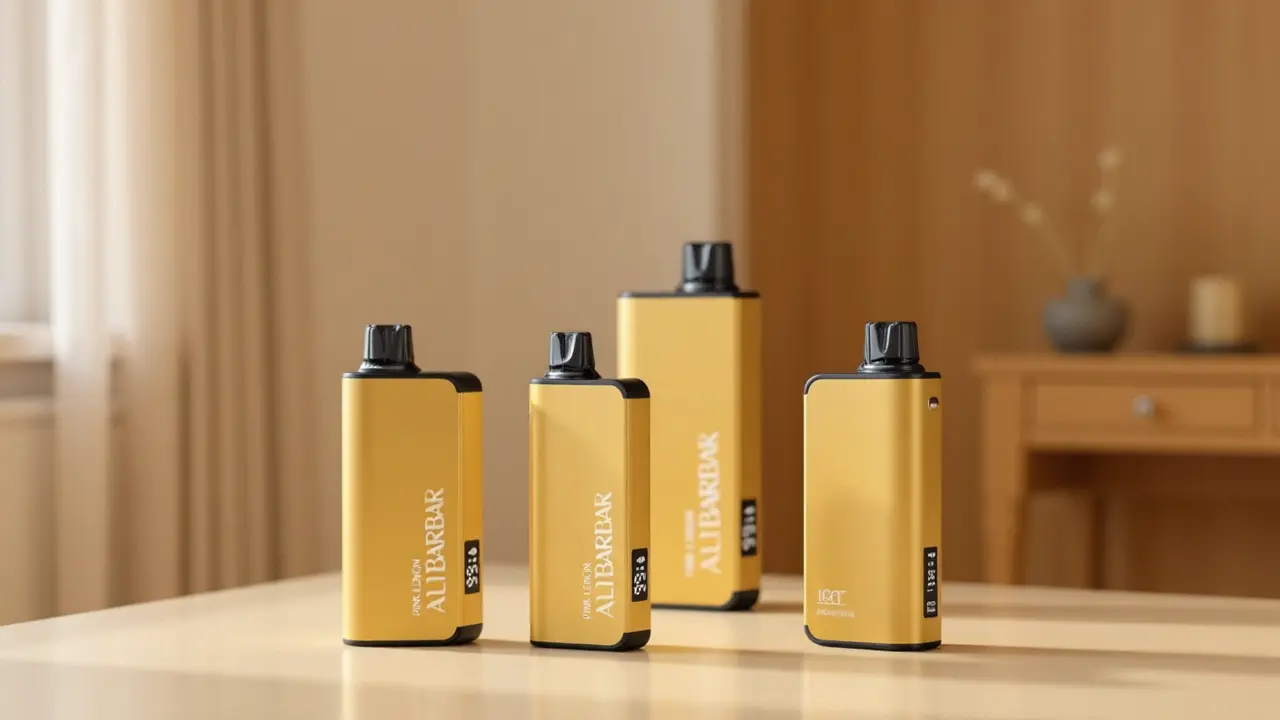
This explains why users who quit one substance often continue using a device with zero‑content inputs. The ritual has separated from the chemical. That is a critical observation for anyone trying to understand the market, and it is something the design teams at brands like ALIBARBAR have clearly internalised.
Engineering That Respects the User’s Day
There is a second layer that outsiders rarely see: adult users are simply tired of being let down by cheaply made tools. They’ve carried enough unreliable gadgets to learn that upfront savings evaporate the moment a device dies halfway through a day. Once that lesson sticks, behaviour changes permanently. This is where design and material choices start to influence population‑level usage patterns.
Consistency and Predictability of Output
A device that performs identically on its first hour and its last hour earns trust. The engineering that enables this is invisible — a well‑tuned power management circuit, an atomiser geometry that maintains capillary flow, a battery chemistry that resists sag. Most consumers will never know these terms, but they feel the result.
When people find a product that “just works” without drama, they not only stay with it but become unintentional ambassadors. Many of the users driving the visible growth of the category are simply people who stopped fighting their equipment and started recommending the one that didn’t frustrate them.
Device Longevity and Maintenance Cycles
A hidden driver of the trend is the shift away from single‑use, disposable‑day units toward rechargeable and modular designs. The practical difference is profound: rather than constantly shopping for replacements, a user can invest in a core device and manage consumable components separately. This lowers the mental overhead and the per‑use cost, making the behaviour more sustainable over months and years.
Modular systems also allow a person to tailor their experience over time. They might change mouthpiece material, adjust output power, or switch to a different consumable without discarding the entire unit. That sense of agency — of being able to learn and refine — creates a relationship with the product that a sealed, non‑serviceable unit never can.
User Interface and Status Communication
One of the most under‑appreciated frustrations in the category is the ambiguous status indicator. A single light that blinks red and means “low power, check atomiser, or general fault” is a recipe for anxiety. Users compensate by carrying backup devices, which doubles cost and clutter.
Well‑engineered products solve this with multi‑colour LED arrays, haptic feedback, or simple display screens that tell you exactly what’s happening. The difference seems minor on a spec sheet; in real life, it means leaving the house with confidence. OZVAPE Shop has long observed that devices with clearer status communication have lower return rates and higher customer satisfaction, which feeds back into broader adoption.
Social and Cultural Catalysts
Engineering alone doesn’t explain a widespread behavioural shift. Social forces are always at play, often in ways that even the users themselves don’t articulate.
The Community and Shared Experience
Walk into any specialty retail environment and you’ll overhear conversations that sound like a hobbyist meetup. People swap notes on device performance, compare flavour profiles, and discuss nuances of battery management. This communal knowledge‑sharing creates a sense of belonging that is independent of the actual substance used.
Online, the dynamic is amplified. Forums, reviews, and tutorial videos form a self‑sustaining ecosystem where experienced users mentor newcomers. This reduces the barrier to entry and normalises the behaviour in the eyes of someone who might otherwise feel tentative.
Perception as a Modern Alternative
For many adults, the decision starts with a comparison to a predecessor that they view as significantly more disruptive or socially intrusive. The newer devices produce no lingering odor on clothing, no ash, no sidestream that affects bystanders. Visually, they resemble everyday tech products — a USB drive, a power bank, a high‑end lighter — rather than something that signals a particular identity.
This aesthetic neutrality lowers the social friction of use. It allows a person to incorporate the device into settings where older formats would have drawn comment or disapproval. That expanded situational suitability directly increases daily use frequency.
Flavour Variety and Personalisation
Choice is an underestimated motivator. When a user can rotate through half a dozen flavour profiles across a week — moving from a crisp, cool morning option to a warmer, dessert‑inspired evening preference — the experience stays novel. Novelty combats habituation, which might otherwise lead a person to set the device aside.
However, this same variety can mislead first‑time buyers into over‑purchasing. The industry is full of cases where a user bought ten different consumables, liked one, and abandoned the other nine. That’s not a product failure; it’s a behaviour pattern that retailers who actually talk to their customers learn to anticipate and gently guide against.
Common Misconceptions and Industry Realities
Having watched the market evolve, I want to name a few errors in logic that persist because they’re rarely challenged by people who understand manufacturing.
Assuming visual similarity equals functional equivalence. Two devices that look nearly identical can differ enormously in their internal component quality, thermal management, and electrical safety protections. Many users blame an entire category when what they really experienced was a cut‑cost clone.
Overweighting maximum puff counts. A rated number on a box is a lab‑derived estimate under controlled conditions. Actual usage varies with draw duration, ambient temperature, and power level. Users who expect a number to be a promise inevitably feel cheated; those who treat it as a relative benchmark make far more satisfying choices.
Ignoring the cost of status ambiguity. A device with poor battery feedback forces the user into a backup habit. Over a year, the cost of that second device, plus the hassle, often exceeds the price difference of a better unit with clear communication.
Confusing category terminology with technical specification. The market uses words loosely. Terms that sound technical are often marketing shorthand. A user who learns to ask “how does this device tell me it’s about to stop working?” instead of “what’s the puff count?” will consistently make smarter purchases.
From an industry perspective, the companies that endure are the ones that treat their product as a technical instrument, not a lifestyle statement. They invest in battery management ICs, tight tolerance atomiser assembly, and rigorous batch testing. The market is in a natural selection phase where brands that confused packaging with performance are being culled by word‑of‑mouth.
Frequently Asked Questions
Q: Is the increase in usage simply a replacement for older habits?
A: Partly, but not entirely. Longitudinal data showing sustained use of zero‑content devices suggest the behavioural ritual has independent appeal. For many, it’s a parallel activity, not a direct substitute.
Q: How do I know if a device is well‑engineered before buying it?
A: Check whether the manufacturer publishes detailed specifications for materials (e.g., coil composition, battery type) and whether there is clear feedback on unit status. User reviews that focus on consistency over months are more informative than unboxing videos.
Q: Do more expensive devices actually last longer?
A: Price correlates loosely with component quality but not perfectly. Look for modularity: a device with replaceable consumables and a rechargeable power core usually outlasts a sealed unit at any price point because you’re not discarding the whole system when one part wears.
Q: What causes a device to lose performance before it’s empty?
A: Common culprits are power‑source degradation under load and wicking inconsistency. Quality devices include voltage regulation and thermal management to delay this, but the phenomenon cannot be eliminated entirely in any portable unit.
Q: Why do people care about flavour variety so much?
A: Flavour switching maintains novelty, which prevents sensory adaptation. However, it can also lead to purchase inefficiency if not approached with a sampling mindset. Trying a small range first is more practical than buying in bulk.
Q: How should I evaluate whether a device fits my daily routine?
A: Map your typical day. Identify the moments where you currently feel a gap or a need for a break. Then choose a device whose battery capacity and form factor match that pattern rather than the largest, most feature‑heavy option available.
Q: Are there any advantages to purchasing from a specialised local retailer?
A: Yes. A local retailer with an authorised supply chain can verify authenticity, honour warranty claims without international shipping delays, and provide specific operational guidance. This reduces the risk of counterfeit units, which remain a significant industry problem.
Q: What should I do if a device stops working unexpectedly?
A: Cease use, document the issue with photos or video, and contact the point of sale. Legitimate retailers have defined processes for replacement or credit. Attempting to repair a sealed unit yourself can be dangerous.
Making Sense of an Individual Choice
The reason so many people now use these devices is not a single story. It’s an intersection of ritual psychology, engineering that finally respects the user’s time, social normalisation, and a broader cultural move toward products that offer personal, discreet moments of control. For every person, the mix of these factors is different.
If there’s one takeaway worth carrying forward, it’s that informed users consistently make more satisfying choices than those who buy on impulse or peer influence. Understanding what you’re actually looking for — a consistent ritual, a reliable piece of equipment, a particular sensory experience — makes the difference between a tool that blends into your life seamlessly and one that ends up in a drawer.
Most of the confusion in this market disappears when you stop chasing the loudest claim and start asking the quiet, practical questions. OZVAPE Shop was built to be the kind of place where those conversations can happen without pressure or pretence, and the full ALIBARBAR catalogue is available there for anyone who wants to see what engineering driven by user observation actually feels like.