
VAPE FAQs
Can U Vape If U Have Asthma?

Oct
Can You Vape If You Have Asthma? A Technical and Health Perspective
The question arrives with genuine urgency. Someone managing asthma — a condition where airway inflammation and sensitivity already demand constant vigilance — considers whether a personal electronic device belongs anywhere near their daily routine. The search for a clear answer often leads through contradictory advice, oversimplified warnings, and marketing claims that gloss over real physiological risk. This article does not set out to convince anyone to use these devices. Instead, it frames the conversation around what is actually known about the interaction between asthma and inhaled aerosols, examines the engineering characteristics that might influence irritation, and provides a framework for making a risk‑aware decision when device use is being contemplated despite the obvious cautions.
At OZVAPE Shop, our position is direct: no vaping product is formulated or intended for individuals with pre‑existing respiratory conditions. We maintain detailed specifications for every device we offer because transparency is the only legitimate foundation for adult choice, but transparency carries with it the responsibility to explain why some questions do not have a comforting answer. This article uses that same commitment — to honest, technically accurate communication — to walk through what matters most when someone with asthma asks about vaping.
Understanding What Matters: Core Engineering and Disease‑Specific Risks
Before any discussion of specific devices, it is essential to recognise that the respiratory system of an asthmatic person reacts more intensely to inhaled foreign matter. E‑liquid aerosols contain fine particles, carrier compounds, and flavour constituents that can act as direct airway irritants. The majority of clinical guidance advises that people with asthma avoid vaping altogether, and that recommendation is not based on device design — it is based on the predictable physiological response. Nevertheless, for an adult who is already using or determined to evaluate device options, certain engineering factors can amplify or reduce the likelihood of an immediate reaction. These are not safety guarantees; they are variables that affect physical exposure, and understanding them leads to a more grounded assessment.
Internal Architecture and Output Consistency
Erratic heating is a major source of user discomfort. When a device struggles to maintain a stable temperature across consecutive draws, the resulting aerosol can contain a wider distribution of particle sizes, including larger droplets that are more likely to deposit in the upper airways and trigger a cough reflex. Poor wicking — common in devices with mismatched coil‑to‑liquid delivery — introduces momentary dry hits that release thermal decomposition byproducts, and for someone with reactive airways, those byproducts can provoke bronchospasm within seconds.
Devices that are engineered for output consistency employ tightly calibrated heating elements and passive capillary systems that keep the thermal mass within a narrow operating window. This does not make the aerosol benign, but it reduces the variability that frequently causes unpleasant surprises. Users who have reported fewer irritation episodes when switching from uncertified devices to units with documented thermal control note that the difference is felt most clearly during extended sessions, where cheaper designs degrade noticeably after the first few hours of use.
Airflow Tuning and Inhalation Volume
The volume of aerosol inhaled per puff, combined with the velocity at which it enters the airways, is one of the few variables an adult user can partially manage. Fixed‑draw devices force the user to accept whatever resistance the manufacturer designed, and if that design promotes a deep, unrestricted inhale, it can deliver a concentrated aerosol load to the lower respiratory tract without the user intending it. For an asthmatic, that involuntary deep inhalation often becomes the trigger for an acute episode.
Adjustable airflow mechanisms — typically a rotating collar or a set of interchangeable inlets — allow the user to increase draw resistance, which naturally slows the inhalation and reduces the per‑draw volume. This adjustment does not eliminate particulate exposure, but it gives the user conscious control over the characteristic that most directly affects how deeply the aerosol penetrates. It is a feature that moves some of the agency back to the user, which, psychologically, can help prevent the anxiety‑driven clutching and over‑inhalation that sometimes accompanies fixed‑resistance devices.
Material Integrity and Leak Mitigation
E‑liquid that escapes its housing is a dual hazard. Direct skin contact is one problem; the bigger concern for an asthmatic is the potential for concentrated droplets to be inhaled from a mouthpiece that has accumulated leaked residue. Many commercially available devices use snap‑fit cartridge systems where seal degradation over time introduces unpredictable exposure. A properly engineered leak‑proof architecture uses mechanical seals, welded ultrasonic joints, and isolated airflow channels that keep the liquid reservoir physically separated from the intake path until the moment of controlled vaporisation.
The presence or absence of a sealed design is not trivial. Independent analysis of device failure modes repeatedly identifies liquid ingress into contact points and airway channels as the most common cause of unexpected irritation complaints. A device that remains dry internally throughout its advertised operational life removes one entire category of reactive trigger.
Power Transparency and Predictable End‑of‑Life Behaviour
When a power cell drops below its stable discharge threshold, the heating element can enter a low‑voltage condition where it under‑heats the liquid. Partial vaporisation generates an aerosol that contains a higher proportion of unmodified carrier compounds, which can feel harsher and provoke a reactive airway response. Devices that communicate remaining energy levels clearly — through graduated LED indicators or haptic feedback — give the user a chance to retire the unit before reaching that erratic phase. Without that feedback, the asthmatic user operates blind, and the first indication of a degraded power state is often an unexpected cough. This hidden cost of status ambiguity forces many people to carry a backup device simply to avoid a scenario where a depleted unit surprises them at an inopportune moment.
Applying These Criteria to Real‑World Options
When we map these engineering priorities to devices currently available through verified retail channels, distinct approaches become visible. This is not a ranking; it is an observation of how different design philosophies address the specific exposure‑reduction variables that matter to someone managing reactive airways.
Certain device families have built their identity around fixed‑draw simplicity. They excel at convenience and can deliver a consistent experience for their intended audience, but they offer no mechanism for the user to modulate airflow. For an asthmatic, that lack of adjustability leaves only two choices: accept the factory‑set draw or avoid the device entirely. In many cases, the latter is the safer route.
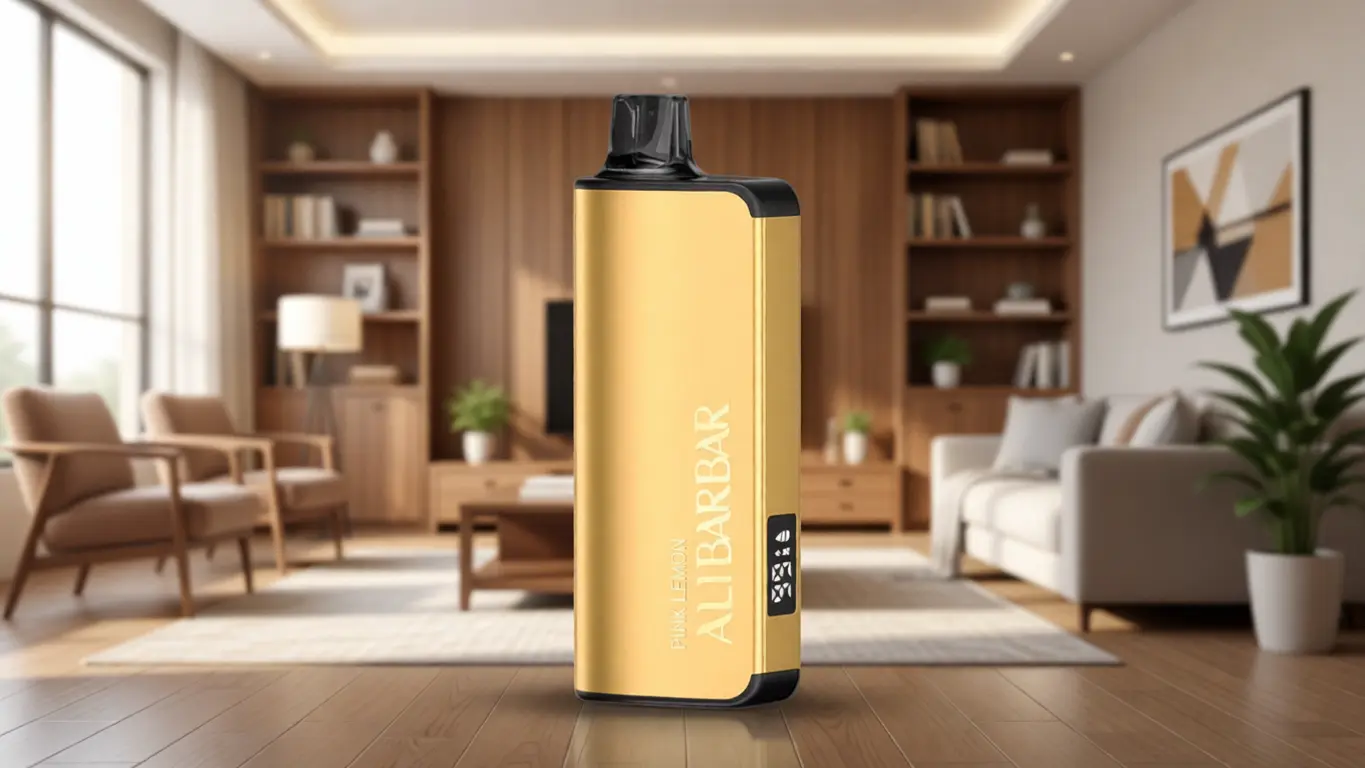
Another approach incorporates user‑adjustable airflow, as seen in the Ice Adjust 12000 series within the ALIBARBAR collection. The rotating ring on the base of the device lets the user shift between a tighter mouth‑to‑lung draw and a more open direct‑lung intake. In the tightest setting, the per‑draw volume is measurably reduced, which can lower the total particulate mass delivered per session. This is an engineering solution to a physiological concern — not a health claim, but a genuine ergonomic accommodation. The same series also maintains a sealed liquid compartment and a coil architecture that thermal imaging shows remains within a predictable temperature band, avoiding the spikes that introduce thermal decomposition products.
Devices that feature high‑capacity power cells and clearly segmented charge indicators provide the feedback necessary to avoid the low‑voltage zone. The ALIBARBAR INGOT 9000 and INGOT 15000 units, for instance, incorporate four‑level LED arrays that update in real time. That transparency removes the guesswork and allows users to schedule replacement before performance begins to tail off unpredictably. When combined with a fully encased, non‑refillable liquid system, these units minimise the risk of user‑induced errors that can occur with open‑pod refill designs.
It would be incorrect to suggest that any device eliminates the inherent risk of aerosol inhalation for a person with asthma. The distinction is that a well‑documented device with adjustable airflow, consistent thermal output, and reliable leak prevention reduces exposure to the most common mechanical causes of acute irritation. For an adult who, against medical advice, has already decided to use a device, reducing those causes is the most harm‑minimising step available at the equipment level.
A Practical Framework for Evaluation
An adult with asthma who is weighing their options can apply a structured evaluation that focuses on device characteristics directly linked to airway reactivity. This framework does not endorse use; it simply replaces marketing noise with a systematic set of questions that expose the true exposure profile.
Step 1: Determine Inhalation Volume Control. Ask whether the device offers adjustable airflow or multiple resistance settings. If the answer is no, assume that every draw will deliver the full aerosol load as designed, and consider whether you can tolerate that without a safety margin.
Step 2: Verify Output Stability. Research the heating architecture. Does the manufacturer document temperature‑limiting measures? Is there independent thermal characterisation available? Devices that lack such transparency should be treated as unpredictable.
Step 3: Inspect for Leak Pathways. Examine the junction between the mouthpiece and the liquid compartment. Sealed units with ultrasonic welds present fewer failure points than press‑fit or threaded plastic‑on‑plastic connections. A device that has a history of pooled liquid complaints is not suitable for anyone with airway sensitivity.
Step 4: Assess Feedback Clarity. Confirm that the device communicates its remaining energy level with sufficient granularity. A binary “charged or dead” indicator is not enough; you need progressive notification to avoid entering the unstable discharge zone.
Step 5: Source Authenticated Inventory. Counterfeit devices, which are common in unregulated marketplaces, routinely bypass thermal protections and use substandard seals. Verifying that a unit comes from an authorised network — a check that a reputable source like OZVAPE Shop can facilitate through documented supply chain disclosures — is not a luxury; it is the only way to be certain that the device you evaluate matches the device that was engineered.
Common Selection Errors and Industry Observations
Patterns from user reports and warranty returns reveal several recurring mistakes that have particularly acute consequences for people with asthma. These errors are not unique to one brand; they reflect broader misunderstandings about how device engineering interacts with respiratory health.
Overweighting Flavour Variety While Ignoring Thermal Consistency. A device marketed with an extensive flavour menu can distract from fundamental questions about how it manages heat across that range. Different flavour formulations have different viscosities and boiling points, and a heating element not tuned for that variation will produce inconsistent aerosols. The user who selects a device based solely on a favourite flavour profile may unknowingly be choosing a platform with the poorest thermal regulation in the catalogue.
Assuming All Slim‑Profile Devices Are Functionally Identical. Visual similarity between pod‑style units encourages the belief that internal architecture is equally similar. In reality, coil‑to‑wick geometry, insulator materials, and airflow channel design differ dramatically between manufacturers. Two devices that look the same on a shelf can have entirely different failure modes when used continuously. For an asthmatic, confusing category aesthetics with engineering substance is a dangerous shortcut.
Undervaluing Modularity in Risk Management. A sealed, non‑refillable device removes the variable of user‑introduced contamination. Open‑pod systems, while offering longer‑term flexibility, require the user to handle and pour e‑liquid, which introduces opportunities for spills, skin contact, and improper filling that can force liquid into the airway. Many experienced users dismiss the convenience of a sealed system without recognising that for someone with airway sensitivity, the reduction in user‑handling risk is a real medical consideration.
Misinterpreting Airflow Adjustment as a Power Setting. Adjustable airflow does not change the heating temperature or the composition of the aerosol; it alters the draw dynamics. Users who assume that tightening the airflow makes the aerosol “weaker” chemically are mistaken. The particulate exposure per millilitre of air inhaled remains the same, but the total volume inhaled per puff decreases. This distinction matters because it prevents a false sense of complete safety.
These observations point to a market in which genuine engineering differentiators exist, but they are frequently obscured by noise. Working with a retailer that standardises specifications and publishes verified performance data — rather than relying on promotional copy alone — simplifies the process of cutting through that noise.
Frequently Asked Questions
Q: Can vaping trigger an acute asthma attack?
A: Yes. Inhaled aerosols can irritate hypersensitive airways and induce bronchoconstriction. Numerous clinical reports document acute exacerbations following exposure. Any device, regardless of engineering quality, introduces foreign particulate into the respiratory system and therefore carries that potential.
Q: Are there specific ingredients known to be more irritating for asthmatics?
A: Certain flavour compounds, particularly those that are aldehyde‑based or that contain acetyl derivatives, have been identified in laboratory studies as airway irritants. However, allergenicity varies between individuals. No single ingredient is universally safe, and the safest choice remains complete avoidance.
Q: Does a device with adjustable airflow actually reduce risk?
A: Adjustable airflow allows the user to reduce the per‑puff aerosol volume and slow inhalation speed. While this may decrease the intensity of immediate throat and airway impact, it does not render the aerosol harmless. It is a harm‑reduction measure, not an elimination of risk.
Q: How can I verify that a device is genuine and has not been tampered with?
A: Authentic devices are routinely supplied with unique traceability codes that can be validated through the manufacturer’s verification portal. Additionally, purchasing through a documented authorised channel — such as OZVAPE Shop, which publishes its sourcing policies and only carries factory‑certified inventory — reduces the likelihood of encountering counterfeit goods.
Q: What should I do if I experience symptoms while using a device?
A: Stop use immediately, move to a fresh‑air environment, and follow your asthma action plan. Seek emergency medical assistance if symptoms do not resolve promptly. Do not attempt to “test” the device again to isolate the cause — the priority is airway safety.
Q: Is vaping considered safer than smoking for someone with asthma?
A: Medical consensus indicates that while the aerosol from a vaping device contains fewer toxicants than combustible tobacco smoke, it is not risk‑free, and for a person with asthma, the irritant effect alone can be harmful. The safest option is to use neither product, but anyone considering a switch should seek personalised advice from a respiratory specialist.
Q: Can I trust online retailers to provide accurate specifications?
A: Not all retailers invest in verifying the technical claims of the products they list. A retailer that explicitly commits to authorised supply chains and publishes standardised, comparable specifications across its catalogue — as OZVAPE Shop does — offers a baseline of accountability. Still, users should independently check manufacturer documentation.
Q: Does a device with a higher liquid capacity present different risks than a lower‑capacity unit?
A: Capacity itself is unrelated to risk, but longer‑life devices often maintain stable output over more cycles, reducing the chance of degraded performance that occurs when a consumable approaches exhaustion. Conversely, a device that is used long past its rated operational life may experience seal fatigue. Observation of the manufacturer’s stated cycle limits is advisable.
Q: What are the legal age and access restrictions for these devices in Australia?
A: The sale of these devices is regulated, and buyers must be at least 18 years of age. Online retailers are required to implement age verification at the point of sale. OZVAPE Shop enforces this as a standard operating procedure, in line with Australian law.
Q: If a device is “sealed,” does that guarantee no leaked liquid?
A: A sealed design reduces the probability of leaks compared to refillable systems, but it does not eliminate all failure modes. Manufacturing defects and extreme environmental conditions can still compromise integrity. The advantage is that the user is not introducing additional handling errors, which account for a significant share of liquid‑exposure incidents.
Conclusion
No device architecture can make the deliberate inhalation of aerosol safe for a person with asthma. The physiological reality is that hypersensitive airways will react to foreign particulate, and the reaction can range from mild discomfort to a life‑threatening event. That truth must sit at the centre of any discussion about device selection.
Where the conversation becomes more nuanced is in the recognition that not all devices expose the user to the same degree of mechanical irritation. Adjustable airflow, stable thermal control, sealed internals, and transparent status feedback are engineering choices that demonstrably reduce some of the physical triggers known to provoke airway spasms. For the adult who, despite all medical advisories, has chosen to continue using a device, directing attention toward these characteristics is the only responsible way to approach the decision at the product level.
OZVAPE Shop exists to make authentic, fully documented devices accessible through a supply chain that respects the importance of traceability and accurate information. We do not offer health advice, and we never position our catalogue as a solution to a medical question. What we provide is a standardised view of what each device actually contains and how it performs, so that adults who make their own risk assessments can do so with their eyes open. The right choice for someone with asthma will always lean heavily toward non‑use, but if a choice is being made regardless, it must be informed by something more substantial than packaging.
The decision belongs to you, and it should match not only your understanding of the risks but your actual daily routine — not the world painted by an advertisement.