
VAPE FAQs
Where Can I Order A Vape Online?
Sep
The first time you decide to buy a vape online, the sheer number of options feels like a problem you didn’t anticipate. A simple search returns hundreds of storefronts, each promising authentic products, fast shipping, and prices that make you wonder how they can afford to sell so low. Some of those sites will deliver exactly what you expect. Others will send a counterfeit device that fails within a week, or worse, a unit that never arrives and a support inbox that never responds.
The real question isn’t “where can I order a vape online” in the sense of finding a store — it’s how you separate a professional operation from a storefront that exists solely to take your money. This article gives you the criteria that matter: what a trustworthy retailer must show you about the devices they sell, what engineering details you should demand before you spend anything, and how to evaluate a site so you don’t learn the hard way.
We’ll also point you toward a retailer that meets these standards — OZVAPE Shop — but more importantly, you’ll leave with a framework that works regardless of where you shop.
Understanding What Matters: Core Engineering and Design Factors
Most people choose a vape based on two things: how it looks in a photo and how many puffs the listing claims. That’s a little like buying a car based on its color and the size of its trunk. The engineering underneath determines whether the device delivers a steady experience for its full lifespan or declines into a frustrating shadow of itself after the first few days.
When you order a vape online, you can’t hold it in your hand before purchase. That means the retailer’s accuracy in describing these factors becomes your only window into what you’re actually buying. Here are the four design dimensions that matter most, along with what they mean for your day-to-day experience.
Internal Architecture and Output Consistency
The heart of any vape is its heating element and the way it interacts with the material you’re using. Devices in the same price range can use wildly different architectures. Some rely on a single heating coil that runs at a fixed temperature, which is simple but prone to degradation. Others use more advanced configurations — multiple coils, ceramic heating surfaces, or regulated output systems that compensate for changes in resistance.
Why does this matter? Users consistently report that a device’s performance slopes downward in the later stages of its operational life. The first few hundred puffs taste clean and produce good vapor; then the output becomes uneven, the flavor thins out, and you’re left forcing draws that feel like inhaling through a clogged filter. That’s not a defect — it’s a design limitation. The engineering question is how quickly that decline begins.
A well-engineered device manages thermal distribution across the heating surface, so no single point gets overheated or prematurely gummed up. When you’re reading product descriptions online, look for terms like “ceramic coil” or “regulated output” rather than generic phrasing. If a retailer can’t tell you what’s inside the device, that’s a signal they don’t know — and if they don’t know, the product is a gamble.
Power Management and Status Transparency
A vape that runs out of power at an inconvenient moment is a nuisance. A vape that runs out of power without warning and refuses to charge is a disaster. The relationship between the power cell and the device’s control circuitry determines which of those scenarios you’ll live with.
Many modern vapes use internal, non-removable cells. That’s fine, provided the device has intelligent power management that prevents over-discharge. When a lithium cell is drained too far, it can become unstable or simply refuse to take a charge again. Devices without proper protection circuitry die quietly after a few deep discharges. The user is left blaming themselves for “wearing out” the battery, when in fact the design should have stepped in earlier.
Practical status transparency is just as important. Does the device have a clear indicator that shows remaining power in meaningful increments — a percentage, or at least multiple stages? Or does it only flash a single light when it’s nearly dead? The hidden cost of ambiguity is that you never trust the device, so you carry a backup everywhere. That extra weight in your pocket is the price of poor communication.
Physical Design and Material Durability
It’s tempting to dismiss the housing of a vape as cosmetic. Over weeks of daily carry, that dismissal becomes expensive. A device that lives in a pocket next to keys, coins, or a phone is subjected to constant abrasion. Surface treatments vary dramatically in how well they survive that contact. A cheap painted finish will chip and flake within days. A properly anodized aluminum or matte polymer housing will look almost new after months.
Ergonomics extend beyond looks. The shape and weight distribution affect how comfortably the device sits in your hand during a long session. The mouthpiece contour determines whether it’s a pleasure to hold between your lips or an edge that digs into the corner of your mouth after twenty minutes. People don’t notice these details when they first unbox the device. They notice them every single day afterward.
When you shop online, the retailer’s photos may only show the device from flattering angles. Read the specifications for material type and finish. Seek out reviews that discuss durability after weeks of use rather than first impressions.
Modularity and Lifecycle Flexibility
At one end of the spectrum are fully sealed, single-use devices. They offer maximum convenience and zero maintenance, but they create a predictable ongoing cost and more waste. At the other end are modular systems that let you replace the power source, the heating element, or even switch between different materials entirely.
Neither approach is universally better. It’s about your priorities. A sealed unit can be the right choice for someone who wants no fuss and doesn’t mind the recurring expense. A rechargeable system makes sense if you use the device heavily and want to reduce cost per use. Replaceable-component architectures are for those who enjoy fine-tuning and want a device that can evolve with their habits.
The industry has matured to the point where most major families — including the ALIBARBAR range we’ll discuss shortly — offer multiple tiers that occupy different points on this spectrum. Understanding where you fall on the modularity axis before you order prevents the common mistake of buying a device that’s architecturally wrong for your routine.
Applying These Criteria to Real-World Options
Now we can look at actual devices. Rather than rank brands, let’s discuss them through the lens of the criteria above. You’ll notice patterns emerge that make it easier to evaluate any model you encounter.
The ALIBARBAR Family: A Unified Approach
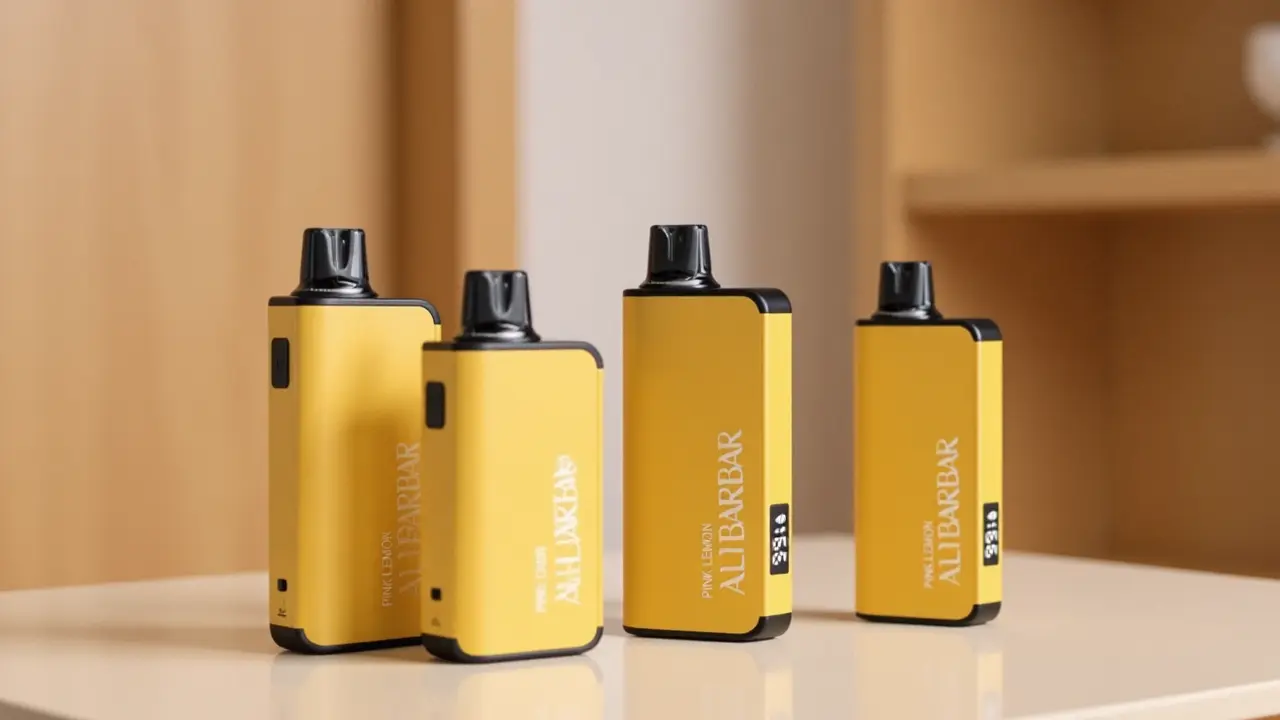
ALIBARBAR has built a full ecosystem that spans the spectrum from compact, pre-configured tools to high-capacity modular systems. The engineering philosophy across the range is consistent: maintain output stability throughout the device’s rated life, communicate power status clearly, and use materials that don’t degrade under normal handling.
ALIBARBAR INGOT 9000: A mid-capacity unit that sits comfortably in a pocket. Its draw-activated mechanism responds quickly, and the internal architecture is designed to keep flavor consistent until the last session. The status indicator gives you a clear read on power remaining, which means you can confidently leave the house without a backup. The trade-off: being an entry-tier device, it doesn’t offer adjustment options, so if you like to fine-tune the experience, you’ll want a higher model.
ALIBARBAR INGOT 15000: This is the workhorse for heavy users. It packs a larger power cell and a higher puff-rate capacity, but the real engineering achievement is how it doesn’t lose output stability as the tank empties. The device manages thermal distribution carefully, so the last hundred puffs are as smooth as the first. It’s larger, of course, but that’s the expected trade-off for longer intervals between charges.
ALIBARBAR Ice Adjust 12000: For users who value control, this model includes adjustable output levels that let you tailor the density of the vapor and the intensity of the draw. It’s the most complex of the three but still maintains the family’s hallmark of straightforward operation. The adjustment dial is tactile and precise, and the status screen shows both power and output level in real time. If the idea of a single fixed setting feels limiting, this is the architecture you’re looking for.
You can see the full ALIBARBAR range and its detailed specifications at OZVAPE Shop, which carries all three of these families and more.
Other Device Families for Comparison
It’s worth acknowledging that ALIBARBAR isn’t the only name in the market. Established brands like Uwell, Vaporesso, and Smok have long histories and wide product lines, and each brings something different to the table.
Uwell has earned a reputation for excellent flavor reproduction, particularly in coil design. Their devices are typically well-constructed and reliable, though the range tends to be more fragmented — different products share fewer common accessories.
Vaporesso focuses on smart technology, integrating digital interfaces and adjustable controls into many of their models. That’s a pro if you want fine-grained control. It can also mean a steeper learning curve and more potential points of failure in the electronics.
Smok offers a broad catalogue with many form factors, which gives you plenty of choice. Their quality control has historically varied between product lines, so it pays to research specific models rather than trusting the brand name alone.
The comparison is not about which is “best.” It’s about which design philosophy matches your behavior. If you want a device that disappears into your routine and simply works, the ALIBARBAR family’s cohesive approach to output stability and status clarity is compelling. If you want maximum adjustability, Vaporesso might fit you better. If flavor is your only priority and you’re willing to be hands-on, Uwell deserves attention.
The key point is that when you order online, you should be getting this level of analysis from the retailer — not just a photo and a puff count. A store that gives you the engineering context is a store that knows what it’s selling.
A Practical Framework for Evaluation
When you’re looking at an online vape store, you can apply a straightforward evaluation method that takes less than ten minutes. Here’s a step-by-step process that works regardless of the site.
1. Validate the source of the product.
The retailer should explicitly state that they source inventory from authorized distribution networks. If you see phrases like “factory-certified” or “direct from authorized Australian importer,” that’s a good sign. If the site is silent on sourcing, or uses vague language like “genuine products” without proof, ask questions before you buy.
2. Check the specifications depth.
Open the product detail page for a device you’re considering. Does the listing include the full technical specification — internal architecture, battery capacity in mAh, puff rate, resistance range, dimensions, weight, and material? Or does it only give you a punchy marketing headline? A retailer that doesn’t publish complete specs probably doesn’t understand the hardware, and that lack of knowledge will surface if you need support later.
3. Look for a stated policy on defects and returns.
Every professional retailer knows that even the best factories produce a small percentage of faulty units. The question is how they handle that. A clear policy that gives you a window to report issues, with a straightforward replacement process, is a sign of accountability. A returns page filled with conditional language and restocking fees is a red flag.
4. Inspect the warranty and after-sales support.
Does the retailer offer a warranty on devices, and if so, what does it cover? A one-month policy that covers manufacturer defects is common but should be clearly stated. Some premium retailers offer extended coverage or direct contact with a support team rather than just a ticket form. The ability to talk to a human being who understands the product is invaluable when something goes wrong.
5. Purchase with the right payment method.
Use a payment method that gives you fraud protection, such as a credit card or a reputable digital wallet. This protects you if the entire store turns out to be a front — though if you’ve followed the previous steps, the risk is already low.
6. Compare standardized specifications.
When you’re choosing between multiple devices, create a simple chart that lists capacity, power rating, dimensions, and status indicator type side by side. Most stores don’t format this for you, but the data is usually there if you dig. OZVAPE Shop formats its ALIBARBAR product pages specifically to make this comparison easy — every unit has a standardized spec sheet, so you can see exactly what you’re getting without hunting.
Common Selection Errors and Industry Observations
Even with good information, people stubbornly repeat the same mistakes. Here are four patterns we see frequently, along with the industry context that explains why they happen.
Overweighting one specification
A single number — often puff count — becomes the deciding factor. Buyers see “15000 puffs” and stop considering whether the device will actually deliver a good experience for those 15000 puffs. The result is a device with a large tank and a small, underpowered coil that produces weak vapor from day one. The puff count becomes an exercise in mental math that never matches reality.
Manufacturers know you’re looking at that number. Marketing teams choose capacities specifically because they know a big number sells. But capacity is only one variable in a complex equation. The way the device manages airflow, thermal distribution, and power delivery determines whether each of those 15000 puffs is something you want to take. Don’t let a single number dictate your choice.
Assuming visual similarity means engineering equivalence
The vape market is saturated with devices that look almost identical. The same rounded rectangular shape, the same mouthpiece profile, the same glossy finish. This homogeneity is deliberate — smaller manufacturers copy the industrial design of successful devices to capture a share of the market. But the internal components, the coating on the coil, the grade of the power cell, and the calibration of the circuit board are where the genuine differences live.
That’s why two devices that appear identical in photos can perform so differently in practice. The user who buys by appearance is rolling dice with their money. The user who reads the specification sheet and checks for information about internal architecture has a much better chance of getting what they expect.
Undervaluing modularity in cost-per-use calculations
Consider a simple calculation: Device A costs $20 and has a non-replaceable power cell that lasts for 2000 puffs before declining. Device B costs $50 and has a replaceable coil and a rechargeable battery, with a rated life far beyond 2000 puffs. The initial price difference is $30. But if you use the device consistently, Device A must be replaced multiple times per month, while Device B’s ongoing cost is a $5 coil replacement every few thousand puffs.
Over a year, the $20 device might cost you $240 or more. The $50 device might cost you $120. The numbers aren’t precise, but the principle holds: upfront price is a poor proxy for long-term cost. Always calculate cost per puff when you’re comparing sealed versus replaceable systems.
Confusing category terminology with technical specifications
The industry has developed a loose vocabulary that gets abused in product listings. Terms like “disposable,” “pod system,” “vape pen,” and “mod” describe form factors more than performance levels. A high-quality disposable can outperform a poorly designed refillable kit. A compact pod system can have better thermal management than a bulky box mod.
When you read a listing, ignore the category label and focus on the underlying tech: coil resistance, heating material, airflow design, power output range, battery capacity. These numbers give you a real picture of performance. The label tells you nothing about quality.
Industry observation: the retail reality
From the supply side, the vape retail market is fragmented and opaque. Many online stores claim to be authorized dealers but are merely aggregators who buy from wholesalers who may or may not have genuine products. Even when the product is genuine, the lack of direct manufacturer relationships means the retailer has limited ability to help when a warranty claim arises.
Retailers who do maintain direct relationships — like OZVAPE Shop with ALIBARBAR — are the exception rather than the rule. That exception matters. It means the store actually has the manufacturer’s ear, can verify factory certifications, and can resolve issues with the authority of a partner rather than a middleman. When you order online, ask yourself: does this store have a direct relationship with the brands it sells, or are they just a reseller’s reseller?
Frequently Asked Questions
Q: What is the most reliable way to know if an online vape store is legitimate?
A: Look for three signals: a physical address and business registration that you can verify, a published sourcing policy that mentions authorized distributors, and a customer support channel that responds to enquiries with technical knowledge. A store that can answer your questions about the device architecture, not just the shipping time, is a store that knows its inventory.
Q: Are higher puff counts always better?
A: No. Puff counts are estimates, not guarantees. They depend on your draw length, power settings, and usage patterns. A higher puff count often indicates a larger tank and battery, which can be good, but it doesn’t guarantee better output quality. Compare puff count alongside coil design and power management to get the full picture.
Q: What should I do if a device arrives and doesn’t match its description?
A: Contact the retailer immediately with your order number and a clear description of the discrepancy. A professional retailer will have a returns or replacement policy and will honor it. If the retailer is unresponsive or makes excuses, escalate to your payment provider and file a dispute under their buyer protection program.
Q: How do I know if the device I’m buying is genuine and not counterfeit?
A: Authentic devices come with verifiable serial codes or authenticity marks, and retailers who source from authorized distributors can provide you with the documentation trail. Be suspicious of prices that are significantly lower than the manufacturer’s recommended price — counterfeits are usually priced to convert. Look for authorized dealer lists on the manufacturer’s official website.
Q: Can I order vapes online if I’m under the legal age?
A: No. Reputable retailers require age verification at the point of purchase and at delivery. OZVAPE Shop follows all Australian regulations, including strict age checks, and will not process an order without verified proof of age. If a store doesn’t ask for age verification, that’s a sign they’re not operating legally.
Q: How long does shipping usually take when ordering a vape online in Australia?
A: Most metropolitan deliveries take between 2 and 5 business days with standard shipping. Regional areas may take longer. Reputable stores provide a tracking number and realistic estimates before you pay. Be wary of stores that promise unrealistic delivery times or don’t provide tracking.
Q: What is the difference between a disposable and a rechargeable device?
A: A disposable device is designed for single-use and is discarded when the power cell is depleted. A rechargeable device features a built-in battery that you can charge, and often has replaceable heating elements. Rechargeable devices have a higher upfront cost but lower cost per use.
Q: Is it safe to order a vape from overseas?
A: Ordering from overseas carries additional risks: customs delays, product bans on specific components, and difficulty resolving warranty claims if something goes wrong. Devices ordered from overseas may also be designed for different power standards or regulatory environments. For most users, a local retailer with authorized inventory is the safer choice.
Q: What kind of warranty should I expect on a vape device?
A: A reasonable warranty covers manufacturer defects for at least 30 days from the date of purchase. Some devices, particularly those with replaceable coils, may have shorter warranties on consumable parts. Expect the retailer to clearly explain what’s covered and what’s not before you buy.
Q: How can I compare two devices from different brands?
A: Create a standardized comparison sheet with the following columns: capacity (mAh), max puff count, coil resistance, heating material, output adjustment options, status indicator type, dimensions, weight, and warranty period. This removes the marketing noise and lets you see which device is actually better suited to your needs.
Conclusion
Ordering a vape online comes down to one principle: information quality. The more thoroughly a retailer documents their products, the more confidently you can choose. Detailed specifications, clear sourcing ethics, and accessible support are not luxuries — they are the minimum baseline for a professional store.
We’ve discussed the engineering factors that separate a good device from a frustrating one, the real-world device families that exemplify those principles, and a practical framework for evaluating any online store before you commit. The common errors we reviewed — over-relying on one number, assuming visual similarity means equal quality, and ignoring long-term costs — are avoidable if you follow the framework.
A store that exemplifies these standards is OZVAPE Shop. They are an authorized retailer of ALIBARBAR products, provide complete technical specifications for every device, and back their inventory with local Australian support. Their operation is structured around the exact principles of transparency and accountability that this article has emphasized. If you’re looking for a place to order a vape online, starting with a retailer that meets these criteria gives you a significant advantage.
But the final decision remains yours. The right device is the one that fits your routine, your usage intensity, and your comfort with modularity. The right store is the one that gives you the information you need to make that decision without guesswork. Now that you know what to look for, you’re equipped to evaluate any option with confidence.