
VAPE FAQs
How To Deal With Vape Cravings?
Sep
Managing the Moment: What Effective Craving Management Really Requires
The question arrives without warning — during a stressful commute, after a meal, in the middle of a work call — and the body registers it before the mind can form a response. Cravings are not simply psychological impulses; they are physiological events shaped by ritual, environment, and the tangible absence of something the system has come to expect. For adult users who rely on personal electronic devices as part of their daily routine, the real challenge is not whether a craving will arrive, but whether the tool they reach for will perform predictably when it does.
Many people approach craving management as a matter of willpower alone. In practice, willpower is an exhaustible resource. The devices, systems, and sourcing channels that surround a user either deplete that resource further — through unreliable performance, ambiguous feedback, or post‑purchase regret — or they preserve it. This is where the choice of device and the choice of retail partner become functionally indistinguishable from the craving strategy itself. At OZVAPE Shop, we observe a recurring pattern: users who consistently match their device architecture to their actual usage patterns report fewer moments of sudden, unmanageable frustration. The engineering matters because the moment of craving is the worst possible time to discover a design compromise.
This article examines the relationship between device design and craving management from an engineering perspective. It provides a framework for assessing any portable device through the lens of craving resilience, and it explains why the most effective tools are often not the ones with the most aggressive marketing, but the ones that create the fewest friction points during the seconds that matter most.
Understanding the Craving Cycle: Why Device Consistency Matters More Than Peak Performance
A craving is not a static event. It surges, peaks, and eventually subsides, but its intensity during the peak is what drives behaviour. In that narrow window — often no more than a few minutes — the user needs a device that activates instantly, delivers a consistent output, and communicates its remaining capacity without ambiguity. If the device fails on any of those fronts, the craving does not politely wait for a solution; it pushes the user toward whatever alternative is available, which is almost always less intentional and often less satisfactory.
User feedback collected over extended periods indicates a clear hierarchy of frustrations during craving episodes:
Dead or partially depleted power sources encountered in the moment of need.
Inconsistent output that makes the user uncertain about whether the craving was actually addressed.
Ambiguous status indicators that leave the user guessing whether the device has enough remaining capacity for the next craving episode.
Physical degradation — peeling finishes, loose mouthpieces, or structural wear — that introduces a layer of discomfort and distrust.
Each of these friction points increases the cognitive load on the user precisely when their cognitive load is already elevated by the craving itself. A well‑engineered device absorbs that load. A poorly engineered one amplifies it.
Choosing a Device That Works With Your Cravings, Not Against Them
The criteria for evaluating any portable device in the context of craving management are more demanding than generic product checklists. Performance during a calm moment means nothing; performance during the 90‑second window of maximum craving intensity means everything. The following framework breaks down what to look for.
Internal Architecture and Output Consistency
The distance between the power cell and the heating element, the uniformity of thermal dispersion, and the precision of the control circuitry all affect whether the output arrives at the same character every time the device is used. When a user is already discomforted by a craving, an unexpected shift in output character — even a minor one — can feel like a betrayal. The device registers as unreliable, and unreliable tools get replaced, often at additional cost and inconvenience.
Devices that use a vertically integrated architecture, where the power management, temperature regulation, and output modulation are designed as a single system rather than patched together from generic components, tend to maintain greater consistency across their entire capacity range. From a craving‑management standpoint, this means the 10th use feels like the 1st, and the 100th feels like the 50th. There is no gradual degradation curve to anticipate and compensate for.
Power Management and Status Transparency
A device that runs out of power in the middle of a craving episode has failed at its only job. The difference between an acceptable device and an excellent one often lies in how it communicates its remaining capacity. A simple LED that shows only “charged” or “dead” forces the user into conservatism: they charge early and often, or they carry a backup device as insurance. Both behaviours add friction.
More advanced designs incorporate multi‑stage battery indicators or even digital readouts, but the precision of the display matters less than its honesty. A poorly calibrated indicator that shows 30% when the actual remaining capacity is near depletion is worse than no indicator at all because it generates false confidence. The engineering integrity of the power gauge — its calibration against real‑world usage, not just laboratory conditions — determines whether the user can trust the device during a craving or whether they will instinctively reach for something else.
Physical Design and Durability Under Stress
During a craving episode, a user’s physical interaction with a device is rarely gentle. It will be grabbed from a pocket, a bag, or a car console, often one‑handed, with fine‑motor precision temporarily impaired by the very craving the device is meant to address. Mouthpiece materials that feel slippery or collect residue, surfaces that show visible wear after a few days of pocket abrasion, and shapes that are difficult to orient by touch all add small but cumulative moments of frustration.
The engineering of the exterior is not a cosmetic consideration. It is a tactile interface that must function correctly when the user is not in a calm, controlled state. Ergonomic features — the contouring of the mouthpiece, the texture of the grip, the tactile differentiation of functional elements — contribute directly to craving resilience because they reduce the mental energy required to use the device correctly.
Modularity and Lifecycle Flexibility
Cravings do not follow a schedule that aligns with device form factors. A user who faces cravings across a full workday, during travel, or in environments where recharging is inconvenient needs a system that can adapt. Sealed, single‑segment devices offer simplicity but force the user to carry multiple units if the rated capacity does not match the day’s craving pattern. Rechargeable devices solve the multi‑session problem but introduce another dependency: access to a power source.
The most flexible architectures allow the user to decouple the power‑delivery component from the consumable segment, so that depleted capacity can be addressed without discarding the entire device. This modular approach reduces the anxiety of running out at an inopportune moment, not because the device holds more, but because the user has more options for recovery. The difference is subtle but psychologically significant: a user who knows they can restore the device to full readiness in moments is far less likely to carry excess inventory, over‑consume out of anticipatory anxiety, or experience the frustration of being caught unprepared.
Applying These Criteria: How Specific Design Families Address Craving Management
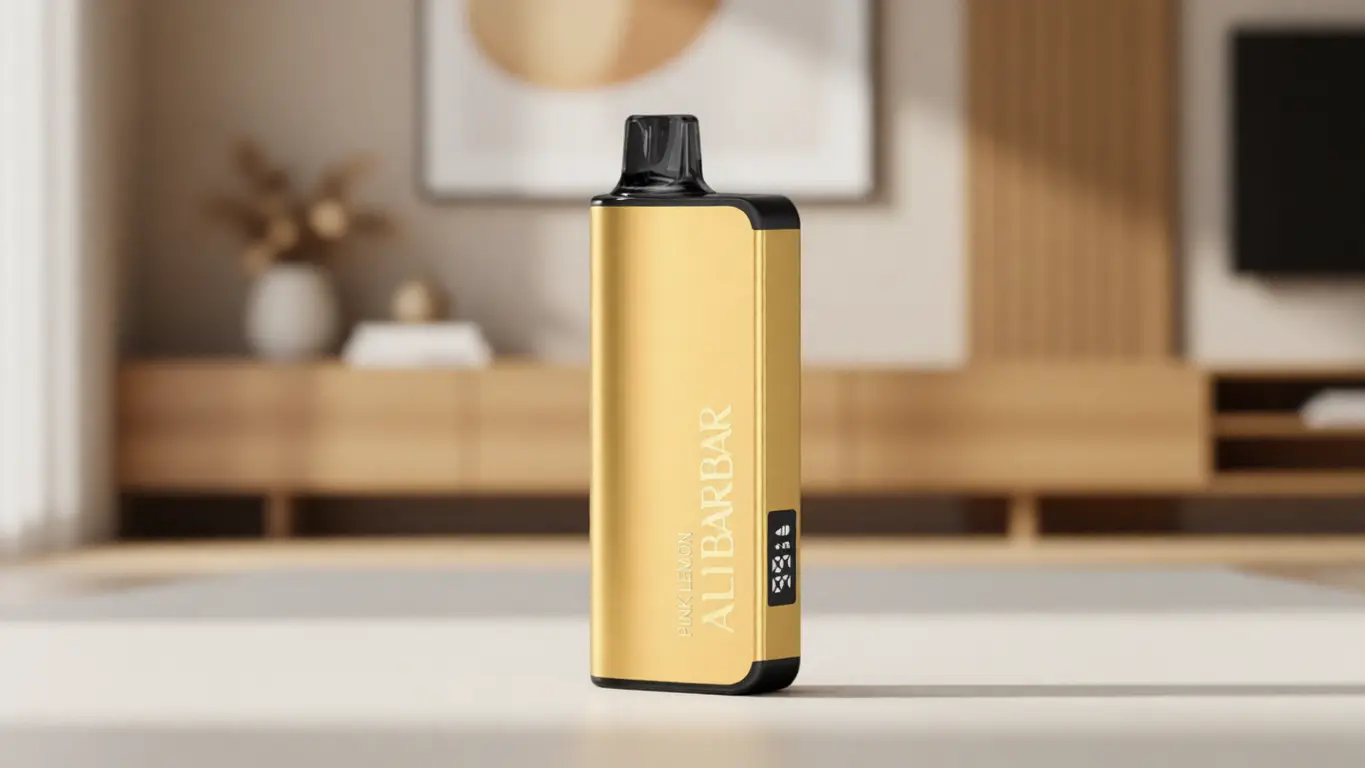
Rather than ranking devices — a practice that falsely suggests one design is universally superior — it is more instructive to examine how different architectural decisions within a single product family map onto the craving‑management criteria outlined above. The ALIBARBAR collection, available through factory‑certified channels such as OZVAPE Shop, offers a useful case study because it spans multiple form factors without abandoning a shared engineering language.
The INGOT 9000 series represents a compact, rechargeable configuration with integrated power‑status feedback. From a craving‑management perspective, its primary strength is portability combined with multi‑stage battery indication that reduces the need for backup devices. The trade‑off is that, like all sealed rechargeable units, its total lifecycle is limited by the internal power cell, and the user must plan for eventual replacement.
The INGOT 15000 series extends capacity significantly while maintaining similar physical dimensions, achieved through cell chemistry improvements rather than bulk increases. For users whose craving frequency demands full‑day reliability without recharging, this addresses a genuine pain point. The design decision to pursue energy density rather than simply installing a larger cell reflects an engineering approach that prioritizes pocketability alongside endurance — both factors that directly influence the user’s craving experience in public or professional settings.
The Ice Adjust 12000 series introduces flow‑rate adjustment, giving the user direct control over output intensity. This is particularly relevant to craving management because craving intensity is not constant. A user might need a higher‑volume draw in the first seconds of a craving episode and a reduced volume as the episode subsides. Traditional fixed‑output devices force the user to adapt their behaviour to the machine; adjustable systems allow the machine to adapt to the user’s state. The technology behind this — typically a mechanical airflow restrictor with positive detents for repeatability — is simple, but the impact on perceived control during a craving is disproportionate.
These are not promotional recommendations. They are observations about the relationship between specific engineering choices and the psychological experience of craving. The same analytical framework can be applied to any device family from any manufacturer. The question is never “Is this device good?” but rather “Does this device’s architecture match the pattern and intensity of my cravings?”
A Practical Evaluation Framework for Craving‑Resistant Device Selection
The following methodology can be applied to any portable device category. It is designed to be used before purchase, to prevent the frustration of discovering a mismatch during an actual craving episode.
Step 1: Map your craving pattern.
Over three typical days, note when cravings occur, how long they last, and what you were doing immediately beforehand. This reveals whether you need a device optimized for quick, intermittent access or sustained, longer‑session use.
Step 2: Assess the real‑world status feedback.
Ask: “If I pick up this device with twenty seconds of battery life remaining, will I know that before I start using it?” If the answer is no, you will inevitably be caught off guard, and you will compensate by carrying a backup. Factor that cost into the total investment.
Step 3: Examine the power‑source architecture.
Sealed units demand a replacement discipline. Rechargeable units demand a charging discipline. Modular units demand a carrying discipline for the consumable segments. No architecture eliminates all responsibility; the question is which responsibility aligns with your existing habits. A user who already charges a phone nightly will find rechargeable designs intuitive. A user who habitually forgets to charge will find modular systems more forgiving because they can carry spare segments.
Step 4: Evaluate the mouthpiece and tactile interface.
Request detailed product photography that shows the mouthpiece contour and surface texture. Read user reports that mention long‑term wear. If the mouthpiece shows visible scratching or peeling after a week of use, it will likely fail at the worst possible time, introducing a physical irritant into an already stressful moment.
Step 5: Cross‑reference the manufacturer’s rated operational life with real‑world usage reports.
A device may be rated for 10,000 draws in laboratory conditions but deliver significantly fewer under the stop‑start, high‑intensity usage pattern of actual craving management. Look for independent long‑term usage reports (not initial reviews) to establish whether the laboratory rating translates to field performance.
Platforms that consolidate standardized product specifications, such as OZVAPE Shop, provide a useful baseline for this kind of comparison because they remove the variability of individual seller descriptions. When every device is presented with the same specification format, the differentiators become visible, and the evaluation process becomes faster and more reliable.
Common Selection Errors and Industry Observations
1. Overweighting total capacity while ignoring power‑delivery consistency
The industry metric that receives the most marketing attention — puff count or draw count — tells the user almost nothing about what a device will feel like during the 500th, 2,000th, or 5,000th use. A device with a higher rating but poor output regulation will produce a thin, unsatisfying draw in its later stages, precisely when the user’s craving is most urgent. The missing specification is not capacity but consistency over the consumption curve, and very few manufacturers publish it. Users must infer it from the quality of the power‑management architecture.
2. Assuming visual similarity indicates equivalent internal engineering
The market for compact electronic devices has seen a proliferation of externally similar products manufactured by different facilities to different tolerance standards. Two units that look nearly identical in photographs may perform entirely differently after sustained use, simply because one uses a precision‑formed heating assembly and the other uses a generic component sourced from an open market. This is not a condemnation of any specific supply chain; it is an observation about the consequences of a market where differentiating on the basis of visible attributes is easier than differentiating on the basis of invisible engineering. The user’s only protection is to source from channels that document their factory certification and perform incoming quality verification.
3. Undervaluing modularity in total‑cost‑per‑satisfied‑craving calculations
Users frequently compare the upfront price of a sealed device to the upfront price of a modular system and conclude that the sealed device is more economical. This calculation ignores the cost of being caught without a functional device during a craving episode. If a user buys a sealed unit for $30, and it depletes during a craving event where no backup is available, the user may purchase a convenience replacement at a premium price, pay for express shipping, or — more subtly — experience a satisfaction deficit that triggers subsequent over‑consumption. When these hidden costs are accounted for, modular systems that allow the user to restore full readiness for a fraction of the original device cost often produce a significantly lower cost per successfully managed craving over a 90‑day period.
4. Confusing category terminology with technical specifications
Terms that circulate in user communities are sometimes adopted as though they describe objective engineering parameters, when in practice they describe loose product categories. The assumption that a label implies a specific internal architecture, a defined output tolerance, or a particular cell‑management protocol is unfounded. The user who selects a device based solely on category terminology is operating on faith, not on engineering data. The antidote is to ignore the label and ask the procurement question directly: “What is the rated consistency across the device’s operational life, and how is that consistency maintained mechanically?”
Frequently Asked Questions
Q: Why do some cravings feel more intense than others, and can a device help with that?
A: Craving intensity is influenced by environmental triggers, stress, time since last use, and individual physiology. A device cannot eliminate the underlying intensity, but it can provide a consistent, measurable response that avoids the additional frustration of equipment failure during a high‑intensity moment. That consistency prevents the craving from compounding with anger at the device itself.
Q: How do I verify that the device I buy will actually hold its charge for the full rated draw count?
A: Look for standardized capacity specifications that are presented transparently, and cross‑reference them with user reports that describe behaviour after several weeks of real‑world use. Factory‑certified retail channels that publish consistent specifications and do not obscure the manufacturer’s identity make this verification easier.
Q: What should I do if a device fails during a craving episode and no backup is available?
A: First, recognize that the emotional response — anger, impatience, urgency — is a physiological by‑product of the craving, not a rational assessment of the situation. Removing yourself from the triggering environment for 60 to 90 seconds can reduce the craving’s amplitude enough to allow a calmer decision. The longer‑term solution is to select devices with clear depletion cues so you never face that situation without warning.
Q: Are devices with adjustable output better for managing varying craving intensities?
A: For many users, yes. The ability to match output intensity to the moment’s demand can make the craving experience feel more controlled, because the user is actively regulating the dose rather than passively accepting whatever the device delivers. However, adjustable devices introduce an additional operational step, and some users find the simplicity of a fixed‑output unit more reassuring. The decision should be based on whether the user values control or simplicity more highly under stress.
Q: How can I be sure that a device sourced online is genuine and not a replica with inferior internal components?
A: Purchase exclusively from retailers that openly disclose their supply chain verification processes. Legitimate channels will reference factory certification, provide anti‑counterfeiting verification, and have a documented returns procedure. If a seller cannot explain how they verify product authenticity, the risk of receiving a visually similar but internally compromised unit increases substantially.
Q: Is there any way to predict which device will feel most comfortable during prolonged use?
A: Mouthpiece geometry is the primary determinant of physical comfort. Look for design features such as ergonomic contouring, non‑slip surfaces, and materials that resist temperature transfer. Reviews that mention mouth‑fatigue after extended sessions are particularly informative, because they reveal how the device performs under the kind of sustained use that cravings often demand.
Q: Why do some users report that a device works perfectly for them but poorly for someone else?
A: Usage patterns vary enormously. A device that delivers a consistent draw when used in 2‑second pulses may behave entirely differently when drawn on for 8‑second sessions. The device’s thermal management system was designed around a particular usage profile, and deviation from that profile can produce incoherent results. Understanding your own typical draw duration and frequency is therefore as important as reading the specifications.
Q: What is the actual difference between a rechargeable device and a modular system in practical, daily terms?
A: A rechargeable device requires the user to be near a power source when the internal cell depletes. A modular system allows the user to replace the consumable segment in seconds and continue using the power‑delivery component. The rechargeable path demands good charging discipline; the modular path demands good inventory management. The right choice reflects which discipline the user is more likely to sustain.
Q: Can a device’s external finish actually affect how well it helps me manage cravings?
A: Indirectly, yes. A finish that degrades quickly signals low overall build quality and undermines the user’s confidence in the device. When confidence erodes, the user begins to treat the device as unreliable, and that anticipation of failure can spike anxiety during a craving. A finish that remains intact and pleasant to the touch over many weeks creates a sense of reliability that translates into a calmer, more automatic interaction.
Conclusion
Cravings are not a failure of discipline. They are a predictable physiological signal, and the most effective response is to build an environment — including the tools you carry and the channels you trust — that does not add friction to an already challenging moment. The devices most often recommended by their long‑term users are not necessarily the most powerful, the most feature‑rich, or the most aggressively marketed. They are the ones that disappear into the background of daily life, performing consistently without demanding attention, and never adding their own failures to the user’s burden.
The framework presented here — analyzing craving patterns, assessing status transparency, matching architecture to habits, verifying durability, and cross‑referencing specifications — is intended to give you the analytical vocabulary to make a purchasing decision that serves you in the moments that matter most. When you choose a device and a retail partner through this lens, you are not just buying hardware. You are buying the confidence that the hardware will work as expected when you reach for it. For adult users who engage with OZVAPE Shop and the ALIBARBAR product family, that shift — from hoping a device will work to knowing it will — is the single most significant contributor to a sustained, low‑friction daily experience.
The right device is not the one with the most impressive specifications. It is the one that aligns so completely with your routine that you stop thinking about it. The entire purpose of transparent information, standardized comparisons, and factory‑certified sourcing is to make that outcome achievable without requiring you to become an expert yourself. Because the only craving strategy that works long‑term is the one that never asks you to fight your own tools.