
VAPE FAQs
How To Hit A Blinker On A Vape?
Sep
You have likely heard the term “blinker” floating through conversations about portable electronic devices. It describes a specific phenomenon: holding the activation mechanism until the indicator light flashes, signalling the device’s maximum draw duration has been reached. But here is the question that rarely gets answered properly — should you actually be doing this, and what does it tell you about the device and your own usage patterns?
This article will explain what a blinker actually signifies from an engineering perspective, why it matters for device longevity and user experience, and how to understand your device’s behaviour when you push it to its operational limits. At OZVAPE Shop, we regularly encounter questions about this practice, and the answer is rarely as straightforward as popular discussion suggests.
Understanding What Matters: Core Engineering and Design Factors
Before examining whether hitting a blinker is advisable, it is essential to understand what is happening inside the device during a prolonged draw. The answer lies in how these devices manage heat, power, and airflow — three variables that interact in ways most users never consider.
Internal Architecture and Output Consistency
Every portable electronic device of this category relies on a heating element to convert stored energy into vapour. The configuration of that element — its material composition, surface area, and thermal mass — directly determines how the device behaves during extended activation.
When you initiate a draw, the heating element begins to rise in temperature. In well-engineered devices, this temperature rise is controlled through pulse-width modulation or resistance-based feedback loops. The element reaches an optimal operating range quickly and maintains it consistently throughout the draw duration.
The problem with blinkers is straightforward: reaching the maximum draw duration often means the device has been operating at its thermal ceiling for an extended period. Depending on the device’s internal architecture, this can lead to one of several outcomes:
Consistent output throughout: In devices with robust thermal management, the output remains stable until the cutoff. The blinker simply indicates the timer has expired.
Gradual degradation: In less sophisticated designs, the heating element may begin to exceed its optimal temperature range during the latter portion of the draw, causing the output to become progressively harsher or thinner.
Premature wicking issues: Extended draws can outpace the ability of the wicking material to deliver stored fluid to the heating element, potentially leading to dry conditions that degrade performance in subsequent uses.
Why this matters: users who consistently hit blinkers often report that their devices degrade noticeably in the later stages of operational life. The correlation is not coincidental — repeated thermal stress accelerates component wear.
How to recognize well-engineered thermal management: Devices that maintain consistent output regardless of draw duration typically employ ceramic-based heating platforms with larger thermal mass, allowing them to absorb extended activation without excessive temperature spikes.
Power Management and Status Transparency
The blinker function is fundamentally a power-management feature. Every device has a programmed maximum draw duration — typically between eight and fifteen seconds, depending on regional regulations and manufacturer specifications. When that limit is reached, the device cuts power and flashes the indicator light.
This is not a feature designed for user enjoyment. It is a safety mechanism and a battery-preservation measure. The engineering reality is that prolonged draws place disproportionate strain on the power source, because the current draw does not decrease linearly — it remains at peak demand throughout activation.
The practical value of clear status indicators becomes apparent here. A device that simply cuts off without visual feedback leaves the user uncertain about what happened. Was it a timeout? A low power condition? A protection circuit activation? A well-designed blinker mechanism communicates clearly: “You have reached the programmed limit.”
The hidden cost of status ambiguity is significant. Users who cannot interpret their device’s signals naturally compensate by carrying backup units. This is not a user failure — it is a design failure. Devices that provide transparent feedback about their operational state reduce uncertainty and allow users to plan their usage accordingly.
Physical Design and Material Durability
The physical stresses of extended draws are rarely discussed, but they are real. When you hold a device to your mouth for ten or more seconds, you change how heat dissipates. The mouthpiece becomes warmer. The device body absorbs more radiated heat. The overall thermal profile shifts.
This has implications for material selection. Devices intended for extended-draw usage should employ mouthpiece materials with lower thermal conductivity — Delrin, PEEK, or ceramic composites rather than metals or thin plastics. The exterior finish should resist heat distortion and maintain its structural integrity under repeated thermal cycling.
Beyond aesthetics, the ergonomic considerations are practical. A device that becomes uncomfortable to hold during prolonged draws will be used less frequently. The mouthpiece contour matters significantly for comfort during extended use — sharper edges concentrate pressure, while well-rounded profiles distribute it evenly.
Modularity and Lifecycle Flexibility
The relationship between blinker usage and device lifecycle depends heavily on the device’s architecture.
Sealed, non-rechargeable units are designed for a fixed number of activations. Each blinker represents a measurable fraction of the total available operational cycles. If a device is rated for approximately 9000 draws and each blinker consumes the equivalent of multiple short draws, the effective lifespan diminishes proportionally.
Rechargeable closed systems offer more flexibility but introduce a different constraint: the power source is being cycled more aggressively during extended draws. Charging cycles add to the cumulative wear on the power management circuitry.
Replaceable-component architectures — where the heating element and fluid reservoir are separate from the power source — provide the greatest flexibility. The user can replace the consumable component without discarding the entire device. This design choice directly addresses the cost-per-use calculation for users who prefer extended draws.
Connect these design choices to your priorities: if you frequently take long draws, a modular system will likely deliver better long-term value because you can replace worn components rather than the entire device.
Applying These Criteria to Real-World Options
Rather than ranking devices in abstract terms, let us consider how different architectures handle the blinker scenario in practical terms.
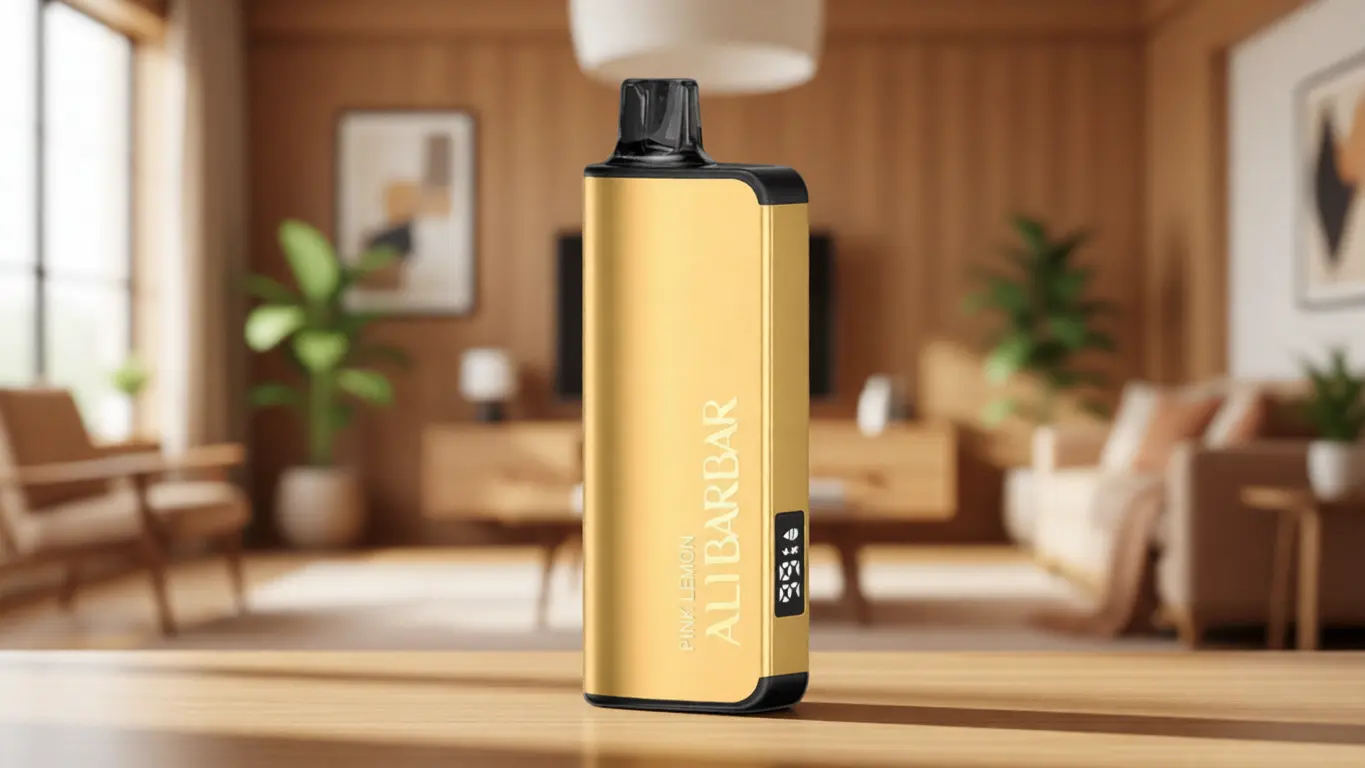
Take the example of the ALIBARBAR INGOT series. These devices employ a ceramic heating platform with relatively high thermal mass. The practical consequence is that extended draws do not cause the rapid temperature spikes seen in lower-mass designs. The output remains consistent throughout the draw duration, and the blinker activation does not correlate with the performance degradation that cheaper devices exhibit.
The trade-off is physical size. Higher thermal mass requires more material, which means the device is slightly larger than ultra-compact alternatives. For users who prioritise discretion and pocket-friendliness above all else, this may be a meaningful consideration.
Other commonly encountered device families illustrate different engineering philosophies. Some prioritise compact size and moderate output stability, accepting that extended draws will push the heating element closer to its thermal limits. Others focus on maximum fluid capacity at the expense of thermal management sophistication.
The key insight is that there is no universally correct answer. The right choice depends on whether you intend to use blinkers as part of your regular routine or whether the blinker is merely a safety limit you rarely encounter.
A Practical Framework for Evaluation
Here is a step-by-step methodology you can apply to evaluate any device’s suitability for extended-draw usage:
Step 1: Determine the rated draw duration. Check the device documentation for the maximum single-draw time. Devices with longer limits (12–15 seconds) are typically engineered with extended draws in mind.
Step 2: Evaluate thermal management. Take a standard draw and note the output character. Then take a draw that reaches the blinker limit. Compare the quality. If you detect significant degradation, the device’s thermal management is insufficient for your usage pattern.
Step 3: Assess recovery time. After a blinker, how quickly does the device return to normal operating temperature? Devices with poor heat dissipation will require longer cooldown periods between uses.
Step 4: Calculate cost-per-use. If you habitually reach the blinker limit, estimate how many draws the device delivers compared to its rated capacity. A device rated for 9000 draws may deliver significantly fewer if every draw is a blinker.
Step 5: Consider the feedback system. Does the device provide clear status indicators? Does the blinker pattern communicate useful information about the device’s state? If not, you will likely experience uncertainty about remaining capacity.
Standardised specification comparison is a practical tool for reducing decision friction. When evaluating options, look for documented draw-duration limits, heating element materials, and rated operational cycles. These numbers, combined with your own usage pattern, give you the information needed to make an informed choice.
Common Selection Errors and Industry Observations
Through observing thousands of user interactions, several patterns of incomplete evaluation emerge consistently:
Overweighting one specification while ignoring complementary factors. Users fixate on fluid capacity or battery rating without considering how draw duration affects both. A device with high capacity but poor thermal management will deliver fewer satisfactory draws than a smaller device with robust engineering.
Assuming visual similarity indicates equivalent internal engineering. The market contains devices that look nearly identical externally but employ radically different internal architectures. The presence of a ceramic heating element, the quality of the power management circuitry, and the materials used in the heating chamber are invisible at the point of sale but dominate the user experience.
Undervaluing modularity in cost-per-use calculations. The initial purchase price of a sealed device may be lower, but if you use it intensively, the cumulative cost of full-device replacement significantly exceeds the cost of replacing components in a modular system over the same period.
Confusing category terminology with technical specifications. The term “blinker” refers to an indicator function, not a measure of device capability. A device that permits long draws is not necessarily well-engineered for them. Always verify the underlying thermal management and power delivery specifications.
From an industry perspective, there is a notable divergence between what marketing materials emphasise and what engineering realities dictate. Marketing tends to highlight maximum capacity and compact form factors. Engineering realities point toward thermal management, component quality, and user feedback systems as the true determinants of satisfaction.
Frequently Asked Questions
Q: What exactly is a blinker on a vape?
A: A blinker occurs when a device’s safety timer reaches its programmed maximum draw duration, typically 8–15 seconds. The indicator light flashes to signal that the activation limit has been reached and power has been cut.
Q: Is it bad to hit a blinker on a vape?
A: It depends on the device’s engineering. In well-designed devices with robust thermal management, occasional blinkers cause no noticeable degradation. In lower-quality devices, repeated blinkers accelerate component wear and reduce operational lifespan.
Q: How long can you hit a blinker without damaging the device?
A: The device is designed to handle its programmed maximum draw duration. The damage concern is cumulative — repeated extended draws create more thermal stress than occasional ones. Most modern devices from reputable manufacturers can handle regular blinkers without catastrophic failure, though component degradation may accelerate.
Q: Why does my vape taste burnt after hitting a blinker?
A: Extended draws can outpace the wicking material’s ability to deliver fluid to the heating element. If the element runs dry even momentarily, it produces a burnt taste. This indicates either insufficient wicking capacity or that the device’s thermal management cannot maintain proper temperature during prolonged activation.
Q: Does hitting blinkers drain the battery faster?
A: Yes, but not proportionally. Extended draws place sustained peak current demand on the battery, which generates more internal resistance and heat. This reduces overall energy efficiency compared to multiple shorter draws. The effect is measurable but modest for most users.
Q: How can I verify whether my device can handle blinkers?
A: Compare the output quality of a normal draw to a draw that reaches the blinker limit. If the quality degrades, the device is not well-suited for extended draws. Also check the device documentation for maximum draw duration specifications and heating element materials.
Q: Are disposable vapes designed for blinker usage?
A: Disposable devices are designed for their rated number of activations. Each extended draw consumes a larger portion of that total capacity. While they can reach the blinker limit, doing so repeatedly will reduce the total number of usable draws.
Q: What should I do if my device blinks immediately upon activation?
A: A blinker that occurs immediately rather than after several seconds typically indicates a power management issue — either insufficient remaining energy, a connection fault, or a protection circuit activation. Try charging the device or checking the connection points.
Q: How can I tell if a device is well-engineered for extended draws?
A: Look for ceramic heating platforms, documented thermal management systems, adjustable airflow, and clear status indicators. Devices with higher thermal mass and sophisticated power management handle extended draws more consistently.
Q: Does OZVAPE Shop provide specification documentation for device draw durations?
A: Yes. All product listings include rated draw durations and heating element specifications where available. Our customer support team can also provide clarification on any technical specification.
Conclusion
The blinker is not a feature to chase or avoid categorically. It is a safety mechanism that communicates the device’s programmed limit. Whether reaching that limit is advisable depends entirely on the engineering that governs what happens before the light flashes.
Informed users evaluate devices based on thermal management, power delivery consistency, and component quality — not arbitrary specifications or popular trends. The devices that meet extended-draw usage patterns successfully are those that maintain output stability throughout the draw duration, provide clear status feedback, and use materials that resist thermal degradation.
At OZVAPE Shop, we have structured our product selection and specification documentation to support this kind of informed decision-making. Our curated ALIBARBAR range reflects the engineering principles discussed here — thermal stability, transparent feedback, and durable construction that withstands real-world usage patterns.
The right device is the one that matches your actual routine, not the one with the most attention-grabbing claims. Understand what your device is telling you, evaluate your own usage honestly, and choose accordingly. That is the only reliable path to sustained satisfaction.