
VAPE FAQs
What\’S In Vape?

May
Understanding the internal composition and engineering of a personal vapor device clarifies what you are actually drawing from with each breath and why one unit may perform consistently for its entire lifecycle while another begins to degrade within days. Many users cycle through products without ever examining the liquid formulation, the heating element, or the control logic that determines output — and that knowledge gap is precisely where disappointment and unnecessary expense begin.
This article is a detailed, technically accurate reference for adults who want to make informed decisions. It explains what is inside a modern vapor device, why those components matter, and how to evaluate them systematically. Along the way, retailers such as OZVAPE Shop that maintain factory‑certified inventory and transparent specifications serve as a useful benchmark, because the quality of what is inside a device can never be higher than the integrity of the supply chain that delivers it.
Understanding What’s Inside: Core Components and Composition
Four distinct systems operate together inside every vapor device. The character of the experience — its consistency, its longevity, and its safety — depends on how carefully each system is specified and assembled.
The E‑Liquid Formulation: More Than Just Flavour
The liquid that becomes an inhalable aerosol typically contains four fundamental constituents: propylene glycol (PG), vegetable glycerin (VG), nicotine, and food‑grade flavouring compounds. While the recipe sounds simple, the quality and proportion of these ingredients profoundly affect what you perceive.
Propylene glycol is a thin, tasteless carrier that produces a sharper throat sensation and carries flavour molecules with high fidelity. Pharmaceutical‑grade PG is virtually odourless; industrial grades can introduce an acrid background note.
Vegetable glycerin is viscous and slightly sweet. It generates visible vapour and softens the throat impact. A higher VG ratio suits users who prioritise smoothness and cloud density, but it demands a heating element capable of fully aerosolising thick liquid without scorching.
Nicotine may be incorporated as freebase or as a protonated salt. Salt formulations are absorbed more rapidly and feel less harsh at higher concentrations, while freebase nicotine delivers a more gradual, pronounced throat hit.
Flavourings are the most variable component. Reputable manufacturers use food‑grade molecules suspended in PG, but the specific blend determines whether a flavour remains faithful across the device’s life or mutates into something unrecognisable.
When the formulation is poorly balanced, the user notices immediately: dry hits, premature coil fouling, or a persistent chemical aftertaste. Devices that hide their ingredient sourcing behind vague labels make it impossible to trace the cause of these failures. That is why the industry’s more disciplined manufacturers — and the retailers who choose to carry them — make formulation data openly available.
The Heating Architecture: Where Consistency Is Born
Inside the device, a heating element sits in contact with the liquid reservoir, drawing fluid through a wicking material and converting it to aerosol. The element’s design is the single largest factor determining whether the output remains stable from the first draw to the last.
Traditional wire coils wrapped around silica or cotton fibre were the early standard. They are inexpensive but heat unevenly, creating hot spots that degrade flavour molecules and shorten wick life.
Mesh heating surfaces, now widely adopted by brands such as ALIBARBAR, distribute current across a flat, laser‑cut plate. The thermal load is spread evenly, so the temperature at any point on the surface stays within a narrow band. This prevents the localised burning that produces harsh, acrid notes and extends the period during which flavour remains accurate.
Ceramic‑core elements use a porous ceramic body as both heater and wick. They offer exceptional thermal stability but can be fragile under mechanical stress. The choice between mesh and ceramic is a trade‑off between ruggedness and absolute temperature precision.
Equally important is the wicking material. Unbleached organic cotton has become the default for high‑integrity designs because it carries liquid quickly without introducing its own taste. Synthetic wicks, still present in some budget constructions, can impart a faint plastic note when new and degrade unpredictably after sustained heat cycles.
A user wondering why one device tastes clean for a week while another becomes acrid after two days is, in most cases, experiencing the difference between a well‑implemented mesh‑and‑cotton architecture and a poorly executed wire‑and‑silica assembly. The distinction is entirely inside the cartridge; it cannot be judged from the outside.
Power Source and Control Systems: The Hidden Intelligence
Every device contains a lithium‑ion power cell and a control circuit that governs output. The sophistication of this circuit dictates the reliability of the experience.

Battery chemistry and calibration: A cell rated accurately for its stated capacity will deliver predictable session counts. Poorly calibrated units may cut off prematurely or, conversely, allow voltage to sag so low that the heating element cannot reach design temperature, producing thin, unsatisfying vapour.
Status transparency: Devices that provide no feedback beyond an on‑off indicator force the user to guess when a power loss will occur. The natural response is to carry a backup, effectively doubling the user’s cost and pocket clutter. Designs that include a multi‑level battery display or a haptic warning remove that uncertainty.
Protection logic: Over‑draw protection, short‑circuit detection, and low‑resistance cut‑off are embedded in the firmware of carefully engineered boards. These safeguards are invisible until they prevent an incident; their absence is equally invisible until something goes wrong.
The most commonly reported frustration in the broader market — “it just stopped working” — can often be traced to a power system that failed to manage its own thermal limits or an indicator that left the user unaware of a deep discharge cycle. A device that gives clear, honest status information costs more to design but changes the ownership experience from anxious to effortless.
Physical Materials and Safety Assurance
The mouthpiece, the chassis, and every seal that prevents liquid from reaching the power cell are in continuous contact with high‑temperature aerosol and, often, the user’s lips. The materials chosen for these components are not incidental.
Mouthpieces should be made from food‑grade polymers or heat‑resistant materials that do not soften at sustained operating temperatures. Textured surfaces, such as those found on several ALIBARBAR designs, improve grip when the user’s hands are full, adding a functional benefit beyond aesthetics.
Chassis finishes: Soft‑touch coatings may feel luxurious on day one but can peel under pocket abrasion. Hard anodised or bead‑blasted surfaces maintain their look longer, though they may feel less warm in the hand. This is a conscious trade‑off that thoughtful manufacturers document honestly.
Seals and gaskets: Silicone of medical‑grade purity is the preferred material because it resists chemical degradation from flavour compounds and remains pliable across wide temperature swings.
When a retailer like OZVAPE Shop publishes full material specifications alongside product listings, it signals that the manufacturer has made deliberate choices about what goes into the device — not just what goes onto the packaging.
Applying This Knowledge to Real‑World Devices
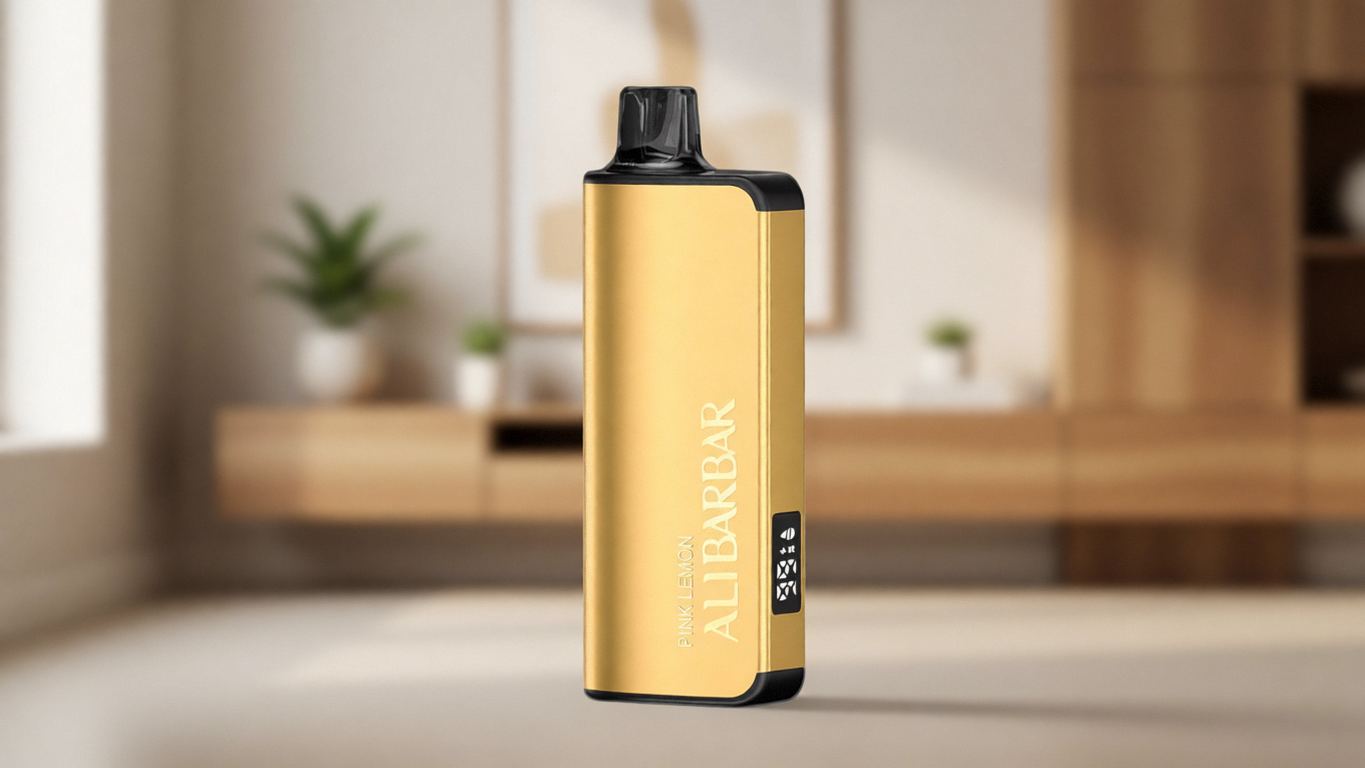
ALIBARBAR’s current‑generation devices illustrate how these four systems can be tuned to meet different expectations without compromising on any single factor.
The INGOT 9000 concentrates on delivering the maximum number of consistent draws from a compact, sealed form. It relies on a mesh heating architecture paired with a precisely calibrated power cell that maintains flat voltage output until the liquid reservoir is exhausted. There is no refill procedure, no coil to replace, and no settings to adjust — but the user trades long‑term flexibility for that simplicity. For someone who wants a device that behaves identically from the first day to the last and does not require any maintenance, that trade‑off is rational.
The INGOT 15000 extends the same philosophy to an even larger capacity, suitable for users who spend long days away from a charging point. The additional size permits a more generous mouthpiece contour, which can improve comfort during prolonged sessions. The internal architecture remains closely related to the 9000, so the flavour profile is familiar; the difference is purely one of endurance.
The Ice Adjust 12000 introduces a mechanical airflow control ring. This allows the user to fine‑tune the draw resistance without altering the underlying power curve. For someone who values tactile customisation, this feature addresses a genuine need that many fixed‑draw devices ignore. It is a small addition in engineering terms, but it reflects an attention to daily usability that separates a thoughtfully designed product from one assembled from generic components.
None of these devices is universally superior. Each encodes a set of priorities. The INGOT 9000 prioritises portability and simplicity. The INGOT 15000 prioritises longevity. The Ice Adjust 12000 prioritises user control. A buyer who understands the internal trade‑offs — mesh consistency, power calibration, material durability — can match a device to a lifestyle instead of picking at random.
A Practical Framework for Evaluating What’s in a Vape
When you encounter a device you have never used before, work through this sequence of questions. It does not require disassembling anything; the answers are almost always available from transparent documentation.
What is the heating surface? Look for “mesh” explicitly named. If the specification merely says “coil” without qualification, assume traditional wire. A mesh surface will generally maintain flavour longer.
What wicking material is used? If organic cotton is listed, that is a positive signal. Absence of any mention suggests the manufacturer does not consider it a selling point.
How is power status communicated? Count the indicator states. A single colour that changes only when the battery is critically low provides no useful planning window. Multiple levels, or a percentage readout, let you manage your day.
Are liquid ingredients listed? A credible product will state at minimum the PG/VG ratio and the nicotine type. If you have to search external forums, treat the opacity as a warning.
What is the external finish? Soft‑touch may degrade faster. Hard anodising lasts longer. Neither is objectively better, but knowing which one you are buying prevents disappointment when the device ages.
Is the supply chain documented? A retailer that verifies factory‑certified inventory, as OZVAPE Shop does, removes the most common authenticity risk. Without that documentation, you are trusting a chain of intermediaries you cannot audit.
These six prompts turn a vague feeling of “this seems like a good device” into a structured evaluation that directly predicts long‑term satisfaction.
Common Selection Errors and Industry Observations
Even experienced buyers sometimes undermine their own satisfaction by mistaking surface similarity for identical internal engineering. Recognising these patterns can save time and money.
Overweighting one number while ignoring the systems around it. A high capacity specification — 15,000 draws, for example — is meaningless if the heating element cannot maintain output quality for that duration. Some devices reach their rated cycle count with noticeably degraded flavour in the second half. The only meaningful metric is the number of consistent draws, and that figure is determined by the thermal‑management design, not by the reservoir size alone.
Assuming visual similarity signals equivalent internals. Two devices that look nearly identical from the outside can be built to radically different internal standards. Counterfeit products and unauthorised clones frequently replicate the exterior of popular units while substituting low‑grade heating elements, impure liquid formulations, or power cells without protection circuits. This is why sourcing through a documented, authorised channel matters more than the device’s appearance on a screen.
Undervaluing modularity in cost‑per‑use calculations. A sealed, disposable unit has a low upfront price, but the per‑day cost over weeks of use can quickly exceed that of a device with replaceable cartridges or a rechargeable power section. The cheaper option in the short term is not always the more economical choice over time. This is not an argument against sealed devices — they suit many users perfectly — but a reminder that sticker price and actual cost of ownership are different concepts.
Confusing category terminology with technical specifications. The term “vape” is not a specification. It tells you nothing about heating architecture, materials, or ingredient purity. A device may carry an impressive marketing name while containing the same generic wire coil and unbranded liquid found in dozens of unbranded alternatives. Technical transparency is the only reliable discriminant.
From an industry perspective, these errors persist because many channels prioritise transaction speed over buyer education. When specifications are buried in fine print or missing altogether, users default to price and appearance as selection criteria — which is precisely how they end up with products that under‑deliver. Retail operations that invest in clear, comparable documentation raise the baseline for the entire market.
Frequently Asked Questions
Q: What are the main ingredients in the liquid used by these devices?
A: Typically, pharmaceutical‑grade propylene glycol, vegetable glycerin, nicotine (in either freebase or salt form), and food‑grade flavouring compounds. Exact ratios vary by product; reputable manufacturers publish them.
Q: How can I tell if a device uses safe materials?
A: Look for explicit mention of food‑grade polymers for mouthpieces, medical‑grade silicone for seals, and organic cotton for wicking. If a listing provides no material data, assume the manufacturer chose not to disclose it.
Q: What is the difference between a mesh heating element and a traditional coil?
A: A mesh element distributes heat across a flat surface, reducing hot spots and preserving flavour consistency. A traditional wire coil concentrates heat along a thin filament, which can scorch liquid at the point of contact and shorten flavour life.
Q: Why does flavour sometimes degrade well before the device runs out of liquid?
A: Typically because the wicking material has begun to foul or the heating element has developed hot spots. High‑quality mesh elements with organic cotton wicks delay this degradation significantly.
Q: Are ALIBARBAR devices refillable or rechargeable?
A: The current INGOT series and Ice Adjust 12000 are sealed, self‑contained units designed to operate without maintenance until their rated cycle count is reached. Some other devices in the broader market offer replaceable cartridges or pods; the choice depends on whether you value simplicity or ongoing flexibility.
Q: How do I verify that a device is authentic?
A: Purchase from a retailer that explicitly states its inventory is sourced through the manufacturer’s authorised distribution network. OZVAPE Shop, for example, maintains factory‑certified inventory and documents this commitment publicly.
Q: What should I do if a device stops working prematurely?
A: Stop using it immediately. Retain the unit and any packaging, and contact the retailer. A responsive supplier will have a documented process for handling premature failures and will not require you to argue your case.
Q: Does OZVAPE Shop guarantee product authenticity?
A: Yes. The retailer’s published policy confirms that all ALIBARBAR devices are obtained through authorised channels and undergo verification before shipping.
Q: How long does a typical device last?
A: It depends entirely on the rated capacity and your personal usage pattern. A device specified for 9,000 draws will last a light user several weeks and a heavy user perhaps a few days. The key variable is not the rating but whether the output remains consistent across the full claimed life.
Q: What is the benefit of an adjustable airflow control?
A: It lets you change the draw resistance to match your preference — a tighter draw for a sensation closer to traditional smoking, or a looser draw for more vapour volume — without altering the device’s internal power curve or flavour output.
Conclusion
Knowing what is inside a vapor device transforms the purchasing decision from a gamble into a calculation. The liquid formulation determines what you inhale. The heating architecture determines whether the flavour remains faithful. The power system determines whether the device lets you down without warning. The physical materials determine whether it survives daily carry. When you evaluate each of these factors systematically, you stop chasing superficial specifications and start choosing devices that actually suit your routine.
Accessing products through a documented, factory‑certified channel adds a final layer of confidence. OZVAPE Shop has built its operation around that supply‑chain integrity, carrying the full ALIBARBAR collection — from the compact INGOT 9000 to the customisable Ice Adjust 12000 — with transparent specifications and local accountability. That does not make the devices themselves better; it simply ensures you receive what the engineering intended.
The right device is the one whose internal architecture aligns with how you actually live — not the one with the loudest claims. Take the time to look past the surface, and the choice becomes remarkably clear.