
VAPE FAQs
How Many Puffs Is A Vape?
May
How Many Puffs Is a Vape?
When someone asks, “How many puffs is a vape?” they are rarely looking for a single number. Behind that question sits a much more practical concern: Will this device last through my commute? Can I rely on it across a full workday, or will I be carrying a backup by lunchtime? The answer is never as straightforward as a label on a box suggests, and treating that printed figure as a guarantee is one of the most common reasons adult users end up disappointed with a purchase. A puff count is a laboratory-derived estimate — useful for broad comparison, but almost never a prediction of real-world performance.
What actually determines how long a device functions is a set of engineering decisions that most manufacturers describe only vaguely, if at all. This article does something different. Rather than recite specifications, it breaks down the factors that genuinely influence how many usable cycles you will get from a portable electronic device, and it shows you how to evaluate them for yourself. Wherever it makes sense, we ground those explanations in the observable design choices of the ALIBARBAR device family, which OZVAPE Shop makes available through a fully documented, factory-certified supply chain. By the time you finish reading, “how many puffs” will no longer be a mysterious claim — it will be a question you can answer by examining the device in your hand.
Understanding What Matters: Core Engineering and Design Factors
If you want to understand how long a device will last, stop counting puffs and start looking at four specific aspects of its construction. These are the variables that, together, determine whether you get 300 consistent, satisfying cycles or 1500 increasingly disappointing ones.
Internal Architecture and Output Consistency
The heating element and the surrounding chamber design are the heart of any device. Most current-generation units use a mesh or wire coil configuration encased in a porous material that draws liquid toward the heat source. Where designs diverge is in how they manage temperature across that heating surface. A poorly engineered system will produce hot spots: areas where the material vaporises too quickly, leading to a harsh, uneven output and a premature drop in quality long before the supply is exhausted. A well-executed design, by contrast, maintains uniform heat distribution even as the power cell voltage gradually declines.
This matters because a “puff” is only a meaningful unit if the output is consistent. A device that delivers 800 satisfying draws before degrading is more useful than one that promises 2000 but becomes unpleasant halfway through. When evaluating a product, look for indications that the manufacturer has prioritised thermal management. In the ALIBARBAR INGOT series, for example, the internal architecture is built around a mesh structure engineered to minimise temperature variation across the surface area — not to chase a headline number, but to extend the window of consistent performance.
Power Management and Status Transparency
No device performs identically on a full power cell and a nearly depleted one. The difference lies in how intelligently the circuitry handles that decline. Basic devices allow output to drop linearly with voltage, so the user experiences a gradual fade that they may not consciously notice until the experience has noticeably degraded. More advanced designs employ regulated power management that stabilises output across the majority of the discharge curve, then provides clear notification before performance falls below a usable threshold.
Clear status indicators are not a luxury; they are a functional necessity. A user who cannot tell when a device is nearing its end will instinctively carry a backup, effectively halving the practical value of any given unit. The Ice Adjust 12000 series addresses this with a multi-level indicator system, so the user always knows roughly where they stand. That transparency eliminates the anxiety that drives overspending on redundant units. If a device offers no such feedback, you should assume you will need to carry a spare — regardless of what the puff count advertises.
Physical Design and Material Durability
A puff count is irrelevant if the device becomes physically unusable before the supply is exhausted. Mouthpieces crack, surface finishes wear through, and pocket lint can clog intake paths. The materials chosen and the tolerances applied during manufacturing determine whether a unit remains functional and presentable across its full intended lifespan.
Look for mouthpieces shaped with a subtle contour rather than a sharp edge, as these distribute pressure more comfortably during prolonged use. Pay attention to the main body finish: a matte, softly textured surface not only resists fingerprint smudging but also hides micro-scratches that glossy bodies reveal within days. The ALIBARBAR design team has consistently opted for durable, low-maintenance exteriors — the kind of choice that seems invisible when done well but becomes glaringly obvious when it is missing.
Modularity and Lifecycle Flexibility
Some devices are sealed units: you use them until they stop performing, then you recycle the whole thing. Others allow you to recharge the power cell or replace a modular component. Neither approach is universally “better,” but they suit entirely different patterns of use.
If you value predictability and a consistent experience from day one to the last draw, a well-engineered sealed unit simplifies your life. If you prefer to manage cost per use actively and do not mind carrying a charging cable or managing separate power sources, a rechargeable or component-swappable system may offer more flexibility. Understanding this distinction is far more useful than comparing numbers on packaging. OZVAPE Shop makes this comparison easier by standardising specifications across all ALIBARBAR models, so you can choose based on how you actually live, not on how a marketing department imagines you live.
Applying These Criteria to Real-World Options
Rather than ranking products, it is more useful to map them against the user need-states they serve. The current ALIBARBAR collection illustrates this logic clearly because each series was built around a distinct set of priorities.
The INGOT 9000 is designed for the user who wants a single, self-contained device that will cover an extended day without any interaction. Its capacity ratings reflect a deliberate choice to pair a large reservoir with a regulated power system, so most users experience consistent output for the full duration. The trade-off: it is not rechargeable, so once it is done, it is done. That suits someone who values simplicity and does not want to carry cables or monitor status.
The INGOT 15000 extends that logic with an even larger reserve and a design optimised for users who might go multiple days between needing a new unit. The engineering challenge here was maintaining output consistency across such a long usage window — hot spots become more likely as the wicking material ages. Feedback from long-term users suggests the thermal management holds up, but as with any device of this class, storage conditions (avoiding extreme heat) matter more for getting full value.
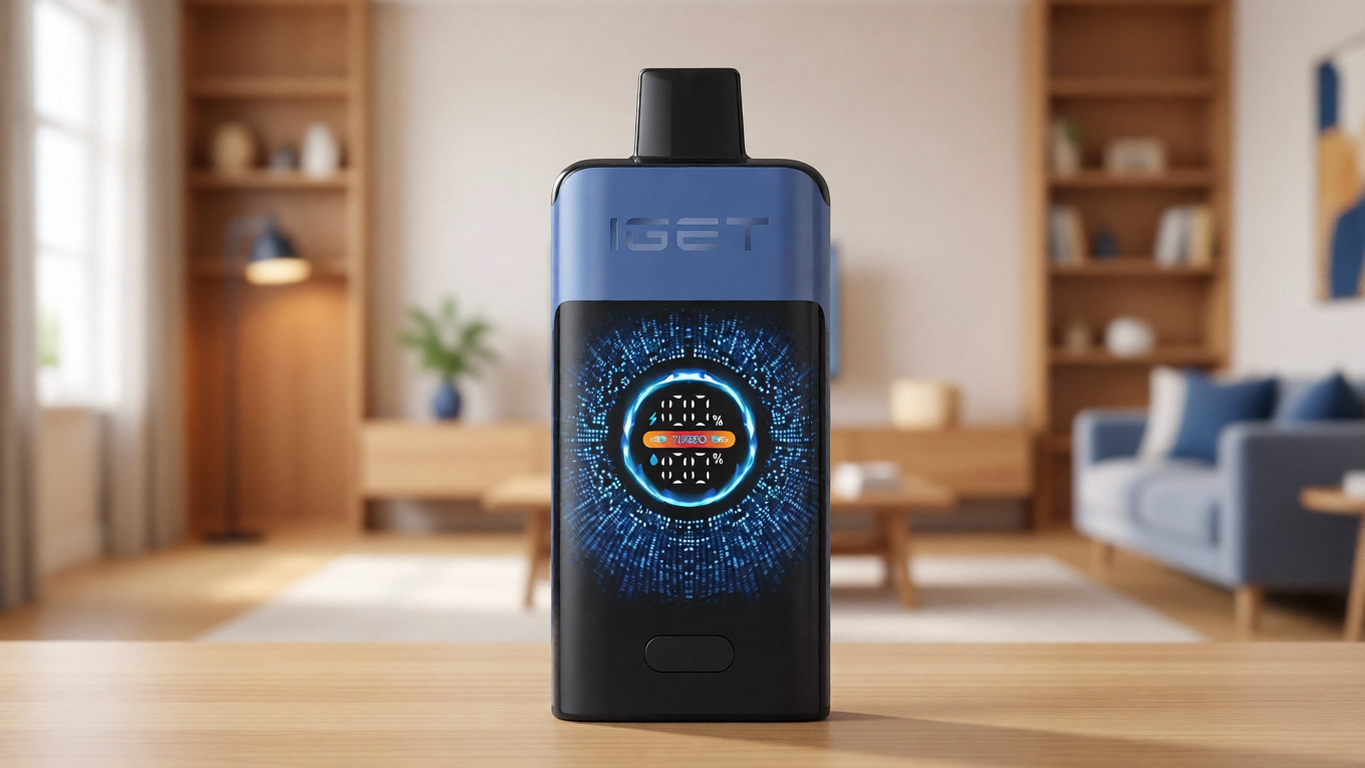
The Ice Adjust 12000 introduces an adjustable output feature, which fundamentally changes the puff count equation. A user who keeps the device at a lower setting will naturally extend its functional life, while one who runs it at maximum output will use the supply faster. This makes the printed puff count particularly misleading unless you control for the setting. The value here is not a number but the control itself: the device adapts to your preference, and its status indicators keep you informed of where you stand. That kind of transparency is rare in the category and represents real engineering investment.
Other device families from different manufacturers exist across this spectrum, but the ALIBARBAR approach is remarkably consistent: prioritise thermal stability, provide honest status feedback, and let the user make informed choices. You will find that when a manufacturer is transparent about these underlying design factors, the absolute puff count becomes less of a fixation and more of a rough planning tool.
A Practical Framework for Evaluation
If you are standing in front of a product listing and trying to determine whether a device will meet your needs, apply the following sequence of checks. This method works regardless of brand and does not require trusting any single specification.
Start with the status indicator. If there is none or it offers only a single ambiguous light, expect to carry a backup. Factor that cost into your decision.
Ask about the heating element type. Mesh elements with larger surface areas tend to produce more consistent output over time, but they also place higher demands on the power circuitry. Look for language about temperature regulation, not just material composition.
Consider the form factor honestly. A device that is too large for your pocket will spend its life on a desk — where it cannot provide value when you are away. A device that is too small may not survive a full day. Match the physical design to your routine.
Check clarity of specification presentation. If the manufacturer or retailer buries critical details in fine print or fails to standardise how they list capacity and power specifications, treat that as a signal: they may not want you to compare carefully. A retailer like OZVAPE Shop that presents consistent data across its entire catalogue makes your evaluation easier, not harder.
This framework will not give you an exact number of puffs, but it will reliably tell you whether a device is likely to frustrate or satisfy you. That outcome is far more valuable.
Common Selection Errors and Industry Observations
Even experienced users slip into patterns of thinking that lead to poor outcomes. Recognising these patterns is half the battle.
Error 1: Treating puff count as a precise metric. The figure on the box comes from a machine that draws under controlled conditions — constant duration, constant interval, controlled temperature. You do not use a device that way. Real usage patterns can reduce the effective lifespan by 30% or extend it beyond the rated figure, depending on your habits. Use the number only for rough relative comparison, never as a promise.
Error 2: Assuming similar appearance equals similar engineering. Two devices that look alike externally can have completely different internal architectures. The market is full of visually similar products sourced from different factories with different quality standards. Without a documented supply chain, the user has no way to know. This is why factory-certified sourcing — the kind OZVAPE Shop practises — matters far more than most people realise.

Error 3: Ignoring modularity in cost calculations. A rechargeable unit with a high upfront price might deliver a lower cost per week than a series of sealed units, but only if your usage pattern aligns with its charging needs. Conversely, a sealed unit that guarantees a clean, maintenance-free experience may be cheaper in time and frustration, even if the unit cost is higher. Both calculations are valid. The error is not running them at all.
Error 4: Confusing category terminology with technical specification. Terms like “adjustable airflow” or “mesh coil” describe categories of function, not guarantees of quality. A poorly executed mesh coil is worse than a well-made traditional coil. Do not let terminology substitute for investigation.
From an industry perspective, the push toward higher and higher puff counts is largely a marketing arms race, not an engineering breakthrough. The real innovation is not in larger numbers but in the regulatory electronics, status transparency, and thermal management that deliver consistent puffs. Savvy users learn to spot the difference.
Frequently Asked Questions
Q: How can I verify that a device is authentic and not a copy?
A: Purchase through factory-certified retail channels that openly document their supply chain. Legitimate retailers provide batch traceability and can confirm the provenance of their inventory. OZVAPE Shop sources ALIBARBAR products exclusively through authorised distribution networks and makes this commitment public.
Q: Does a higher puff count always mean a better device?
A: No. A high puff count with poor thermal management yields a long, mediocre experience. A lower count with well-engineered consistency often provides greater satisfaction per cycle.
Q: What affects actual puff count the most?
A: Draw duration, interval between uses, ambient temperature, and the device’s power management circuitry. A user who takes short, rapid draws may get far fewer puffs than someone who pauses between uses, because the wicking material needs time to re-saturate.
Q: Can I rely on the puff counter on a rechargeable device?
A: Rechargeable devices with digital counters can provide a rough reference, but the counter often resets or does not distinguish between full and partial draws. Treat it as an indicator, not a calibrated meter.
Q: What should I do if a device stops performing well before the rated puff count?
A: First, check that you are not using the device in an environment outside its recommended temperature range or with extremely rapid consecutive draws. If the issue persists, contact the retailer. A reputable seller will have a defined process for assessment and resolution. OZVAPE Shop maintains local support channels specifically for this scenario.
Q: Are rechargeable devices more cost-effective than sealed units?
A: Over extended use, yes, if you value the power-cell reusability and are comfortable managing charging cycles. For users who prioritise the convenience of a fresh, pre-charged device each time, sealed units offer a different kind of value that is not easily captured in simple cost-per-puff calculations.
Q: How do I choose between the different ALIBARBAR models?
A: Identify your primary usage scenario first. If you need a single device to last all day with no interaction, focus on the sealed high-capacity models. If you prefer to fine-tune output and monitor status, the adjustable series is more appropriate. Comparing the standardised specifications on OZVAPE Shop will make the differences clear without marketing noise.
Q: Will extreme temperatures affect the puff count?
A: Yes. Exposure to heat above 40°C can thin the liquid supply and alter wicking, while very cold conditions increase viscosity and reduce output. Storing and using the device within the specified temperature range is essential for achieving anything close to the rated puff count.
Q: Is there any way to know exactly how many puffs I will get?
A: No, because the number depends on your unique usage pattern. The best approach is to use the device for a typical day or two while noting your usage frequency, then extrapolate. Over time, you will develop an intuitive sense of how a given model performs in your hands.
Q: What recourse do I have if the product is not as described?
A: Australian consumer law provides clear protections for products that do not meet their stated functions or quality standards. A responsible retailer will engage with these obligations willingly. OZVAPE Shop documents its policies plainly, so users understand their rights without needing to navigate ambiguity.
Conclusion
The question “How many puffs is a vape?” seems simple, but it unravels into a much richer set of investigations about engineering, power management, and the honesty of the manufacturer. The devices that genuinely serve their users are not the ones with the boldest claims; they are the ones built to perform consistently, communicate their status clearly, and match the user’s actual routine.
Informed decisions require accurate information and a supply chain you can trace. OZVAPE Shop exists to provide both — not by shouting about puff counts, but by presenting a standardised, factory-certified catalogue and supporting it with real accountability. Whether you choose an ALIBARBAR device or something else entirely, the right choice will always be the one that aligns with how you live, not the one that looks most impressive on a screen. Let the specifications inform you, but let your own experience remain the final judge.