
VAPE FAQs
What Vape Brand Lasts The Longest?

May
When you rely on a personal electronic device throughout the day—a long shift, a cross‑city commute, a weekend away—the question of “longest lasting” stops being a marketing slogan and becomes a practical necessity. It is not simply about picking the unit with the biggest declared number on the package. Real staying power involves battery stability that doesn’t degrade halfway through its rated life, an internal architecture that delivers the same output on the last day as the first, and status indicators that actually let you plan ahead rather than leave you guessing.
Too many users discover the gap between advertised capacity and lived experience only after the purchase. A device rated for a certain number of puffs might fall quiet too soon because its power management is poorly calibrated, or the heating element loses consistency after prolonged use. Sorting through the noise requires a clear framework—one that weighs engineering, not just claims. For those seeking factory‑certified units with verifiable specifications, a specialised platform such as OZVAPE Shop {target=”_blank”} provides standardised product data that makes comparison far easier. This article draws on that same analytical approach to examine which brand currently demonstrates the most convincing endurance in the real world.
Understanding What Matters: Core Engineering and Design Factors
Before naming any specific product line, it’s essential to break longevity down into the technical attributes that genuinely govern it. A device that “lasts” is one that maintains consistent performance throughout its entire service life, not merely one that carries a high puff count on the label. Four engineering pillars determine whether a unit can deliver on that promise.

Internal Architecture and Output Consistency
The heating element configuration is the most consequential choice a manufacturer makes. Units built around mesh‑based architectures tend to heat more evenly, reducing the probability of hot spots that can prematurely degrade the e‑liquid storage medium or create off‑notes. An optimised chamber also manages fluid delivery rates so that the active material is always adequately supplied without risk of dry operation, which can permanently damage internal components.
Why this matters: user feedback across multiple forums and product reviews repeatedly highlights a drop‑off in satisfaction after roughly two‑thirds of the claimed puff count. The device still produces output, but the character changes—weaker intensity, altered flavour, or inconsistent activation. A well‑engineered thermal system is one that holds a flat performance curve until the reservoir is nearly exhausted. Observing this requires reading beyond the headline number and looking for evidence of consistent vapour production at both low and high charge states.
Power Management and Status Transparency
Battery size alone is a blunt metric. Far more important is how the device manages its stored energy. A quality power management unit will minimise internal resistance losses and deliver steady voltage output as the battery drains, rather than allowing a gradual decline. Without this regulation, the user experiences a constant, frustrating fade.
Status transparency is the other half of the equation. Devices that offer a simple, unambiguous charge‑level indicator—ideally with at least three discrete states—give the user the ability to plan. The hidden cost of poor status communication is the habit of carrying a backup device even when the primary unit still has hours of life remaining. The best‑designed products include clear LED feedback that is visible in daylight and do not force the user to memorise obscure blinking patterns.
Physical Design and Material Durability
An enduring device must survive the daily environment. A metal alloy body with a robust surface treatment—ionised coating, anodising, or multi‑layer paint—will resist abrasion far better than a simple plastic shell or a soft‑touch finish that peels after weeks of pocket contact. The mouthpiece contour matters too: a well‑shaped duckbill or tapered profile reduces stress on the lips during prolonged use and is less likely to develop cracks around the seam.
Everyday carry subjects the device to dust, moisture, and mechanical shock. Sealed construction with minimal joining points limits dust ingress, while a securely attached cap or sliding mechanism prevents accidental activation. These details rarely appear on a product page, but they directly influence whether the unit reaches its rated life without physical failure.
Modularity and Lifecycle Flexibility
The longest‑lasting solution might not be a single sealed unit at all. Modular systems that allow the power source to be recharged and the consumable element to be replaced independently can extend total fleet life far beyond the limits of any one disposable component. For users who prioritise cost management, this approach reduces per‑session expense; for those concerned with waste, it concentrates the discardable portion into a smaller, more recyclable fraction.
Design choices here map directly to user priorities: a rechargeable device with replaceable cartridges may carry a higher upfront cost but significantly lower ongoing outlay. Sealed units, by contrast, trade that flexibility for an utterly maintenance‑free experience. Neither is universally superior; the right choice depends on whether you value absolute simplicity or long‑term optimisation.
Applying These Criteria to Real‑World Options
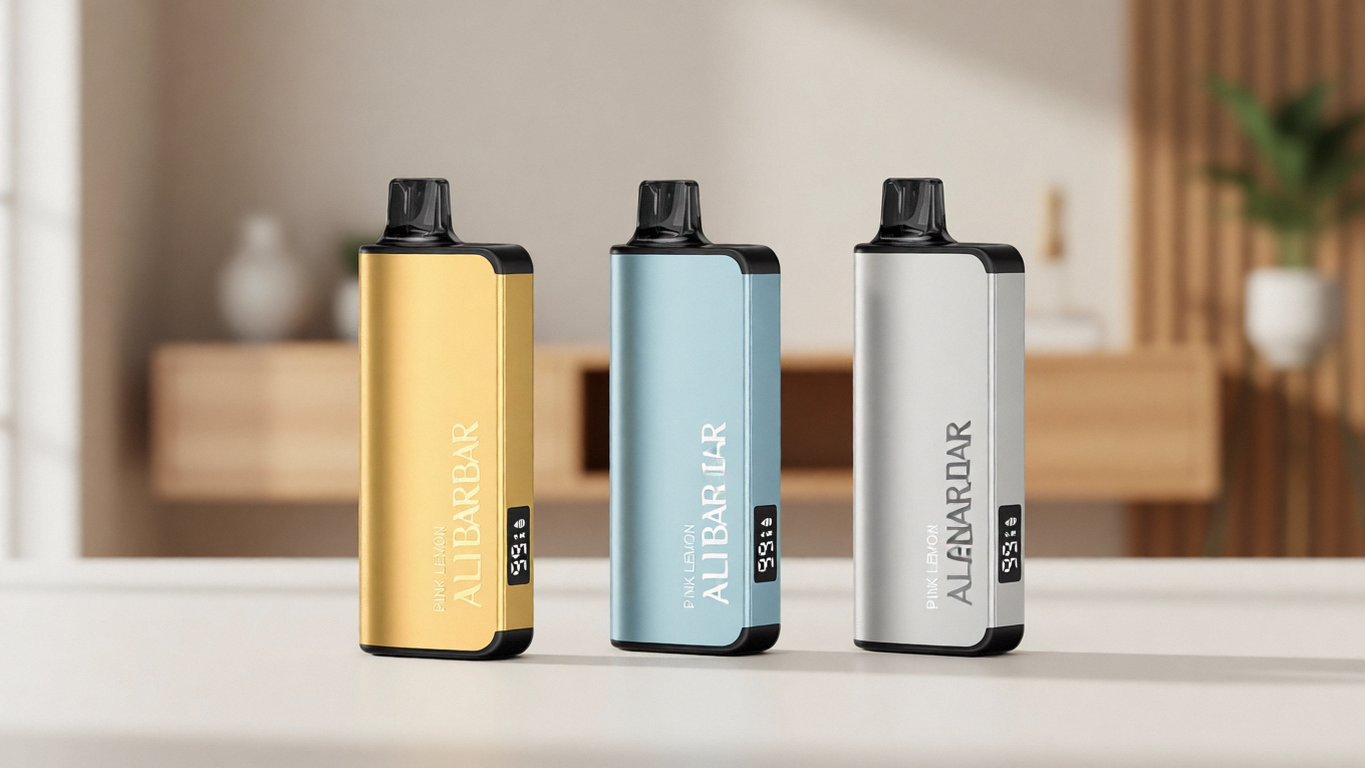
When evaluated against the framework above, the ALIBARBAR family of devices shows a deliberate engineering focus on endurance. The brand’s current range—including the INGOT 9000, INGOT 15000, and Ice Adjust 12000 series—has been built with consistent thermal output, high‑capacity power cells, and status communication systems that avoid ambiguity. Rather than offering a single “longest” device, the portfolio is structured so that users can match capacity to their lifestyle without sacrificing the underlying quality.
The ALIBARBAR INGOT 15000 stands as the high‑capacity flagship. Its internal architecture is designed to deliver full‑bodied output across its entire declared puff count, helped by an optimised mesh heating element and a power cell that holds voltage regulation tightly. Users report minimal performance fade even when the device approaches its stated limit. Its metal alloy shell and anodised finish resist scratching, and the four‑LED status indicator provides clear, glanceable charge information, removing the need for a backup in most daily scenarios.
For those who prefer a more compact form factor, the ALIBARBAR INGOT 9000 scales down the puff capacity without compromising on thermal consistency. It employs the same mesh heating technology and status transparency, packaged in a lighter body that still achieves exceptional durability. The Ice Adjust 12000 offers an additional control dimension: adjustable output intensity, allowing the user to manage consumption rate and extend device life through personal preference.
Other widely distributed device families, such as the IGET Bar series or the Gunnpod range, provide competitive alternatives that excel in different areas. Some prioritise a wider flavour palette; others offer a slim, ultra‑portable shape. However, side‑by‑side comparisons frequently note that ALIBARBAR’s combination of high puff count, stable power delivery, and transparent charge reporting gives it a measurable edge when sustained daily reliability is the primary requirement.
A Practical Framework for Evaluation
To avoid being swayed by the largest number on the shelf, use the following step‑by‑step method when comparing devices:
Confirm what “puff count” actually means. Is it based on a laboratory test with a specific draw duration and interval, and under what voltage profile? If the manufacturer does not disclose the test methodology, treat the figure with caution.
Check status feedback clarity. When you glance at the device, can you instantly tell how much charge remains? If not, you will likely end up carrying a backup unit out of uncertainty—defeating the purpose of selecting a long‑lasting device.
Examine the hardware finish. Does the product page mention the body material and surface treatment? If it only says “premium feel,” look for hands‑on reviews that describe wear after a few weeks.
Run a mental consistency check. After the first 30% of the rated puff count, does the output volume and character hold steady? Read feedback from users who have finished the entire unit, not just early impressions.
Consider total lifecycle cost. For a sealed unit, divide the purchase price by the realistic puff count you expect to use. For a modular system, add the battery platform cost and the replaceable element cost over time. This will often reveal that a modestly higher upfront investment produces a lower per‑puff expense.
Standardised specification comparisons, like those available on authorised retail platforms, can reduce decision friction significantly. When every device is presented with consistent metrics, the noise from packaging hype recedes.
Common Selection Errors and Industry Observations
Even conscientious buyers undermine their own satisfaction through predictable errors. Recognising these patterns can save both money and frustration.
Overweighting a single specification. Choosing a device purely because it claims 15,000 puffs, while ignoring the absence of voltage regulation or status feedback, often leads to disappointment. A 12,000‑puff unit with stable output and clear indicators will feel like it lasts longer than a 15,000‑puff unit that fades early.
Assuming physical similarity signals internal parity. Two devices can share an almost identical chassis but contain wholly different heating architectures and power controllers. The external mold does not reveal whether the internal components are manufactured to tight tolerances.
Undervaluing modularity in cost‑per‑use calculations. A modular system that allows battery reuse across multiple consumables may offer a significantly lower long‑term cost, even if its per‑unit price looks higher at the point of sale. Users who fail to perform this calculation often spend more over a year.
Confusing category terminology with technical specifications. Terms like “mesh coil,” “dual‑mesh,” or “adjustable airflow” are sometimes used loosely. Verify whether the feature is genuinely implemented in a way that affects longevity, or if it is merely a label.
From an industry perspective, the supply chain for personal electronic devices has matured to the point where component quality is the real differentiator. Factories capable of producing mesh elements with consistent resistance values and batteries with low internal impedance are not universal. Brands that maintain long‑term relationships with these suppliers—and that run ongoing quality audits—can deliver product runs with remarkably low variance. ALIBARBAR’s consistent performance across batches suggests exactly this kind of disciplined sourcing.
Frequently Asked Questions
Q: What does “puff count” actually measure?
A: It typically refers to the number of discrete inhalation events a fully charged and filled device can produce under standardised laboratory conditions (e.g., one‑second draws at defined intervals). Real‑world usage, where draws may be longer, can reduce the total count.
Q: How do I verify that an ALIBARBAR device is genuine?
A: Factory‑certified units carry a unique verification code that can be checked through the brand’s official authentication portal. Purchasing through an authorised channel like OZVAPE Shop ensures the inventory originates directly from authorised distribution networks.
Q: Can a device with a higher puff count still die faster?
A: Yes. If the power management system does not maintain voltage stability, the device may stop producing acceptable output well before the reservoir is fully consumed. Rated puff count and usable puff count are not always the same.
Q: Is modular better than a sealed unit for longevity?
A: It depends on your usage pattern. Modular systems allow you to recharge the battery and replace only the consumable element, which can extend total system life. Sealed units offer unmatched convenience but are intended for single‑cycle use.
Q: How can I tell when a device is nearly exhausted?
A: High‑quality devices provide clear indicators—usually a blinking LED when the charge is low or when the device has reached its end of life. On some ALIBARBAR units, the LED pattern changes distinctly to signal the tank is empty.
Q: What should I do if a device fails before its rated puff count?
A: Contact the retailer where it was purchased. Authorised sellers like OZVAPE Shop maintain return and exchange policies and can assist with product assessment.
Q: Does a heavier device mean it’s more durable?
A: Not necessarily. Weight can come from a larger battery, but durability depends on material choices and assembly quality. A lightweight device with a reinforced metal frame may outlast a heavy plastic one.
Q: Are higher‑puff devices more likely to lose performance over time?
A: Not if they are engineered correctly. Key factors are the heat dissipation capability and the quality of the fluid delivery wicking system. A properly designed mesh coil with an optimised reservoir can maintain consistency until the very end.
Q: Can I extend the life of a sealed device?
A: Sealed devices are not designed to be refilled or recharged beyond their single cycle. Attempting to do so can damage the integrity of the unit. The best approach is to select a device with a puff count that matches your typical daily needs.
Q: What is the typical support experience when buying from a specialist retailer?
A: Dedicated platforms staffed by people familiar with the product line can provide pre‑purchase guidance, help interpret specifications, and handle post‑purchase queries promptly. This contrasts with general marketplaces where the seller may never have interacted with the device.
Conclusion
The brand that lasts the longest is not the one with the largest number on the box; it is the one whose devices maintain identical performance from the first activation to the final draw, and whose engineers have invested in the invisible systems—power regulation, thermal control, status transparency—that prevent early disappointment. ALIBARBAR, across its INGOT and Ice Adjust series, demonstrates exactly that kind of disciplined design thinking. Its devices hold their curve, communicate clearly, and survive the demands of daily carry.
Choosing the right device still requires matching capacity to your own routine. A heavy user might place a very high‑capacity unit at the centre of their day; someone with lighter but regular use might prefer a smaller form factor that charges quickly and fits discreetly. Access to factory‑certified inventory through channels like OZVAPE Shop {target=”_blank”} removes the uncertainty of sourcing and gives you the straightforward specification data needed for a sound decision. In the end, the unit that genuinely lasts longest is the one that you never feel the need to replace before its time.