
VAPE FAQs
How Many Cigarettes In A 5000 Puff Vape?
May
We are frequently asked to boil a modern device specification down to a single familiar number: how many cigarettes is this? The question sounds simple, but the answer sits at the intersection of fluid dynamics, electrical engineering, and human behaviour. It cannot be settled with a conversion chart alone. This article examines what a “5000 puff” label actually represents, why the cigarette comparison is inherently approximate, and which engineering factors determine how close a device gets to its stated number. OZVAPE Shop provides access to factory-certified devices with transparent specifications, but understanding those specifications is the user’s first step toward a genuinely informed choice.
Understanding What Matters: The Variables That Shape the Number
A puff-count rating is not a guarantee. It is a laboratory-derived figure produced under a standardised puff duration, airflow, and power level that may bear little resemblance to how an individual draws on a device. Translating that rating into an estimate of cigarette equivalence requires accounting for at least four independent variables.
Internal Architecture and Consistency of Output
The heart of any device is its heating element and the wicking system that delivers e-liquid to it. A coil that maintains a stable temperature over successive draws will provide a predictable aerosol output for most of the device’s operational life. If the temperature fluctuates—starting too cool and climbing as the power cell drains, or overshooting during chain use—each puff becomes chemically and physically different. Inconsistency destroys the value of a puff-count estimate because early puffs differ from later ones.
Why this matters: users who attempt to gauge their usage by counting cigarettes are implicitly assuming each puff is identical. With a poorly regulated device, a single “puff” could deliver twice the aerosol of another, making any conversion unreliable. High-quality devices employ materials like mesh heating elements and optimised airflow channels to flatten the output curve.
Power Management and Battery Behaviour
Even if a device is rated for 5000 puffs, the power cell must support those puffs without voltage sag. When voltage drops below the heating element’s design threshold, the device may still fire but produce a thinner aerosol. A user taking that weaker puff will often compensate by drawing longer or more frequently, introducing more variability into the consumption pattern. A device with a stable discharge curve from 100% to near-depletion preserves the puff’s character and keeps the cigarette-equivalence arithmetic from drifting over time.
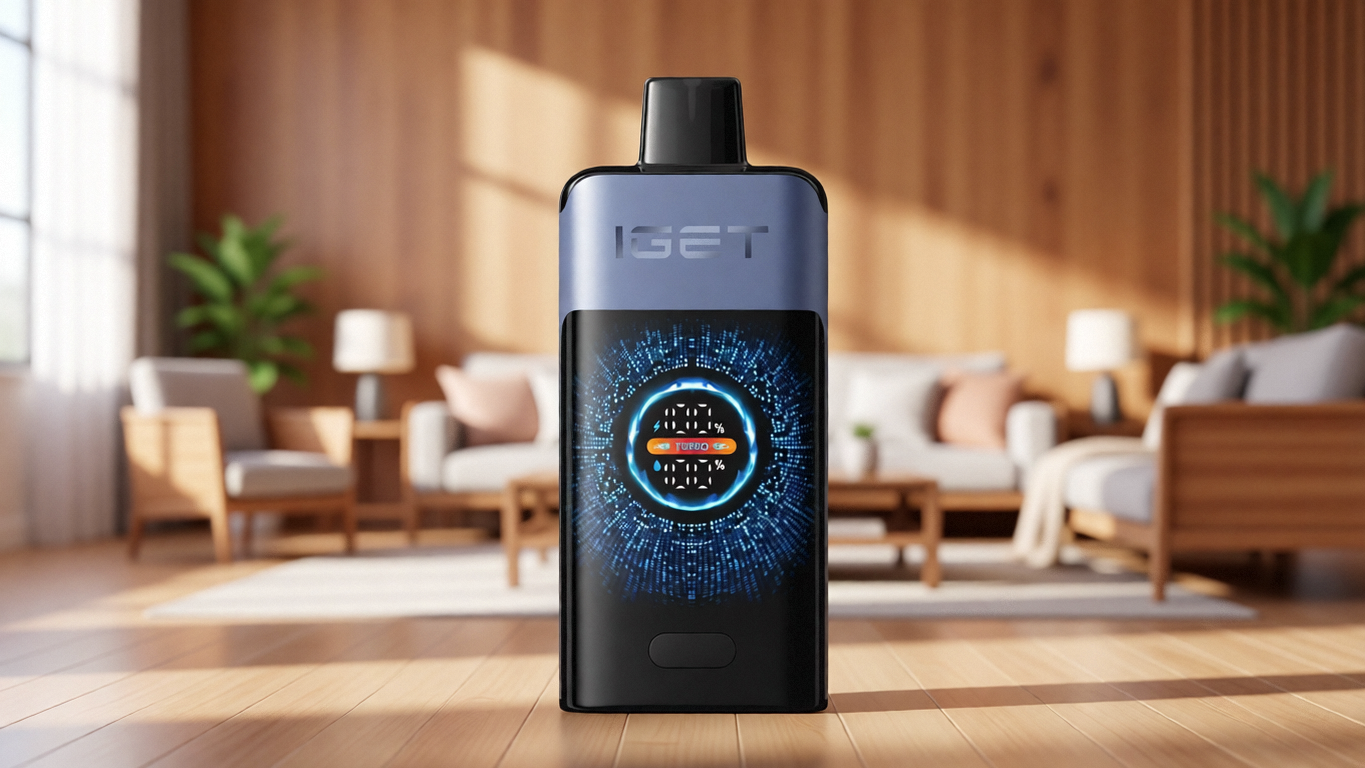
Practical insight: a device that shows no meaningful status indicator leaves you blind. You cannot know whether you are consuming faster because your behaviour changed or because the device is simply delivering less per activation. Some indicator systems—whether a simple multi-stage LED or a digital readout—let you track usage patterns and adjust accordingly.
E-liquid Volume and Nicotine Concentration
A 5000-puff device typically holds between 10 and 15 millilitres of e-liquid, depending on the manufacturer’s puff calculation. The nicotine concentration is normally expressed in milligrams per millilitre (mg/mL) or as a percentage. A device with 20 mg/mL (2%) e-liquid will deliver roughly twice the nicotine per unit of aerosol compared to one at 10 mg/mL, all else being equal. The volume of aerosol per puff also matters—a high-power setup that produces dense clouds will consume liquid faster and deliver more nicotine per draw, potentially reducing the total puff count.
A cigarette typically delivers between 1 and 2 milligrams of absorbed nicotine, but the manner of absorption differs substantially. The comparison is further complicated by the fact that nicotine salt formulations, commonly used in pre-filled devices, enter the bloodstream with a different time profile than freebase nicotine or the alkaloids present in combustible tobacco. Any equivalency must therefore be treated as a rough order-of-magnitude estimate, not a dose calibration.
User Behaviour and Inhalation Pattern
Laboratories use a puff-duration standard—often 1 to 2 seconds—with rest intervals. Real users draw for 2 to 5 seconds, hold the aerosol differently, and may take multiple puffs per minute. A single user may vary their style across a day. Consequently, two people with the same 5000-puff device might finish it in entirely different numbers of sessions and feel they consumed different amounts.
Applying These Criteria to Real-World Options
Manufacturers release 5000-puff devices at a remarkable pace, but the engineering beneath the label varies significantly. Some brands prioritise compact sealed units; others invest in consistent thermal performance. A device family such as ALIBARBAR—carried by OZVAPE Shop within a fully documented specification framework—illustrates how design choices influence the puff experience.
ALIBARBAR’s current catalogue includes units like the INGOT 9000 and the Ice Adjust 12000. While these exceed the 5000-puff bracket, the same design principles scale to mid-range models. Their mesh coil architecture is calibrated to maintain a narrow temperature band, and the e-liquid metering system is designed to feed the wick evenly from first use to near-dry. When a device like the INGOT 9000 is operated within its intended power curve, the per-puff output is relatively stable, making the cigarette comparison less of a wild guess.
This does not mean the advertised number is a direct substitute for cigarettes. With a stable-output device, a user might observe that a full 9000-puff unit replaces the need for a certain number of cigarette packs with reasonable consistency. A device with inferior thermal control could be expected to underdeliver on its puff rating while also being rougher on the throat. The differentiator is not the number printed on the box but the engineering that backs it.
A Practical Framework for Evaluation
Rather than ask “how many cigarettes?” and accept a single figure, consider these steps whenever you examine a new device:
Check the e-liquid volume and nicotine concentration. Estimate the total nicotine content in milligrams (volume × concentration). A 5000-puff device with 12 mL of 20 mg/mL e-liquid contains 240 mg of nicotine. If a cigarette yields approximately 1–1.5 mg of absorbed nicotine, the total is notionally equivalent to 160–240 cigarettes. However, bioavailability differences render this a maximum theoretical value, not an absorbed-dose guarantee.
Look for evidence of output stability. When a manufacturer publishes a puff count without explaining the test conditions, assume variability. Devices that specify the puff duration, coil resistance, and battery discharge performance give you much more to work with. If the brand is silent on these details, treat the puff count as a rough capacity indicator only.
Observe your own behaviour honestly. Track how many puffs you take per hour on a new device and compare it with the number of cigarettes you would have consumed in that interval. Over a week, the ratio stabilises enough to give a personal conversion factor. That number will be more accurate than any generic table.
Factor in modularity. Some sealed devices cannot be recharged. Once the battery fades, the remaining e-liquid becomes inaccessible. With a rechargeable unit, you can use the liquid fully, turning more of the rated puffs into real puffs.
Common Selection Errors and Industry Observations
Analysing how users evaluate high-puff-count devices reveals several recurring patterns that undermine satisfaction:
Overweighting rated puff count while ignoring nicotine delivery: A 5000-puff device with low nicotine concentration might require far more frequent use to satisfy the user, leading to a premature sense of depletion. Conversely, a high-nicotine concentrate may feel overwhelming. The puff number means little without the supporting chemistry.
Assuming identical appearance means identical internals: Two devices looking alike may use radically different coil materials, airflow paths, and wicking density. Visual similarity is not engineering equivalence. Shortcuts in coil construction lead directly to inconsistent output.
Undervaluing modularity in cost-per-use calculations: A rechargeable device with replaceable pods often delivers a lower per-puff cost over its lifetime than a string of disposables. Users who buy solely on upfront price and puff count frequently overlook this.
Confusing device category with a technical standard: The term “5000 puff vape” is a marketing shorthand, not an ISO-defined measurement. Treating it as such leads to disappointment. The industry is gradually moving toward standardised testing methods, but until they are universally adopted, the label remains a starting point, not a specification.
From a supply-chain perspective, the precision of a puff-count claim often correlates with the sophistication of the manufacturer’s quality-control infrastructure. Brands that invest in automated coil testing, batch consistency monitoring, and transparent reporting are generally more likely to deliver a product that performs close to the nominal figure.
Frequently Asked Questions
Q: How many cigarettes is a 5000 puff vape equivalent to?
A: As a broad estimate, it can replace 150 to 400 cigarettes depending on nicotine concentration, puffing style, and device consistency. The wide range reflects the many uncontrolled variables. No single number is universally correct. For a user accustomed to strong cigarettes, a 5000-puff device at 20 mg/mL might feel equivalent to roughly 200–250 cigarettes; a light user on a lower concentration may experience fewer. This is not a medical claim, only an observational range.
Q: Why does my device feel as though it is running out of puffs earlier than advertised?
A: The most common causes are long, deep draws (consuming more liquid per puff than the test standard), a battery that starts sagging and produces thinner aerosol, or chain-puffing that temporarily dries the wick. Checking your average puff duration against the manufacturer’s test specification is the simplest diagnostic.
Q: Can I rely on the puff counter if the device has one?
A: A digital puff counter tracks activations, not quality. It will count a weak, flavourless puff the same as a full one. It can help you monitor usage rhythm but should not be treated as a measure of remaining satisfaction.
Q: How can I get a more accurate personal cigarette-equivalence estimate?
A: For one week, record the number of puffs you take per session and the number of sessions per day. Compare that to your previous daily cigarette consumption. The ratio you derive will be far more relevant to your circumstances than any generic online converter.
Q: Does a higher nicotine concentration mean fewer puffs needed?
A: Not necessarily. Nicotine salt formulations deliver nicotine differently. Some users find a high-strength formulation satisfies quickly with fewer puffs; others take the same number of puffs out of habit. Behavioural factors often override chemistry.
Q: Are all 5000-puff devices rechargeable?
A: Not all. Some are sealed and reliant on a single battery that may not last as long as the e-liquid supply. Rechargeable units let you utilise the full liquid capacity, delivering more of the rated puffs. Check the specifications before purchasing.
Q: What is the most reliable indicator that a device delivers consistent output?
A: Look for manufacturer transparency. If the brand shares test parameters (puff duration, coil resistance, discharge profile), it signals a level of quality control over internal architecture. User reviews that mention consistent draw throughout the device’s life are another strong indicator, but treat isolated complaints with caution unless they form a clear pattern.
Q: How does a mesh coil improve puff consistency?
A: Mesh distributes heat more evenly across the wicking surface than a round wire coil, reducing hot spots and dry hits. Even thermal distribution means the vaporisation rate per puff stays stable, which in turn makes the cigarette-comparison exercise less erratic.
Q: Can high humidity or temperature affect puff count?
A: Environmental conditions can influence e-liquid viscosity and battery performance. A battery stored in a hot car may discharge faster and deliver fewer effective puffs. Similarly, cold temperatures thicken the liquid, temporarily reducing wicking efficiency. Once the device returns to normal operating range, performance should recover, though repeated thermal stress can degrade components over time.
Q: What should I do if my device clearly does not come close to its rated puffs?
A: First, review your usage pattern against the manufacturer’s stated conditions. If the shortfall is drastic and consistent, contact the retailer. A reputable supplier with documented, factory-certified inventory—such as OZVAPE Shop—is positioned to address a genuine product fault through its support protocols, provided the device was purchased through an authorised channel.
Conclusion
The path from “5000 puffs” to a cigarette number is not a straight line. It wanders through human habits, power curves, and material chemistry. Understanding that uncertainty is far more useful than accepting a false precise answer. Informed users use the puff-count rating as a capacity clue, not a consumption contract, and they evaluate the engineering behind the number before they trust it. OZVAPE Shop makes these devices accessible within a framework of authentic sourcing and documented specifications, but the final translation into personal usage remains the user’s own, based on observed behaviour rather than marketing copy. The right choice is the one that aligns with how you actually use the device, day after day.