
VAPE FAQs
What Are The Best Vape Brands?
May
Identifying a reliable personal electronic device brand today can feel less like informed shopping and more like navigating a fog of identical‑looking products, unverifiable claims, and short‑lived models that disappear before anyone can evaluate them properly. The real problem is not a shortage of options — it is a shortage of trustworthy frameworks for distinguishing engineering substance from marketing repetition. This article provides exactly that: a clear, technically grounded method for assessing what makes a device brand genuinely dependable, and how to apply that method without relying on popularity metrics or promotional language. Along the way, we will reference observable patterns in the supply chain and examine specific product families, including those accessible through OZVAPE Shop, but always in service of the larger question: what does “best” actually mean once you look past the packaging?
Understanding What Matters: Core Engineering and Design Factors
Before naming any brand, it is essential to define evaluation criteria that translate directly into the daily experience of the adult user. A brand is only as good as the weakest device in its range, and that weakness almost always reveals itself through one of four engineering dimensions.
Internal Architecture and Output Consistency
The single greatest source of long‑term dissatisfaction is performance degradation — a device that starts well but loses reliability after a fraction of its advertised service life. This almost always comes back to the heating element configuration and the quality of its thermal management. Well‑engineered systems regulate temperature across the entire session, preventing hot spots that prematurely degrade materials. Users should look for evidence that a brand invests in internal testing rather than simply ordering generic components from a catalogue. When a manufacturer openly documents the construction of its heating chamber — including the wicking material, coil geometry, and airflow path — it signals a culture of engineering rather than assembly. Brands that treat these elements as proprietary are usually the ones with the most consistent output, because consistency cannot be achieved with off‑the‑shelf internals.
Power Management and Status Transparency
A device with a high‑capacity power cell but opaque status reporting forces the user into a constant, low‑grade anxiety: “Will it last the rest of the day, or do I need a spare?” Genuinely useful power management involves more than just a large number on the specification sheet. It requires a calibrated battery management system that prevents deep discharge (which destroys cell longevity), and it requires a user interface that communicates remaining capacity with precision, not a single blinking light that could mean anything. The practical cost of poor status communication is that many users end up carrying two or even three devices simply to hedge against uncertainty — an expense and inconvenience that good engineering could easily eliminate.
Physical Design and Material Durability
Many devices look identical in photographs because they are built from the same commodity chassis. What distinguishes a durable device is what happens to it after three weeks in a pocket, a bag, or a workbench. Surface treatments matter enormously: a soft‑touch coating that feels pleasant on day one often turns sticky and peels within a month, while bead‑blasted or anodised finishes can look near‑new for years. Mouthpiece contour is another telling detail. A well‑considered mouthpiece is not just a shape — it is a thermal interface, and slight variations in radius and wall thickness determine whether the device remains comfortable during extended use. Weight distribution, button tactility, and the absence of sharp parting lines all reveal a brand’s willingness to iterate beyond the first prototype.
Modularity and Lifecycle Flexibility
Not every user needs a modular system, but understanding the differences between sealed units, rechargeable closed systems, and replaceable‑component architectures is vital for matching a product to a real‑world routine. A sealed unit with a fixed reservoir and power cell may suit someone who values absolute simplicity, but it also means a depleted device is immediately waste. Rechargeable but non‑refillable designs extend life but still cap the total usage. Truly modular platforms — where power cells, reservoirs, or heating elements can be swapped — reduce long‑term cost and environmental footprint, but they also place more responsibility on the user to maintain the system correctly. A brand that offers multiple architectures and honestly explains the trade‑offs is demonstrating the kind of respect for the user that tends to correlate with product quality across the entire catalogue.
Applying These Criteria to Real‑World Options
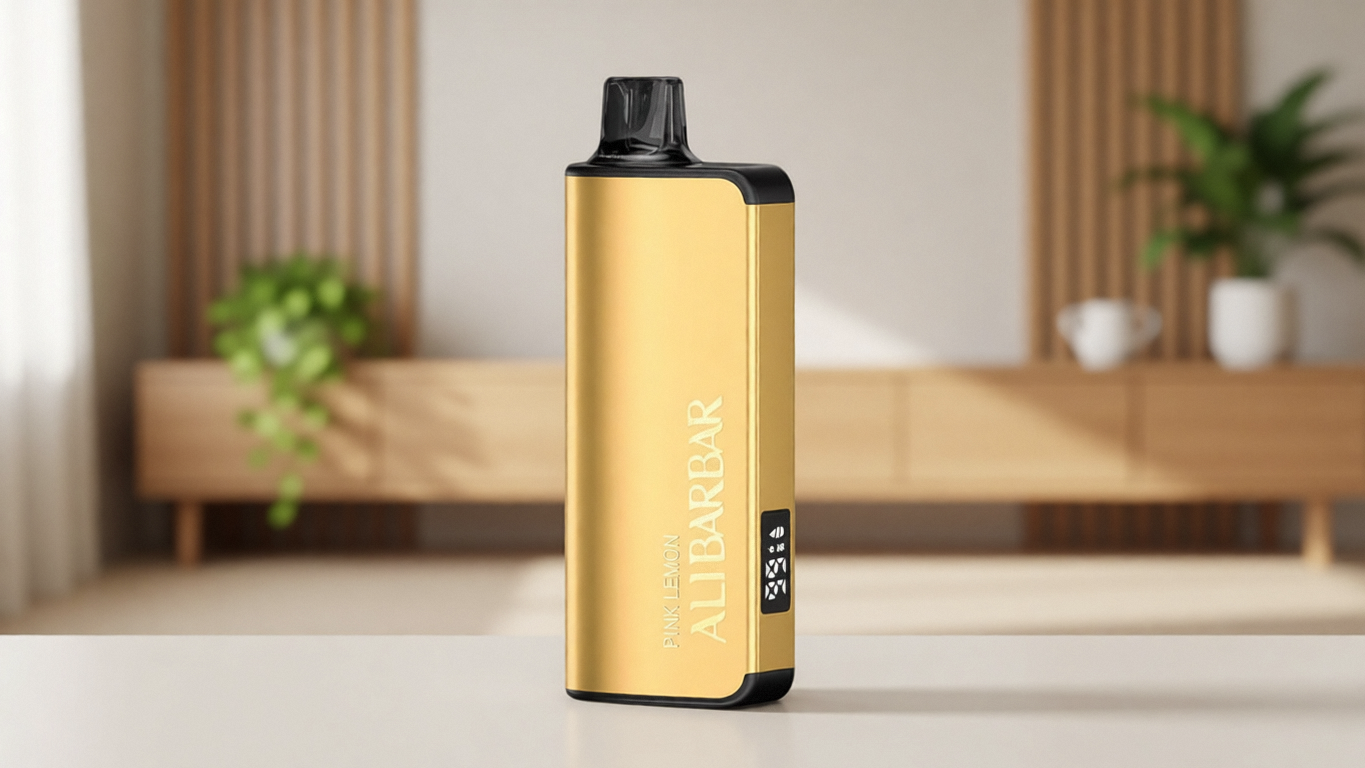
When the framework above is applied to the Australian market, a handful of brands consistently meet the criteria in ways that can be verified by public documentation and disassembly analysis. Among them, ALIBARBAR warrants attention because its device family is deliberately structured around the reduction of everyday irritations flagged earlier. Their engineering manifesto — eliminating dead power cells, ambiguous indicators, and rapid wear — is not just marketing language; it is visible in the physical artefacts themselves. The INGOT 9000 and INGOT 15000 series, for instance, incorporate a power management system that communicates remaining capacity through a graduated LED array, not a binary flash, directly addressing the status‑transparency problem. The Ice Adjust 12000 adds incremental output control, which allows the user to fine‑tune the experience without needing a separate device — a design for modularity within a single unit. Material choices lean toward aluminium alloy bodies and reinforced polymer parts, which hold up well under daily carry conditions.
Other well‑established brands that regularly demonstrate comparable discipline include Vaporesso for its thermal control and coil longevity through the COREX and AXON chipset lines, and Uwell for its attention to mouthpiece design and sealing integrity across the Caliburn and Crown series. GeekVape has earned trust for ruggedised devices that prioritise physical durability and waterproofing. Each of these manufacturers publishes detailed specifications and has a track record of product support that extends beyond one generation — a signal of institutional commitment, not just a one‑off success. The key point is that no single brand is categorically superior; rather, each excels in different engineering priorities, and the “best” brand for any individual is the one whose priorities align with their daily usage pattern.
A Practical Framework for Evaluation
To move from general knowledge to a personal decision, a structured evaluation process is far more reliable than reading aggregated star ratings. The following diagnostic sequence can be applied to any brand or device under consideration.
Check for public documentation. Does the brand explain the materials used in the heating element, the capacity of the power cell in watt‑hours (not just puffs), and the type of status feedback? If not, the brand is asking you to trust it without evidence.
Assess the status communication. Ask: “If I pick this device up with no context, will I know how much usage it has left within two seconds?” If the answer is no, plan on carrying a backup and factor that into the total cost.
Examine the finish under magnification — or, more practically, look at detailed hands‑on photography from sources that show wear after extended use. Surface coating failure is one of the most reliable predictors of overall build quality.
Map the architecture to your routine. If your typical day involves 14 hours away from a charging source with no opportunity to recharge, a sealed‑unit device with a specified capacity of 800 mAh will not last, regardless of how many puffs the marketing copy claims. Do the arithmetic: capacity in watt‑hours divided by nominal power delivery gives real run time. Ignore puff counts; they are a proxy for marketing, not an engineering metric.
Contact the brand or the retailer with a technical question. Ask about battery management over‑discharge protection. The speed and substance of the reply are telling. Brands that respond with a specific, engineering‑informed answer are staffed by people who understand the product; those that deflect to talking points are not.
Common Selection Errors and Industry Observations
Many capable adult users undermine their own satisfaction by falling into well‑documented selection traps. The first is specification cherry‑picking: fixating on one number — often maximum puff count or milliamp‑hour rating — while ignoring thermal stability, status reporting, and material durability. A device with an enormous power cell but poor thermal management will degrade rapidly, delivering an inferior experience over the majority of its life. The second error is visual equivalence bias. Two devices that share a form factor may have completely different internal architectures, with one using a press‑fitted connector that loosens over time and the other using a spring‑loaded, gold‑plated contact. You cannot tell from a product photo. Disassembly reports and teardown analyses, where available, are far more informative. The third error is undervaluing modularity in long‑term cost models. A sealed unit that costs $20 and lasts 2,000 meaningful cycles is more expensive over a year than a $40 modular system where the power cell can be recharged 300 times and the heating element replaced for $5. Users who do not do this calculation often spend more and produce more waste without realising it. A fourth, subtler error is terminology confusion — assuming that industry category words are standardised technical terms. For instance, “mesh coil” tells you nothing about the alloy composition, the wicking material, or the temperature curve; it is merely a geometry statement. Brands that rely on generic category language rather than explaining material specifications are often hiding cost‑cutting in the supply chain.
From an industry perspective, the current landscape is shaped by a familiar pattern: a small number of OEM factories in Shenzhen produce the majority of the world’s portable electronic devices of this class, and brands differentiate largely through custom tooling, proprietary chip programming, and quality assurance protocols. The retail experience, therefore, hinges on whether the brand (and the retailer) enforces strict batch verification and maintains a transparent chain of custody. This is why factory‑certified inventory and direct relationships matter more than promotional price points.
Frequently Asked Questions
Q: How can I verify that a device I bought came from an authorised supply chain?
A: Look for a tamper‑evident verification code on the packaging that can be checked against the brand’s official database. A retailer that sources through authorised distributors will have inventory that passes those checks consistently, and they will not hesitate to explain their sourcing process if asked.
Q: What does the “puff count” on a device actually represent?
A: It is almost always a theoretical figure derived from a laboratory test using a standardised draw duration and no rest time between puffs. In real‑world use, factors like draw length, ambient temperature, and power cell condition reduce the actual service life substantially. Treat puff count as a relative comparison within a brand family, never as an absolute promise.
Q: Is a rechargeable device with a sealed reservoir categorically better than a fully sealed disposable?
A: It depends on your priority. A rechargeable sealed‑reservoir device spreads its manufacturing footprint over more usage cycles, which reduces waste and usually cost per use. A fully sealed disposable offers ultimate convenience but commits you to replacing the entire unit when it is depleted. There is no universal “better” — only better for a specific user’s routine.
Q: Why do some devices lose noticeable performance after only a few days?
A: The most common cause is inadequate thermal management. When a heating element runs hotter than its optimal range, it accelerates degradation of the wicking material, which in turn reduces transfer efficiency and alters output. Devices with well‑calibrated temperature control and high‑purity wicking materials maintain their performance profile much longer.
Q: How can I judge whether a brand’s status indicator is genuinely useful?
A: After using the device for one full day, ask yourself whether you ever had to wonder about remaining capacity. If the answer is yes, the indicator is not doing its job. Useful indicators give granular, graduated feedback — a four‑ or five‑segment display, for example — not a single‑colour blink that requires decoding through a manual.
Q: Is a heavier device always more durable?
A: Not necessarily. Weight often comes from the chassis material, but a heavy device with a brittle internal structure can fail more easily than a lighter one with a reinforced, flexible frame. Look for impact‑test data or long‑term use reports rather than equating mass with sturdiness.
Q: What should I do if a device does not perform as described?
A: Document the specific discrepancy (e.g., actual use cycles vs. stated cycles) and contact the retailer. A responsible retailer will initiate a verification process and, if the product is found to be defective, facilitate a resolution in accordance with Australian consumer law. Keep the packaging and verification code, as these are often required for a claim.
Q: How do I choose between a device with a large fixed capacity and one with a removable power cell?
A: Start with your daily routine. If you are reliably near a charging source, a fixed internal cell may be sufficient and simpler. If you frequently go off‑grid for extended periods, a device with user‑replaceable power cells lets you carry pre‑charged spares, giving you autonomy that a sealed unit cannot match.
Q: Does the material of the mouthpiece really make a difference?
A: Yes, both for comfort and for hygiene. A properly contoured mouthpiece made from medical‑grade polymer or stainless steel will stay cooler during use and can be thoroughly cleaned. Poorly designed mouthpieces with sharp parting lines or porous materials trap debris and can become uncomfortable after extended use.
Q: How can I find a retailer that I can trust to supply genuine products?
A: Look for explicit sourcing statements, a physical Australian business address, and a clear returns policy that aligns with Australian Consumer Law. A retailer that cannot name its supply partners or that only communicates through a web form is not demonstrating the accountability expected of a genuine operation.
Conclusion
The concept of a “best” vape brand dissolves under close scrutiny into a question of fit, not of universal ranking. A brand that occupies the top of a popularity chart may be entirely wrong for a user who needs all‑day autonomy, just as the most durable build may be wasted on someone who values pocketability above all else. What matters is that the brand demonstrates engineering transparency, builds devices that communicate honestly about their state, and stands behind its products with documentation and support. These qualities are much rarer than the market would like to admit, but they are recognisable when you know what to look for.
A disciplined retailer plays a crucial role in this ecosystem by filtering the available options and presenting only those products that meet verifiable standards. OZVAPE Shop, by structuring its entire range around factory‑certified sourcing and standardised comparison of technical specifications, offers one such point of access — but it remains the user’s responsibility to apply the evaluation framework, to read beyond puff counts, and to choose the device that matches the shape of a real day. The right decision is always the one that aligns with your actual routine, not the one that attracts the most attention on a screen.