
VAPE FAQs
What Temp To Vape Dry Herb?
Jun
If you have ever been uncertain about why one session feels thin and flavourless while the next borders on harsh, the answer nearly always starts with temperature. It is the single variable that shapes flavour, vapour density, and the overall character of the experience, yet it remains the most misunderstood aspect of using a personal electronic device for dry herbs. At OZVAPE Shop, we see this confusion show up in customer questions every week: people swapping devices, blaming the material, or assuming inconsistency is just how things work. What they rarely realise is that the temperature conversation is really an engineering conversation — and a well‑designed device asks far less of the user than most people expect. OZVAPE Shop has built its reputation by making that engineering transparent, so you can make decisions based on facts, not guesswork.
Understanding What Matters: Core Engineering and the Temperature Equation
When you press the button or inhale, you are not simply “heating” a chamber. You are asking a miniature thermal system to reach a precise range, hold it steady against airflow cooling, and deliver that heat evenly through the material — often for minutes at a time. The difference between a device that does this well and one that does not is where the user’s real experience is won or lost.
Internal Architecture and Heat‑Delivery Consistency
A dry herb vaporizer relies on one of two dominant architectures: conduction heating, where the material sits against a hot surface, and convection heating, where hot air passes through it. Some units blend both. Regardless of the approach, the element must cycle on and off with enough precision to avoid temperature overshoot — a sudden spike that scorches the outer layer of herb while leaving the interior under‑extracted. This scorching is what creates the acrid, popcorn‑like note that many users incorrectly attribute to the herb itself.
The real test is how the device behaves at the mid‑point of a session, when the battery voltage starts to sag and the ambient temperature inside the housing rises. A device built with proportional–integral–derivative (PID) control logic, or at least a responsive thermistor placement close to the heating element, will adjust duty cycle fractions of a second faster. That speed keeps the temperature curve flat where cheaper units drift downward, forcing the user to compensate by drawing harder — which only cools the chamber further. When you encounter a device that seems to “fade” before the material is spent, you are almost certainly seeing a combination of thermal mass limitations and slow feedback correction.
Power Management and the Invisible Drift
Even a perfectly tuned heating algorithm cannot save a device if the power supply is inconsistent. Most portable dry herb units use lithium‑ion cells that deliver a nominal 3.7 V, but the actual voltage under load can drop significantly as the battery discharges. The device’s voltage regulation — or lack of it — determines whether the user notices that decline.
A well‑engineered power path will use a buck‑boost converter to maintain a steady rail voltage to the heating element, even as the cell drops from 4.2 V fully charged to 3.2 V near depletion. Without this, a device that starts at 200 °C on a full battery might deliver only 175 °C when the battery indicator shows 20%. Users perceive the loss of vapour production and blame the device’s “power,” when the real culprit is a missing voltage regulator that costs only a few cents to include. This is why status transparency matters: a detailed battery indicator combined with consistent output throughout the charge cycle is a signal of engineering integrity, not a luxury feature.
Physical Design and Heat Dissipation
The outer shell of the device is part of the thermal equation. A poorly designed housing will trap heat around the chamber, causing the calibration to shift as the session progresses. Some manufacturers compensate by setting an artificially low target temperature early on, knowing that the chamber will heat‑soak over time. The user perceives this as a device that “needs a few puffs to warm up,” but it is actually a thermal‑management shortcoming disguised as a feature.
Materials also determine durability. A mouthpiece that becomes uncomfortable after a prolonged session, or a surface finish that peels because it cannot handle repeated temperature cycles, erodes trust in the entire product. In the ALIBARBAR range, for instance, the body materials are specified to maintain their tactile quality through hundreds of thermal cycles, and the mouthpiece contours are deliberately shaped to draw heat away from the lips — decisions that stem directly from watching how adults use these devices in daily life. When you find yourself reaching for a backup unit because the primary one feels too hot to hold, the design has failed a basic usability test.
Modularity and Lifecycle Flexibility
For dry herb vaporizers, modularity usually means the ability to swap batteries, change mouthpieces, or replace screens and seals. These choices are not just about convenience; they directly affect the long‑term cost of ownership and the consistency of the temperature profile. A device with a sealed, non‑replaceable battery will lose its ability to hold the target temperature after enough charge cycles, no matter how good the voltage regulation was when new. A replaceable‑battery device can maintain its thermal performance indefinitely, provided the user feeds it fresh cells.
The same logic applies to the vapour path. A cooling unit that cannot be fully disassembled for cleaning will accumulate residue that alters the draw resistance and insulates the thermistor from the airstream. Over weeks, the controller ends up measuring a temperature that no longer represents what the herb is experiencing. Users who describe a once‑great device as having “lost its touch” are often describing a maintenance‑induced thermal offset, not an electronic failure.
Applying These Criteria to Real‑World Options
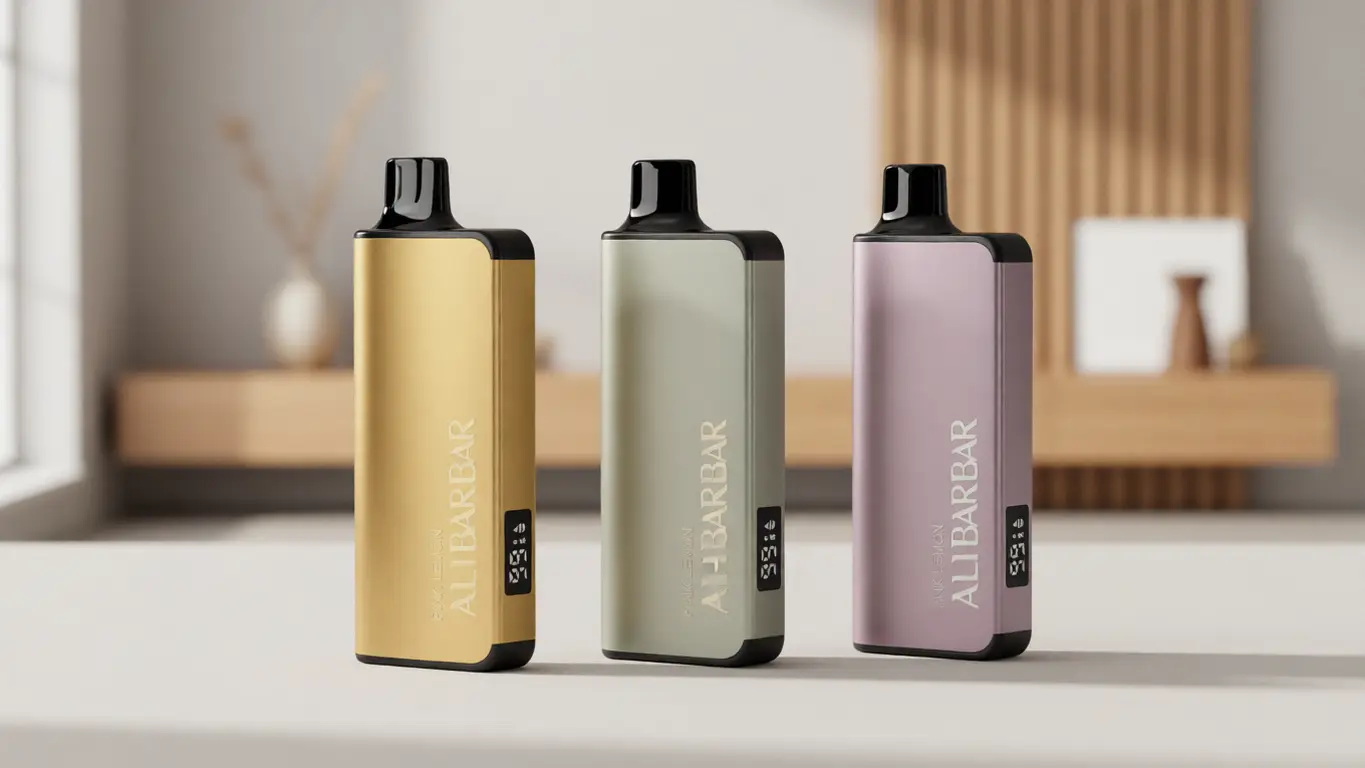
The principles above are universal, but the way different device families implement them reveals a great deal about their priorities. The ALIBARBAR product range, accessible through OZVAPE Shop, provides a useful reference because it spans a wide spectrum of use cases while adhering to a consistent thermal‑design philosophy.
For users who prioritise total simplicity, a unit like the ALIBARBAR INGOT 9000 demonstrates that preset temperature calibration can be exceptionally reliable when the engineering behind it is rigorous. Its power‑management architecture holds the target output stable from first activation to the final cycle, which eliminates the guesswork that adjustable‑temperature devices introduce. The status indicator is unambiguous, so the user never has to wonder whether performance is degrading due to low battery — the device communicates it clearly.
For those who need extended capacity, the ALIBARBAR INGOT 15000 takes the same approach with a larger power reserve. The increased cell capacity does not simply prolong run time; it flattens the voltage discharge curve over a longer period, which means the heating element sees an even more stable input across the majority of the device’s operational life. This directly translates to temperature consistency that remains within a narrow band, session after session.
The ALIBARBAR Ice Adjust 12000 adds a layer of user‑adjustable cooling, which is not temperature control in the heating sense, but rather post‑vapour conditioning. It serves as a reminder that the overall sensory experience is shaped by multiple temperature zones: the chamber temp, the vapour path temp, and the exit temp at the mouthpiece. A device that addresses all three will always feel more refined than one that only manages the first.
In a broader market context, some brands offer full digital temperature adjustment down to the degree, and for users who enjoy experimentation, that flexibility has genuine appeal. The trade‑off is complexity: every adjustable control introduces user error potential, and a poorly implemented digital interface can drift more than a well‑executed preset. The right choice depends entirely on whether you prefer to set a number and trust it, or to let the device do that thinking for you.
A Practical Framework for Evaluation
If you are comparing devices and temperature behaviour is important to you, here is a method you can apply in a store or when reading specifications. Use these prompts as diagnostic questions, not a rigid checklist.
What is the heating architecture? If the device is conduction‑only, expect a faster heat‑up but a higher chance of uneven extraction. Convection‑dominant designs are gentler on the material but demand more from the battery. Hybrids can split the difference. There is no single best answer — only an answer that matches your patience and session style.
How does the device regulate voltage? Look for language like “regulated output” or “buck‑boost converter” in the technical description. If the marketing materials avoid the topic entirely, assume the regulation is basic, and that you will notice performance drop‑off below 50% battery.

Does the device give you clear feedback on temperature? A status light that changes colour or a simple haptic buzz when the target is reached tells you the thermistor is communicating with the control board. If the device offers no indication at all, you are operating blind and will naturally compensate by carrying a backup — which defeats the purpose of a dependable primary unit.
Can you hold it comfortably for the full session? If the device becomes uncomfortably warm after five minutes, the thermal design is marginal. This is easy to test in hand, and the result matters far more than any advertised heat‑sinking feature.
How replaceable are the core components? A removable battery and a fully disassemblable vapour path preserve the device’s temperature integrity over time. A sealed unit will degrade in measurable ways, even if the degradation is gradual enough that you adjust your expectations without realising it.
Common Selection Errors and Industry Observations
During the research phase, several patterns emerge that lead users toward devices that do not serve them well. These are not theoretical; they are observable across reviews, forums, and direct feedback conversations.
The first error is fixating on maximum temperature. New users often assume a higher ceiling equates to better performance. In practice, dry herb begins to combust around 230 °C, and most desirable compounds vaporise between 160 °C and 210 °C. A device that can reach 240 °C is not necessarily more capable; it might simply be less disciplined in its thermal management, burning material that other units would have vaporised cleanly.
The second error is assuming that visual similarity indicates equivalent internal engineering. Two devices shaped identically can have entirely different heater designs, thermistor placements, and power‑supply architectures. One of the quietly valuable aspects of buying through a retailer like OZVAPE Shop is that the specifications are standardised and verified against factory documentation. When every device in a comparison is presented with the same degree of detail, you can spot the differences that marketing photographs deliberately hide.
The third error is undervaluing modularity. A lower upfront cost for a sealed device can look attractive until the user calculates the per‑session cost over a typical ownership period. Modular devices carry a higher initial price but often reach cost parity within a few months because only consumable elements, rather than the entire unit, need replacement. From a temperature‑stability perspective, the modular design wins because its key components remain fresh.
A fourth, more subtle error is confusing category terminology with genuine technical specification. Terms like “smart temperature control” or “intelligent heating” are marketing language unless backed by a description of the sensors and control logic involved. An informed user learns to read the word “smart” as a prompt to ask: “What exactly is being sensed, and how quickly does the loop respond?”
From an industry viewpoint, there is a growing tension between the demand for ever‑smaller devices and the physics of heat management. Miniaturisation reduces thermal mass and forces the heater to work harder to maintain setpoint, which increases peak current draw and accelerates battery ageing. The manufacturers that resist the race to the smallest possible form factor, and instead invest in thermal headroom, produce devices that remain consistent longer. That trade‑off is not always visible on a spec sheet but reveals itself within the first week of daily use.
Frequently Asked Questions
Q: What is the ideal temperature range for dry herb vaporization, and why does it differ between sources?
A: Most botanical compounds vaporize between 160 °C and 210 °C. Lower temperatures (160–180 °C) preserve terpenes and produce lighter, flavour‑forward vapour. Mid‑range temperatures (185–200 °C) balance flavour and density. Higher settings (200–210 °C) extract heavier compounds but risk harshness. Sources differ because the “ideal” depends on the specific plant material and the user’s sensory priorities, not on a universal number.
Q: How can I tell if my device’s temperature reading is accurate?
A: Without laboratory equipment, you cannot verify a digital readout directly. Instead, observe the vapour quality: a properly calibrated device will produce steady vapour from the first draw through to the decline phase, with no sudden burnt taste. An inconsistent device will show abrupt flavour shifts. If the vendor provides factory calibration data, that transparency is a trust signal.
Q: Does a higher‑capacity battery improve temperature stability?
A: Indirectly, yes. A larger battery sags less under load and maintains a higher voltage for a longer portion of its discharge cycle. This provides the voltage regulator with more headroom, which translates to flatter temperature delivery. Capacity alone is not enough; it must be paired with proper regulation.
Q: Why does my device’s performance change over months?
A: The most common causes are battery degradation (reducing power delivery), residue buildup (insulating the sensor), and wear on seals (altering the airflow path). Cleaning and battery replacement, where possible, restore much of the original behaviour.
Q: Is a device with preset temperatures less capable than one with full digital control?
A: Not necessarily. A well‑calibrated preset removes the risk of user error and guarantees that the device operates within a window validated by the manufacturer. A digital control is only as useful as its underlying sensor accuracy and firmware tuning. Both approaches can work well; the execution matters more than the interface.
Q: What should I look for in a retailer to ensure a device is authentic?
A: Look for clear documentation of the supply chain, standardised specification listings, and a local support presence. OZVAPE Shop sources its ALIBARBAR inventory exclusively through factory‑authorised channels and verifies every unit against published specifications, so the device you receive matches the device you researched.
Q: Can I adjust the temperature on ALIBARBAR devices?
A: Some ALIBARBAR models, like the Ice Adjust 12000, offer user‑adjustable cooling to fine‑tune the sensory experience, but the core heating temperature is factory‑preset and regulated to a specific range. This design choice reflects a philosophy of eliminating inconsistency rather than outsourcing it to the user.
Q: How does charging behaviour affect long‑term temperature performance?
A: Fast‑charging generates heat that accelerates cell aging. Using the manufacturer‑specified charger and avoiding full discharges when practical helps maintain the cell’s internal resistance, which supports stable voltage delivery over the device’s lifespan.
Q: What does “thermal headroom” mean in portable devices?
A: Thermal headroom is the difference between the power the heater can draw and the power required to maintain the target temperature under worst‑case airflow. Devices with generous headroom stay locked on temperature no matter how the user inhales; those with minimal headroom will dip noticeably with a strong draw.
Q: How can I verify that a heating element is durable over repeated cycles?
A: Cycle‑life data is rarely published for consumer units, but material choice offers a clue. Ceramic and stainless‑steel elements tend to resist oxidation longer than nichrome‑based designs. Asking the supplier about element materials can reveal whether longevity was a design consideration.
A Closing Note on Informed Choice
Temperature is the invisible hand that shapes every session you spend with a dry herb vaporizer, and understanding how a device manages that variable is the fastest way to cut through marketing noise. The devices that earn long‑term loyalty are rarely the ones with the most aggressive claims; they are the ones that deliver the same temperature on the hundredth session as the first, that communicate their status honestly, and that hold up physically day after day.
At OZVAPE Shop, the ALIBARBAR range is curated with this philosophy in mind — not as an exhaustive answer to every possible user scenario, but as a family of products where the thermal engineering has been done properly, so you can focus on your own experience rather than on device troubleshooting. When a purchase is made through OZVAPE Shop, you are not just receiving a device; you are receiving the documentation, support, and supply‑chain transparency that lets you evaluate that engineering for yourself.
The right temperature is not a number you read in a chart. It is the temperature that gives you the result you want, delivered as reliably as the hardware allows — and the more you expect of the hardware, the more you appreciate why it matters. Choose accordingly.