
VAPE FAQs
How Can I Tell If My Vape Is Burnt?
Jun
A harsh, acrid pull that catches the back of the throat — when a device suddenly delivers something closer to charcoal than the intended flavour, the experience is unmistakable and universally unwelcome. The question of whether a device is “burnt” is common, yet the answer is rarely about a single moment. It involves materials, power delivery, wicking efficiency, and a chain of events that often began long before the user noticed anything wrong. When sourcing devices through a platform like OZVAPE Shop, understanding the engineering behind them helps users distinguish between an inherent flaw, a maintenance lapse, and an inevitable end-of-life signal. This article breaks down what a burnt hit actually indicates, the design factors that influence when — and if — it occurs, and how to interpret the warning signs.
Understanding What Matters: Core Engineering and Design Factors
A burnt taste is not a standalone failure. It is a symptom of heat applied to a wicking material that is insufficiently saturated with liquid. That single sentence contains the entire diagnostic challenge. To evaluate whether a device is prone to burnt hits — or whether a user can realistically avoid them — requires examining the internal architecture, power management, physical design, and lifecycle flexibility of the system in question.
Internal Architecture and Output Consistency
The heating element and its surrounding wick form the heart of every personal electronic device. Nichrome, kanthal, stainless steel, and mesh configurations each dissipate heat differently. Mesh, with its larger surface area and more uniform thermal distribution, generally reduces the likelihood of hotspots — concentrated zones where the wick dries out faster than the surrounding material. However, mesh alone does not guarantee immunity. The wicking material matters equally: organic cotton, silica, ceramic, and blended fibres all differ in capillary action, heat tolerance, and scorch threshold.
A user experiences a burnt hit when the energy delivered to the coil exceeds the rate at which e-liquid can replenish the wick. Even a well-designed coil will scorch if power is applied to a dry wick for even a fraction of a second. The most reliable countermeasure is a combination of generous liquid intake channels, properly tensioned wicking material that touches the coil uniformly, and a tank design that maintains negative pressure to assist flow without flooding. Devices that omit any one of these elements can perform adequately under careful conditions but fail quickly when the user takes consecutive pulls or operates near the lower fill line.
Power Management and Status Transparency
Modern devices vary enormously in how they regulate output. Fixed-output designs rely entirely on the resistance of the coil to determine wattage. If the coil is constructed within a narrow tolerance, the experience remains consistent. However, if a user inadvertently pairs a high-power battery with a coil designed for lower output, the wick can be vaporised before liquid arrives, producing a burnt taste instantly. Variable-output devices with onboard protection — temperature limiting, dry-hit detection, or simple wattage locks — offer a meaningful safety margin.
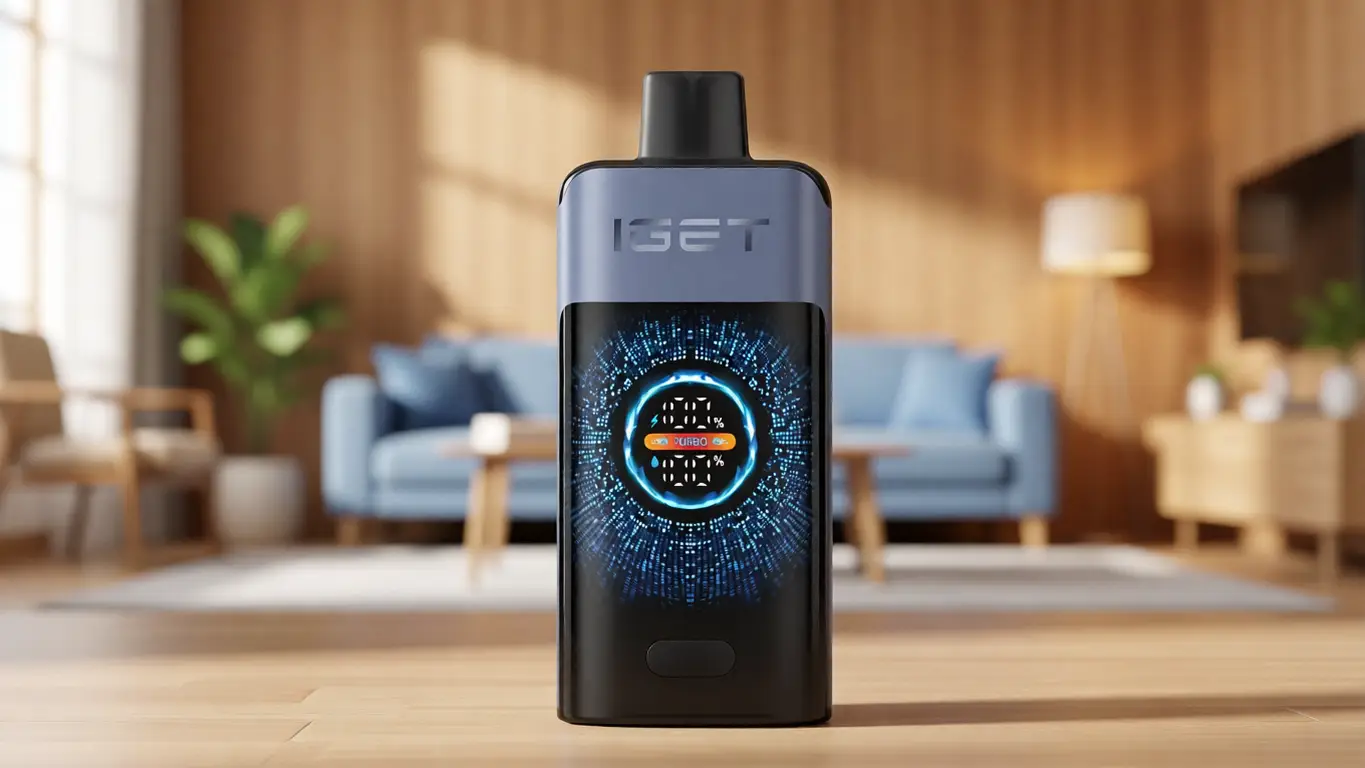
Even with these protections, ambiguity in status reporting creates risk. A user who does not know the remaining battery level, the current output, or whether the device is actively protecting against a dry hit operates blind. The hidden cost of this ambiguity is not just a single unpleasant pull; it is a persistent lack of confidence that leads people to carry backup devices, replace coils prematurely, or discard units they do not actually need to retire. Clear, unambiguous indicators — whether through haptic feedback, LED colour coding, or a simple numerical display — reduce both the frequency of burnt hits and the anxiety surrounding them.
Physical Design and Material Durability
While physical design might seem secondary to the burnt-hit problem, it plays a significant role in how likely a user is to detect warning signs early. Devices with tight airflow, for instance, can mask the gradual flavour degradation that precedes a full scorch. A user may not realise the wick is struggling until the taste turns unmistakably acrid, at which point the coil is already damaged. Wide-bore mouthpieces and certain drip-tip materials transmit subtle taste shifts more readily, giving the user an earlier cue to pause and let the wick resaturate.
Material durability extends to the coil housing and the connections that supply power. Corrosion at contact points can gradually increase resistance, altering the effective wattage without the user’s knowledge. A device that felt smooth for weeks might suddenly deliver a burnt hit not because the coil expired, but because a dirty connection forced more current through the same resistance. Design choices — gold-plated contacts, sealed compartments, and robust threading — mitigate this drift. When these are absent, burnt hits can appear sporadically and unpredictably, frustrating the user who cannot trace the cause.
Modularity and Lifecycle Flexibility
The architecture of the device at the system level dictates how the user responds to a burnt coil. Sealed, disposable units offer no recourse: once the wick is scorched, the entire device must be retired, regardless of remaining battery capacity or liquid. Rechargeable systems with integrated pods present a middle ground — the battery can be reused, but the coil and pod are discarded together. The most flexible approach, replaceable-coil pods, allows the user to swap only the compromised element, keeping the device and often the pod itself in service.
From a burnt-hit prevention standpoint, modularity does not alter the physics of wicking. It does, however, change the economics and psychology of maintenance. A user who can replace a coil for a fraction of the cost of a full pod or device is more inclined to swap it at the first hint of flavour loss, before charring sets in. By contrast, someone facing a full-device replacement may attempt to stretch usage beyond the coil’s functional limit, actively inviting the very burnt hits they dread.
Applying These Criteria to Real-World Options
The principles above do not exist in abstraction. They are observable in how specific device families behave under daily use. The ALIBARBAR INGOT series, for instance, employs mesh coil architectures in many of its higher-capacity units, combined with densely packed cotton wicking and well-sized intake ports. The result, as reported by adult users and corroborated by consistent performance patterns, is a notably low incidence of burnt hits in the first three-quarters of the device’s rated life. Where complaints do surface, they cluster predictably near the end of the liquid capacity — a sign that the wicking is keeping pace until the reservoir pressure drops too low to sustain rapid chain use.
Other commonly encountered families illustrate trade-offs. Some ultra-compact devices prioritise form factor so aggressively that the liquid chamber holds barely enough to keep the wick submerged when tipped. In such designs, a burnt taste can emerge after just a few consecutive pulls even when the device is half full. The wick is not defective; the system’s hydraulic design simply cannot feed it under those conditions. Understanding this removes the guesswork: if a user frequently chain-pulls, a device with a longer saturation pathway and a larger reservoir becomes a functional necessity, not a luxury.
The Ice Adjust 12000 series is instructive in a different way. Its adjustable airflow and larger battery allow the user to find a balance between vapour temperature and wick cooling. Cooler vapour, achieved through increased airflow, indirectly lowers the temperature at the coil surface during a draw, reducing the peak heat the wick must absorb. This does not eliminate the risk of a dry hit — only adequate liquid delivery can do that — but it lengthens the grace period during which the user can notice a flavour change and stop. Devices that lack any airflow control surrender this buffering effect.
A Practical Framework for Evaluation
For an adult user trying to determine whether their current device is burnt or simply fading, a methodical approach is more reliable than guessing.
Taste in isolation. Take a single, slow draw with no background flavours or distractions. A burnt hit tastes sharply acrid, chemically charred, and lingers unpleasantly. A fading but still functional coil tastes muted, cottony, or slightly sweet-stale. The distinction matters: a faded coil can often be nursed along with gentler pulls; a burnt coil is permanently damaged.
Check the visual condition of accessible components. If the device allows, inspect the coil and wick. A healthy wick appears saturated and uniform in colour, ranging from white to light amber depending on the liquid. A burnt wick shows dark brown to black discolouration directly around the coil, often with a crusty texture. On sealed devices, this isn’t possible, so the next step becomes critical.
Assess usage context. Ask: “Did this taste appear suddenly after a series of rapid pulls? Did I just refill and not allow time for saturation? Is the liquid level below the wicking ports?” Sudden onset after neglect or aggressive use points strongly to temporary wick dryness that was pushed into permanent charring. If the taste developed gradually over several days, the coil has simply reached its end of life through normal degradation.
Test with a known-good device. If available, try the same liquid in a fresh unit. If the off-taste remains, the liquid itself may have degraded — oxidised nicotine or flavouring components can taste harsh and bitter, mimicking a mild burn. If the taste is clean in the new device, the original coil is compromised.
Decide based on cost and convenience. In a sealed device, a confirmed burnt hit means retirement. In a modular system, replace the coil or pod and salvage the rest. The economic calculation is straightforward, but it depends on having accurate information. Standardised specification comparisons — something a platform like OZVAPE Shop makes available across the ALIBARBAR range — simplify this by letting users understand coil life, liquid capacity, and replacement costs before a problem arises.
Common Selection Errors and Industry Observations
Even well-informed users can undermine their own satisfaction through a few recurring misjudgements, many of which stem from how devices are marketed rather than how they are engineered.
Overweighting puff count in isolation. A device labelled “9000 puffs” may still produce burnt hits by puff 4000 if the user’s draw length is longer than the testing protocol. Puff count is a proxy for liquid volume and coil durability, but without knowing the wattage, wick material, and reservoir design, it is a soft promise. Users who select based solely on this number often feel betrayed when the device degrades early, when in reality the mismatch was between their usage style and the engineering constraints.
Assuming visual similarity indicates equivalent internals. The market is flooded with devices that look nearly identical from the outside yet house entirely different coil geometries, wicking materials, and quality control standards. A user who experiences a burnt hit on one cylinder-shaped device may assume all similar devices are equally prone, then dismiss an entire architecture that — in a properly manufactured version — would have served them well. The lesson is not to judge by silhouette.
Undervaluing modularity in cost-per-use calculations. A replaceable-coil device often carries a slightly higher upfront cost. The user who fixes solely on the initial price overlooks that three replaceable coils, at a fraction of the device cost, may extend usable life by weeks. Burnt hits frequently arise from “one more session” thinking — pushing a single-use device past its reasonable limit because retiring it feels wasteful. A modular setup reframes that decision entirely.
Confusing category terminology with technical specifications. Labels like “mesh,” “dual coil,” or “ceramic” are used so loosely across price tiers that they have lost reliability as quality signals. A genuine mesh coil from a manufacturer with rigorous process control differs dramatically from a stamped metal sheet with uneven spacing. The industry does the user no favours by blurring these distinctions. The most dependable path is to observe how a specific device family performs over time, across many users — not to trust a single descriptor on a package.
From an industry perspective, the burnt-hit problem is heavily influenced by procurement dynamics. Large distribution networks often prize unit cost above all else, incentivising manufacturers to squeeze margins on the very components that determine wicking reliability: cotton grade, coil plating thickness, and quality auditing. A retailer that maintains direct, authorised relationships with manufacturers — and that can therefore reject lots that fall below documented specifications — changes the equation for the end user. When authentic devices sourced through controlled channels consistently outperform grey-market alternatives, it is not luck. It is supply chain discipline intersecting with better engineering.
Frequently Asked Questions
Q: Why did my device taste burnt immediately after I refilled it?
A: The wick likely did not have enough time to fully saturate with the new liquid before you took a draw. Even a few seconds of dry firing can scorch cotton. After refilling, allow the device to stand upright for several minutes. If the burnt taste persists, the coil has been permanently damaged.
Q: How can I tell the difference between a dying coil and a truly burnt one?
A: A dying coil delivers muted flavour and a faint stale taste that builds gradually. A burnt coil produces a harsh, acrid, charred taste that appears suddenly and does not fade. One is a warning; the other is a failure.
Q: Is it safe to continue using a device that tastes slightly burnt?
A: A scorched wick releases compounds that are not intended for inhalation. While a single brief exposure is unlikely to cause acute harm, continued use is not recommended. Replace the coil or device.
Q: Can a burnt coil be cleaned or revived?
A: Once the cotton or wicking material has charred, the damage is irreversible. Soaking, rinsing, or dry-burning cannot restore the material’s fibre structure. The coil must be replaced.
Q: Do higher-wattage devices cause burnt hits more often?
A: Not inherently. A higher-wattage device with proper temperature regulation and a coil designed for that power can deliver a consistent experience. Problems arise when a coil is run above its designed wattage range or when wicking cannot keep pace with vaporisation. The match between power source and coil resistance is what determines risk.
Q: Why do burnt hits sometimes occur even when the device shows liquid remaining?
A: Visual indicators are approximate. Liquid can be present but unable to reach the wicking ports due to surface tension, low pressure in a nearly empty tank, or a tilted orientation. When the fluid path to the coil is interrupted, even a visible reservoir cannot prevent a dry hit.
Q: How do I know if the burnt taste is from the device or from old liquid?
A: Try the same liquid in a fresh device. If the off-taste disappears, the original device’s coil or wick was compromised. If it persists, the liquid has likely oxidised beyond its best-by window.
Q: Are certain coil materials more resistant to burning?
A: Mesh coils generally distribute heat more evenly, reducing hotspot-related burning. Ceramic wicking materials tolerate higher temperatures without charring, but they can alter flavour perception. The choice is a trade-off between longevity, flavour fidelity, and device compatibility.
Q: What should I do if a new device tastes burnt out of the box?
A: Stop using it immediately. A brand-new device should never taste burnt. The most likely cause is a manufacturing defect — a dry wick that was fired during testing, or a coil that was not properly primed. Reputable retailers with documented, factory-certified sourcing, such as OZVAPE Shop, provide clear pathways for replacement in these cases.
Q: Does airflow setting affect the likelihood of a burnt hit?
A: Indirectly, yes. Higher airflow cools the coil during a draw, which may reduce peak temperature slightly and prolong the time before a struggling wick chars. However, airflow cannot substitute for proper liquid delivery. It is a minor mitigating factor, not a solution.
Conclusion
A burnt hit is rarely a mystery. It is a message that the delicate balance between heat, wicking, and liquid supply has been disrupted — either by design limitations, normal end-of-life wear, or how the device was used in the moments leading up to it. The user who understands that message can distinguish between a coil that needs replacing, a device that simply isn’t suited to their draw style, and a one-time mistake that can be avoided next time.
The hardware itself plays a significant role. Devices built with generous liquid channels, uniform heating elements, transparent status feedback, and modular replacement options give the user far more control over whether, and when, a burnt taste appears. They reduce the frustration of the guesswork that surrounds less transparent designs.
For the adult user pursuing that control, having access to authentic, fully documented products through a known channel removes at least one layer of uncertainty. When a retailer’s sourcing discipline aligns with the engineering quality of the devices it stocks, the outcome is not perfection — no coil lasts forever — but predictability. And predictability, for someone trying to avoid an experience as jarring as a burnt hit, is the closest thing to peace of mind.