
VAPE FAQs
Is One Vape Equal To A Pack Of Cigarettes?
Jun
One of the most common calculations someone tries to make when first exploring personal electronic devices is disarmingly simple: if I usually smoke a pack a day, how long will one of these things last me? The question sounds straightforward, but the moment you look beyond the label on the box, you realise that “one vape” and “a pack of cigarettes” are units from two completely different measurement systems. Understanding what makes the translation unreliable — and what you can trust instead — is the difference between a satisfying experience and a series of expensive assumptions. At OZVAPE Shop, we’ve spent years helping adult users navigate exactly this question, and the answer reveals far more about device design than most people expect.
The Variables That Determine Usage Equivalence
No single number can answer the title question because every portable electronic device sits at the intersection of engineering decisions, chemical formulation, and human behaviour. The following four factors are what actually dictate how many packs a given device replaces — and none of them appears clearly in a product name.
Puff Count and Its Measurement Reality
Manufacturers state a puff estimate that comes from laboratory-style testing: a machine pulls a fixed volume of air for a specific duration under controlled conditions. In the real world, your inhalation may be shorter or longer, deeper or shallower. A device rated for 9000 puffs can deliver anywhere from 7,000 to 10,000 in daily use depending on your style. By contrast, a cigarette delivers roughly 8–15 puffs, with 10 being a commonly cited average. This puts a 20-cigarette pack at around 200 puffs. In raw arithmetic, a 9,000-puff device therefore represents about 45 packs. But raw arithmetic only holds if every puff is satisfying.
Nicotine Delivery and Absorption
A cigarette delivers nicotine through combustion, producing a rapid spike in blood levels. Modern devices often use nicotine salts, which enter the bloodstream differently — smoother, but with a longer-lasting plateau. The concentration in the e-liquid (expressed in mg/mL or as a percentage) matters less than the total nicotine absorbed per session. Two devices with identical puff counts but different nicotine formulations can feel vastly different in terms of “how much” they replace. If you are trying to match the experience of a pack-a-day habit, the feeling of completion matters as much as the chemical figure.
Power Consistency and Device Longevity
A puff counter is meaningless if the battery collapses before the e-liquid is finished, or if the heating element degrades halfway through the rated life. The real number of usable puffs is determined by the weakest link in the chain. A well-designed device uses regulated power management to maintain consistent vapour output from the first activation to the last. Without that, you might get a weak, unsatisfying experience for the final 30% of the device — puffs you’d rather not count. This is why architecture matters: a mesh coil coupled with a battery calibrated to the e-liquid volume ensures that the “pack equivalence” you calculate from the label is what you actually experience.
User Behaviour Variation
Two people using the same device on the same day will get different outcomes. One takes short, frequent draws; the other takes long, deliberate ones. One uses the device as a continuous companion; the other intermittently. These patterns don’t just change how many days a device lasts — they change how the brain interprets the substitution. A pack of cigarettes has a clear physical endpoint: 20 butts. A device offers no such boundary. Learning to recognise the body’s signals rather than an external cue is part of the transition, and it means the equivalence is always partly subjective.
How Modern Devices Like the ALIBARBAR Range Redefine Equivalence
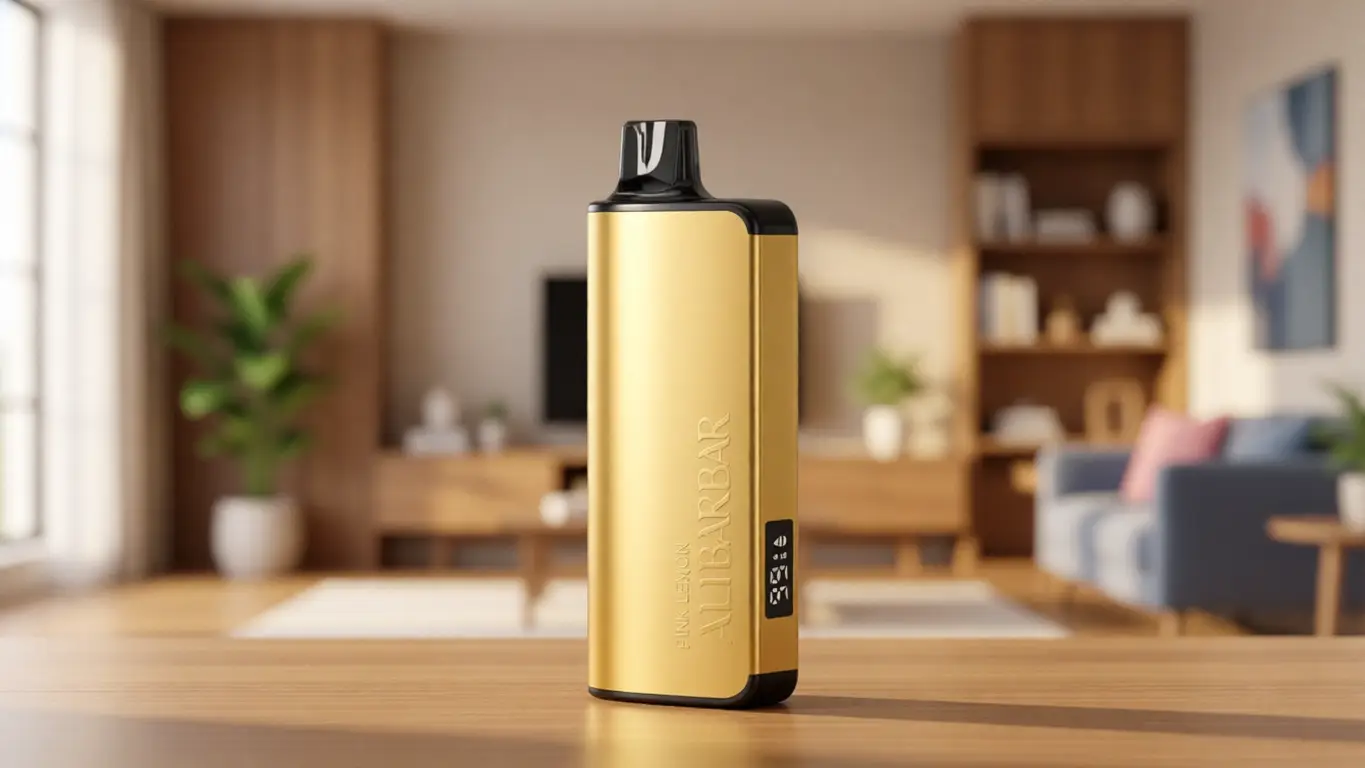
ALIBARBAR is an instructive case study because its engineering choices directly address each of the variables above, creating a range where the stated performance is closer to the lived reality. The product family is built on a conviction that users should never have to wonder whether a device will stay consistent for its entire life. Observing how specific models handle the translation from puffs to packs makes the design principles visible.
The INGOT 9000, with its rated 9,000 puffs, was designed for people who want a direct replacement for multiple packs without recharging anxiety. It pairs a high-capacity battery with a mesh coil that maintains thermal stability across the full e-liquid reservoir. Users report that the 9,000-puff figure is not a theoretical ceiling but a usable, consistent range. Measured against a 200-puff cigarette pack, that’s around 45 packs of equivalent activations — but the more meaningful comparison is that it can serve as a reliable companion for over a week of typical daily use, removing the daily purchase cycle entirely.
For those who need even longer independence, the INGOT 15000 pushes the capacity to 15,000 puffs, which translates to roughly 75 packs in puff-count terms. The significance here is not the large number — it’s the fact that the device incorporates a rechargeable battery and an intelligent power indicator, so you are never caught off guard. A common frustration with high-capacity units is that they fail silently, leaking power or losing output quality before the user notices. The INGOT 15000 was designed to avoid that: clear status feedback replaces guesswork.
The Ice Adjust 12000 adds another dimension: an airflow control that lets the user fine-tune the draw. Since equivalence depends so heavily on inhalation style, a device that adapts to how you actually inhale — tight like a cigarette or open like a deeper pull — gives you more control over what “one puff” means. This matters because the number of packs you feel a device replaces is ultimately a measure of how well it fits your routine, not just how much liquid it holds.
A Practical Framework for Evaluating How Many Packs a Device Replaces
To move from marketing numbers to a personal estimate, you need a method. Here’s a step-by-step evaluation you can apply to any device, regardless of brand.
Establish your baseline. Track how many cigarettes you actually smoke in a typical week, not what you intend to smoke. Be honest. If it’s a pack a day, that’s about 1,400 puffs per week (20 cigarettes × 10 puffs × 7 days).
Learn the device’s puff rating, but treat it as a starting range. Subtract 10–20% for real-world variation. A 9,000-puff device likely delivers 7,200–8,500 usable activations for an average user.
Check the battery architecture. If the device is non-rechargeable and the e-liquid volume is high, ask: does the battery outlast the liquid? A device that dies with liquid remaining cuts your effective puff count significantly. Rechargeable designs mitigate this risk.
Examine the nicotine specification. For someone coming from a pack-a-day cigarette routine, nicotine salt strengths that mimic the absorption profile often feel more familiar. But don’t equate a percentage on the label with a number of packs — equivalence is experiential, not numerical.
Observe the status indicators. A device that gives you no warning before it runs out forces you to carry a backup. If the design includes a clear battery or e-liquid gauge, you can plan your usage and avoid finding yourself empty-handed, which is itself a hidden cost.
Run a personal trial. Start with a high-capacity device that covers your calculated weekly puff needs, and note when you feel the urge to reach for an alternative. That data is more valuable than any manufacturer claim.
Common Mistakes People Make When Comparing Vapes to Cigarettes
The path from a pack-a-day habit to a device that feels equivalent is paved with avoidable errors. Understanding these patterns will save you time, money, and irritation.
Over-reliance on puff-count arithmetic. Dividing a device’s labeled puffs by 200 yields a number that feels scientific, but it ignores the role of nicotine satisfaction. A device that gives you 200 puffs of an unsuitably weak formulation will feel like it replaced zero packs, because you’ll keep reaching for it without feeling done. The quantitative and qualitative must be considered together.
Assuming all 9000-puff devices are identical. Two devices with the same rating can perform dramatically differently. One might use a coil that degrades after 5,000 puffs, producing burnt-tasting vapour long before the liquid runs out. Another might have no battery regulation, so the vapour becomes weak and inconsistent. The puff count is a design target, not a guarantee; the internal components determine whether the target is met.
Ignoring the cost of dead weight. If a device promises 15,000 puffs but you discard it after 10,000 because the battery died, you’ve lost a third of the value. Devices that cannot be recharged are especially vulnerable to this failure mode at high capacities. Modularity — rechargeable batteries, visible e-liquid windows — protects you from this hidden waste.

Misunderstanding the transition period. The first few days after switching, your body is adjusting to a different nicotine delivery rhythm. You may use a device more frequently than a cigarette, not because the device is weaker, but because the ritual is new. This transient phase can skew your perception of how many packs a device “feels like.” Give yourself a full week with a single, well-chosen device before drawing conclusions.
Frequently Asked Questions
Q: How many packs of cigarettes is a 9000-puff vape equivalent to?
A: Based on an average of 10 puffs per cigarette, 20 cigarettes per pack, a 9,000-puff device represents roughly 45 packs in puff-count terms. However, real-world factors like inhalation style, nicotine satisfaction, and device consistency can shift this equivalence up or down.
Q: Does one vape pod equal one pack of cigarettes?
A: Some low-capacity pods are designed to approximately match a pack in total puffs (around 200), but this varies by product. It’s more reliable to check the device’s puff rating and compare it to your personal usage pattern than to rely on a blanket assumption.
Q: Is vaping cheaper than smoking if one high-capacity device replaces many packs?
A: A single high-capacity device that substitutes for 30–40 packs of cigarettes typically costs less than buying those packs individually, but the financial comparison depends on local tobacco prices. The bigger economic shift is the change from daily purchases to a consumption rhythm measured in weeks.
Q: How can I tell when a no-indicator device is finished?
A: Without a screen or LED indicator, you rely on taste degradation, reduced vapour production, or the onset of a burnt note. These signals often appear only after the device has been running on empty for several puffs, which is why many experienced users prefer devices with clear status feedback.
Q: Can a vape with a very high puff count lose flavour before it’s empty?
A: Yes, if the coil is not designed to maintain output consistency across the full e-liquid volume. Premium devices use heat-resistant materials and tested wicking to preserve flavour integrity, but lower-quality units can deliver a muted experience well before the liquid is consumed.
Q: Are 15,000-puff devices too large to carry comfortably?
A: Modern engineering has allowed brands to pack high capacity into surprisingly compact form factors. The ALIBARBAR INGOT 15000, for example, remains pocket-friendly despite its 15,000-puff rating, balancing longevity with daily portability.
Q: How does nicotine salt concentration compare to cigarette nicotine intake?
A: There’s no direct 1:1 conversion because absorption rate and bioavailability differ. A cigarette delivers nicotine rapidly via inhalation; nicotine salt formulations provide a smoother curve. Users often describe the satisfaction as equivalent when the concentration aligns with their tolerance, but the experience is more sustained than the sharp spike of a cigarette.
Q: What should I look for to ensure a device delivers its rated puff count?
A: Look for a rechargeable battery, a known coil architecture (mesh coils generally offer better longevity and consistency), transparent e-liquid windows, and an indicator system that communicates battery life. Independent user reviews that report consistency over time are more valuable than manufacturer assertions.
The question “Is one vape equal to a pack of cigarettes?” is not wrong — it’s simply incomplete. What you’re really asking is whether a device can reliably replace the role those packs play in your day: the routine, the physical sensation, the biochemical satisfaction, and the freedom from constant replenishment. A thoughtfully engineered device can do all of that, often for many packs at a time, but only if you look past the headline number and examine how it manages power, flavour, and feedback. For those who prefer to make these judgments based on transparent, factory-certified specifications rather than guesswork, OZVAPE Shop provides a documented range built around exactly these principles. The right device is not the one with the most impressive claim; it’s the one that fits your actual week, your actual hands, and your actual need for control.