
VAPE FAQs
How To Tell When A Vape Is Empty?
Jun
It’s a scenario familiar to millions of adult users: you’re away from any convenient re-supply point, relying on a single portable electronic device, and you begin to notice subtle changes in its behaviour. The draw feels lighter, the output less pronounced, or the indicator light blinks in a pattern you haven’t seen before. Is the unit truly empty, or is something else going on? Misreading these signals leads to one of two frustrations — prematurely discarding a device that still had useful life remaining, or carrying a dead unit around because you couldn’t trust its status feedback. At OZVAPE Shop, we see this as less a product problem and more an information problem, which is why understanding the engineering and design factors that communicate remaining contents is the bedrock of informed, confident use.
This article does not exist to push any single device family. Instead, it provides a structured, reusable framework for evaluating how a specific unit tells you it’s approaching the end of its functional window. By the end, you’ll be able to look at any device, from a compact disposable to a high-capacity modular system, and read its signals as clearly as you’d read a fuel gauge.
Understanding What Matters: Core Engineering and Design Factors
A device’s ability to communicate its remaining contents isn’t a single feature — it’s an emergent property of several design choices. When these choices are made thoughtfully, you rarely need to wonder if the unit is empty; you know. When they’re neglected, you’re left guessing.
Internal Architecture and Output Consistency
At the heart of every device lies a heating element and a wicking system that feeds it liquid. The relationship between these two components largely determines how performance fades as the reservoir depletes. In well-engineered systems, the wick maintains saturation until the very last of the liquid is consumed, producing a gradual, detectable degradation in vapour density and warmth. You’ll notice the usual throat sensation becoming thinner, the visible exhale less dense, and the flavour profile turning slightly muted or dry. This is the most reliable physical cue — but only if the architecture prevents dry spots on the coil during those final puffs.
Poorly configured devices, however, can deliver the same subtle drop‑off well before the reservoir is empty, simply because the wicking can’t keep up with demand. That leads to false‑empty signals and unnecessary waste. When examining a device, look for information about its wicking material (cotton, ceramic, mesh composite) and whether the manufacturer describes any anti‑dry‑hit mechanisms. The more transparent the company is about these components, the more confident you can be in the consistency of its end‑of‑life behaviour.
Power Management and Status Transparency
Most modern portable units include some form of intelligent power management, but the way that intelligence is communicated to you varies enormously. A simple single‑colour LED that flashes to indicate a depleted battery is common, but it conflates two distinct conditions: low power and empty contents. In a device that relies on a sealed battery, once the power drops below a functional threshold, the unit may simply shut down, even if there is still liquid inside. If the status feedback doesn’t differentiate between “battery low” and “reservoir empty,” you are operating blind.
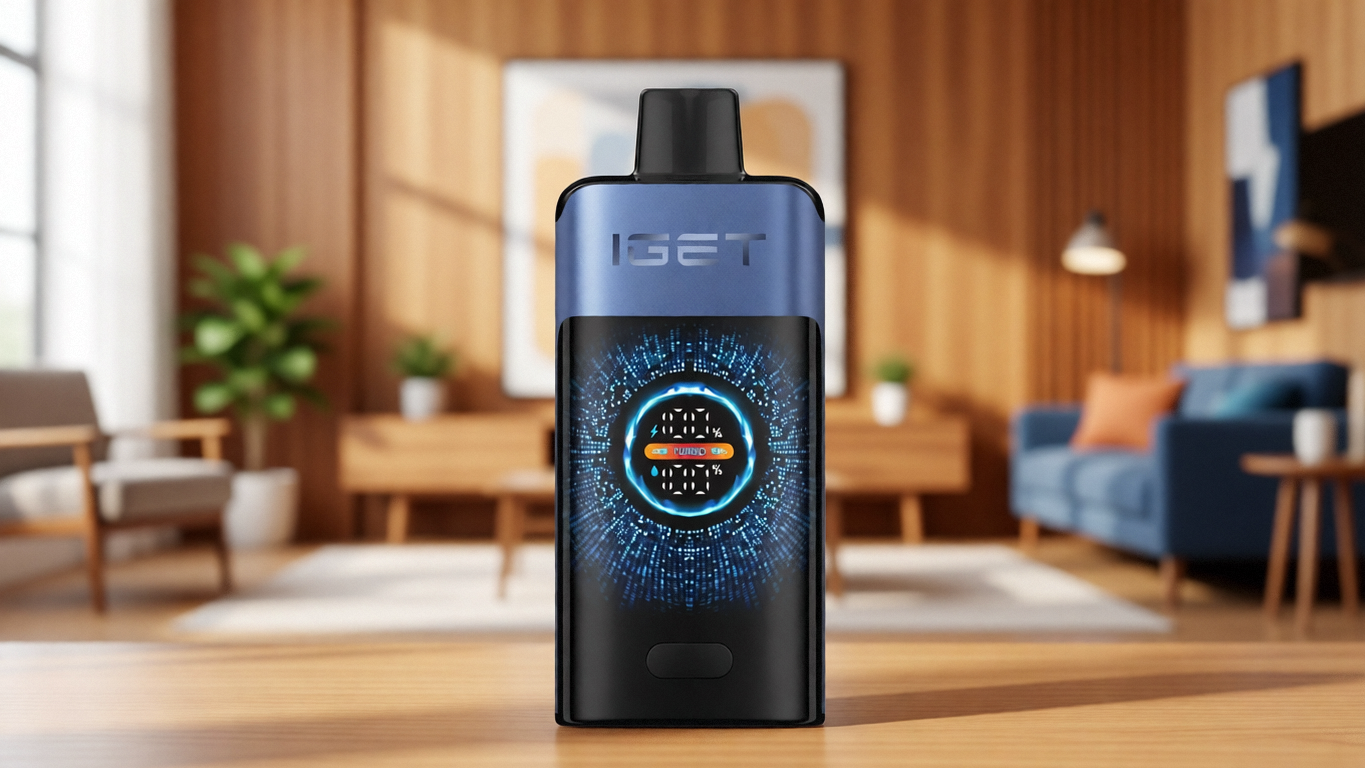
Higher‑transparency designs provide multiple cues: a subtle change in LED colour when the liquid level drops below a sensor, a haptic pulse at specific consumption milestones, or a clear, continuous display of remaining liquid volume. The real‑world value of this multi‑signal approach is that it eliminates the need to carry a backup device “just in case.” You can see at a glance whether you have enough to get through the afternoon. This kind of clarity is not a luxury; it’s a reliability feature with a direct impact on your daily routine.
Physical Design and Material Durability
Not all feedback is electronic. A significant number of devices rely on a simple, time‑tested method: a transparent or semi‑transparent reservoir that lets you visually confirm the liquid level. The catch is that not all transparent materials age equally well. Polycarbonate, for example, can become clouded or scratched after extended pocket carry, transforming a once‑clear window into an opaque suggestion. Borosilicate glass and certain treated plastics retain their optical clarity far longer, preserving the one truly unambiguous method of knowing when you’re empty.
Beyond the window itself, consider the overall mass of the device. A full reservoir adds a measurable amount of weight. Experienced users often develop an intuitive sense of when a unit is nearing empty simply by how it feels in the hand. This physical feedback loop works best when the device’s construction makes the weight difference between full and nearly empty substantial enough to detect. Ultralight, single‑use designs obscure this signal; heavier, more substantial builds amplify it.
Modularity and Lifecycle Flexibility
From the perspective of detecting emptiness, modular systems — those with replaceable pods, cartridges, or refillable tanks — offer a definitive advantage. When the pod is empty, you can see the cotton wick through the casing or notice the absence of any moving liquid. When it’s done, you replace the pod and continue using the same power unit. There is no ambiguity. Sealed disposable devices, by contrast, require you to interpret the aggregate of all their signals — vapour quality, LED patterns, draw‑activated resistance — without the possibility of visual verification.
This doesn’t mean sealed units are inherently inferior; it means that if you choose a disposable for its convenience, you must pay closer attention to the manufacturer’s commitment to status transparency. Does the device include multiple indicators? Does the packaging clearly explain what each light pattern means? A lack of such detail is a red flag that you’ll likely find yourself discarding units prematurely or, worse, carrying a backup for every situation, which defeats the purpose of a portable device in the first place.
Applying These Criteria to Real-World Options
When you survey the Australian market, one family of devices that consistently applies the principles above is the ALIBARBAR range, available through authorised retailers like OZVAPE Shop. The series includes units like the INGOT 9000 and INGOT 15000, which feature a self‑contained design with a multi‑state LED indicator that distinguishes between battery charge level and liquid consumption, alongside a visible reservoir window on select models. The result is a device that doesn’t leave you guessing: when the light sequence changes, or the window appears drained, you know exactly what’s happening.
What’s instructive here is not the brand itself, but how the design choices map onto the framework. For instance, the Ice Adjust 12000 variant includes an adjustable airflow mechanism. This may seem unrelated to emptiness detection, but it actually provides a secondary verification method: as the liquid runs low, you can tighten the airflow to maintain a satisfying draw with the remaining vapour, thereby extending the period during which the device gives you clear, consistent feedback before it finally shuts down. This kind of thoughtful integration is what separates a design that respects your time from one that merely looks similar to a more engineered product.
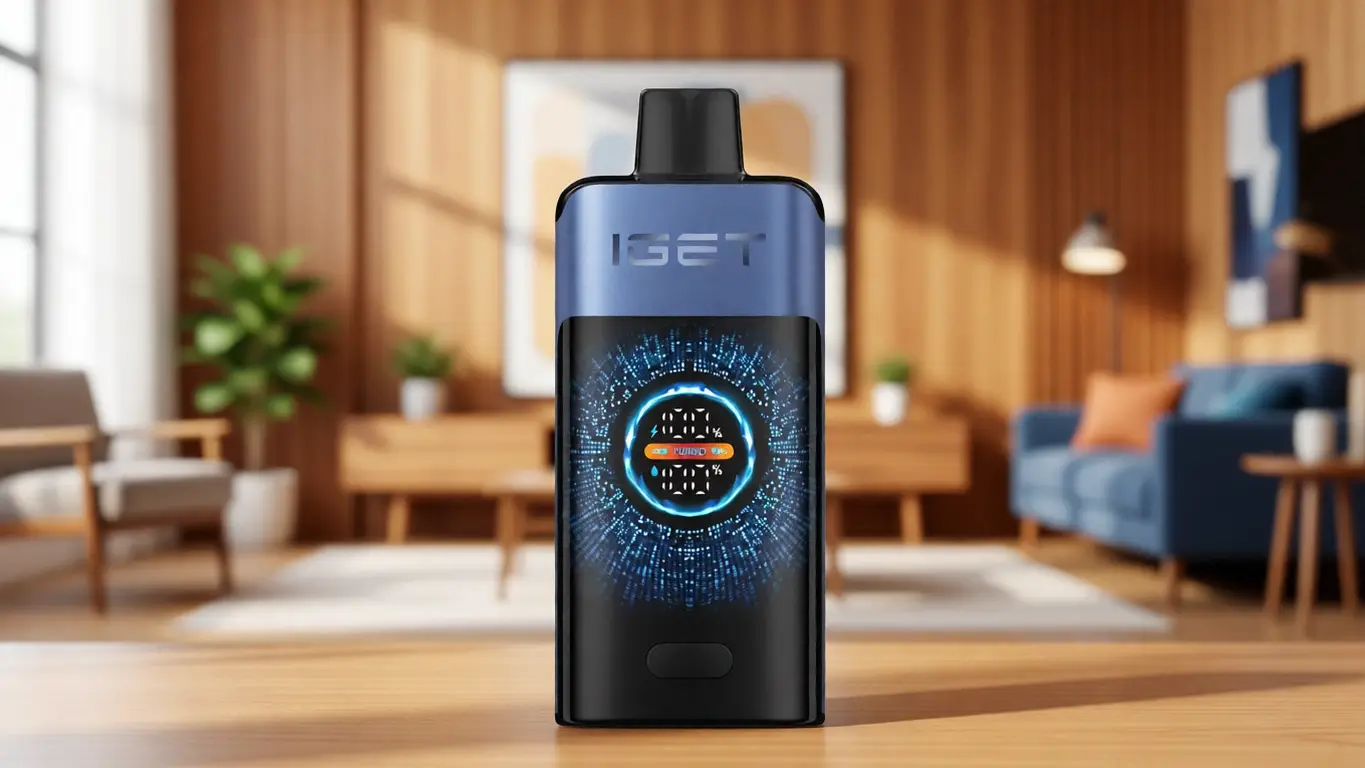
Of course, other manufacturers in the category also offer devices with varying levels of transparency. Some high‑capacity disposables now include small e‑ink screens that display a remaining puff count or liquid percentage, removing all guesswork. The trade‑off is typically a larger footprint and a higher price point. By understanding the specific design factors outlined earlier, you can weigh whether that screen is worth the added bulk, or whether a combination of a clear window and a reliable LED scheme is sufficient for your usage pattern.
A Practical Framework for Evaluation
If you’re standing in front of a display or scrolling through specifications online, use the following step‑by‑step methodology to assess how well a device will communicate its status to you:
Identify the primary empty indicator. Is it a light, a screen, a window, or a physical sensation? If the manufacturer’s description doesn’t explicitly state how you’ll know when it’s empty, assume you’ll be left guessing.
Check for confusion between battery and liquid state. Ask yourself: “If this unit stops working, will I know immediately whether it’s because the battery is depleted or because the liquid is gone?” If the answer is no, plan to carry a backup.
Examine the viewing window (if present). Is it positioned where it won’t be covered by your fingers during normal use? Is the material likely to retain clarity over weeks of handling? A cheap, frosted plastic window is only marginally better than no window at all.
Assess the weight differential. Pick up a full demo unit and an empty one, if possible. Can your hand feel the difference? This matters more if you’ll be using the device in situations where you can’t look at it frequently.
Review the manufacturer’s technical documentation. Look for terms like “dry hit protection,” “continuous output monitoring,” or “low‑liquid sensing.” These phrases indicate that the engineering team considered end‑of‑life behaviour as a core feature, not an afterthought.
A valuable tool you can use at OZVAPE Shop is the standardised specification comparison across all ALIBARBAR models. By placing key indicators — battery capacity, estimated puffs, indicator type, window material — side by side, you strip away marketing language and make the decision on the basis of data. This approach reduces decision friction and dramatically lowers the chances of a mismatch between your expectations and the device’s real‑world behaviour.
Common Selection Errors and Industry Observations
Even with a solid evaluation framework, several cognitive traps regularly lead users to choose devices that frustrate them. Understanding these errors is as important as understanding the devices themselves.
Overweighting puff count while ignoring indicator quality. A device promising 9000 puffs sounds impressive, but if the only indicator is a light that flashes four times when the battery is dead, you will spend the final half of its life unsure whether the next puff will be the last. That uncertainty imposes a cognitive tax every time you reach for the unit. In practice, a device with a modest puff rating and a precise liquid‑level display feels far more capable than a high‑number unit with ambiguous feedback.
Assuming visual similarity means identical internal engineering. Two cylindrical devices with rounded mouthpieces can look nearly indistinguishable on a retail shelf, but one might have a sophisticated anti‑dry‑burn algorithm and the other a simple voltage‑based cutoff. The external casing tells you nothing about the control firmware or the wicking architecture. This is why seeking out detailed product descriptions from authorised retailers, rather than relying on appearance alone, repays the effort many times over.
Undervaluing modularity in cost‑per‑use calculations. A sealed disposable may have a lower upfront cost, but if you regularly discard units with some remaining liquid because you couldn’t confirm they were empty, the actual cost per effective use rises. A modular system with replaceable pods, where each pod’s contents are visually verifiable, almost always delivers a more predictable and ultimately more economical experience over months of use. The mistake is to look only at the price tag and not at the waste factor created by information gaps.
Confusing category terminology with technical specifications. The market has settled on terms like “disposable,” “rechargeable disposable,” and “pod system,” but these categories don’t tell you much about how the device handles its final phase. A rechargeable disposable might have a larger battery and a liquid‑level light, or it might simply be a larger disposable that you can recharge but still have no way of knowing when the liquid is gone. You must look past the category name and into the specific engineering features that define the empty‑state behaviour.
From an industry perspective, we’ve observed a slow but definite shift toward greater transparency. Early‑generation devices treated the empty state as an afterthought, and users adapted by developing workarounds: tapping to check weight, estimating puffs mentally, or simply swapping units on a schedule. Today, the most responsible manufacturers understand that the period just before a device is fully consumed is the moment when user trust is most fragile. A device that communicates clearly at that point strengthens the entire brand. OZVAPE Shop’s curation of the ALIBARBAR line reflects this understanding: each model in the range has a defined, documented method for communicating consumption status, so users can choose based on their preference for a window, a colour‑coded light, or both.
Frequently Asked Questions
Q: My device’s light blinks when I inhale, but it still produces some vapour. Is it empty?
A: Not necessarily. A blinking light often indicates a low battery condition, not an empty reservoir. If the vapour output is reduced but still present, the device may simply need recharging (if rechargeable) or is operating at a diminished voltage. Consult the specific model’s manual to decode the blinking pattern.
Q: Why does my device sometimes taste burnt before it seems empty?
A: A burnt taste usually means the heating element is reaching temperatures higher than the wicking can support. This can happen when the liquid level is very low but not yet entirely depleted, causing air to reach the coil intermittently. It can also occur if the device is used in rapid succession without allowing the wick to re‑saturate. A burnt note is a strong signal that the unit is near its end, even if visual indicators haven’t yet confirmed emptiness.
Q: Can a transparent window really be trusted to show the true liquid level?
A: Mostly yes, but with two caveats. First, some liquid may remain trapped in the wicking block itself, out of sight from the window. Second, if the window is small or poorly positioned, what appears to be an empty reservoir could simply be an air bubble covering the viewing area. Gently tilting the device can verify. High‑quality devices use larger, treated windows to minimise these effects.
Q: How can I verify that an ALIBARBAR device I purchased is from an authorised source?
A: Products supplied through OZVAPE Shop include factory‑certified packaging with verification codes that can be cross‑checked against the manufacturer’s database. Authorised sourcing ensures the device’s indicator systems and firmware reflect the factory‑intended behaviour, including accurate empty‑state signaling.
Q: If a device advertises a certain number of puffs, how closely should I expect that to match reality?
A: Puff counts are derived from laboratory testing under standardised conditions, including specific puff durations and intervals. Real‑world usage often involves longer draws or more frequent use, which reduces the total puff count. Instead of treating the number as a precise promise, view it as a relative indicator of capacity, and use the device’s onboard status feedback (window, light, or screen) as your actual gauge.
Q: Is it safe to keep using a device that occasionally sputters but still produces vapour?
A: Sputtering indicates that liquid is reaching the heating element in uneven amounts, possibly because the reservoir is nearly empty and the wick is alternately dry and saturated. While you may get a few more draws, the experience is likely to be inconsistent, and the risk of a burnt hit increases. For best results, treat sputtering as a signal that the unit has entered its final functional stage.
Q: Do higher‑capacity devices make it harder to tell when they’re empty?
A: Not inherently, but they can create a perception problem. Because the usage period stretches over many days or even weeks, you may stop paying attention to the gradual changes in vapour quality. That’s why high‑capacity devices benefit most from explicit, hard‑to‑miss indicators like e‑ink screens or large visual windows that don’t rely on you remembering how a full draw felt a week ago.
Q: What’s the best way to store an unfinished device overnight?
A: Store it upright in a cool, dry place. This keeps any remaining liquid pooled near the wick inlet, reducing the chance of a dry start the next morning. If the device has a dedicated power‑off mechanism, use it to prevent accidental activation during storage.
Q: Can I rely on the weight of a device to judge emptiness accurately?
A: To some degree, yes, but it depends on the device’s construction. Heavier metal‑bodied units show a more noticeable weight difference between full and empty than ultralight polymer units. Practice helps: after using the same model for a few cycles, many users develop an accurate feel for when a unit is approaching empty.
Q: What should I do if my new device doesn’t match the empty‑indicator behaviour described in the manual?
A: Contact the retailer immediately. At OZVAPE Shop, customer support is structured to handle such discrepancies directly, with a documented process for verifying and, if necessary, replacing units that fail to perform to their specifications. Do not attempt to disassemble the unit, as this can compromise any warranty claim.
Conclusion
The ability to tell when a portable electronic device is truly empty is not a minor usability detail; it’s a deciding factor in whether that device will integrate seamlessly into your daily life or become another source of low‑grade anxiety. By understanding the interplay of internal architecture, power‑management signalling, physical design cues, and modularity, you gain a lens through which to evaluate any product — and you stop relying on guesswork.
OZVAPE Shop exists to make that evaluation process simpler and more transparent. With a curated range that includes the full ALIBARBAR collection, standardised specifications, and an unwavering commitment to authorised sourcing, the platform provides the information you need to choose with confidence. The right device is not the one with the most attention‑grabbing puff number; it’s the one whose design language you can read as easily as the clock on your wall. When you can tell, without a second thought, that it’s time to replace a unit or a pod, the device has done its job.