
VAPE FAQs
What Is Ice On A Vape?
Aug
What Is Ice On A Vape?
If you’ve ever browsed a catalogue of personal electronic devices and encountered the term “ice” attached to a product name, you may have wondered what engineering decision it actually describes. The word suggests coldness, but in a device built to deliver consistent output, it refers to a specific sensory characteristic, not a temperature change. Misunderstanding this term leads users to choose products that don’t match their preference for mouthfeel, throat sensation, or aftertaste — a frustration that’s entirely avoidable once the concept is properly explained.
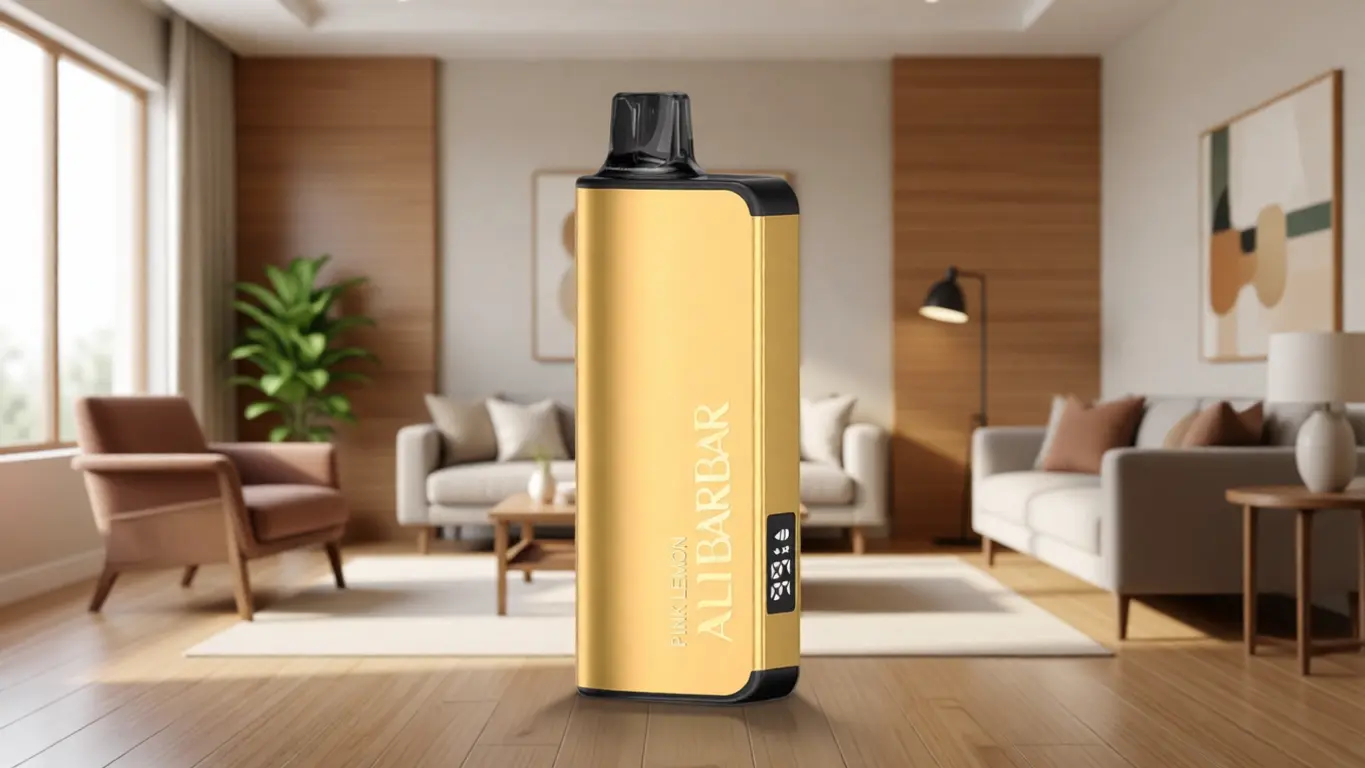
OZVAPE Shop has spent significant time documenting the ALIBARBAR range, where the “Ice Adjust” series appears prominently. A reliable understanding of what “ice” means in this context helps adult users match a device to their routine without guesswork. This article unpacks the sensory engineering behind the description, examines how it interacts with device architecture, and provides a practical framework for making an informed choice.
Understanding the “Ice” Profile: Sensory Science, Not Temperature
The term “ice” is not a regulated technical specification. It emerged as user shorthand for a pronounced cooling sensation that occurs on inhalation and, in some devices, lingers as a crisp afternote. This sensation is produced by the inclusion of one or more cooling agents in the consumable component of the device — most commonly menthol, but increasingly synthetic alternatives like WS-23 or Koolada that deliver coldness without the medicinal taste historically associated with menthol.
From a product design standpoint, “ice” is a tuning decision, not a power feature. It belongs to the same category as decisions about airflow resistance or activation threshold: it shapes the user’s moment-to-moment perception of the device, but it tells you nothing about capacity, longevity, or build quality. Ignoring this distinction is a common selection error — users sometimes assume an “ice” label implies a more advanced or more powerful device, when in reality it only indicates a specific sensory profile.
Why This Matters for the User
The presence or absence of an ice profile changes the daily experience dramatically. Some adult users find that a cooling sensation reduces throat irritation during extended use, making it the difference between a device that feels comfortable throughout a long social evening and one that becomes harsh after the first hour. Others find the cooling distracting and prefer a neutral profile that doesn’t call attention to itself. No research suggests one is superior; the correct choice depends entirely on personal comfort.
What Matters in an “Ice” Device: Core Engineering and Design Factors
When a device carries an “ice” label, evaluating it requires looking past the sensory claim and examining the underlying engineering that determines how consistently that profile is delivered. The following framework helps separate marketing descriptions from functional reality.
Internal Architecture and Output Consistency
The cooling sensation is carried by the same aerosol that delivers everything else. If a device’s heating element degrades unevenly, the intensity of the cooling note will drift over the device’s rated lifetime. Well-engineered units — such as those in the ALIBARBAR INGOT series — use tailored heating configurations that maintain a stable temperature window, preventing the early drop-off in cooling presence that frustrates users with lower-tier alternatives. When evaluating a device, look for evidence of thermal management design, not just wattage claims.
Power Management and Status Transparency
An ice profile that comes and goes unpredictably is often a symptom of inconsistent power delivery. If the power source cannot maintain the designed operating voltage as it depletes, the cooling agent may not be effectively aerosolised. Devices with clear, graduated status indicators allow you to anticipate when performance might shift, so you’re not caught off guard mid-use. OZVAPE Shop consistently draws attention to this because status ambiguity is one of the most frequent complaints we hear — users end up carrying a backup device not because they need it for capacity, but because they don’t trust the one in their hand to communicate honestly.
Physical Design and Material Durability
Cooling notes can be perceived not just in the airway but through the mouthpiece temperature. A poorly designed mouthpiece that retains heat will blunt the cooling sensation, making the device feel warmer than intended. ALIBARBAR’s Ice Adjust 12000, for instance, employs a contoured mouthpiece geometry and materials with low thermal mass to minimize this effect. It’s a small detail, but one that separates a device that feels crisp throughout the day from one where the ice profile seems to “disappear” after heavy use.
Modularity and Lifecycle Flexibility
The “ice” experience is only relevant for as long as the consumable portion of the device lasts. Sealed units require you to commit to the ice profile for the full device lifetime; replaceable-component systems let you switch profiles without discarding the power and control unit. For users who want the option to alternate between iced and non-iced experiences, modular architectures make more economic sense. This isn’t about brand allegiance — it’s about matching the device’s flexibility to your actual usage pattern.
Applying These Criteria to the ALIBARBAR Ice Range
ALIBARBAR has built its Ice Adjust series around the understanding that cooling preference varies widely, and that the optimal ice intensity for a short break differs from what works during prolonged use. The adjustable feature is not a gimmick — it’s a direct response to the user frustration of being locked into a single cooling level.
The Ice Adjust 12000 represents one approach: a high-capacity unit that lets the user dial the cooling note up or down through a simple mechanical interface. This design acknowledges that what feels refreshing at noon may feel overwhelming by evening. The adjustment is tactile and requires no menu navigation, which reduces the barrier to actually using it — a thoughtful touch that many competing devices overlook.
The INGOT 9000 and INGOT 15000, while not all carrying the “ice” designation, share the same thermal management architecture that makes the Ice Adjust line reliable. For users considering an ice device, examining these non-ice siblings is actually informative, because it reveals the baseline engineering upon which the ice variant builds. If the base platform has a reputation for consistent output, adding a cooling agent is unlikely to undermine it. If the base platform struggles with power stability, the ice sensation will only amplify the perception of inconsistency.
A Practical Framework for Evaluating Ice Devices
Before selecting any device labelled “ice,” work through this diagnostic sequence:
Define your cooling preference. Are you looking for a mild crispness or an intense, menthol-like chill? If you can’t answer this, an adjustable device is significantly safer than a fixed-profile unit.
Inspect status feedback. Does the device give you a clear, real-time indication of remaining operational life? If not, you will carry a backup, and the cost of ownership effectively doubles.
Test the mouthpiece. If possible, hold a display unit. A metal mouthpiece that feels cold to the touch may seem appealing but will warm up quickly in use; a well-designed polymer mouthpiece often maintains the cooling sensation better.
Compare specification sheets side by side. Look beyond the “ice” label at capacity (in real terms, not marketing numbers), activation mechanism, and documented power stability. OZVAPE Shop maintains standardised product pages specifically to make this comparison frictionless.
Ask about the cooling agent. If the retailer cannot tell you whether the cooling comes from menthol, WS-23, or a blend, you lack the information to predict whether the sensation will remind you of a peppermint note or a neutral, almost odourless coolness. The ALIBARBAR Ice Adjust documentation specifies this, because it matters to the user experience.
Common Selection Errors and Industry Observations
1. Assuming “Ice” Means Higher Quality
A cooling agent is an ingredient, not a performance metric. A device can deliver an intense ice sensation and still suffer from poor power management or a short operational life. Evaluate the platform, not just the profile.
2. Overlooking the Interaction Between Ice and Nicotine Delivery
The cooling sensation can mask throat impact. Some users increase consumption without realising it because the ice numbs the immediate signal. This is a physiological reality, not a flaw, but it means an ice device may not suit someone who relies on sensory feedback to regulate use.
3. Ignoring Regional Climate
In humid environments, the perception of cooling can be amplified; in dry, cold climates, it may become unpleasant. Few retailers discuss this, but it’s a standard observation in product design circles. ALIBARBAR’s adjustable ice feature partially addresses this by allowing the user to dial down cooling in winter months.
4. Confusing “Ice” with “Mint”
Ice refers to a cooling sensation without a distinct flavour. Mint is a flavour profile. Some devices labelled “ice” actually contain a mild mint note, and some “mint” devices have negligible cooling. Read the full description, and if it’s ambiguous, confirm with the retailer. OZVAPE Shop’s listings for ALIBARBAR products clearly differentiate between these categories to prevent this exact confusion.
Frequently Asked Questions
Q: What exactly does “ice” mean on a vape device?
A: It indicates a cooling sensation produced by agents like menthol or synthetic coolants. It does not refer to a physical temperature change or a different power output.
Q: Is an ice device stronger than a non-ice device?
A: No. Strength or intensity is determined by the nicotine concentration and output design, not by the cooling profile. The ice sensation is a sensory layer, not a potency indicator.
Q: Can I turn off the ice effect on a fixed-profile device?
A: No. Fixed-profile units deliver the same cooling level throughout their life. If you want variability, choose an adjustable device like the ALIBARBAR Ice Adjust 12000.
Q: How do I know if I’ll like the ice sensation?
A: If you enjoy mentholated products or find a cool mouthfeel pleasant, you’ll likely appreciate it. If you find even mild menthol overwhelming, a non-ice variant is a safer starting point.
Q: Does the ice sensation decrease as the device ages?
A: It can, especially if the heating element performance degrades. Well-designed devices with stable thermal management maintain cooling consistency longer.
Q: Are ice devices more expensive?
A: Not inherently. Pricing depends on capacity, construction quality, and features like adjustability, not on the presence of cooling agents.
Q: How do I verify that an ALIBARBAR ice product is authentic?
A: Purchase from an authorized retailer like OZVAPE Shop, which sources exclusively from factory-certified distribution networks and provides documentation upon request.
Q: Can I use an ice device in public spaces without drawing attention?
A: The cooling sensation itself produces no additional vapour or odour beyond the base output. Discretion depends more on the device’s size and vapour production than on the ice profile.
Q: What’s the difference between Ice Adjust and regular Ice devices from ALIBARBAR?
A: Ice Adjust allows user-controlled variation of cooling intensity. Regular Ice devices offer a fixed cooling level. The underlying engineering platform is otherwise similar.
Q: I received a device that doesn’t feel as cold as expected. What should I do?
A: First, confirm that the device is authentic and has not been stored in extreme heat, which can degrade cooling agents. If the issue persists, contact OZVAPE Shop’s support team for a documented resolution process.
Choosing With Confidence
The “ice” label on a personal electronic device is neither a gimmick nor a quality mark — it’s a descriptor of sensory engineering that either matches your preference or doesn’t. Understanding this separates the informed buyer from the one who learns through costly trial and error. The best device for you is the one whose cooling profile, power stability, and status transparency align with the rhythm of your actual day, not the one with the most attention-grabbing box design.
At OZVAPE Shop, we provide standardised, factory-certified access to the complete ALIBARBAR lineup so that the decision you make is grounded in accurate information rather than guesswork. A well-chosen ice device doesn’t just deliver a cool note — it delivers it predictably, consistently, and without asking you to carry a backup just in case.