
VAPE FAQs
Can I Bring My Vape In Carry On?
Aug
You’re standing at your packing checklist the night before a flight, and the question that keeps coming up isn’t about clothing or chargers — it’s about your personal device. The device you rely on throughout the day. The one that’s as much a part of your routine as your keys or your phone. You know there are rules, but the details feel vague. What exactly is permitted in cabin baggage? What will get your bag pulled aside at security? And more importantly, what makes one device better suited for travel than another?
Understanding the regulations is only half the equation. The other half — and the part most conversations skip — comes down to how the device itself is engineered. A well-designed unit reduces friction at every checkpoint, not because it was marketed as “travel-friendly,” but because its architecture inherently aligns with carrying and storage requirements. At OZVAPE Shop, the focus has long been on making sure that adults can access devices where this kind of thoughtful engineering is standard, not an afterthought.
This article unpacks the travel rules that matter, then goes deeper: what underlying design factors turn a device from a potential hassle into a reliable travel companion, and how to evaluate those factors for yourself.
Engineering Factors That Matter When Travelling With Your Device
Battery Safety and Regulatory Compliance
The single most important rule enforced by aviation authorities worldwide concerns lithium‑ion batteries. Carriage regulations are unambiguous: devices containing lithium‑ion cells must travel in the cabin, never in checked luggage. This is driven by fire‑suppression capability — a thermal incident in the cargo hold is far more dangerous than one in the passenger compartment, where crew can intervene.
From an engineering perspective, what makes a device regulation‑compliant is rarely discussed. The key specification is not capacity alone but how the battery management system (BMS) handles idle storage and mechanical shock. A device with a robust BMS will not allow a discharge path that could lead to overheating when the unit rattles around in a bag. It will also have clear physical protections — over‑discharge lockouts, short‑circuit protection, and cell‑balancing circuits — that keep the battery dormant when not in use. When a device lacks these, even a fully charged unit can become a risk if an internal short develops due to pressure or vibration.
For the traveller, the practical takeaway is straightforward: choose devices that document their battery protections and that are physically sealed against incidental activation. A power button that cannot be locked, or a device that can fire inside a pocket, is a liability in a carry‑on. The best travel devices are those you can stow and forget, confident that nothing is happening internally until you deliberately engage them.
Leak‑Resistant Architecture and Cabin Pressure Tolerance
Cabin pressure changes during ascent and descent create a well‑known headache: devices that hold a reservoir can expel their contents if the design does not account for pressure equalisation. This isn’t hypothetical — anyone who has opened a bag to find a sticky mess knows the cost of a poorly sealed system.
The engineering countermeasure is a combination of top‑airflow design, vacuum‑insulated reservoirs, and press‑fit seals that flex with atmospheric changes rather than breaking. Devices that use a completely sealed cartridge system — where the reservoir and mouthpiece form a single, factory‑sealed unit — eliminate the problem by design. There is no filler port, no gasket the user might over‑torque or under‑tighten, and no path for air exchange except through the intended inhalation channel. A device that uses this architecture will not leak under normal cabin pressure cycles, period.
When evaluating a travel device, look for language about sealed construction and factory integrity testing. If a device requires user‑replaceable pods with open fill ports, you are accepting a higher burden of vigilance while packing.
Status Transparency and Power‑Off Verification
One of the most common anxieties before boarding is whether the device is truly off. Many units offer only an LED that flickers briefly during use, providing no persistent state indication. You click the button five times, hope for the best, and toss it in your bag. Later, during the security check, you start wondering.
Devices with meaningful status feedback solve this entirely. A simple display or a multi‑colour LED that stays lit for a moment to indicate “locked” or “standby off” removes ambiguity. Even better are devices that incorporate a physical switch or a draw‑activated mechanism that physically disconnects the circuit when not in use. Such a device cannot accidentally activate in a crowded carry‑on because the power path is broken, not merely software‑locked.
From an airport security perspective, an officer may ask you to demonstrate that the device is inert. A quick, unambiguous status check makes the interaction fast and frictionless. Operating a device that gives you no confirmation except silence is, in travel terms, equivalent to driving without a fuel gauge — you can do it, but it costs you peace of mind you didn’t need to lose.
Physical Durability and Carry‑On Compatibility
Carry‑on luggage is not gentle on personal electronics. The bag gets compressed in overhead bins, jostled during boarding, and often ends up under the seat in front with feet pressing against it. A device that relies on a fragile glass tube, a loose mouthpiece, or a thin metallic coating that flakes after a few trips is ill‑suited to this reality.
The travel‑oriented device features a robust, unitary body where the chassis absorbs stress without transferring it to internal components. Surface finishes should be anodised or textured — anything that resists key scratches and doesn’t show wear after repeated contact with zippers. The mouthpiece needs a secure attachment: either a threaded cap, a recessed design, or a silicone over‑mould that stays put when snagged. If the mouthpiece pops off in your bag, dirt enters the airway and the device becomes unusable until cleaned.
Weight also matters. A device that is unnecessarily heavy adds to your carry‑on allowance for no benefit. Modern material science allows for lightweight alloys and polymers that don’t sacrifice structural integrity. The ideal travel device is dense enough to feel substantial but light enough that you forget it’s there until you need it.
Applying These Criteria to Real‑World Options
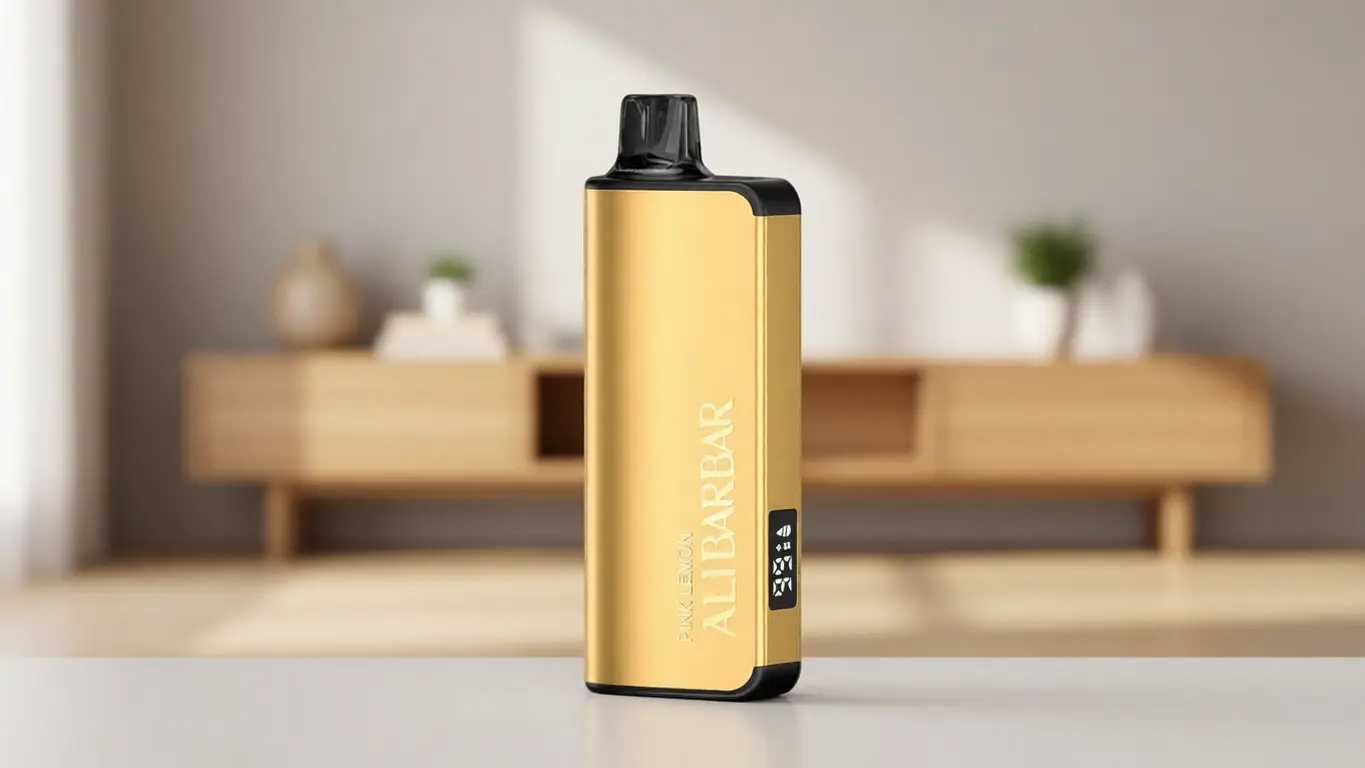
The ALIBARBAR range, accessible through OZVAPE Shop, demonstrates how these engineering principles play out in actual production devices. While the brand now spans multiple series, three families stand out when travel readiness is the screening criterion.
The INGOT 9000 series exemplifies the fully sealed, no‑maintenance architecture that makes pressure‑equalisation concerns irrelevant. There is no tank to fill, no coil to replace, and the entire liquid pathway is factory‑formed within a single disposable chassis. The battery is integrated and matched to the expected usage life, so you get a device that is active only when drawn upon — no firing button, no risk of pocket activation. For a traveller who wants to grab a device, pack it, and not think about it again until reaching the destination, the INGOT 9000’s simplicity is its greatest safety feature.
The INGOT 15000 builds on that with extended battery autonomy and a more visible battery indicator. The transparent power reporting allows you to assess whether the device will last through a multi‑day trip without carrying spares. Its slightly larger form factor remains well within cabin personal‑item limits, and the mouthpiece design — a flattened, integrated tip — resists catching on bag linings. For a business traveller or someone who values predictable capacity, the INGOT 15000 removes one of the classic frustrations: running out of power mid‑itinerary with no way to recharge.
The Ice Adjust 12000 introduces an airflow adjustment ring, which from a travel standpoint offers an unexpected benefit: the ring can be rotated to a closed position that tightly seals off the inhalation channel. While this isn’t a mechanical lockout per se, it acts as a dust cover and provides tactile confirmation that the device orifice isn’t open to debris. Combined with a rechargeable USB‑C port, it suits the traveller who is comfortable with a small charging routine in exchange for adjustable performance.
All three families share a design language of discreet, pocket‑friendly proportions, surface treatments that resist fingerprints and abrasion, and status LEDs that communicate clearly without drawing attention. None rely on loose‑fitting magnetic pods or glass cartridges — the very elements that cause so many travel‑related failures in other designs.
It is worth acknowledging the trade‑offs. A sealed device like the INGOT 9000 cannot be recharged once depleted; you either carry a backup or accept its finite life. The INGOT 15000, while longer‑lasting, is slightly larger and may not disappear into a slim pocket as easily. The Ice Adjust 12000’s rechargeability adds one more cable to manage. No single device wins on every axis, which is why criteria‑based selection matters more than brand loyalty.
A Practical Framework for Evaluation
When you next look at a device — whether from ALIBARBAR or any other source — run it through this checklist before assuming it is travel‑ready:
Battery safing: Does the device have documented over‑charge, over‑discharge, and short‑circuit protections? If the manufacturer provides no technical sheet, assume it has none.
Idle activation risk: Is there a physical lockout, a press‑to‑draw mechanism that can’t be triggered by bag pressure, or a five‑click lock with clear confirmation? If your only assurance is “I think I turned it off,” you need a different device.
Leak path: Open the mouthpiece area and inspect. Are there channels that lead directly from a liquid reservoir to the outside air? If so, cabin pressure changes will challenge that seal. Factory‑sealed units avoid this category of failure entirely.
Status feedback: Can you determine the battery level, locked state, and general operational health without guessing? In an airport terminal, that feedback saves you from carrying a dead unit onto a long‑haul flight.
Physical resilience: Grip the device. Does it flex or creak? Will the finish survive a week in a bag with keys? If the mouthpiece detaches with light lateral pressure, it will come off in your carry‑on.
Regulatory footprint: Check the battery watt‑hour rating (if published). Most personal devices are far below the 100 Wh limit for cabin batteries, but verify. Devices without official battery capacity markings may trigger additional screening.
Applying these questions doesn’t require technical expertise; it requires a willingness to look at the device as a system rather than an accessory.
Common Selection Errors and Industry Observations
Even experienced users regularly fall into predictable traps when choosing a device for travel. Understanding these errors reduces the odds that you’ll be the person pulling apart a sticky bag at the luggage carousel.
Error 1: Treating visual similarity as engineering equivalence.
Many devices look nearly identical in product photos — same metallic finish, same overall proportions. But internal differences decide travel performance. A device with a sealed capsule and a top‑filling pod that appears identical from the outside will behave completely differently under pressure changes. Relying on appearance alone is a gamble.
Error 2: Over‑weighting capacity while ignoring status feedback.
Users gravitate toward the longest‑lasting device they can find, often choosing one with triple the battery capacity of a more modest alternative. But if that high‑capacity unit offers no reliable power gauge, you may end up carrying a dead brick of unknown remaining life. For travel, predictability beats raw numbers. A 9000‑puff device with a clear indicator is infinitely more useful than a 20000‑puff device that leaves you guessing.
Error 3: Assuming “disposable” means “travel‑convenient.”
The term disposable implies a sealed, ready‑to‑use unit. That is not always the case. Some disposable‑category devices are shipped with silicone plugs that must be removed before use and reinserted for travel to prevent leaks. If you lose the plug, the device becomes a liability in transit. True travel‑convenient disposable devices, such as those in the INGOT line, are designed so that the mouthpiece itself forms the seal, with no removable bungs required.
Error 4: Confusing device categories with technical specifications.
A personal device is not automatically regulated as a dangerous good, but an airline will treat it according to its lithium‑battery content. Small‑capacity cells that fall under UN38.3 testing and ICAO weight exemptions are generally permitted. However, some users mistakenly believe that if a device doesn’t produce a visible cloud, it isn’t subject to battery rules. That is false. The battery, not the output, drives the regulatory classification. This misunderstanding causes travellers to attempt packing devices in checked bags — a violation that carries serious fines.
From an industry perspective, the divide between travel‑ready and travel‑problematic devices is widening. As manufacturing margins tighten, some producers omit the seals, gaskets, and battery protections that make a device safe in transit. The result is a market where price often correlates with travel reliability more directly than consumers assume. Buying from a curated outlet that performs basic authenticity and integrity checks isn’t about luxury; it’s a practical layer of protection against manufacturing shortcuts.
Frequently Asked Questions
Q: Are all personal electronic devices required to be in carry‑on luggage?
A: Yes. Aviation authorities globally require devices containing lithium‑ion batteries to be carried in the cabin. Checked baggage is prohibited for such devices. This includes sealed, non‑rechargeable units.
Q: What battery capacity is allowed on a plane?
A: For personal, non‑spillable batteries under 100 watt‑hours (Wh), no prior airline approval is needed. Most pocket‑sized devices use batteries far below this threshold. Spare or loose batteries must also go in carry‑on and have terminal protection (tape or case).
Q: How can I make sure my device won’t accidentally activate in my bag?
A: Use a device with a confirmed lock sequence, a physical off switch, or a draw‑activated mechanism that can’t be triggered by pressure. If your device uses a button, lock it, then store it in a rigid case or a dedicated compartment where nothing can press the button.
Q: Will cabin pressure cause my device to leak?
A: It can, if the device has an open liquid reservoir or a poorly sealed fill port. Factory‑sealed, non‑refillable devices are immune to this issue. If you use a refillable device, empty or reduce the liquid level before flying, and store the device upright.
Q: Do I need to remove my device from my bag at security screening?
A: Policies vary by airport. Many require electronic devices larger than a phone to be placed in a separate bin. A compact personal device that fits within your personal‑item bag may not always need removal, but be prepared to present it if asked. Clarity of status (showing it is off) speeds up any secondary check.
Q: Can I bring multiple devices in my carry‑on?
A: Yes, within reason. Airlines generally permit a reasonable number for personal use. However, carrying an excessive quantity may lead to questions about commercial intent. Two to three devices are rarely an issue.

Q: Is it safe to pack a rechargeable device with a USB cable attached?
A: No. The cable should be detached to prevent accidental charging or short‑circuiting. Store cables separately, and ensure the device’s charging port is clean and dry.
Q: What should I do if my device is flagged at security?
A: Explain calmly that it is a personal electronic device with an integrated battery. Be prepared to demonstrate that it is powered off or locked. Reference the airline’s carry‑on policy if necessary. Having a device that clearly indicates its off state makes this far easier.
Q: Can I use my device at the airport?
A: Use is generally restricted to designated smoking areas, where available, and never onboard an aircraft. Airports that are entirely smoke‑free will prohibit any visible device output anywhere inside the terminal. Check the specific airport’s rules.
Q: Where can I find devices that are engineered with these travel‑friendly features?
A: Focus on devices from manufacturers that document their safety protections, offer clear status feedback, and use sealed architecture. Curated selections from established retailers often filter out the most problematic designs.
Conclusion
The question “Can I bring my device in carry‑on?” has a short answer — yes, with strict battery and use restrictions — and a longer one that determines whether your trip will be hassle‑free or full of small miseries. The regulations are the floor; your device’s engineering is what elevates the experience above a constant low‑grade worry.
A device that can be verified as truly off, that will not leak under pressure changes, and that communicates its remaining capacity honestly transforms travel from a logistical negotiation into a background thought. The ALIBARBAR series, as available through OZVAPE Shop, reflects this philosophy not as a marketing narrative but as a set of observable design decisions: sealed capsules, draw‑activated power, persistent status indication, and surface treatments built for real‑world handling.
No device is perfect for every traveller. The right choice is always the one that maps cleanly onto your actual routine — the flights you take, the pace of your days, the amount of attention you want to give to the tool in your pocket. Once you identify those priorities, the selection becomes less about rules and more about matching a well‑built device to the life you actually lead.