
VAPE FAQs
What Is Eco Mode On A Vape?

Oct
As portable electronic devices grow more sophisticated, adult users increasingly find themselves navigating features that sound promising but remain poorly explained. One such feature is “eco mode” – a label that appears across a range of personal devices, from smartphones to the compact units many rely on throughout the day. For those who depend on battery-powered devices during long shifts, extended travel, or simply prefer not to carry a backup, the frustration of an unexpected power fade is all too familiar. Understanding what eco mode actually changes inside the device – and what it does not change – can be the difference between a reliable, all-day companion and a source of constant low-level anxiety. When evaluating options from authorised retailers such as OZVAPE Shop{:target=”_blank”}, it pays to understand what these features actually do, rather than relying on surface-level claims.
Understanding Eco Mode: Power Management in Portable Devices
Eco mode is fundamentally a power conservation strategy, implemented in firmware, that deliberately constrains how a device draws energy from its battery. It is not a marketing synonym for “low quality” or “beginner setting,” but a calculated trade-off engineered to extend operational duration. Digging into the specifics reveals a set of intentional limitations that serve a clear purpose.
What Eco Mode Actually Changes
At the hardware level, eco mode typically imposes one or more of the following restrictions:
Maximum output power is capped. A device that normally operates at, say, 40 watts might be limited to 25 watts when eco mode is active. This is achieved by reducing the voltage applied to the heating element, which directly lowers current draw.
Draw duration may be shortened. Some devices automatically cut off after a shorter activation period, preventing the battery from draining through prolonged, high-draw usage.
Pre-heat or boost phases are disabled. Many modern devices deliver a brief high-power pulse at the start of each activation to bring the heating element to temperature rapidly. Eco mode often eliminates this, relying solely on steady-state power.
These adjustments collectively reduce the total energy consumed per session. For the user, the immediate sensation is a cooler, less dense output. The device feels less “aggressive,” which can be a deliberate design goal or an acceptable compromise, depending on individual priorities.
The Battery Chemistry Connection
Lithium-ion cells, which power virtually all portable electronic devices today, age most rapidly when subjected to high discharge currents. The chemical reactions inside the cell become less efficient, generating excess heat and accelerating capacity loss. Eco mode reduces the peak current the device demands from the battery, operating within a more conservative discharge band. This has two practical consequences:
Per-charge runtime increases. Because fewer watt-hours are consumed per session, the battery depletes more slowly.
Long-term battery health improves. By avoiding deep, high-rate discharges, the cell retains a higher percentage of its original capacity over hundreds of charge cycles. For users who keep a device for months rather than days, this is a non-trivial benefit.
Real-World Impact on Daily Use
Field observations and user reports suggest that a properly implemented eco mode can yield a 20–40% increase in the number of sessions between charges. The exact figure depends on the baseline power draw, the device’s battery capacity, and how aggressively the user normally operates the device. However, the experience is noticeably different: the output is less intense, and the ritual of use may feel slower. This is not a defect; it is the intended result of limiting energy flow. Whether this trade-off is acceptable depends entirely on the user’s routine. Someone who values a strong, immediate output throughout a social evening will likely find eco mode disappointing. Someone who needs the device to last a full workday without a recharge, and who prioritises reliability over peak performance, may find it indispensable.
The Engineering Behind Eco Mode: A Deeper Look
To appreciate eco mode fully, it helps to understand the intelligence that governs it. A modern device is not simply a battery, a switch, and a heating coil. A microcontroller sits between the power source and the output element, executing firmware that monitors multiple parameters and adjusts behaviour in real time.
Microcontroller Intelligence
When eco mode is engaged, the microcontroller actively tracks battery voltage, internal temperature, and load resistance. It modifies the output waveform accordingly, often switching from a constant-voltage to a constant-power regulation scheme or simply enforcing a lower ceiling. This dynamic adjustment is important because a battery’s voltage sags naturally as it discharges. Without active management, a device set to a fixed power level would draw progressively higher current as voltage drops, accelerating wear. Eco mode firmware typically scales the power limit to maintain a consistent, sustainable drain rate. More advanced implementations may even reduce power gradually as the battery approaches empty, preventing the sudden shutdowns that frustrate users.
Status Transparency and User Feedback
A well-engineered device communicates its operating state clearly. Eco mode is no exception. Many devices indicate eco mode activation through a dedicated LED colour change (e.g., green instead of blue), a screen icon, or a subtle haptic pulse. The absence of such feedback can create confusion: a user might believe the device is malfunctioning when it simply entered eco mode automatically at a low battery threshold. Transparent feedback lets the user know what to expect and allows them to decide whether to recharge or continue in power-saving mode. This is a hallmark of thoughtful product design, and one that separates devices worth considering from those that prioritise cost-cutting over user experience.
Trade-offs in Thermal Management
Lower power operation naturally generates less heat, which can be an advantage. Components experience reduced thermal stress, potentially extending the life of solder joints, insulating materials, and the battery itself. However, if the heating element is not brought to its optimal operating temperature, the conversion of energy into the intended output may become less efficient. In some architectures, this can lead to incomplete energy transfer, resulting in inconsistent output or the need for longer, harder draws to compensate. Designers must balance the thermal sweet spot carefully. A poorly calibrated eco mode may underheat the element, reducing not only intensity but also the perceived quality of the experience. The best implementations hit a narrow efficiency window where power is conserved without dropping below the minimum threshold required for proper function.
How Eco Mode Fits Into the Broader Device Architecture
Eco mode does not exist in isolation. Its effectiveness is shaped by the device’s overall design, including battery capacity, heating element specifications, and modularity.
Modularity and Battery Swaps
Devices with user-replaceable batteries offer one path to extended runtime: carry spares. Eco mode serves a different purpose. It extends the runtime of a single cell, reducing the need to swap. For users who prioritise minimal carry weight, a device with an effective eco mode may be more practical than one with replaceable batteries. That said, a modular system combined with eco mode offers the greatest flexibility – spare cells for when power is non-negotiable, eco mode for when conservatism is preferred.
Physical Design and Battery Size
Compact devices that emphasise portability often house smaller batteries. Eco mode becomes a pragmatic way to make these devices last longer despite the capacity limitation. Without it, a slim, pocket-friendly unit might fail after a few sessions. With it, the device can serve as a viable all-day option. The same principle applies to devices with integrated, non-replaceable batteries, where eco mode effectively prolongs the useful life of the entire unit before disposal.
Real-World Example: ALIBARBAR INGOT Series
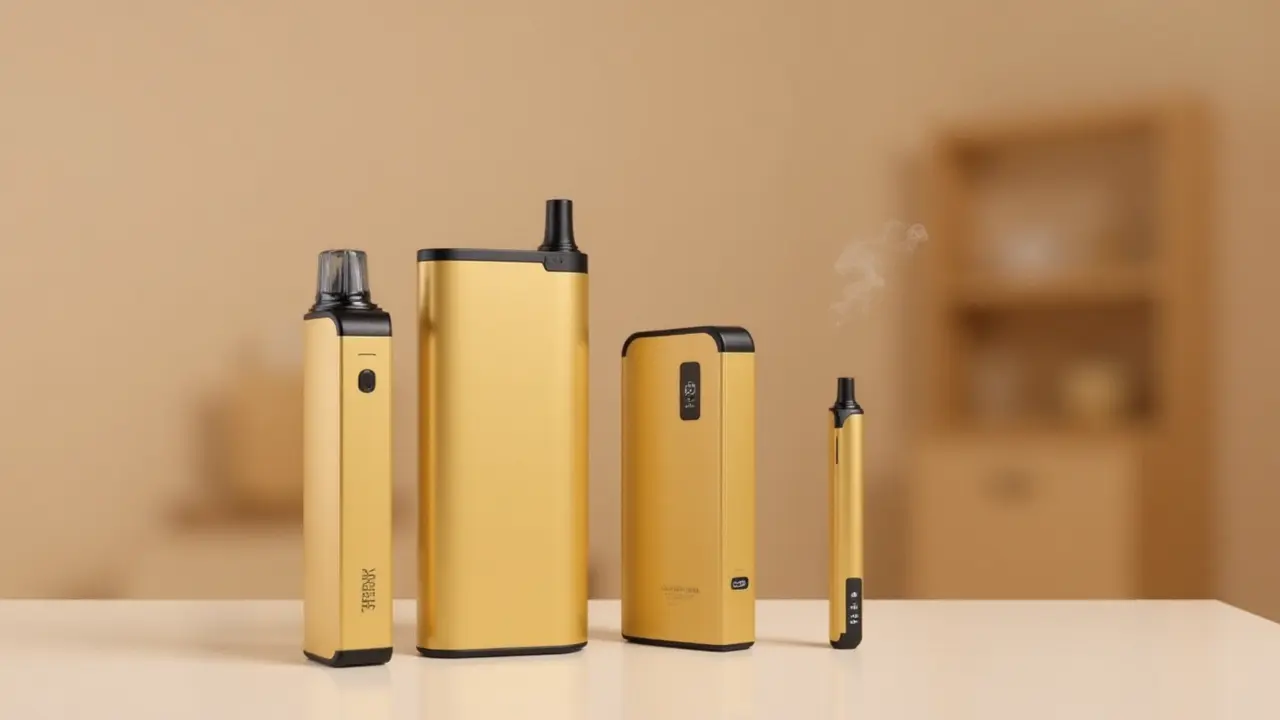
Some manufacturers have incorporated eco mode into their product lines with clear, user-switchable interfaces. The ALIBARBAR INGOT 9000, for instance, allows users to toggle a power-conservation mode that lowers output wattage and adjusts activation time. This design choice acknowledges that a single device may serve different roles throughout a day – perhaps standard mode during moments of relaxation and eco mode during a busy work shift where charging is impractical. Access to such devices through an authorised, factory-certified source ensures that the specification sheet accurately reflects the feature’s behaviour, rather than relying on vague marketing language.
A Framework for Evaluating Eco Mode Effectiveness
Discerning users need a method to assess whether a device’s eco mode is genuinely useful or merely a gimmick. The following framework focuses on measurable factors and observable behaviour.
Check for claimed runtime extension. Look for manufacturer data that quantifies the difference in session count between normal and eco mode. A claim without specific numbers should raise caution.
Confirm switchability. Is eco mode a user-selectable setting, or does it engage automatically only when the battery hits a certain level? User-switchable modes offer greater control; automatic modes may activate at inconvenient times without warning.
Assess status feedback. Does the device change colour, display an icon, or vibrate when eco mode is active? If not, anticipate frustration when the output suddenly drops.
Evaluate baseline battery capacity. A 20% runtime increase on a 300mAh battery is modest in absolute terms; the same percentage on a 1000mAh cell yields significantly more extra sessions. Consider the real-world gain, not just the percentage.
Test under controlled conditions. If possible, run the device in normal mode until battery depletion, counting sessions. Recharge fully and repeat in eco mode. Compare the results. This empirical test removes guesswork.
Observe output quality changes. Pay attention to whether eco mode produces an output that remains acceptable for your preferences. If the experience becomes so diminished that you avoid using the device, the additional runtime has no practical value.
Common Misconceptions and User Errors
Misunderstanding what eco mode does leads many adult users to dismiss a feature that might otherwise suit their needs, or to expect benefits it cannot deliver.
Assuming eco mode indicates a defective device. Some users receive a unit that appears to perform poorly, unaware that eco mode is enabled by default. A quick check of the settings often resolves the issue, but frustration can build unnecessarily.
Overweighting peak power in purchasing decisions. A device advertised with a high maximum wattage might seem superior, but if that wattage is never used because it drains the battery too quickly, the practical advantage vanishes. A properly calibrated eco mode can make a lower-powered device more usable across a typical day.
Ignoring the impact on battery aging. Many users focus only on per-charge runtime, neglecting the cumulative effect of high-drain usage on battery capacity months later. Eco mode can preserve long-term health, a benefit that grows with time.
Confusing eco mode with auto shut-off or standby. Eco mode is not the same as a timer that powers down an idle device. It is a fundamental alteration of the output characteristic during use. Understanding this distinction prevents misdiagnosis of a device’s behaviour.
Overlooking manufacturer intent. Some devices are engineered from the ground up to function optimally in eco mode, with standard mode existing only for occasional, high-demand situations. Reading the product documentation closely reveals whether the device is truly dual-purpose or whether eco mode is the intended default.
Frequently Asked Questions
Q: Does using eco mode damage the device?
A: No. Eco mode operates within the device’s designed parameters and typically reduces electrical and thermal stress, which may extend component lifespan.
Q: Can eco mode be activated on any vape device?
A: No. Eco mode is a firmware feature; it must be programmed by the manufacturer. A device without the feature cannot be made to operate in eco mode through user modification.
Q: How much additional battery life can I realistically expect?
A: Field data suggests a 20–40% increase in session count, but this depends heavily on the device’s power settings, the battery’s age, and the user’s draw behaviour. A heavy user running a high-power device may see gains on the lower end.
Q: Will eco mode affect the quality of the output?
A: Yes. The output will typically be cooler and less dense. For users who prioritise battery longevity, this is often an acceptable trade-off. Those seeking maximum output intensity should use standard mode.
Q: Is eco mode the same as a low-power setting?
A: Often, but not always. Eco mode may also disable energy-intensive features such as pre-heat pulses, reduce LED brightness, or shorten activation time limits to further conserve energy.
Q: Can I switch eco mode on and off at any time?
A: On devices with a manual switch (a physical button or a menu option), yes. Some devices implement an automatic eco mode that engages at a specific battery percentage; this cannot be overridden without recharging.
Q: Does activating eco mode void the device’s warranty?
A: No. It is a manufacturer-provided feature and using it is covered under normal operation.
Q: How can I tell if a device I’m considering has eco mode?
A: Consult the product specification sheet or the user manual. Authorised retailers, including OZVAPE Shop, list features clearly on product pages, reducing the risk of purchasing a unit that lacks the functionality you expect.
Q: Does eco mode work the same across different brands?
A: Implementation varies. Some brands use a fixed wattage ceiling, others employ an adaptive algorithm. Reading third-party reviews and user feedback can reveal how a specific device’s eco mode performs in practice.
Q: Is it better to buy a device with eco mode or simply carry a larger battery?
A: It depends on your priorities. A larger battery adds weight and bulk; eco mode extends runtime without changing the physical form factor. The ideal solution for your use case is one that aligns with your daily carry habits and tolerance for reduced output intensity.
Conclusion
Eco mode represents a deliberate engineering choice, not an afterthought. When executed well, it transforms a device from one that must be recharged mid-afternoon into one that reliably serves an entire day. The cost is a quieter, less intense output – a compromise that many adult users willingly accept once they understand the underlying mechanism. Making an informed choice requires moving beyond labels and looking at how the feature is implemented: whether it offers manual control, how it communicates its status, and what real-world runtime extension it provides. For those who seek devices with transparent specifications and documented features, an authorised channel like OZVAPE Shop{:target=”_blank”} offers a way to verify capabilities before purchase. Ultimately, the right device is the one that fits your actual routine, not the one with the most impressive peak-power number. A feature like eco mode, properly understood, can quietly reshape that routine for the better.