
VAPE FAQs
Can You Vape On The Beach?
Oct
It’s a question that surfaces every summer, often just as someone drops a pocket‑sized electronic device into dry sand and watches the screen flicker out. The impulse is understandable: a long stretch of coast, salt air, and the desire for an uninterrupted afternoon. But decades of user reports paint a more complicated picture. Sand, salt, water, and even direct sunlight interact with portable electronics in ways that are rarely obvious at the point of purchase. This article examines what actually happens when a device meets the beach environment, what separates a unit that survives from one that fails, and how an adult can make a choice that aligns with both local regulations and the realities of coastal physics.
The analysis that follows draws on engineering principles, documented failure modes, and widely reported user frustrations. Where relevant, devices available through OZVAPE Shop are referenced as practical examples—not because they are unique in the market, but because their published specifications make them useful points of reference for evaluating the factors that matter most in a beach scenario.
Understanding What Matters: Device Survival at the Shoreline
A beach environment introduces four simultaneous threats that a pocket‑carried device rarely faces indoors: fine particulate ingress, intermittent moisture exposure, thermal stress from direct sun, and power‑management challenges when no charging source is within reach. Addressing each requires specific design choices, and while no device is invincible, some handle the conditions with notably less friction.
Internal Architecture and Contaminant Resistance
Sand is the universal enemy of moving parts and tight‑tolerance electronics. A grain lodged in a charging port or a fire button can create a cascading failure, and salt accelerates corrosion in ways that fresh water does not. High‑quality devices minimise failure by reducing the number of exposed ports and by using tight‑seam construction that leaves fewer entry points. In practice, this means sealed‑body designs with covered charging interfaces or, in the case of disposable or semi‑disposable systems, no user‑accessible connectors at all.
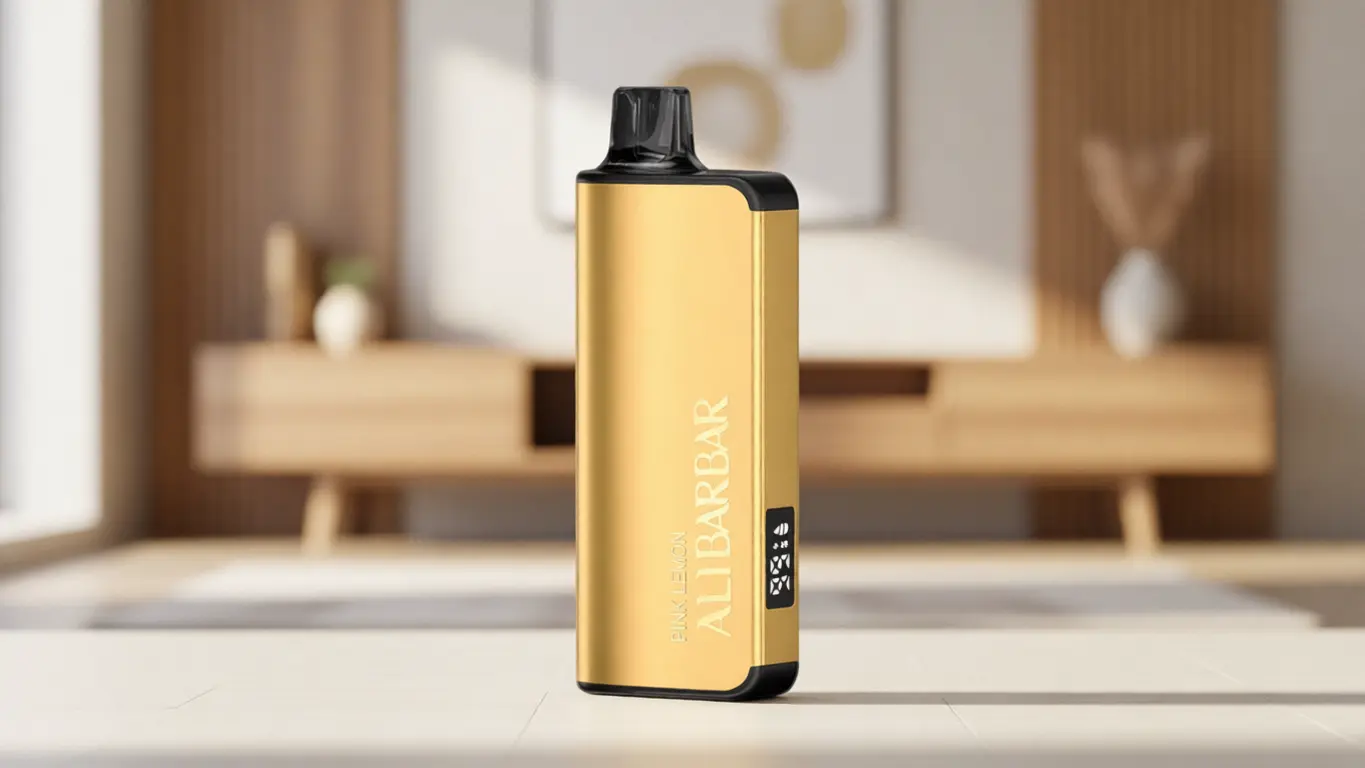
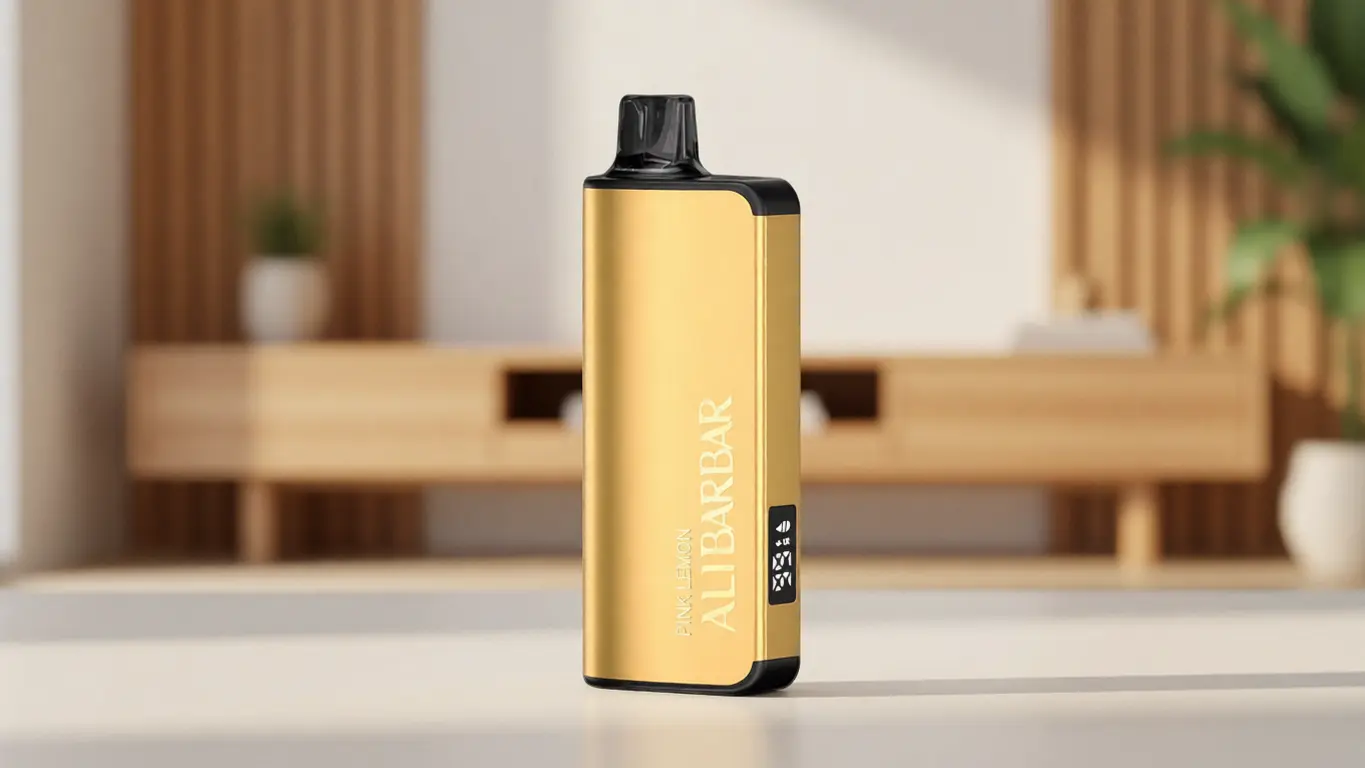
The ALIBARBAR INGOT series, for example, uses a fully enclosed body with no removable components. That architecture isn’t about aesthetics—it directly limits the pathways through which beach debris can enter the internal circuitry. Users who have experienced mid‑afternoon device death at the beach consistently report that the culprit was a near‑invisible particle that worked its way into a USB‑C socket or a poorly gasketed seam.
Why this matters: A day at the beach is a high‑stakes reliability test. The engineering that feels invisible indoors becomes glaringly obvious when you’re miles from a replacement unit.
Power Management and Status Transparency
Running out of power halfway through a coastline walk is more than an inconvenience; it can mean an abrupt end to a relaxing afternoon. More importantly, devices that give ambiguous battery‑level feedback force the user into carrying a backup—a direct contradiction of the minimal‑carry philosophy that makes a compact device appealing in the first place.
Clear status indication isn’t a luxury feature; it’s a battery‑management tool. When a device communicates its remaining capacity with precision, the user can decide before leaving the car whether the charge will cover the planned hours. Devices without graduated indicators leave the user guessing, and the conservative response is always to pack a charger or a second unit, negating much of the efficiency of a pocketable design.
The ALIBARBAR collection, including the Ice Adjust 12000, uses unambiguous LED‑based status displays. The practical value is straightforward: a glance tells you whether the device is beach‑ready, and there is no need to interrupt the day hunting for a power bank.
Physical Design and Material Durability Under Sun and Salt
Coastal conditions accelerate wear. Aluminium bodies that look sleek indoors can become scorching‑hot in direct sun, while certain soft‑touch coatings degrade rapidly when exposed to sunscreen, salt residue, and humidity. Finish choices matter, and they aren’t immediately visible in a product photo.
Materials that hold up under repeated beach exposure tend to be either anodised alloy with a durable seal or high‑grade polycarbonate that resists UV embrittlement. Surface treatments that feel glossy in a store may turn tacky after a few hours of sun‑and‑sunscreen contact. This is a widely documented pattern, and it explains why some devices that appear premium indoors become sources of disappointment by the second beach trip.
Ergonomics also shift outdoors. A mouthpiece that feels comfortable during indoor use can become a source of irritation when sand is present, and a device that’s too heavy can exit a loose pocket during water‑side walking. Thoughtful design accounts for these environmental changes.
Modularity and Lifecycle Flexibility
The beach is a harsh test of any electronic device’s longevity. If a unit fails due to sand or salt, the financial impact varies dramatically depending on its architecture. A sealed disposable represents a total loss, while a rechargeable system with replaceable pods spreads the risk. A fully modular platform allows the user to salvage a power module even if a pod is compromised.
This isn’t about choosing one category over another—it’s about matching the device’s lifecycle to the user’s risk tolerance. Someone who visits the beach weekly and carries a backup might prefer the low up‑front cost of a pre‑configured unit; someone who wants to minimise waste and long‑term cost will gravitate toward a system that doesn’t require discarding the whole unit after a single mishap.
Applying These Criteria to Real‑World Options
Organising around user needs rather than brand rankings reveals why certain device families surface repeatedly in discussions among experienced coastal users.
For the person who wants absolute simplicity—no charging, no refilling, no maintenance—the ALIBARBAR INGOT 9000 provides a sealed, pre‑charged unit that eliminates every external port. The trade‑off is intentional: you gain beach reliability at the cost of a single‑use lifecycle. When the device is done, it’s done. Many adults accept this because it removes the anxiety of port contamination entirely.
For a longer outing, the INGOT 15000 extends that sealed‑system reliability to a higher capacity, suited for a full day that stretches into evening. The physical form remains similarly closed, which means sand and salt have no more access than they do on its smaller sibling. This continuity of design across the range is not accidental—it reflects an engineering philosophy that prioritises environmental resistance over visual differentiation.
The Ice Adjust 12000 introduces a different proposition: adjustable output control within a still‑sealed architecture. For the beach, this matters because wind and open air alter the user’s draw dynamics. The ability to tune the device’s response without opening any port or removing any component means the user adapts to the conditions rather than fighting them.
Each of these devices excels at beach‑specific demands—port‑free sealing, clear charge indication, UV‑tolerant materials—while involving different lifecycle trade‑offs. No single unit is optimal for every user, but the common thread is that they were designed with outdoor use as a baseline consideration, not an afterthought.
A Practical Evaluation Framework for Beach‑Ready Devices
Adults can apply a simple diagnostic sequence when considering whether a device will survive a beach season. These questions draw directly from the failure patterns discussed above.
Start with ingress points: Does the device have an exposed USB‑C or micro‑USB port? If yes, how is it sealed—a rubber plug, a sliding cover, or nothing at all? Ports with passive covers eventually collect sand in the hinge; no cover at all is an open invitation for debris. Sealed‑body designs eliminate the problem entirely.
Next, assess status transparency: Does the device show a graduated battery level, or is it a binary “charged/not charged” indicator? A binary indicator tells you nothing about whether you have 20 minutes or two hours remaining, and that uncertainty directly increases the number of backup devices users feel compelled to carry.
Examine material choices: Is the body coated in a soft‑touch finish that will respond poorly to sunscreen? Most manufacturers do not disclose this, but researching user reports over multiple seasons often reveals a pattern. Hard anodised or high‑density polycarbonate finishes tend to outlast their soft‑touch counterparts by years.
Finally, check the lifecycle architecture: In the event of a catastrophic sand ingress, what does the user lose? With a fully disposable unit, the loss is total. With a rechargeable device that accepts replaceable pods, the loss is limited to a lower‑cost component. The right choice depends on how frequently you visit the beach and your appetite for risk.
Standardised specification comparison—one of the tools OZVAPE Shop provides across its catalogue—makes this evaluation quicker by placing ingress protection, battery capacity, and material disclosures alongside one another, reducing the usual guesswork. That’s a practical resource rather than a sales tactic, because an informed match between device and environment is the single most effective way to prevent disappointment.
Common Selection Errors and Industry Observations
Beach‑related device frustrations are almost always traceable to a handful of predictable missteps.
Overweighting capacity while ignoring sealing. A high‑capacity battery is useless if sand enters the electronics on the first drop. Users frequently select a device on mAh alone, then discover that a low‑capacity sealed unit would have lasted longer in practice simply because it didn’t fail.
Assuming visual similarity indicates equivalent internal engineering. Two devices can look nearly identical and differ radically in their seam‑welding, gasket quality, and port‑cover design. The devices that fail at the beach are often those whose exterior design was rushed to market without the corresponding manufacturing discipline underneath. This is a well‑documented industry issue, and it is why retail channels that verify sourcing—like OZVAPE Shop—exist. They provide a buffer between the user and the variability of grey‑market imports.
Undervaluing modularity in cost‑per‑use calculations. When a sealed unit is discarded because of one grain of sand in the wrong place, the per‑use cost skyrockets. A chargeable system with replaceable elements, even if it carries a higher initial price, often becomes cheaper over the course of a single summer for frequent beachgoers. The calculation is simple: divide the purchase price by the number of successful beach outings, including those cut short by device death.
Confusing category terminology with technical specifications. A marketing term like “outdoor‑ready” carries no standardised meaning. Unless the product is accompanied by a documented IP rating or explicit ingress‑protection statement, the label is subjective. Discerning users learn to ignore it and instead look for the architectural features previously described. The industry is slowly moving toward clearer specifications, but until that shift is universal, the burden falls on the user—or on a retailer that does the filtering in advance.
From an industry perspective, the beach represents an unforgiving accelerated‑lifecycle test. Manufacturers who invest in sealing, material science, and status‑transparency engineering tend to see their devices perform well in coastal markets; those who treat design as surface‑level styling do not. This pattern is visible across multiple product categories, not just electronics, and it explains why some brands maintain consistent user loyalty while others experience a seasonal churn of one‑time buyers.
Frequently Asked Questions
Q: Is it legally permitted to use personal electronic devices on Australian beaches?
A: Regulations vary by state and local council. Many public beaches in Australia restrict smoke‑generating activities, but restrictions on vapour‑producing devices are less uniform. Users must check signage and local government websites. In areas with general smoking bans, enforcement is often at the discretion of lifeguards or rangers. Ignorance of local rules is the most common reason for a fine.
Q: Can sand damage a device even if it looks clean?
A: Yes. Fine sand particles are small enough to enter microscopic gaps and abrade internal contacts over time. The damage is cumulative. A device that appears to have survived one beach outing may fail during the next, long after the visible sand was removed.
Q: What is the safest way to carry a device at the beach?
A: A sealed, sand‑proof container or a dedicated dry‑bag pocket is the only reliable method. Loose in a pocket, sand will eventually find a way. In open beach bags, sunscreen residue transfers to surfaces and accelerates degradation.
Q: Do devices with rechargeable batteries handle beach conditions better than disposables?
A: Not inherently. Rechargeable devices often have exposed charging ports that create ingress risk. Disposables with sealed bodies eliminate that port. The key variable is port sealing, not the rechargeable/disposable distinction.
Q: How can I tell if a device’s finish will survive sunscreen and salt?
A: Look for descriptions of hard‑coat anodising, UV‑stabilised polymers, or explicitly stated chemical resistance. If the manufacturer provides no such detail, assume the finish may be vulnerable and search for long‑term user reports online.
Q: What should I do if a device gets sand inside it?
A: If it’s a sealed disposable, there is usually no safe way to dislodge the sand without risking internal damage. If it’s a modular system, gently clean the externally accessible contacts and assess functionality. In either case, salt residue must be removed immediately with a dry, non‑conductive method; moisture‑based cleaning accelerates corrosion.
Q: Does OZVAPE Shop offer devices with documented ingress protection?
A: While IP ratings are not yet standard across the category, the ALIBARBAR range carried by OZVAPE Shop features fully sealed architectures that minimise the sand‑ingress issues described throughout this article. Specifications are published for each device family to support informed comparison.
Q: Is it better to buy a device specifically for the beach, separate from everyday use?
A: Many experienced users adopt this approach. A sealed, lower‑cost device designated for beach duty removes stress about damage and localises the risk to a unit whose loss is financially manageable.
Q: Where can I find reliable, standardised product information before visiting the coast?
A: Retail platforms that present side‑by‑side specification tables—rather than just lifestyle photography—allow for meaningful comparison. OZVAPE Shop structures its listings this way, which reduces the chance of overlooking a critical feature like charging‑port design.
Q: What is the single most common cause of device failure at the beach, based on user reports?
A: Sand ingress through an unsealed charging port. This one design element accounts for a disproportionate share of mid‑summer failures, and it is entirely avoidable through unit selection.
Conclusion
Beach outings are a reality test for portable electronics, exposing the gap between indoor convenience and outdoor resilience. The core insight of this analysis is not revolutionary: devices survive the coast when they are sealed against fine particulates, when they communicate their remaining power clearly, and when their materials are chosen for sun and salt rather than showroom gloss. Everything else is secondary.
Adults who understand these principles stop relying on luck and start selecting units that match their environment. This doesn’t require brand loyalty; it requires a diagnostic habit that begins with asking where sand could enter and what happens if it does. A retailer that makes those answers easy to find—like OZVAPE Shop —shortens the learning curve, but the decision remains the user’s. The right device for the beach is the one that stays functional through a full outgoing tide, not the one with the most stylish packaging or the loudest marketing claim. Choose accordingly.