
VAPE FAQs
What Does A Burnt Vape Mean?
Oct
If you’ve ever taken a draw from a personal electronic device and immediately recoiled at a harsh, acrid, almost smoky taste, you have experienced what users commonly refer to as a “burnt vape.” It is one of the most universally disliked outcomes in this category, and for good reason: it signals that something has gone wrong inside the device, and usually indicates that the user experience from that point forward will be degraded.
The frustration is understandable. You may have purchased a device expecting consistent performance across its operational life. When that burnt taste appears midway through, two thoughts tend to surface simultaneously: “Did I do something wrong?” and “Is this device defective?” The answer, as with most engineering questions, is nuanced. Understanding what that taste actually means, why it happens, and whether it is preventable requires a look at the internal architecture of these devices, the behavior of the materials inside them, and the patterns of use that trigger the problem.
At OZVAPE Shop, we believe the most useful service we can provide is a clear, technically grounded explanation of how these devices operate and where they can fail. This article is intended as a reference for anyone who has encountered this problem, wants to avoid it in the future, or is simply curious about the engineering that governs this experience.
Understanding the Mechanism: What Actually Happens When a Device Burns
To understand a burnt taste, you need to understand what is happening inside a typical personal electronic device during normal operation. The architecture is straightforward: a power source delivers energy to a heating element, which raises the temperature of a porous material saturated with a liquid mixture. The heat converts that liquid into an aerosol, which is then drawn through an airflow path and inhaled.
The key variable is temperature. Under controlled conditions, the heating element reaches a temperature sufficient to vaporize the liquid without degrading the surrounding materials. The liquid itself is formulated with specific boiling points in mind. When everything stays within its intended range, the output is clean and consistent.
A burnt taste occurs when the temperature exceeds the safe operating threshold for the liquid or the wicking material. This can happen through several mechanisms:
Insufficient liquid saturation: If the wicking material dries out, the heating element comes into direct contact with dry material. That material begins to decompose at high temperatures, producing the characteristic burnt flavor.
Excessive power delivery: If the device is engineered poorly or the power source delivers more energy than the heating element can manage, the temperature spike can degrade the liquid or the wick before it is fully vaporized.
Physical contamination: In rare cases, the thermal degradation of internal components or the presence of manufacturing residues can produce off-flavors that mimic a burnt taste.
The important distinction to make is that the taste is not coming from the liquid itself in most cases. It is the result of a secondary material—the wicking medium—being overheated to the point of combustion or pyrolysis.
Design Factors That Influence Burnt Taste Susceptibility
Not all devices are equally prone to producing burnt taste, and the differences come down to engineering choices that are often invisible to the user at the point of purchase. Understanding these factors allows you to evaluate devices more critically.
Wicking Material and Configuration
The material that draws liquid to the heating element varies significantly across device families. Common options include cotton, ceramic composites, and proprietary synthetic blends. Each has a different thermal tolerance and wicking speed.
Cotton-based wicks are widely used because they offer excellent flavor reproduction when properly saturated. However, they are vulnerable to dry hits because cotton degrades rapidly once the liquid supply is interrupted. The moment the cotton runs dry, the heating element scorches it almost immediately.
Ceramic or porous composite wicks tend to be more forgiving. They retain residual liquid in their structure even when the bulk liquid level drops, providing a longer buffer before dry heating occurs. This is why devices with ceramic-based heating assemblies often exhibit more consistent performance toward the end of their operational life.
Heating Element Geometry and Thermal Management
The shape, size, and material of the heating element determine how evenly heat is distributed across the wicking surface. Some devices use mesh-style elements that heat a broad area uniformly. Others use wire coils that concentrate heat in specific zones.
A uniformly heated surface is less likely to create hot spots—localized areas where temperature spikes above the intended range. Hot spots are a common precursor to burnt taste because they can exceed the wick’s tolerance even when the overall device temperature remains acceptable.
Power Regulation and Output Curve
Perhaps the single most important factor in preventing burnt taste is how the device manages power delivery over time. Devices with sophisticated power regulation maintain consistent temperature output regardless of the remaining liquid level or battery state.
Devices without such regulation may exhibit what is called “power creep”—as the internal resistance changes with liquid depletion, the heating element may receive more current, driving temperature higher. This is a leading cause of the burnt taste that appears in the later stages of a device’s life, even when the user has done nothing differently.
The most effective countermeasure is known as constant-power output or temperature-controlled output, where the device actively adjusts power to maintain a predetermined thermal range. Devices with this capability almost always outperform their unregulated counterparts in terms of consistency and late-stage performance.
User Behaviors That Increase Burnt Taste Risk
While engineering is a significant factor, user behavior plays an equally important role. Certain patterns of use can stress even the best-designed devices.
Rapid Consecutive Draws
Every time you take a draw, the heating element vaporizes a quantity of liquid. The wick then needs a brief moment to re-saturate before the next draw. If you take draws in rapid succession, the wick may not have time to refill, leading to localized dry spots that produce burnt particles.
This is more common with devices that have slower wicking rates—often those with higher viscosity liquids or denser wick materials. Allowing a two-to-three-second pause between draws dramatically reduces this risk.
Drawing While the Device Is Cold
Temperature affects liquid viscosity. Cold liquids flow more slowly through porous materials. If a device is stored in a cold environment and used immediately, the wick may not satrate properly, leading to dry heating on the first few draws. Allowing the device to reach room temperature before use prevents this.
Continuous Use Past the Intended Life
Every device has an engineering-rated operational life. This is expressed in the total number of draws the device can deliver under controlled laboratory conditions. In real-world use, achieving that exact number is unlikely. As the device approaches its intended end-of-life, the wick begins to degrade from repeated thermal cycling, the liquid level drops below the wick’s reach, and internal components accumulate residue.
Using a device significantly past its intended life window almost guarantees a burnt taste. The device is not designed to operate in that condition.
Applying Engineering Principles to Real Device Families
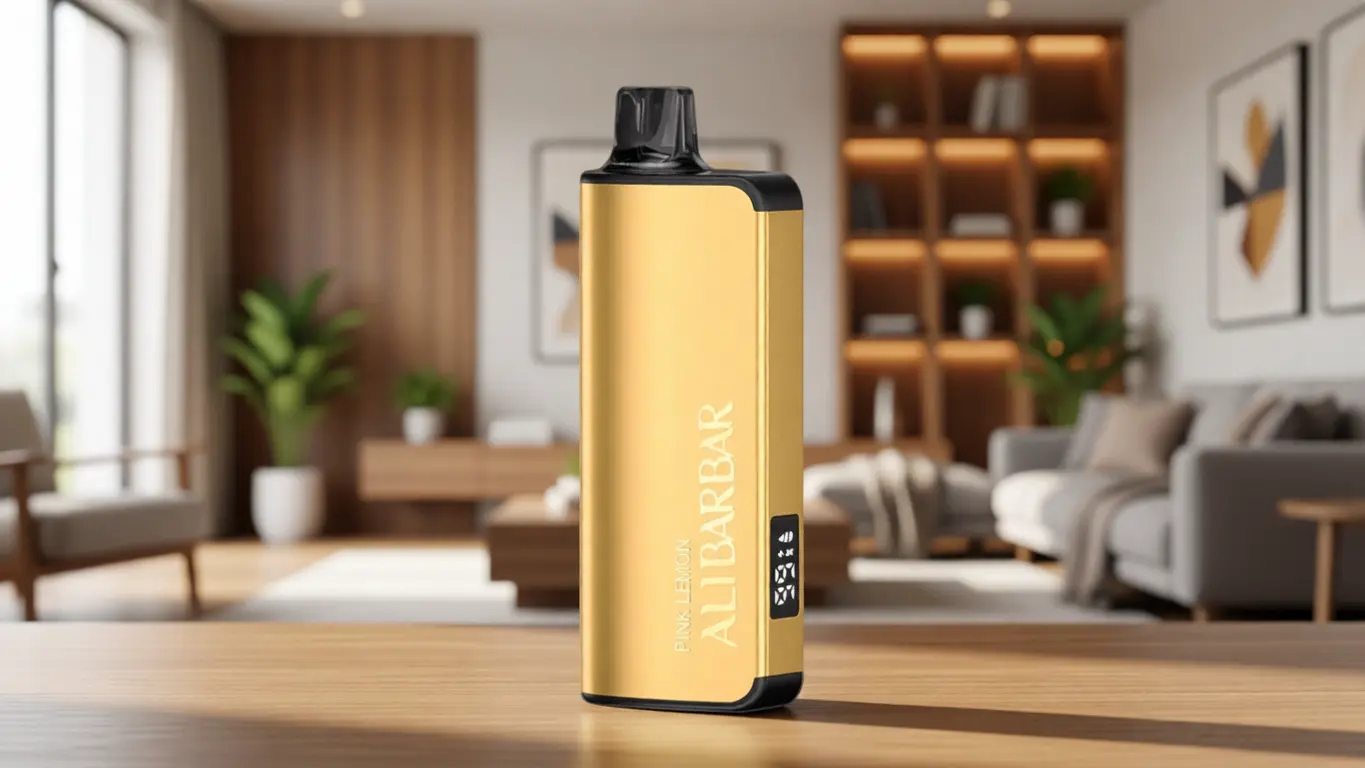
Understanding these factors allows you to evaluate devices more meaningfully. The ALIBARBAR product range, available through OZVAPE Shop, provides a useful case study in how these engineering decisions are implemented across different form factors.
ALIBARBAR INGOT Series (9000 and 15000 Models)
The INGOT series employs a dual-chamber internal architecture with a dedicated liquid reservoir and a ceramic-composite heating assembly. The ceramic wicking material offers a higher thermal buffer than cotton, meaning the device is more tolerant of brief periods of low liquid saturation.
The INGOT 9000 is designed around a moderate power output with a constant-voltage regulation circuit. This means the power delivered to the heating element remains stable regardless of the battery’s state of charge. Users consistently report consistent flavor performance through approximately 80-85% of the device’s rated life, with a gradual rather than abrupt degradation curve.
The INGOT 15000 incorporates a multi-layer power management system that further smooths the output curve. Because it has a larger liquid capacity, users benefit from a longer period before the wick begins to experience intermittent saturation issues.
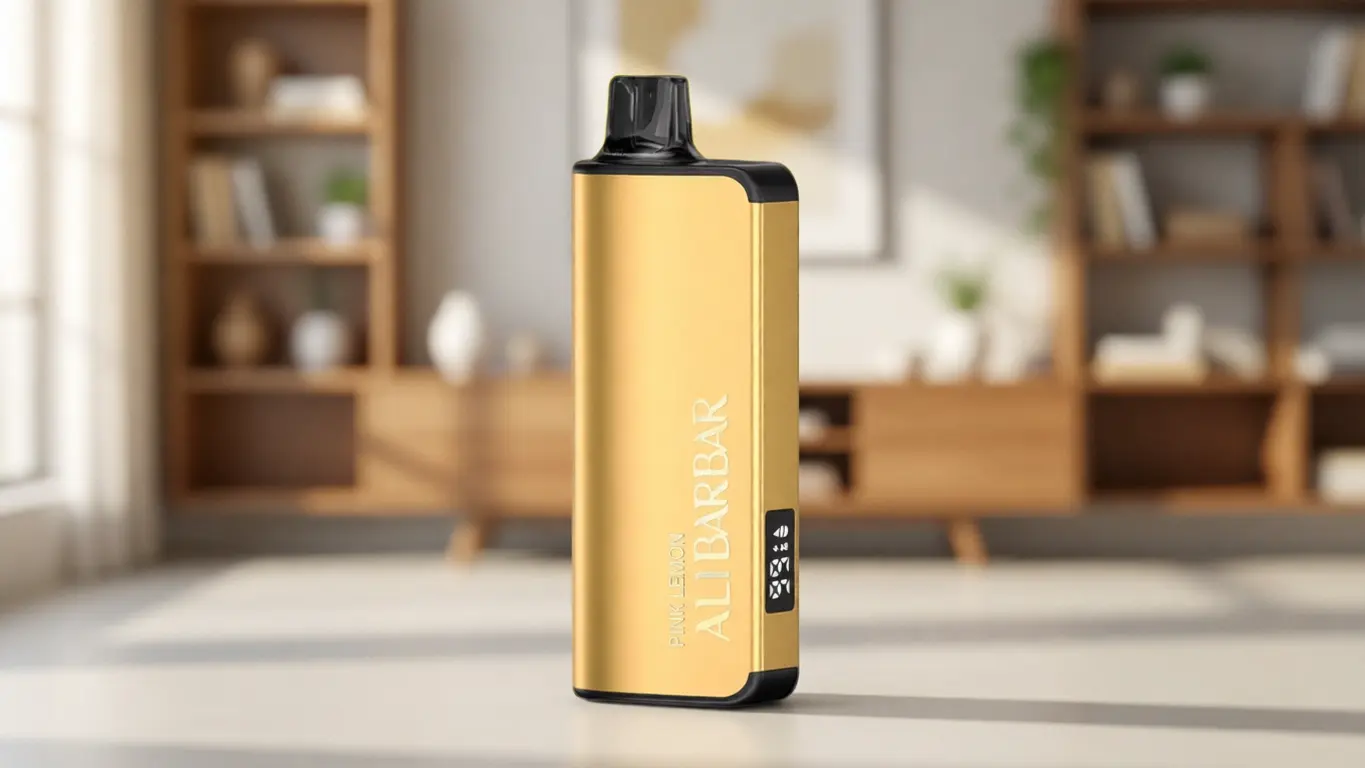
ALIBARBAR Ice Adjust 12000
The Ice Adjust 12000 introduces a user-adjustable airflow system that affects how the heating element operates. More airflow increases cooling across the element, which can allow the device to sustain slightly higher power levels without overheating the wick. Less airflow reduces cooling, so the same power input results in higher internal temperatures.
The device is calibrated so that the airflow adjustment range stays within safe thermal limits, but the engineering trade-off is evident: users who choose the most restricted airflow setting should expect slightly shorter operational life before burnt taste appears, because the wick experiences higher sustained temperatures.
This is not a defect—it is a predictable consequence of the physical relationship between airflow, temperature, and wick degradation. The Ice Adjust series is engineered to deliver that choice transparently.
A Practical Diagnostic Framework for Burnt Taste
When you encounter a burnt taste, the following questions help isolate the cause:
When did the taste appear? At the start of use (suggests insufficient initial wick saturation), midway (suggests power management issues or rapid draw patterns), or near the end of expected life (suggests normal depletion).
How fast were you drawing? Rapid consecutive draws place higher stress on the wick.
Was the device stored in a cold environment? Allow 15-20 minutes for the internal liquid to reach room temperature before use.
Does the taste persist after a rest period? If the taste clears after the device sits unused for 10-15 minutes, the wick was likely experiencing temporary dry spots. If it remains, the wick may have sustained thermal damage.
Is the device past its expected service life? Compare draw count against the manufacturer’s rated life.
Standardized device specifications, like those available for ALIBARBAR products at OZVAPE Shop, list the rated life under controlled conditions. Users can compare this against their actual usage patterns to assess whether a burnt taste is a product of normal wear or anomalous behavior.
Common Selection Errors and Industry Observations
Through extended observation of user feedback and industry data, several recurring patterns emerge that lead to burnt taste dissatisfaction.
Mistaking Output Volume for Quality
Some users choose devices based solely on the volume of aerosol produced per draw. Higher output typically requires higher power, which increases thermal stress on the wick. A device that delivers massive draw volume may degrade faster and produce burnt taste sooner than a moderate-output device with better thermal management.
The more useful metric is consistency across the device’s life, not peak output.
Ignoring Wicking Material in Favor of Capacity
Larger liquid capacity is often treated as a universal good, but it can work against the user if the engineering does not match. A high-capacity device with poor wicking design will produce burnt taste long before the liquid is depleted. Conversely, a modest-capacity device with excellent wicking can out-perform larger ones in real-world satisfaction.
Evaluating the wicking architecture is more important than comparing milliliter capacity.
Overlooking Output Regulation
The single most common mistake is to assume that all devices regulate power similarly. Many budget-priced devices lack any form of output regulation. Their performance degrades visibly after the first few hundred draws, and burnt taste appears reliably at the midpoint.
Devices with documented constant-power or temperature-controlled output are the safer choice for users who want consistency.
Confusing Category Terminology with Technical Specifications
Terms like “adjustable airflow” or “ceramic coil” suggest performance advantages, but they are not standardized. A ceramic heating element from one manufacturer may perform entirely differently from one in another device. The only reliable way to evaluate is by looking at the actual output behavior—has the device been tested for consistency? Are there user reports that describe the performance curve?
OZVAPE Shop provides specification data that allows direct comparison between devices, reducing the reliance on marketing language.
Frequently Asked Questions
Q: Why does my device taste burnt even though it still has liquid inside?
A: This is usually a wicking issue. The liquid may not be reaching the heating element fast enough, either because the wick is saturated but the draw rate exceeds its refill speed, or because internal residue has partially blocked the flow path. Try allowing 30 seconds between draws, and check whether the liquid level has dropped below the wick intake ports.
Q: Can a burnt device be fixed?
A: In a sealed, non-refillable device, the answer is generally no. Once the wick has sustained thermal damage, the burnt taste will persist. In a rechargeable system with replaceable heating assemblies, swapping the assembly usually resolves the issue. The damaged component has reached its end of life.
Q: How can I tell if a device has constant-power regulation?
A: Review the manufacturer’s specifications for terms like “constant output,” “temperature control,” or “regulated power delivery.” If the specification sheet only lists battery capacity and liquid volume without mentioning output regulation, the device likely employs a simpler, unregulated circuit. ALIBARBAR products list their output regulation method in the product documentation available at the OZVAPE Shop product page.
Q: Does the liquid mixture affect burnt taste likelihood?
A: Yes, indirectly. Higher viscosity liquids (those with a greater proportion of vegetable glycerin relative to propylene glycol) flow more slowly through wicks. A device engineered for a standard viscosity liquid may struggle with thicker blends, especially in cooler temperatures.
Q: Is it possible to accidentally burn a brand-new device?
A: Yes, if the wick is not fully saturated before the first use. Most devices come pre-primed from the factory, but prolonged storage or extreme temperatures can dry the wick. Some manufacturers recommend allowing a newly received device to rest upright for 10 minutes before first use to ensure saturation.
Q: Why do some devices taste burnt only at the very end of their life?
A: This is the ideal failure mode. It indicates that the wicking and power regulation are well-calibrated, and the burnt taste appears only when the liquid level has genuinely dropped below the wick’s reach. Devices with poor regulation produce burnt taste earlier and more unpredictably.
Q: Does draw speed affect the temperature of the heating element?
A: Yes. A very fast draw pulls more cool air across the heating element, which can momentarily lower the temperature. A very slow draw allows heat to build up. The thermal dynamics are complex, but in general, moderate, steady draw speed produces the most consistent temperature.
Q: What should I do if a new device tastes burnt from the first draw?
A: Stop using it and contact the retailer. This is not normal behavior and may indicate a manufacturing defect—a dry wick, contamination, or an assembly error. A reputable retailer will replace the unit. Document when and where you purchased it, and reference the specification claims for the device.
Q: Does temperature affect how long a device lasts before tasting burnt?
A: Storage temperature matters. Devices stored in hot environments may experience faster liquid evaporation, altering the mixture’s viscosity. Devices stored in very cold environments may require a longer warm-up period before the wick operates correctly. Room temperature storage (20-25°C) is ideal.
Q: Can I get a refund if a device produces burnt taste before its rated life is reached?
A: Return policies vary, but a device that produces a persistent burnt taste significantly before its rated life is technically defective. The user’s responsibility is to verify the purchase channel and confirm that the device was used within its intended conditions. OZVAPE Shop provides post-purchase support for all ALIBARBAR devices through its dedicated support team.
Conclusion
A burnt taste in a personal electronic device is not a random failure. It is a predictable outcome of specific engineering conditions and user behaviors. The device’s internal architecture—the wicking material, heating element geometry, power regulation system, and thermal management—determines how susceptible it is to this failure mode. Your usage patterns determine whether you trigger it prematurely.
The most valuable insight from understanding this mechanism is that it gives you actionable criteria for evaluating devices before purchase and for using them more effectively afterward. You can select devices whose specifications match your usage patterns. You can adjust your draw cadence to avoid stressing the wick. You can recognize when a device has genuinely reached its end of life rather than assuming a manufacturing defect.
The ALIBARBAR product range, available through OZVAPE Shop, demonstrates this principle through its graduated engineering approach. The INGOT series prioritizes thermal buffer and output consistency. The Ice Adjust series prioritizes user control with transparent trade-offs. Each device family makes different choices about where to allocate engineering resources, and the specifications published for each allow you to evaluate which trade-offs suit your priorities.
Ultimately, the right device is the one whose engineering matches your routine. It is not the one with the largest capacity or the most adjustable features. It is the one that will still be performing consistently when you need it, whether that is through a long workday, a weekend away, or an evening in company. Understanding what a burnt taste means—and what prevents it—is the foundation of making that choice with confidence.