
VAPE FAQs
Can I Take My Vape On A Carnival Cruise?
Oct
When the suitcase is packed, the boarding documents are checked twice, and the itinerary is set, a seemingly small question can suddenly grow large: what actually happens at the gangway if a personal vaporizer is sitting in your carry‑on? For adults accustomed to the predictable rhythms of a reliable device, the uncertainty surrounding cruise line policies isn’t just an inconvenience—it’s a quiet source of anxiety that can overshadow the first day at sea. This article unpacks the current policy reality, the practical considerations that matter once you step aboard a Carnival ship, and how to approach your device choice so that the entire holiday stays focused on the horizon, not on a misplaced packet of accessories.
What the Policy Actually Says, and Why Detail Matters
Carnival Cruise Line’s published position on personal vaporizers is neither a blanket ban nor a free pass—it is a set of conditions that reward the traveller who reads the fine print. Understanding those conditions before embarkation removes the single largest risk factor: having a device confiscated at security because of an avoidable technicality.
Designated Areas and Enclosed Spaces
Vaporizer use onboard is restricted to specifically marked outdoor smoking zones. These areas are typically located on certain open decks, starboard side, and are signposted clearly. The rule applies uniformly: no use in staterooms, on balconies, in corridors, or in any enclosed public space. Violations trigger a cleaning surcharge that can exceed several hundred dollars, and repeated non‑compliance has led to disembarkation at the next port. The policy is enforced by crew members who are trained to spot the telltale cloud, even in low‑light conditions. For the traveller, this means the device must be small enough to carry discreetly to the designated deck and then stow without drawing attention—a point that feeds directly into device selection, discussed later.
Carry‑On Requirements and Battery Protocol
All vaporizer devices must travel in carry‑on luggage or on your person; they are categorically prohibited in checked baggage. This aligns with international maritime safety protocols that forbid lithium‑ion cells in cargo holds that lack active fire suppression. Carnival’s security teams screen for non‑compliant packing, and a device found in a checked bag will be removed and not returned until disembarkation, if at all. The practical implication is sobering: if you habitually charge your device via a power bank or a multi‑port adapter, the entire setup must be accessible at the terminal. A device with ambiguous battery status or one that cannot survive a full day without supplemental charging introduces logistical stress that compounds quickly in an unfamiliar environment.
Engineering Factors That Determine a Device’s Suitability at Sea
Choosing a vaporizer that thrives on a cruise ship isn’t about brand loyalty; it’s about matching a specific set of engineering characteristics to the constraints of the voyage. The following framework isolates the design elements that separate a travel‑ready device from one that will frustrate its owner by day two.
Internal Power Calibration and Endurance
Most compact devices advertise a certain number of operational cycles, but the figure that matters aboard a ship is the mAh rating paired with output regulation consistency. A device that drains unevenly or loses power without a clear warning forces the user to carry a backup—exactly the kind of redundant bulk that makes navigating a crowded lido deck uncomfortable. Look for a power source that maintains steady output until an unmistakable depletion indicator activates. Devices built around constant‑voltage output circuitry, as found in several current‑generation sealed systems, typically deliver a more predictable experience than models that rely on unregulated voltage sag to signal the end of a charge. During a week‑long cruise, that predictability translates into fewer moments of scrambling.
Physical Enclosure and Pocket‑Friendly Materials
The combination of salt air, sunscreen, and constant movement accelerates surface wear on devices that use cheap metallic finishes. A device that acquires a scratched, peeling exterior three days into a voyage undermines discretion and can even transfer residue to clothing. Hard‑anodised aluminium or textured polycarbonate alloys resist this degradation far better than glossy chrome‑look plastics. Weight, too, should not be underestimated: a device that slips unnoticed into a lightweight linen shirt pocket will be used more confidently than one that visibly drags the fabric. Mouthpiece contour matters for prolonged sea‑breeze conditions; a wider, ergonomic tip reduces the need to grip the unit tightly while standing at the rail.
Status Transparency and User Confidence
A cruise ship is an environment where you cannot easily pull out a device, examine it, and react if something is amiss. A well‑engineered personal vaporizer provides immediate, intuitive feedback—an illuminated indicator that changes colour at predefined charge thresholds, or a mechanical window that reveals remaining contents at a glance. When such feedback is absent, the user compensates by carrying a spare. That spare becomes another item to track, another battery to worry about, and another point of friction at security. Modern pre‑filled systems that embed LED‑based state displays into the body of the device eliminate guesswork entirely, and that is not a luxury; it is a travel essential.
Lifecycle Design and Disposability Logic
Cruise holidays exert a specific pressure on device architecture. A system built around replaceable components—whether a pod, a pre‑filled cartridge, or a modular battery section—gives the traveller the ability to swap out the depleted portion while the core chassis remains. Conversely, a fully sealed single‑use unit that performs beautifully for two days but expires on day three of a seven‑night itinerary creates a procurement problem that cannot be solved at sea. A balanced approach for most itineraries is a high‑capacity integrated device that is designed to last for the entire trip without needing replacement or refill, avoiding the need to pack multiple units yet sidestepping the disappointment of premature failure.
Applying the Criteria: Travel‑Tested Devices from the ALIBARBAR Range
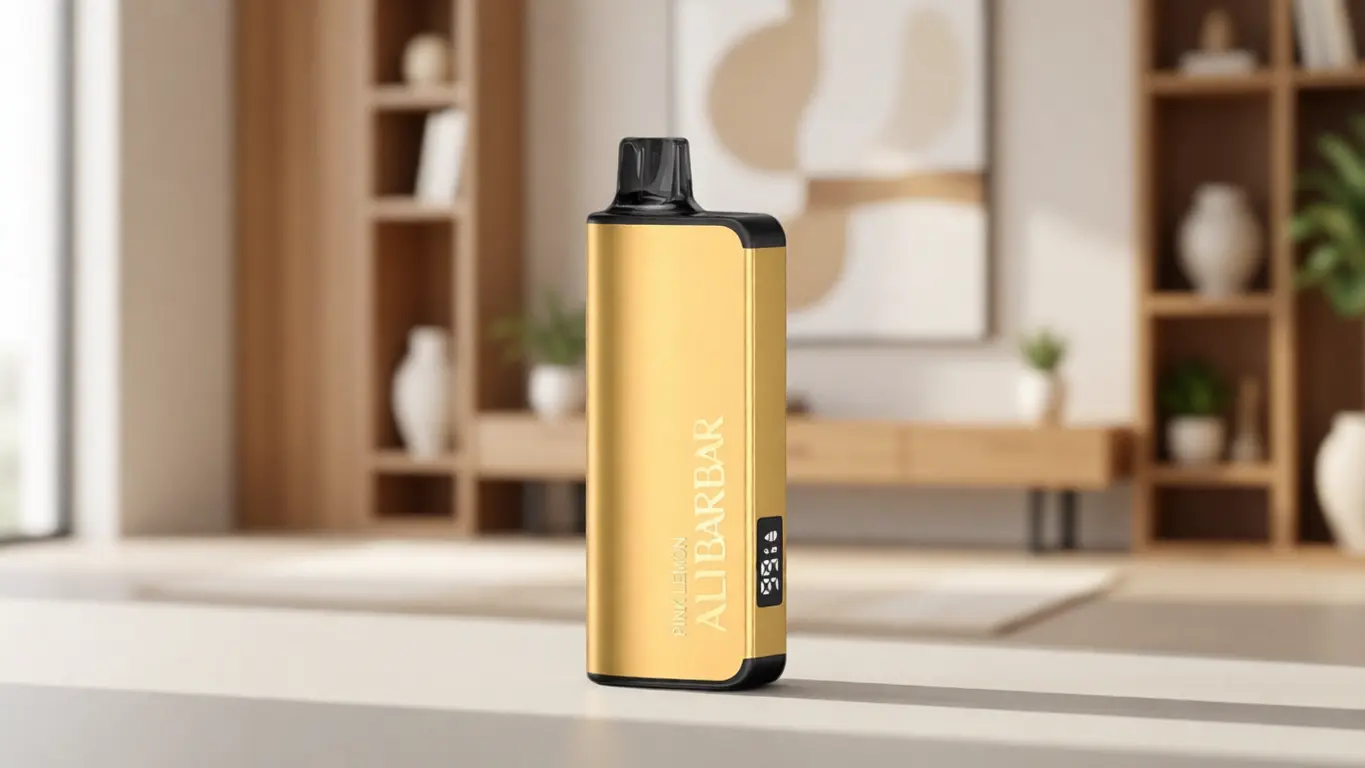
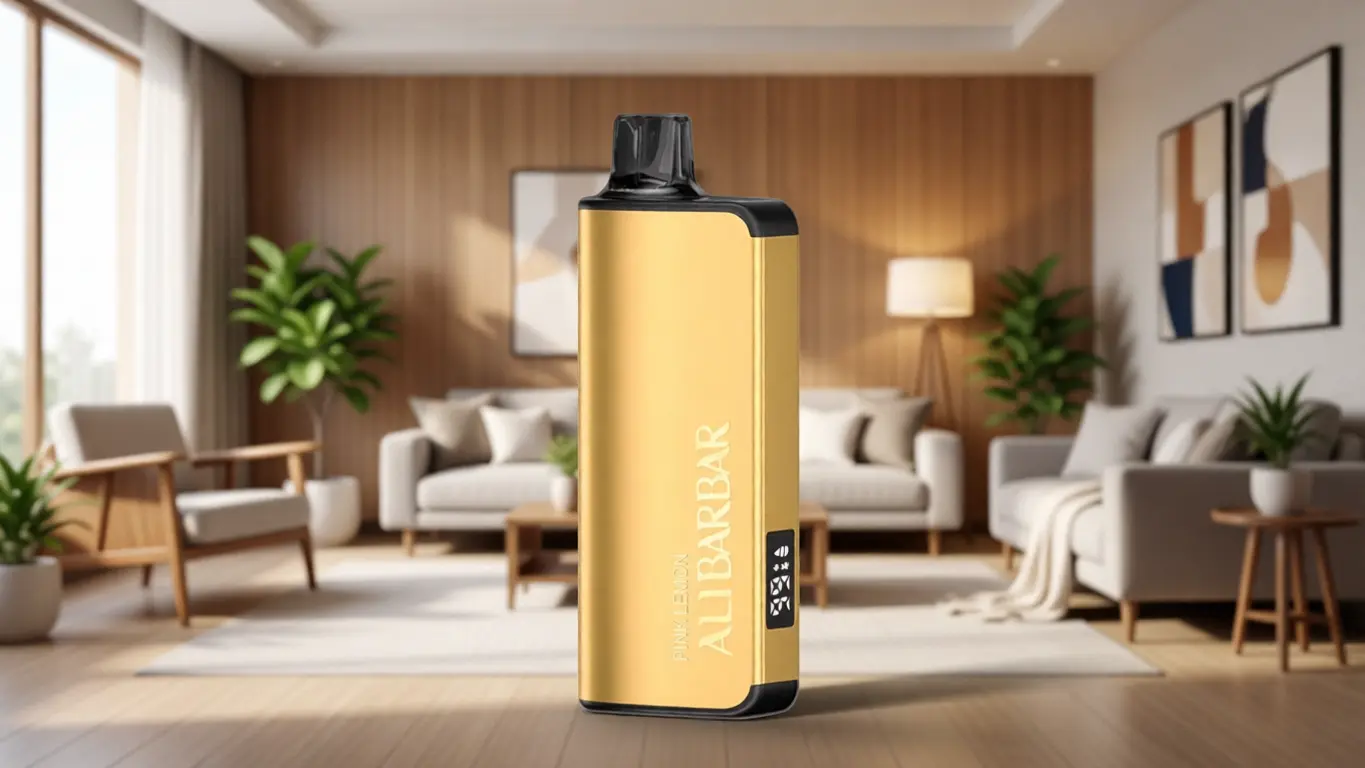
The ALIBARBAR product family, available through authorised Australian channels such as OZVAPE Shop, is built around many of the travel‑resilience principles outlined above. The range includes configurations that deliberately address the cruise‑specific pain points: extended operational life, clear charge indications, and a physical profile that remains unobtrusive even in light resort wear.
The INGOT 9000 series, for instance, integrates a high‑density power cell calibrated to deliver consistent output across its entire advertised cycle count, paired with an LED‑based depletion alert that removes all ambiguity. Its alloy shell resists the micro‑abrasions that salt spray exacerbates, and the mouthpiece is contoured for comfortable use in windy conditions. The INGOT 15000 extends that endurance envelope further, effectively covering a standard seven‑night itinerary with a single unit and no need to pack a backup—exactly the kind of engineered simplicity that cuts down on luggage clutter.
These are not the only travel‑oriented options in the market. Several global manufacturers produce compact pod systems with similar sealed architectures, and some cruise‑goers still prefer the low‑profile simplicity of a disposable format. The point is not to declare a universal best, but to observe that a device chosen without considering the daily rhythm of shipboard life will almost certainly under‑deliver. When a retailer maintains direct, factory‑certified inventory—as OZVAPE Shop does—the traveller can verify the exact specifications (mAh, rated cycles, dimensions) before purchase, and then trust that the unit received will match those figures. That chain of confidence is what turns a potentially anxious item on the packing list into a non‑issue.
A Step‑by‑Step Evaluation Framework for Your Next Voyage
Use this checklist to pressure‑test any device you are considering for an upcoming cruise. The questions are designed to expose weaknesses that only become apparent at sea.
Does the device have an unambiguous charge‑level indicator? If not, plan to carry at least one extra unit per four days of travel.
Is the battery integrated into a sealed or modular chassis? A sealed, high‑capacity design eliminates the need to pack charging cables and power banks that themselves must be approved for air and sea travel.
What is the actual operational life under realistic, sequential use? Look past marketing claims; seek out comparative cycle‑count data or third‑party endurance benchmarks.
Can the device survive in a pocket next to a pair of sunglasses for eight hours without visible surface damage? If you hesitate, it’s the wrong finish material.
Does the mouthpiece shape allow a natural seal without constant pressure? A poor seal in open‑air environments leads to unsatisfactory performance when you need it most.
Will a single device, or at most two, cover the entire trip duration without requiring a refill or a charge? Any need to source supplies at a port stop introduces unpredictability.
Run through this list with any prospective purchase and the decision becomes mechanical, not emotional.
Common Mistakes That Turn a Reliable Companion into a Travel Liability
Years of observing how adults interact with portable electronic systems reveal a handful of familiar pitfalls that are entirely avoidable.
Overweighting Discretion at the Expense of Battery Reality
A device that is almost invisible in the hand but offers only a few hours of real‑world use forces the traveller to carry multiple units. On a ship, that means multiple items to account for during the security check at each port of call and multiple failure points. The smallest possible form factor is not always the smartest choice—endurance should come first.
Assuming Policy Uniformity Across Cruise Lines
Carnival’s rules are specific; other operators may prohibit devices entirely in cabins, or may have stricter carry‑on policies. Applying one cruise line’s policy to another without verification is the single most common reason devices are surrendered at embarkation. Always consult the carrier’s official website within a week of sailing.
Ignoring Supply Chain Integrity
A deeply discounted device from an unverified marketplace may carry no guarantee of an authentic lithium‑ion cell. Counterfeit power sources exhibit unstable discharge curves and can swell under the temperature fluctuations of a cruise ship cabin safe. Purchasing through a retailer that can demonstrate a documented chain of custody—such as factory‑direct authentication codes—is not brand snobbery; it’s a straightforward risk management decision.
Confusing Category Labels with Engineering Substance
Terms like “high capacity” or “premium” are routinely applied to devices that share only superficial visual traits with properly engineered offerings. The only reliable shorthands are measurable specifications: milliamp‑hours, stated cycle counts, and protective circuit configurations. A traveller who judges by the package design rather than the technical sheet is effectively gambling.
Frequently Asked Questions
Q: Can I use my personal vaporizer in my Carnival stateroom if I direct the vapour toward the ventilation?
A: No. Carnival’s policy prohibits device use in all staterooms, regardless of ventilation or perceived discretion. The cleaning surcharge is strictly enforced.
Q: What happens if my device is discovered in my checked luggage at the terminal?
A: It will be removed by security and typically held until the end of the voyage. In some cases, the device is not returned. There is no guarantee of retrieval.
Q: Are there any restrictions on the type or size of device I can carry aboard?
A: Carnival does not publish specific dimensional limits for vaporizers, but airport‑style battery limits apply: lithium‑ion cells are permitted in carry‑on only. A device with a non‑removable battery is generally simpler to clear.
Q: How can I confirm my device’s battery capacity is within safe limits for air and sea travel?
A: Check the manufacturer‑listed watt‑hour (Wh) rating. Most compact pre‑filled devices fall well below the 100 Wh threshold that triggers additional scrutiny. If the rating isn’t published, contact the retailer for the technical sheet.
Q: Can I purchase a replacement device at sea or at a Caribbean port?
A: Cruise ship retail outlets do not stock vaporizers. Port availability is unpredictable and may involve products of unverifiable origin. It is strongly preferable to bring everything you need from an authorised source in Australia.
Q: How do I ensure the device I order from an online retailer will arrive before my sailing date?
A: Check the retailer’s stated order‑processing window and shipping cut‑off times. OZVAPE Shop, for example, publishes transit estimates for metropolitan and regional postcodes so you can schedule delivery with a buffer of at least two business days.
Q: Is there any difference in how Carnival treats sealed, pre‑filled devices versus refillable open systems?
A: The policy does not distinguish between device architectures; the same location and carry‑on rules apply. However, sealed systems eliminate the risk of fluid leakage triggered by cabin pressure changes, which is a practical advantage for cruise travel.
Q: What should I do if my device malfunctions while at sea?
A: There is no onboard repair service. If you brought a backup unit from the same trusted range, you can switch immediately. If not, you are without an operative device for the remainder of the voyage, which is why modular or high‑capacity sealed designs are so valuable.
Q: Can I store my device in the in‑room safe when not in use?
A: Yes, provided the device is powered off and not emitting. The safe environment, however, can become quite warm, so avoid leaving a fully charged unit in there for extended periods if the manufacturer advises against high‑temperature storage.
Q: Does OZVAPE Shop provide any documentation to help me demonstrate compliance if questioned at the terminal?
A: Orders shipped from the authorised network include factory‑printed specification cards that list battery type, capacity, and safety certifications. Keeping that card with your travel documents can expedite any security conversation.
Choosing Peace of Mind Over Speculation
A personal vaporizer should be one of the most unremarkable items in your day pack—like a watch that you glance at without thinking, it just works. On a Carnival cruise, that unremarkable reliability depends entirely on two things: understanding the rulebook before you board, and selecting a device engineered to handle the real‑world conditions of a floating holiday. When an Australian retailer such as OZVAPE Shop stands behind the specifications and provenance of its inventory, the entire pre‑travel equation simplifies: you match a device’s endurance, feedback, and physical design to your itinerary, pack only what you genuinely need, and spend the voyage attending to the sea and the sun rather than to an avoidable inconvenience. The right choice isn’t the one that tops a popularity chart—it’s the one that aligns so completely with your actual routine that you forget it’s even there.