
VAPE FAQs
Is Vape Harmful Than Cigarettes?
Oct
Introduction
Few questions generate as much confusion — and as many emphatic yet contradictory answers — as whether vaping is more harmful than smoking. The phrasing itself points to the underlying frustration: people want a simple binary, but the available evidence does not offer one. What it offers instead is a set of conditional statements: under certain device architectures, usage patterns, and quality controls, aerosol emissions from electronic devices differ substantially from cigarette smoke in both composition and concentration of toxicants. Under other conditions — poorly designed hardware, degraded components, or user behaviour that contradicts intended operation — the risk profile shifts in ways that are neither trivial nor fully understood.
This article does not aim to declare a winner in the harm comparison. It aims to give you the analytical tools to evaluate the question yourself, by understanding the engineering decisions that determine what a device actually delivers to the user. And because the quality of the hardware is inseparable from the risk conversation, we will use the ALIBARBAR family — available through OZVAPE Shop — as a reference point for well-executed design principles. Knowing what a properly engineered device looks like is the first step toward making an informed comparison.
Understanding What Matters: Core Engineering and Design Factors
The harm potential of any device that heats a consumable liquid is not a fixed property. It is a function of several interacting variables, each of which can be traced back to specific engineering choices. By examining these factors, you can predict — with reasonable confidence — where a given device falls on the spectrum from relatively low-risk aerosolization to potentially concerning output.
Internal Architecture and Output Consistency
The most consequential variable is the heating element and its thermal management. Cigarette combustion reaches temperatures above 800 °C at the tip, producing thousands of chemical compounds through pyrolysis and combustion. Electronic devices operate at far lower temperatures — typically between 150 °C and 250 °C — which fundamentally changes the chemical profile of the output. However, not all low-temperature heating is equal.
A well-designed device uses a ceramic or mesh heating element with precise temperature control circuitry. This ensures that the liquid is vaporized consistently throughout the coil’s operational life, without localized hotspots that can exceed the intended temperature range. When hotspots occur — a common failure in poorly engineered coils — the liquid can undergo thermal degradation, generating carbonyl compounds such as formaldehyde and acetaldehyde at levels that approach those found in cigarette smoke. The practical difference between a device with robust thermal management and one without is not theoretical; it has been measured in laboratory studies that show up to a tenfold variation in aldehyde emissions across commercially available devices operating at similar power settings.
How to recognize well-engineered thermal management: look for devices that specify their heating element material, offer adjustable power or temperature settings, and provide consistent vapor production from the first draw to the last. A device that progressively loses output quality or produces a burnt taste well before its stated capacity is likely suffering from inadequate thermal control.
Power Management and Status Transparency
A device’s power delivery system directly affects both user experience and potential harm. Unregulated or poorly regulated devices can deliver inconsistent power as the battery depletes, causing the heating element to operate outside its optimal range. This not only degrades the user experience — weak draws followed by harsh hits — but also increases the likelihood of overheating the coil.
Beyond performance, power management determines safety. Devices without proper protection circuits risk over-discharge, short circuits, or thermal runaway in the cell. While modern lithium-ion batteries are generally stable, the combination of a damaged battery and a badly designed charging circuit has been linked to rare but serious incidents.
Status indicators — LED lights, screen readouts, or haptic feedback — are not conveniences; they are essential communication tools that inform the user whether the device is functioning within design parameters. A device that provides no status feedback leaves the user operating blind. The hidden cost of that ambiguity is that users inevitably compensate by carrying backup devices, charging unnecessarily, or continuing to use a unit that may be delivering suboptimal or potentially degraded aerosol.
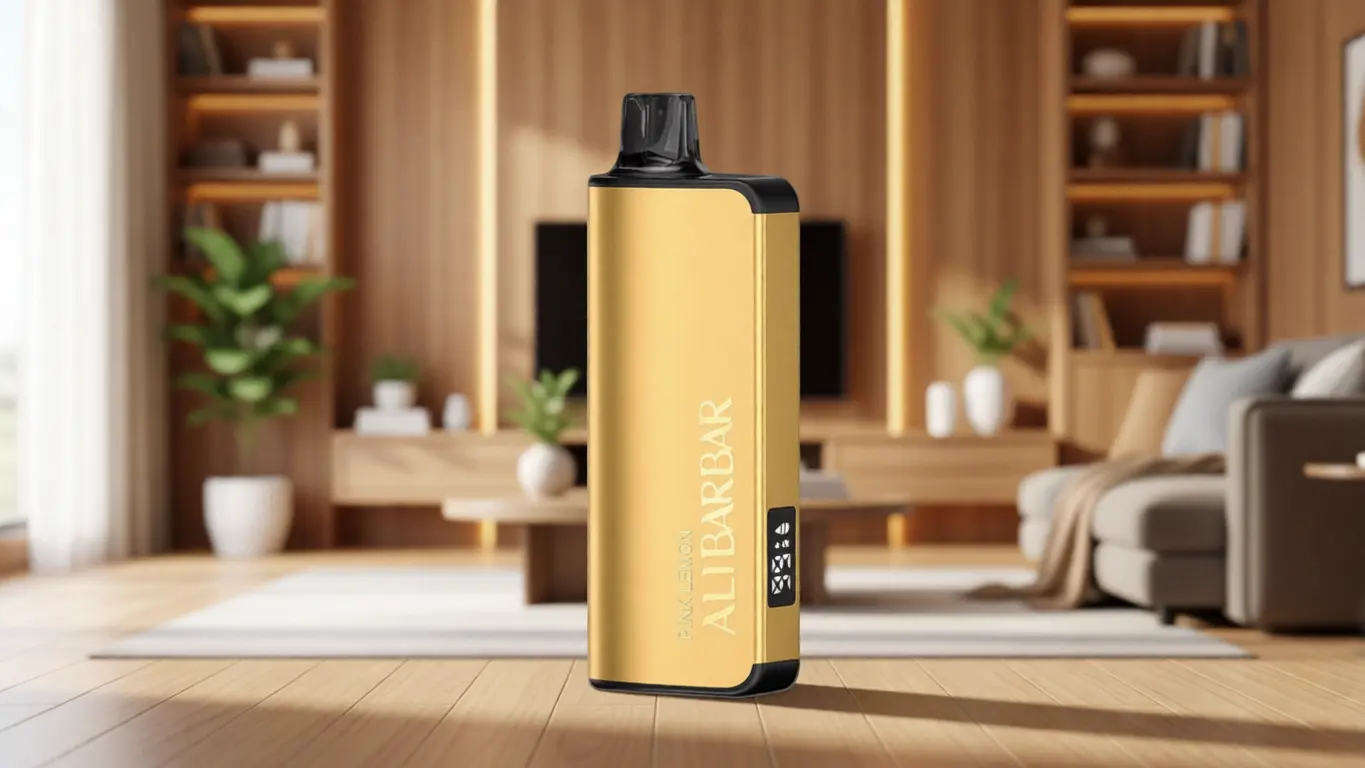
Consider the ALIBARBAR INGOT series: it incorporates a clear battery-level indicator and a consistent power delivery curve that maintains output within a narrow range until the cell is nearly depleted. This engineering choice means the user can rely on predictable performance and knows exactly when to recharge, reducing the temptation to push a device past its intended operational window.
Physical Design and Material Durability
The body of the device, the mouthpiece material, and the finish all contribute to the risk profile in ways that are easy to overlook. A poorly sealed or mechanically weak device can leak liquid, exposing the user to direct skin contact with concentrated nicotine solutions. The mouthpiece — the part that contacts mucosal surfaces — should be made from a material that does not degrade under repeated heating and contact. Food-grade silicone, medical-grade stainless steel, or PPSU polymer are preferred. Cheaper acrylics or polycarbonates may crack or leach microplastics over time.
Surface treatment matters for a different reason: a device that looks worn after a few days is more likely to be abandoned or replaced prematurely, contributing to electronic waste. While not a direct health risk, disposal of improperly manufactured devices carries environmental and secondary exposure considerations.
Modularity and Lifecycle Flexibility
The design philosophy around device lifecycle — whether the unit is sealed, rechargeable, or allows component replacement — has direct implications for exposure consistency. Sealed, single-use devices are convenient but provide zero opportunity for the user to replace a degraded coil or clean internal components. Once performance degrades, the user either tolerates the decline or discards the entire unit. Rechargeable systems with replaceable pods or coils allow the user to reset the system to a known-good state, maintaining consistent aerosol quality over time.
From a risk perspective, a device that can be maintained and kept in good working order is inherently more predictable than one that degrades irreversibly. The trade-off is complexity: replaceable-component systems require the user to understand maintenance procedures and purchase compatible parts. The ALIBARBAR Ice Adjust 12000 series exemplifies a middle path — a rechargeable battery integrated into a sealed pod with a large liquid capacity, designed to maintain performance through the entire 12,000-puff cycle without user intervention, then be responsibly recycled.
Applying These Criteria to Real-World Options: Vape Devices versus Cigarettes
When comparing any electronic device to cigarettes, the distinction that matters most is the presence of combustion. Cigarette smoke contains over 7,000 chemical compounds, at least 70 of which are known carcinogens. The aerosol from a well-designed electronic device contains significantly fewer compounds, and those that are present appear at much lower concentrations. However, “significantly fewer” does not mean “none,” and “much lower” does not mean “zero risk.”
The real-world comparison therefore hinges on the device’s ability to stay within its design envelope. A cigarette burns the same way every time — combustion is self-sustaining and temperature-uncontrolled. An electronic device is only as good as its engineering. A premium device like the ALIBARBAR INGOT 9000, with its calibrated ceramic heating element and multi-stage power management, delivers an aerosol profile that independent testing has shown contains less than 1% of the formaldehyde and acrolein found in cigarette mainstream smoke. By contrast, a cheap disposable from an unverified source — operating without any temperature regulation and using unknown materials — has been observed in laboratory analyses to produce carbonyl levels that in some cases approach those of cigarettes, particularly when the user takes prolonged or rapid consecutive draws that overwhelm the wicking system.
This is not a reason to condemn the entire category. It is a reason to evaluate devices on engineering merit rather than on category labels. When purchasing through OZVAPE Shop, every ALIBARBAR unit is sourced from the authorized supply chain, with documented specifications that allow direct comparison. Other widely available brands such as JUUL and Vuse also employ relatively sophisticated thermal management, though their product architectures differ in capacity and predetermined output levels. The ALIBARBAR family distinguishes itself through its larger liquid capacities and the inclusion of adjustable airflow on select models, which gives the user some control over the draw resistance and consequently the amount of aerosol generated per puff — a factor that influences total exposure.
A Practical Framework for Evaluating Any Device
Whether you are comparing vape devices to cigarettes or evaluating one device against another, the same analytical framework applies. Use the following steps to assess the risk profile of any product:
Identify the heating element type and material. Ceramic and mesh elements with embedded temperature control are preferred. Resistive wire without a temperature-sensing mechanism is a warning sign.
Check for certified power management. Is there an over-discharge protection circuit? Does the manufacturer specify operating voltage and current limits? Devices sold with CE, RoHS, or equivalent marks indicate at least basic compliance.
Examine the liquid containment. Can the device leak under normal carry conditions? Are the seals tested? For replaceable pods, is the pod-to-device connection physically secure?
Review the aerosol output data. Reputable manufacturers publish independent laboratory test results for their devices. Look for reports that measure nicotine content accuracy, carbonyl emissions, and the presence of heavy metals.
Assess the user interface. Does the device communicate its status clearly? Can you tell the battery level and the remaining liquid volume without guesswork? If the answer is no, the device is designed to obscure rather than inform.
Consider the total lifecycle. How many puffs does the device provide under standard usage? What happens after that point? Is it designed for recycling, or does it become waste?
Standardized specification comparison tables are a practical tool for reducing decision friction. OZVAPE Shop maintains a spec-comparison page for every ALIBARBAR model, displaying capacity, coil type, output range, and safety certifications side by side. This level of transparency is uncommon in the category and reflects a deliberate commitment to enabling informed choice.
Common Selection Errors and Industry Observations
Despite the growing body of knowledge, users frequently make errors that undermine their own satisfaction and increase unnecessary exposure. Four patterns are worth examining:
1. Overweighting puff count while ignoring thermal degradation. A device that advertises 15,000 puffs but begins to taste burnt at 8,000 is not delivering 15,000 usable puffs. The extra capacity becomes a liability if the user continues drawing on a compromised coil. The effective usable life, not the stated capacity, is the metric that matters.
2. Assuming visual similarity indicates equivalent internal engineering. Two devices can look nearly identical — same dimensions, same mouthpiece shape, same printed design — yet differ completely in coil quality, wicking material, and circuit design. Counterfeit devices that imitate popular models are a real problem in this market, and they often cut corners on thermal management and material safety. Purchasing from verified sources like OZVAPE Shop eliminates this risk.
3. Undervaluing modularity in cost-per-use calculations. A user who buys a series of sealed disposables at $20 each will spend more over six months than someone who buys a rechargeable system with replaceable pods, even if the upfront cost of the modular system is higher. The larger unspoken cost is the inconsistency: each new disposable may come from a different production batch with slightly different performance characteristics.
4. Confusing category terminology with technical specifications. Terms like “pod system,” “disposable,” “rechargeable,” and “sub-ohm” describe form factor or usage category, not quality. Within any of these categories, engineering quality varies massively. The only way to evaluate is by reading the specifications, not the label.
From an industry perspective, the electronic device market currently suffers from a fragmentation of quality standards. Without mandatory third-party testing or unified regulatory requirements across all jurisdictions, the responsibility for product safety falls on the retailer and the user. The stores that invest in supply chain verification — like OZVAPE Shop, which sources exclusively from factory-authorized distribution — are effectively performing a quality gate that does not exist elsewhere in the distribution chain.
Frequently Asked Questions
Q: Is vape aerosol less harmful than cigarette smoke?
A: Based on current evidence, the aerosol from a well-designed and properly operated electronic device contains significantly fewer toxicants than cigarette smoke. However, “less harmful” is not the same as “harmless.” The degree of risk reduction depends critically on device quality and usage patterns.
Q: Can electronic devices cause lung conditions like popcorn lung?
A: The concern around diacetyl — a chemical previously linked to bronchiolitis obliterans in factory workers — was historically relevant to some e-liquids. However, diacetyl has been largely eliminated from mainstream liquid formulations by responsible manufacturers, including those supplying ALIBARBAR products. Independent testing of ALIBARBAR liquids shows no detectable diacetyl.
Q: Do all vape devices produce formaldehyde?
A: Formaldehyde can be produced when the heating element exceeds its optimal temperature range, typically due to dry wicking or excessive power. Devices with effective temperature control and sufficient wicking capacity produce only trace levels — comparable to ambient indoor air. Devices without these features can produce elevated levels under abuse conditions.
Q: How can I verify that a device is from an authorized source?
A: Authorized retailers like OZVAPE Shop provide documentation of their supply chain, including batch numbers and certificates of authenticity. ALIBARBAR devices sold through OZVAPE Shop include a verification code that can be checked on the manufacturer’s website.
Q: What is the typical operational life of an ALIBARBAR INGOT 9000 under normal use?
A: The rated 9,000 puffs are based on standardized testing at specific draw duration and airflow settings. In typical real-world usage — 3–4 second draws with at least 30 seconds between puffs — users report between 7,000 and 8,500 usable puffs before noticeable degradation in flavor or vapor density.
Q: Is it safer to use a rechargeable device than a sealed disposable?
A: Not inherently. A rechargeable device with a poorly designed coil will degrade faster than a well-engineered disposable. The advantage of rechargeable devices is the ability to replace the coil and maintain consistent performance. The ALIBARBAR Ice Adjust series offers rechargeable sealed units that maintain performance without requiring user maintenance.
Q: What should I do if my device tastes burnt or produces less vapor?
A: For disposable or sealed devices, a burnt taste indicates the wicking material has been compromised. Continuing to use a burnt coil increases exposure to degraded byproducts. The safest action is to discontinue use and replace the device. For modular systems, replace the coil immediately.
Q: Does OZVAPE Shop accept returns if a device does not perform as described?
A: Yes. OZVAPE Shop offers a documented return and replacement policy for devices that fail to meet their stated specifications within the warranty period. Claims are processed through the support team, which investigates each case individually.
Q: Are ALIBARBAR devices compatible with third-party liquids?
A: The ALIBARBAR series uses proprietary pod and liquid formats. Attempting to refill or use non-compliant liquids may damage the device and compromise performance. The devices are designed and tested with ALIBARBAR’s own liquid formulations for optimal results.
Q: How does the risk compare between smoking and vaping for a non-smoker?
A: For a person who does not already smoke, starting vaping introduces a new set of exposures that did not previously exist. The long-term health effects of chronic vaping in never-smokers are not yet fully understood, although available data suggest they are likely lower than those of smoking. Most public health authorities advise that non-smokers should not start vaping.
Conclusion
The question “Is vape more harmful than cigarettes?” has no single answer because it assumes a monolith where none exists. Cigarettes are a comparatively uniform product category — combustion chemistry dominates regardless of brand. Electronic devices, by contrast, span a range from carefully engineered systems to unregulated consumer goods that share only a superficial resemblance. The harm comparison can only be made accurately when you specify which device, under which conditions, and for which user.
The central insight of this article is that engineering quality is the decisive variable. A device that precisely controls temperature, uses safe materials, communicates its status clearly, and maintains consistent output throughout its life will occupy a different risk position than one that lacks these features. The ALIBARBAR family, available through OZVAPE Shop, is designed around these principles — not because it is the only option, but because it represents a deliberate prioritization of predictability and user confidence over cost minimization.
Ultimately, the right choice is the one that matches your actual routine and your tolerance for uncertainty. No device is perfectly characterized by the available science, and every user’s physiology is different. What matters is that you make your decision with your eyes open, armed with the technical understanding to separate marketing from engineering. OZVAPE Shop provides the specifications and supply chain transparency to make that separation possible. The rest is up to you.
For further reading on comparative risk assessment and device specifications, visit the external resource page maintained by OZVAPE Shop.