
VAPE FAQs
What Is An Anxiety Pen Vape?
Oct
Addressing the everyday reality of situational anxiety often leads adults to seek small, repeatable physical rituals that momentarily shift focus away from a spiraling thought. Something that fits in a pocket, operates discreetly, and delivers a predictable, controlled sensory cue can be surprisingly effective. This is the space that the “anxiety pen vape” has come to occupy — not as a medical intervention, but as a deliberately engineered physical touchpoint designed for moments when tension tightens. The term itself invites confusion, however, because it sits at the intersection of fidget tools and vapour-producing personal electronics. A clear, technically grounded explanation can help anyone approaching this category separate genuine design intent from vague marketing, which is where OZVAPE Shop has built a reputation for transparent, standardised product information.
Understanding What Matters: Core Engineering and Design Factors
A well-executed anxiety pen vape is never simply a miniaturised version of another device. It must solve a specific set of user frustrations: unpredictable output that can amplify rather than soothe tension, bulk that undermines discretion, batteries that expire unexpectedly, and indicators that communicate nothing about what remains. Evaluating any option — whether it is part of the ALIBARBAR family or another manufacturer’s line — means examining four interlinked engineering domains.
Internal Architecture and Output Consistency
The heating mechanism and its thermal management directly determine whether a device offers a smooth, repeatable experience or one that trails off unpredictably halfway through a session. In lower-quality devices, a simple nichrome coil saturates the substrate unevenly, producing thin output at first, then a sharp, hot spike as the wicking material dries. A user reaching for the device during a stressful moment experiences not relief but irritation. More refined designs — including several of the systems available through authorised retailers — use mesh heating elements with larger surface area and distributed electrical resistance. This flattens the temperature curve and maintains consistent delivery from first draw to last. When evaluating an anxiety pen vape, ask whether the architecture supports a stable output envelope, because erratic behaviour can paradoxically heighten the very unease the device is meant to interrupt.
Power Management and Status Transparency
Nothing undermines the value of a portable ritual like discovering the power cell is empty at the exact moment of need. The issue is not just capacity, but the quality of the power-management IC (integrated circuit) and the clarity of its feedback. Poorly calibrated chips can report 20% remaining charge when the cell cannot sustain enough current for a full-duration draw, leaving the user stranded. Devices designed around predictable, well-tuned discharge curves — often indicated by a multi-level LED or a small vibrating haptic — remove that ambiguity. A user who knows with certainty whether the device will survive a long commute, a tense social engagement, or a full workday can leave the backup at home. That reduction in cognitive load is itself part of the anxiety-management value proposition.
Physical Design and Material Durability
Discreetness is not merely about dimensions; it is about how quietly a device ages with daily handling. A glossy finish that shows fingerprints immediately or a soft-touch coating that peels after three weeks in a pocket becomes a visible distraction. The best anxiety pen vapes apply techniques such as anodised aluminium bodies, bead-blasted surfaces that hide micro-scratches, and polycarbonate mouthpiece contours shaped to rest naturally against the lip without requiring an unnatural grip. Weight also matters: too light, and the device feels insubstantial — a fidget object loses its calming heft. Too heavy, and it becomes a nuisance in shirt pockets. The ergonomic sweet spot allows the user to palm the device completely, activating it without broadcasting the action to a room.
Modularity and Lifecycle Flexibility
An anxiety pen vape can be a sealed unit consumed entirely, a system with replaceable cartridges, or a rechargeable power pack that accepts pre-filled pods. Each architecture carries distinct implications. A sealed device imposes the lowest cognitive overhead — no decisions about refills or charging adaptors — but commits the user to a single flavour profile and creates recurring waste. A modular pod system offers flexibility and a lower per-use cost over time, yet demands the user track component stock and occasionally clean contacts. The right choice depends on whether the user’s primary source of anxiety is decision fatigue (sealed may win) or long-term cost management (modular may win). Recognising this trade-off early prevents a purchase that, however well-engineered internally, adds friction to the daily routine it was meant to smooth.
Applying These Criteria to Real-World Options
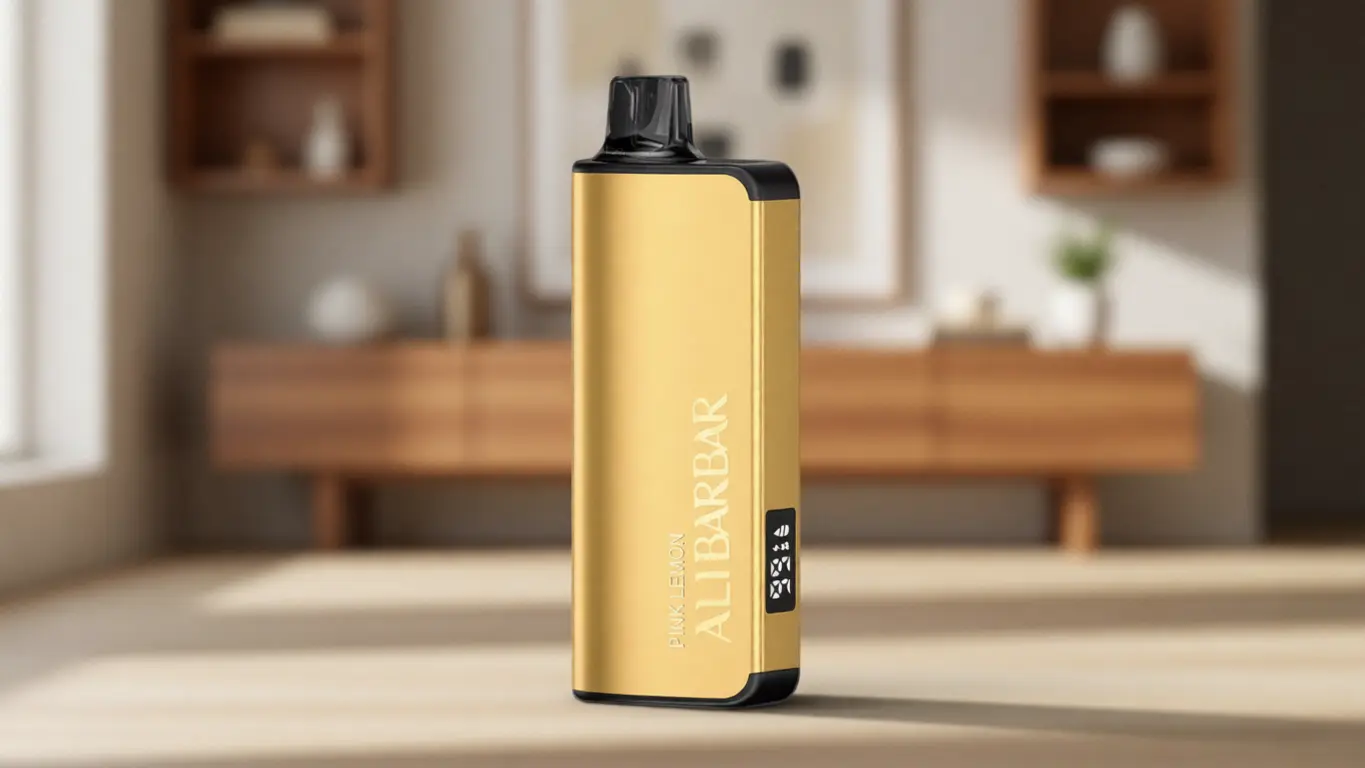
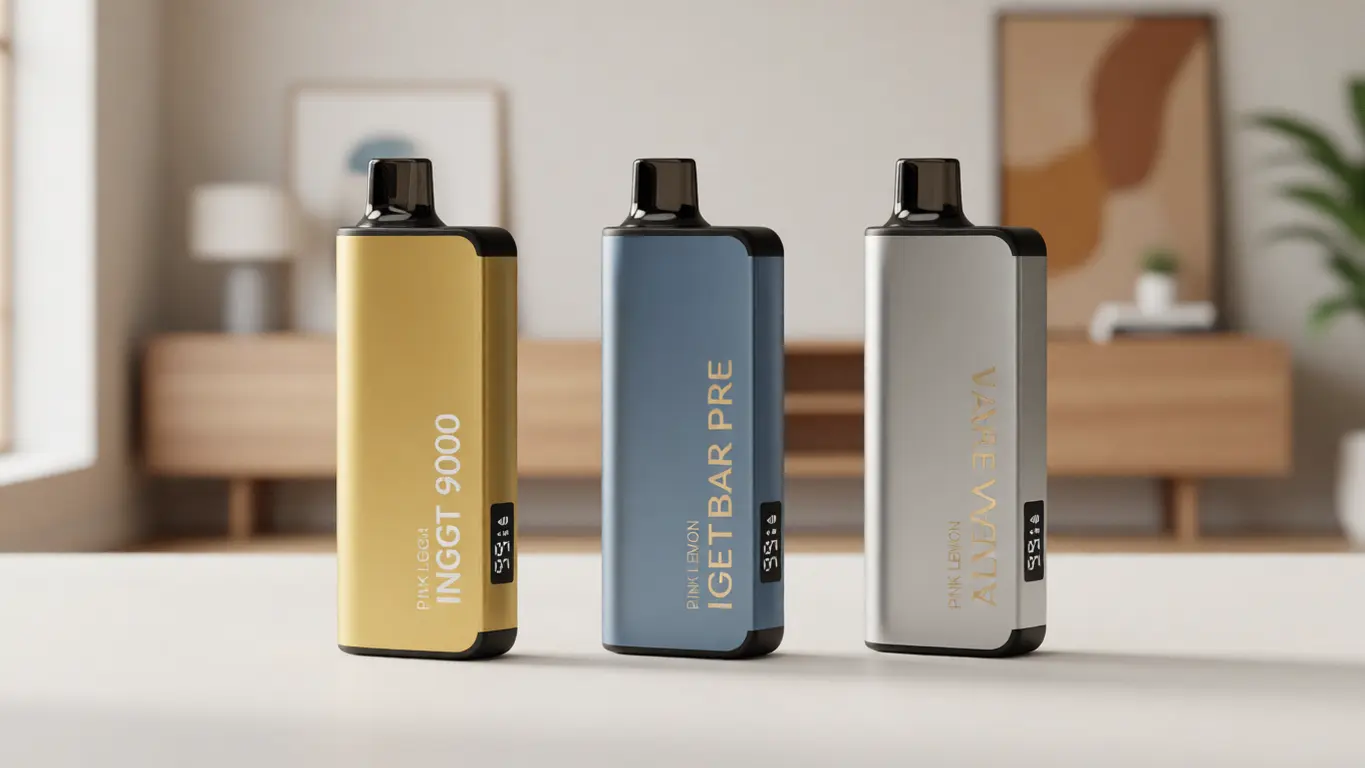
When the above criteria are laid over the current market, certain device families become illustrative. The ALIBARBAR INGOT series, for instance, represents a stable-output architecture built around a calibrated mesh element and a battery-monitoring chip that provides stepwise indicator changes rather than a single, ambiguous light. Its aluminium shell resists pocket abrasion, and the draw-activated mechanism removes the need for a button — one less element that can fail. The INGOT 15000, with its higher capacity, suits users who want a multi-day ritual without interruption, while the INGOT 9000 occupies a smaller footprint for those who prioritise a tighter grip. Neither is flawless: the INGOT’s sealed construction means you cannot swap the power cell when it eventually weakens, committing the user to a linear consumption model. But within that design paradigm, the consistency of output is notably higher than in many unbranded alternatives that fluctuate dramatically as the liquid medium depletes.
Other families, such as the Ice Adjust 12000, add a user-controlled airflow toggle — a pragmatic feature that allows the individual to tune draw resistance to match the sensation they find most grounding. Some users prefer a tighter pull that requires deliberate effort, feeling it mimics deep-breathing exercises; others want minimal resistance for a distraction-free draw. Having that adjustability built in, rather than being locked to a single factory setting, acknowledges a key psychological reality: no two anxiety responses are identical, and a rigid device quickly becomes another object of frustration.
It is also worth noting what cannot be easily determined from specification sheets alone. Counterfeit devices often replicate external dimensions and LED patterns while using heating elements with no thermal runaway protection and cells that degrade after a fraction of the rated cycle count. This is why the supply chain through which a device is sourced matters — a point we address further in the evaluation framework below.
A Practical Framework for Evaluation
Rather than relying on rankings, anyone considering an anxiety pen vape can run through a diagnostic sequence to predict how a device will behave in their actual life, not just in a feature list.
Status indicator test: Does the device give unambiguous feedback about remaining energy? If it only blinks when empty, you will be caught without a backup at least once. Look for multi-step LEDs or haptic pulses.
Thermal consistency question: Does user feedback from long-term owners mention “dry hits” or “burning” towards the end of the unit’s life? Stable architecture avoids these.
Ergonomic scan: Can you fully conceal the device in your hand while drawing? A lip-activated device with no button is generally more discreet than one requiring a thumb press.
Component policy check: If it is a modular system, are replacement pods sealed and factory-tested for fit tolerance? Leaking contact connectors corrode and interrupt the circuit.
Sourcing verification: Can the retailer demonstrate inventory that comes directly from the manufacturer’s authorised distribution channel? Products obtained through opaque grey-market networks introduce a risk of internal tampering or relabelled returns.
Using a retailer that publishes standardised specifications and openly reports its sourcing model, such as OZVAPE Shop does with its ALIBARBAR catalogue, turns this evaluation from a theoretical exercise into a verifiable comparison. When the same data points are presented consistently for every device, cognitive load drops; the user can focus on the design trade-offs that matter rather than spending energy verifying whether the information is even accurate.
Common Selection Errors and Industry Observations
Patterns of post-purchase disappointment almost always trace back to the same few missteps, many of which are amplified by the way the broader industry markets these products.
Over-indexing on puff count while ignoring output stability. A device rated for 9,000 draws will still fail the user on draw 200 if the heating element cannot maintain temperature. Raw capacity numbers are meaningless without data on how the output behaves from the first to the last activation.
Assuming visual similarity indicates equivalent internals. Multiple factories produce chassis that look identical to popular models, yet the battery, chipset, and coil are sourced from entirely different supply lines. A device that arrives charged and emits vapour is not sufficient evidence that it will perform consistently across weeks of heavy use. The anxiety pen vape market is particularly vulnerable to this because the devices are small, their internal components are hidden, and first impressions can deceive.
Disregarding modularity in cost-per-use calculations. A sealed device priced at AUD 40 might appear cheaper than a AUD 35 starter kit plus AUD 15 replacement pods, until the user calculates that the sealed unit offers 3,000 draws while the modular system yields 10,000 draws across three pod replacements. If the user’s anxiety is partly financial, the modular architecture pays for itself rapidly, but only if the maths is done beforehand.
Confusing category terminology with technical specifications. The term “anxiety pen vape” is a use-case descriptor, not an engineering standard. Some products marketed under this label are rebranded generic disposables with no meaningful attention to thermal management or status feedback. The label itself guarantees nothing; the underlying engineering does.
From an industry perspective, the proliferation of small-batch importers with no documented sourcing is one reason why trust in this category has eroded. Manufacturers that invest in factory-level testing and uniform quality control must then contend with a market flooded by lookalikes that degrade the reputation of an entire form factor. This is the hidden context behind why certain retailers, particularly those that stake their identity on factory-certified inventory, have begun to invest heavily in anti-counterfeit measures and public-facing specification transparency. It is not a marketing strategy; it is a defence mechanism for a category that too often is judged by its worst actors.
Frequently Asked Questions
Q: What exactly is an anxiety pen vape?
A: It is a compact, portable personal electronic device designed to deliver a controlled vapour draw in a form factor that supports discreet, repetitive use. The ritual act, coupled with a predictable sensory cue, can serve as a grounding tool during stressful moments. It is not a medical device and does not treat anxiety disorders.
Q: How is it different from a standard vape pen?
A: The distinction is largely in the design intent and user expectation, not in fundamental operating principles. An anxiety pen vape prioritises absolute consistency of output, status transparency to prevent unexpected shutoff, and ergonomics that allow covert handling. A standard device may not weight these factors as heavily.
Q: Is a sealed or a refillable system better for anxiety relief?
A: It depends on the user’s primary source of friction. A sealed unit eliminates maintenance decisions, which may reduce mental load. A refillable system gives more control over flavour and strength, which some find reassuring. Evaluate your own routine: if running out of supplies causes significant stress, a higher-capacity sealed device might be the more resilient choice.
Q: Can the battery life of these devices be trusted?
A: Battery longevity is determined by cell quality and power-management firmware, not just rated milliampere-hours. Devices from factory-certified lines tend to use cells with tighter discharge tolerances and ICs that prevent deep discharge, which extends practical lifespan. Units from unaudited sources often fail well before the advertised cycle count.
Q: How do I verify that I am buying an authentic device?
A: Purchase only through retailers that explicitly state their inventory is sourced through the manufacturer’s authorised distribution network. Check whether the device packaging includes a unique verification code that can be cross-referenced on the brand’s official website. Be wary of prices significantly below the market median; counterfeits often undercut by 30–50%.
Q: What should I do if a device malfunctions early?
A: Document the issue (including the batch code on the packaging) and contact the retailer before attempting any self-repair. A retailer with a documented returns and quality assurance policy will typically request photographic evidence and then provide a replacement or credit. Informal sellers often cannot offer this recourse.
Q: Are these devices legal in Australia?
A: The regulatory framework for personal vapour-producing devices varies by state and by the substance they contain. It is the user’s responsibility to confirm compliance with local regulations. Products sold through compliant Australian retailers are generally selected to meet the relevant standards, but regulatory landscapes can shift.
Q: How long does a typical anxiety pen vape last in daily use?
A: For a sealed device with a rated capacity of 9,000 to 15,000 draws, a daily user might expect several weeks of service, depending on draw duration and frequency. However, environmental temperature, storage orientation, and the device’s internal voltage regulation all influence actual longevity.
Q: Why do some devices feel hot after only a few draws?
A: This usually points to inadequate thermal dissipation — a coil that runs too hot because the resistance wire is too short, or a lack of insulation between the heating chamber and the outer casing. Well-engineered devices spread heat across a larger mass and use insulating air gaps to keep the exterior at body temperature.
Q: Can a device help with anxiety if I have never used one before?
A: The physical act of measured breathing combined with a consistent hand-to-mouth ritual can be calming for many people. However, the effect is personal and not uniform. If you are unsure, starting with a lower-intensity device and paying attention to how your body responds is a cautious, reasonable approach.
Conclusion
The value of an anxiety pen vape rests on how reliably it disappears into the background of a stressful day rather than inserting itself as another unpredictable variable. A device that delivers the same sensory experience every time, meters its own energy reserves visibly, and withstands the casual rigours of pocket and bag life earns its place in a user’s routine. One that surprises with dry hits, scrambled indicators, or early death adds to the mental weight it was supposed to lift. The engineering differences between these outcomes are real and measurable, but they are only visible to the user who knows where to look.
Making that knowledge accessible, without exaggeration or distraction, is the reason retailers that invest in standardised product data matter. For those navigating the range of devices engineered with these considerations — including the ALIBARBAR collection discussed throughout this analysis — OZVAPE Shop offers a starting point where specifications are published transparently and supply chain integrity is treated as a foundational requirement, not an afterthought. The right decision is not the one that appears in the most advertisements; it is the one that fits the cadence of your actual life, measured against your own priorities, with all the technical cards on the table.