
VAPE FAQs
How To Un Burn A Vape?
Oct
Understanding the Problem: When a Portable Device Produces a Burnt Taste
Few experiences undermine confidence in a personal electronic device as quickly as the harsh, acrid sensation commonly described as a “burnt hit.” That single unpleasant draw tells you something has gone fundamentally wrong inside the unit — a thermal event that has degraded the very component responsible for producing a clean, consistent output. For an adult who relies on a device throughout the day, whether for moments of pause or sustained use, encountering this taste is more than an annoyance; it signals a loss of reliability, the suspicion that the device is nearing its end, and the immediate question: can this be fixed?
The short answer is that, with sealed, single‑use devices, there is rarely a true restoration once the wicking material has been charred. But understanding why the taste occurs, what temporary measures might salvage a unit in the early stages of degradation, and — most importantly — how to choose a device engineered to avoid this failure altogether is well within reach. This article examines the issue from an engineering perspective, providing a framework that moves beyond quick fixes and toward informed, preventative decisions. In doing so, we draw on observable patterns from a market where OZVAPE Shop has made it a priority to stock factory‑certified devices with documented performance characteristics, giving adult users a stable reference point.
Understanding Why Burnt Taste Occurs – Core Engineering and Material Factors
Every portable device that delivers a consistent, heated output relies on a precise interplay between three elements: a power source, a heating element, and a material that draws the consumable liquid into contact with that heat. When any one of these components falls out of its designed specification, the thermal balance shifts, and the wicking medium — typically a silica or cotton‑based fabric — begins to scorch. The chemical change is irreversible. Once the material has carbonised, its fibres collapse, losing the capillary action needed to transport liquid evenly. The result is a self‑perpetuating cycle: restricted flow leads to higher local temperatures, which cause further charring, and the taste never returns to baseline.
Internal Architecture and the Liquid‑Delivery Mechanism
Inside a modern sealed device, the heating coil is almost always in direct contact with a wick that feeds the consumable from a saturated reservoir. The architecture matters enormously. A coil that runs too hot because its resistance is not well‑matched to the power output will rapidly dry and then burn the wick at the point of contact. Even a perfectly tuned coil will fail if the wicking material cannot pull liquid in quickly enough to keep pace with the user’s draw frequency.
Manufacturers address this through several design choices: the porosity and density of the wick, the size and shape of the liquid inlet ports, and the use of multi‑layer wicking that buffers the coil from sudden dry spots. Devices that exhibit fewer reports of burnt taste tend to incorporate a degree of redundancy in their liquid delivery — for example, a secondary wicking layer that continues to feed the coil even when the primary layer begins to fatigue. In contrast, units built with a single, minimally saturated wick have almost zero tolerance for a long draw or a brief spike in power.
Power Management and Thermal Stability
A device’s power control circuitry is equally critical. Unregulated or poorly regulated output can cause the coil temperature to overshoot its intended range by a margin that is invisible to the user but devastating to the wick. Some systems mitigate this through calibrated chipsets that monitor coil resistance in real time and adjust the voltage to stay within a safe band. Others rely on a simple, fixed output that depends on the battery’s remaining charge — and as the battery sags, the heating element can cool down or, paradoxically, under certain resistance curves, deliver excessive current at low voltage, accelerating localised burning.
A useful indicator of a stable thermal architecture is the presence of a clear, graduated status display. When a device communicates battery life and operating state transparently, the user is less likely to push it into the marginal zone where power delivery becomes erratic and wick degradation accelerates.
Material Quality of the Wicking Medium
Not all wicking materials are equal. Cotton‑based wicks are valued for their taste neutrality and rapid absorption, but the grade of cotton and its processing matter. Long‑fibre, untreated cotton can withstand repeated heating cycles without developing charring, while short‑fibre, bleached alternatives tend to degrade more quickly. In some newer designs, the wick is embedded with silica filaments that provide a heat‑resistant backbone, preserving fluid transport even when the cotton begins to deteriorate.
When a user describes a burnt taste that appears only toward the end of a draw, it often points to a marginal wick failure: the coil’s temperature climbs faster than the liquid can replenish the contact zone, and the outermost cotton fibres singe without immediately ruining the entire wick. If caught at this stage, improved draw technique or a brief resting period might extend the device’s usable life. But once the taste becomes constant, the wick is compromised beyond repair.
Can You “Un‑Burn” a Sealed Device? Practical Troubleshooting and Its Limits
Adults encountering a burnt taste naturally look for a reversible procedure. In a device with a user‑replaceable coil or an accessible fluid reservoir, the remedy is straightforward: disassemble, replace the wicking element, and clean the contacts. Sealed, disposable units present a different challenge because the heating assembly is permanently enclosed. This means that every technique offered as a fix is, at best, a temporary measure that may delay the inevitable or, in the right circumstances, restore adequate performance if the problem is still at the surface level.
Resting and re‑priming: If the device has been in heavy, rapid‑fire use, the wick may simply have run dry. Setting it aside for 15–20 minutes allows any remaining liquid in the reservoir to redistribute. After resting, take several short, gentle pulls without activating the power — much like priming a pump — to draw liquid into the wick. This can resolve a dry hit that has not yet progressed to full carbonisation.
Adjusting airflow: Some devices feature adjustable airflow rings. Partially closing the airflow increases the pressure differential inside the chamber, which can improve liquid feed to the coil. Conversely, if the draw is too tight, the coil can overheat; opening the airflow may help. The correct setting is often the midpoint that balances vapour density with coil temperature.
Checking for condensation or blockage: A small amount of condensation can pool inside the mouthpiece and airway, creating a harsh sensation that users mistake for a burnt hit. Carefully cleaning the mouthpiece with a dry cloth and blowing gently through the device (away from the electronics) can sometimes clear the issue without any internal intervention.
Tapping and orienting: Allowing gravity to assist fluid flow can help, particularly in devices where the liquid reservoir is at the bottom. Inverting the device for a few minutes, then returning it upright and taking a test draw, sometimes redistributes the liquid enough to rewet a partially dried wick.
However, it must be stated plainly: once the wick material has charred to a degree that produces a persistent, unmistakable burnt taste, nothing can reverse the chemical change. The carbon particles will continue to release an acrid flavour, and any attempt to keep using the device is not only unpleasant but also accelerates the degradation of remaining wick, potentially affecting the device’s structural integrity.
The real value of understanding these troubleshooting steps is that they teach users what a well‑engineered device should not require. If you find yourself constantly resting, priming, and adjusting, the fundamental architecture is failing to keep up with your usage pattern. That insight is what leads to better long‑term choices.
How Thoughtful Device Design Prevents Burnt Coil Failure
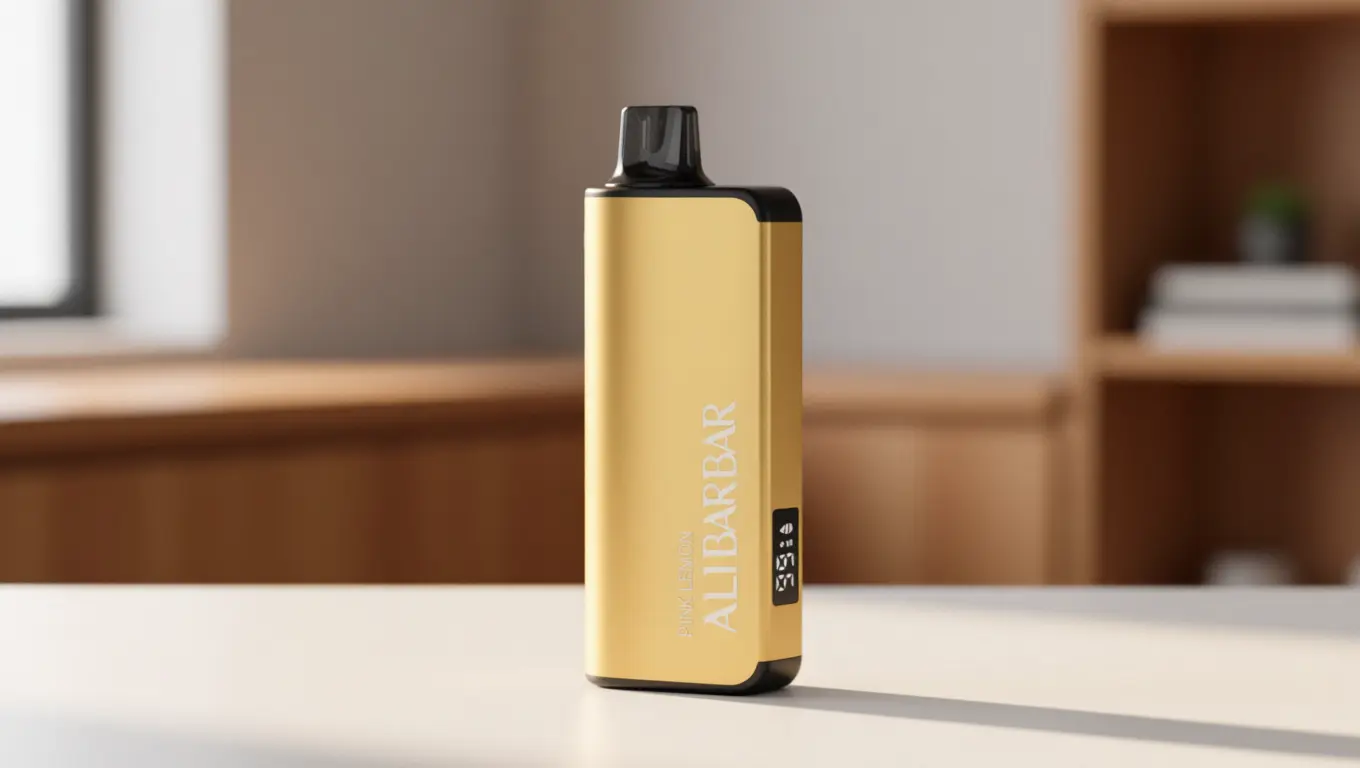
Some device families have quietly built their reputation by systematically addressing the very factors that lead to burnt taste. Moving away from the cycle of temporary fixes means looking at products that put engineering ahead of ornamentation, and that design for predictable output across the majority of their rated operational life. One line of products that illustrates this approach is the ALIBARBAR range, available through OZVAPE Shop. While this is not the only example in the market, its consistent architecture across multiple series offers a clear case study in how industrial design can suppress the conditions that produce a burnt wick.
ALIBARBAR devices are built around a central premise: the heating element and wicking system should never be a source of worry. The INGOT 9000 and INGOT 15000 series, for instance, incorporate a calibrated power‑delivery circuit that limits voltage spikes even when the battery level is low, reducing the risk of thermal overshoot. Multi‑layer wicking ensures that even during intensified use, the coil remains in contact with a stable liquid supply, not a diminishing film. This is not marketing language; it is an observable consequence of using a dual‑density wicking material that can tolerate moderate interruptions in fluid feed without immediately carbonising.
Beyond the wick itself, several design elements contribute to reliability:
Status clarity: A digital or tiered battery indicator — present in many ALIBARBAR units — does more than show remaining charge. It psychologically prevents the user from chain‑firing a device that is entering the low‑power zone, where thermal performance can become uneven. By giving clear feedback, the device naturally encourages resting intervals that prolong wick life.
Airflow architecture: Internal airflow channels are engineered to cool the coil without introducing turbulence that could dry the wick unevenly. In the Ice Adjust 12000 series, for example, adjustable airflow is combined with a cooling‑adapted coil positioning that maintains laminar flow across the heating element.
Material selection: The mouthpiece and body materials are chosen not only for comfort but also for their role in dissipating heat away from the cartridge. A cooler overall operating temperature translates to a narrower temperature gradient at the wick surface, which directly reduces the likelihood of localised burning.
Modularity and lifecycle respect: While many ALIBARBAR devices are sealed, they are designed with an honest recognition of their rated capacity. The wick and coil are meant to last the full liquid volume under normal use, thanks to an oversized coil‑to‑liquid ratio and conservative power settings. This differs from designs that push a smaller coil harder to achieve brief, intense output, trading longevity for momentary impression.
The engineering philosophy behind ALIBARBAR — and similar thoughtfully designed systems — acknowledges that an adult user’s biggest frustration is not a lack of power or flavour, but unpredictability. Burnt taste is the ultimate failure of predictability. By addressing the root cause through redundant wicking, regulated power, and honest capacity ratings, these devices offer a path away from the constant cycle of salvage and towards a more stable daily routine.
A Practical Framework for Evaluating Devices to Avoid Burnt Coil Failure
Most adults do not have the opportunity to disassemble a unit before purchase, but they can still assess burn‑resistance by interrogating the product through a set of observable criteria. The following framework is designed to be applied using only the information a retailer or manufacturer should readily provide.
Does the manufacturer describe the wicking system?
Look for terms like “multi‑layer” or “enhanced capillary design.” A vendor who cannot articulate how the liquid reaches the coil is either ignorant of the engineering or is selling a device where wicking was an afterthought.
What power‑output information is disclosed?
A regulated device with a stated operating voltage range and a nominal coil resistance is more likely to maintain consistent temperature than one with no electrical specifications. If you cannot find any technical data, assume the thermal control is rudimentary.
Is there a battery indicator, and how granular is it?
A multi‑step indicator tells you not just that the device is alive, but that it is approaching a state where performance may degrade. This simple feature gives you the agency to avoid pushing a wick into the danger zone.
What do long‑term users report about taste consistency?
Look beyond the first‑day reviews. The real story is in comments from adults who have used the device through most of its rated life. A pattern of “no burnt taste even near the end” is a strong signal of competent wick design.
Can you verify that the product is factory‑certified and not a counterfeit?
Counterfeit devices often substitute low‑grade wicking materials and unregulated power circuits. Purchasing through a documented supply chain like OZVAPE Shop, where inventory is sourced directly from authorised distribution, removes the most basic burn‑risk variable: getting a device that was never built to the original specifications.
By working through these questions methodically, you can rank any device on its likely susceptibility to burnt hits without ever needing to experience one yourself.
Common Mistakes That Lead to Burnt Taste — and Industry Realities
Even the most robust device can be pushed into failure by a few predictable user behaviours. Recognising these patterns is part of informed ownership.
Over‑using a Device Without Cooling Intervals
Chain‑firing — taking one draw immediately after another — does not allow the wick time to replenish the liquid that the first draw vaporised. Manufacturers typically assume a certain rest time between draws, often 15–30 seconds. Ignoring this repeatedly dries the wick micro‑layer by micro‑layer until the coil scorches the outermost fibres. The mistake is not in wanting to use the device, but in assuming it has unlimited recuperation speed.
Ignoring Status Indicators and Continuing into Depletion
When a battery icon blinks or the device flashes, it is not merely a suggestion to prepare a new unit; it is a warning that the power delivery may have shifted. In unregulated circuits, low voltage can sometimes push more current through the coil because of its fixed resistance, increasing the wattage and overheating the wick. Continuing to draw after the alert is effectively inviting a burnt hit.
Assuming All Visually Similar Products Are Internally Alike
The market is flooded with devices that look identical on the outside but contain entirely different heating assemblies. Two units with the same plastic shell and mouthpiece can have wicking systems of dramatically different quality. An adult who buys based only on visual familiarity risks ending up with a unit whose coil overheats after the first few draws. This is where brand‑specific knowledge and a retailer who discloses technical details become essential.
Undervaluing Modularity in Long‑Term Cost‑per‑Use
Some users move through several cheap, sealed devices in a month, experiencing intermittent burnt taste in each. A modular system — one that allows the user to replace only the coil or the pod — often brings a lower overall cost per week and eliminates the question of whether an entire unit must be discarded because of one burnt wick. While ALIBARBAR products are predominantly sealed, their conservative power settings and oversized wicks mean the incidence of premature burn‑out is exceptionally low, reducing the effective cost‑per‑use in practice. For users who prioritise total lifecycle cost, evaluating the design philosophy behind the device architecture is more meaningful than comparing a simple price tag.
A Word on Industry Supply Chains
From a manufacturing standpoint, burnt taste complaints are often traced back to batch‑level variations in wick density. A factory that tightens its quality control will test wick absorption rates across multiple samples from each reel. Retailers who work directly with certified production lines — as OZVAPE Shop does for the ALIBARBAR range — can access unit‑level traceability that generic wholesalers cannot. This behind‑the‑scenes reality arguably matters more to the end user than any marketing promise, because it determines whether the device in your pocket was verified to withstand normal use before it left the factory floor.
Frequently Asked Questions
Q: Can I truly fix a burnt disposable device, or is it permanently damaged?
A: If the wick has only been dried, resting and priming may restore function. Once the wick material is charred — which you identify by a persistent, unmistakable burnt taste — the damage is permanent. No amount of cleaning or waiting will reverse the carbonisation.
Q: What causes a burnt taste to appear suddenly in a device that was working fine?
A: Typically, a sudden burnt taste indicates that the wick ran dry in one spot and the coil overheated that area instantly. This can happen after an unusually long draw, immediately after refilling (in refillable systems), or when the device has been stored on its side, causing uneven liquid coverage.
Q: How can I verify that a device I purchase will be less prone to burnt hits?
A: Request the technical specifications: coil resistance, rated power output, wick material description. A company that publishes this data is confident in its engineering. Purchasing from a retailer that guarantees factory‑certified inventory, like OZVAPE Shop, also reduces the risk of receiving a counterfeit with substandard internals.
Q: Do airflow settings really affect burning?
A: Absolutely. Restrictive airflow can accelerate coil heating if the draw speed is low, while extremely open airflow might reduce wicking efficiency. A moderate, consistent draw matched to a properly designed airflow path is the ideal operating condition.
Q: If my device tastes slightly off but not fully burnt, is there anything I can do?
A: This often signals early wick scorching. Stop using the device for at least 10 minutes, then take a few short primer puffs without powering it. If the taste improves, the wick is still functional. From that point, allow longer intervals between draws to prevent progression.
Q: Are there devices specifically engineered to prevent burning?
A: Yes. Design elements like multi‑layer wicking, regulated power output, and generous liquid‑to‑coil ratios all reduce burn risk. The ALIBARBAR INGOT and Ice Adjust series, available through OZVAPE Shop, are examples where these features are implemented systematically.
Q: Why does a burnt taste sometimes appear only at the start of a draw and then fade?
A: This can be caused by a small amount of condensation or residue in the airway that evaporates quickly. Cleaning the mouthpiece might resolve it. If it persists, the coil may be intermittently overheating at the very beginning of activation, which is a sign of a deteriorating wick‑coil interface.
Q: How should I handle a device that has burned so badly it produces smoke?
A: Immediately stop using the device. Smoke, rather than the normal aerosol, indicates structural breakdown of the wick and potentially the coil insulation. Dispose of the unit according to local electronic waste guidelines. Continued use is not advisable.
Q: Is it safe to continue using a device that occasionally tastes burnt?
A: An intermittent burnt taste suggests the wick is partially degraded. While the device may still function, the taste will not improve, and the rate of wick breakdown will accelerate. From a satisfaction standpoint, and considering that the cause is a failing component, replacement is the practical choice.
Q: Does the liquid composition affect the likelihood of burning?
A: Yes. Thicker consumables wick more slowly and are more likely to cause dry hits, especially in devices with narrow inlet ports. Using a device designed for the specific liquid viscosity is important. ALIBARBAR’s wicking system, for instance, is calibrated for a particular liquid consistency, which is noted in the product specifications.
Conclusion: Moving from Damage Control to Confident Selection
The question “how to un‑burn a vape” is, at its core, a search for control in a moment of frustration. And while a few careful techniques might buy you some extra hours if the problem is still superficial, the underlying lesson is that burnt taste is almost always a design‑level failure, not a user error that can be permanently reversed through a trick.
Recognising the engineering elements that allow a device to deliver a clean, consistent output from the first draw to the last — the wick architecture, the power regulation, the transparency of status feedback — transforms the purchasing decision from guesswork into informed evaluation. Adults who apply a clear framework and insist on factory‑certified products shift the odds decisively in their favour.
At facilities like OZVAPE Shop, the commitment to stocking devices such as the ALIBARBAR collection, with its documented reliability features, reflects a broader understanding: the best way to deal with burnt taste is never to experience it. The right device for your daily routine is the one that respects your time and your expectations — not the one that keeps you endlessly troubleshooting.
A stable, well‑made device doesn’t need to be un‑burned. It simply works, day after day, as promised.