
VAPE FAQs
Can You Vape In Restaurants?
Oct
Can You Vape in Restaurants?
The question seems straightforward, but for many Australian adults who use personal electronic devices, the answer can feel like a patchwork of contradictory signs, second‑hand advice, and quiet uncertainty. You might have seen someone produce a small device in a café, taken a discreet draw, and exhaled nothing obvious while no one reacted. Or you might have been on the receiving end of a sharp look from a passer‑by or a waiter who gestured toward a “No Smoking” sticker. These mixed signals create a genuine practical problem: when you rely on a device as part of your daily routine, not knowing where you stand makes planning your day needlessly complicated.
This article addresses that uncertainty directly. It is not written to promote any product or to weigh in on personal choice. It exists because clear, accurate, and calmly presented information helps people make better decisions — decisions that keep them on the right side of the law and considerate of the people around them.
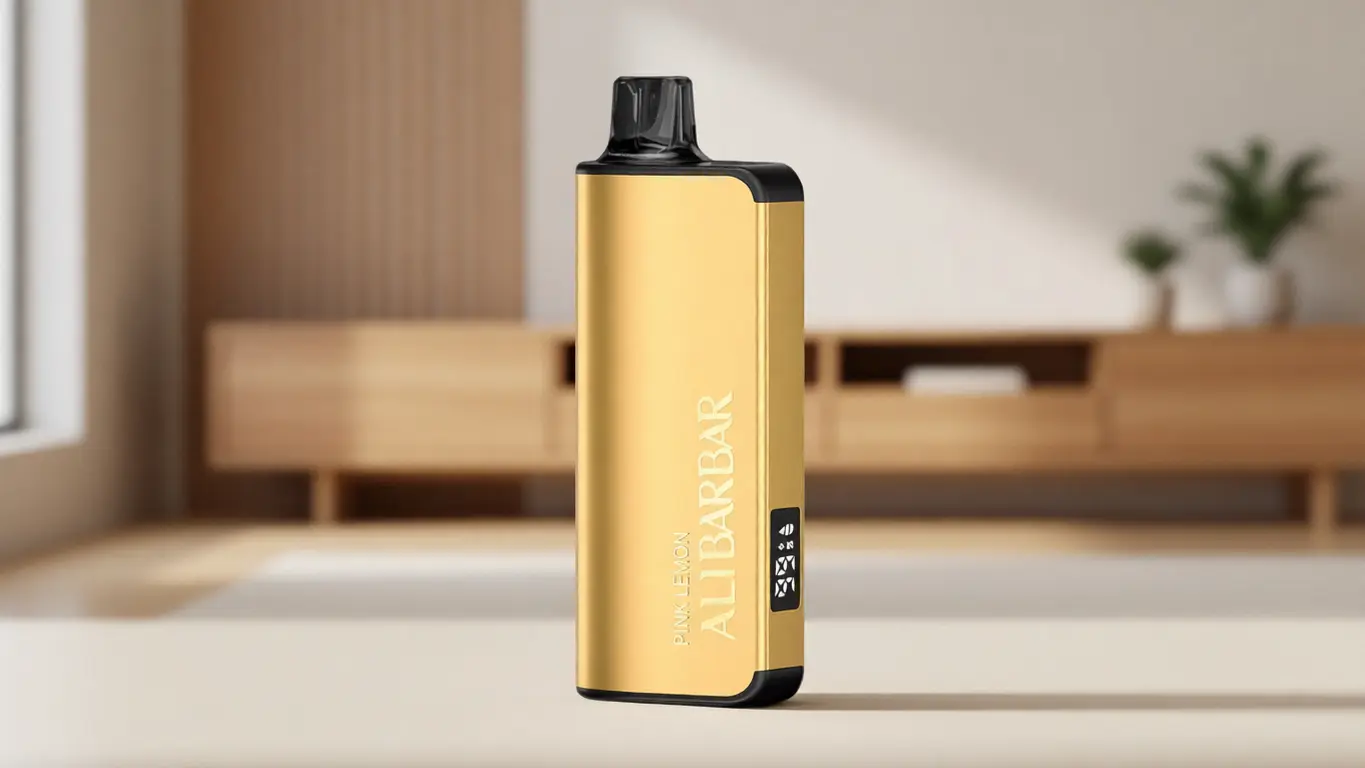
At OZVAPE Shop, we routinely hear from adult users who want to understand exactly where and under what conditions they can use the devices they purchase. While we are best known as a source of factory‑certified ALIBARBAR devices, the conversation always comes back to responsible use. That means knowing the rules before you step into a restaurant, not figuring them out after you have already made a mistake.
The Legal Landscape in Australia
The rules around personal electronic devices in restaurants are not set at a national level. They are embedded in state‑based public health legislation and, in many cases, local environmental health policies. The common thread is that wherever smoking is banned, the use of these devices is banned too — but the detail matters, and there are exceptions that are frequently misunderstood.
State‑by‑State Regulations
Every Australian state and territory now extends its smoking bans to include personal electronic devices in enclosed public places. Restaurants fall squarely into that category.
New South Wales: The Smoke‑free Environment Act 2000 prohibits the use of electronic cigarettes in all enclosed public places. Restaurants, cafés, and dining areas inside clubs or pubs are all covered.
Victoria: The Tobacco Act 1987 explicitly bans the use of electronic cigarettes in all places where smoking is not permitted, which includes all indoor dining areas.
Queensland: Under the Tobacco and Other Smoking Products Act 1998, electronic cigarettes cannot be used in any enclosed public place, including restaurants and licensed venues.
Western Australia: The Tobacco Products Control Act 2006 mirrors the same approach — if you can’t smoke there, you can’t use a device there.
South Australia: The Tobacco and E‑Cigarette Products Regulation Act 2019 applies the same prohibition to all smoke‑free areas.
Tasmania: The Public Health Act 1997 bans use of electronic smoking products in enclosed public places.
Australian Capital Territory: The Smoke‑Free Public Places Act 2003 defines smoking to include electronic cigarettes, so the same restrictions apply.
Northern Territory: The Tobacco Control Act 2002 also categorises electronic cigarettes as smoking products, meaning use in indoor dining areas is illegal.
In short, no matter where you are in Australia, pulling out a device inside a restaurant and using it is, in almost every case, a breach of the law.
Exceptions and Gray Areas
A small number of licensed premises have designated outdoor smoking areas where the use of electronic devices may be permitted, provided the area complies with local ventilation and signage rules. However, these areas are almost never the same as outdoor dining sections. A restaurant’s footpath seating, for instance, is generally not a designated smoking area and will usually be classed as part of the smoke‑free environment.
A more subtle point of confusion arises around devices that produce no visible vapour. Some adults assume that because nothing is being “smoked” or because no aerosol is visible, the legal prohibition does not apply. That assumption is incorrect. The legislation defines the act, not the output. If the device is activated and inhaled from, the act is covered by the ban — regardless of whether anyone else notices.
Why Vaping Is Treated Like Smoking in Public Places
Many users ask why the same regulatory framework is applied to their device as to combustible cigarettes. The reasoning is not based on a direct equivalence, but on the precautionary principle and on public health surveillance that remains incomplete.
Health Rationale
Regulators have consistently pointed to the absence of long‑term studies on the impact of secondhand aerosol. While the chemical profile of exhaled aerosol is different from tobacco smoke, it is not chemically inert. Public health bodies, including the Therapeutic Goods Administration, have taken the position that until the evidence base is settled, enclosed spaces where food is consumed should remain free of any exhaled aerosol. That precautionary logic is what drives the legislative consistency.
Secondhand Aerosol Concerns
There is also a practical dimension. Restaurant staff and patrons cannot be expected to distinguish between a device that produces visible vapour and one that does not. The legislative approach avoids that confusion by applying a blanket rule — an approach that, while imperfect from the user’s perspective, is extremely easy to enforce. For restaurant owners, the last thing they want is an argument between tables about what is and isn’t allowed.
What This Means for Vapers in Practice
Legislation aside, the daily reality for an adult who relies on a portable electronic device is that compliance is largely a matter of personal routine. You adapt your behaviour not only to the law, but to the social context, and you make decisions that keep friction to a minimum.
Restaurant Policies vs. Law
Even if you were in a jurisdiction that had not yet legislated a ban — which is not the case in Australia — most restaurants operate under private policies that prohibit the use of any such device. These policies exist to maintain a comfortable environment for all guests, and they are routinely communicated through signage or at the point of booking. Asking a staff member whether you can use your device is likely to generate a polite but firm “no,” and it is not worth the awkwardness.
Courteous Behavior
The most respected users are those who step well away from any dining area — outside the premises entirely — before using their device. If you are seated at a restaurant and need to step out, pocketing the device until you are some distance from the entrance, away from open windows, and downwind of any outdoor diners is the baseline of courtesy. The fact that you are not producing visible vapour does not exempt you from that courtesy, because the legal line is clear and the optics matter.
Common Misconceptions and Industry Observations
The conversation around where and when you can use a device is filled with half‑truths that consistently trip people up. Here are four of the most persistent.
“If it doesn’t produce smoke, it’s not smoking.”
Australians’ public health acts have been updated across every state to close this linguistic loophole. The language now covers “use” of an electronic device, not “smoking.” The distinction is already in the legislative text.
“If no one sees me do it, it’s okay.”
Restaurants are covered by workplace health and safety obligations. Even if no patron objects, an employee who notices can and often will request that you stop, because the business risks a fine otherwise.
“Outdoor dining means it’s allowed.”
Outdoor dining areas that are part of a restaurant’s licensed footprint are almost always classified as smoke‑free. The only outdoor areas where device use might be permitted are designated smoking sections with appropriate barriers and signage — and those are rarely where meals are served.
“Discreet devices are invisible to the law.”
A device that fits in the palm of your hand and produces no cloud does not make the act invisible. If you are observed drawing from it, you have violated the ban. The device’s size is irrelevant.
These observations are not about passing judgment; they reflect how the regulatory ecosystem actually works. The people who run into trouble are not the ones with the largest devices. They are the ones who assume the rules don’t apply to them.
Frequently Asked Questions
Q: Can I use my device at an outdoor restaurant terrace?
A: In Australia, no. Outdoor dining areas that are part of a licensed restaurant are smoke‑free by law. The terrace is legally the same as the indoor dining room for this purpose.
Q: What if the restaurant does not have a “No Vaping” sign, only a “No Smoking” one?
A: The sign is legally sufficient. Under current legislation, a ban on smoking extends automatically to e‑cigarettes.
Q: Can I use it in a restaurant bathroom?
A: No. Bathrooms are within the enclosed premises, and the ban covers all indoor areas accessible to staff or the public.
Q: Are there any Australian restaurants where vaping is explicitly allowed?
A: There is no legal mechanism for a restaurant to opt out of the smoke‑free laws. Even if an owner were sympathetic, allowing device use indoors would breach the law.
Q: What happens if I’m caught?
A: Penalties vary by state but can include on‑the‑spot fines for the individual and significantly larger fines for the business. Repeat non‑compliance can lead to prosecution.
Q: Could the laws change in the future?
A: It is possible, but the current legislative trend is toward stricter, not looser, controls. Any change would require a public health review and updated legislation.
Q: What should I do if I’m unsure about a specific venue?
A: Assume the ban applies. If you want absolute clarity, call ahead and ask about their policy — but be prepared for a firm no. The safest course is always to step well clear of the premises.
Q: Is it legal to use a device in my car while in a restaurant car park?
A: If the car park is part of the restaurant property and you are within the smoke‑free zone, the ban may still apply. If you are on a public road, you may be legally permitted, but you should check local council regulations around smoking in vehicles if minors are present.
Q: Does the ban apply to devices that don’t vaporise any substance?
A: The legislation typically defines the offence as using the device, regardless of what it contains. Even if the device is empty, activating it in a prohibited area is likely still against the law.
Q: Where can I get more information about compliant use?
A: Your state health department website is the most authoritative source. Retailers that prioritise responsible use, such as OZVAPE Shop, can also provide general guidance, but official government resources should always be your primary reference.
Conclusion
The short answer to “Can you vape in restaurants?” is no. The Australian legal framework treats the question as settled, and the penalties for getting it wrong can be inconvenient for the individual and serious for the venue. Beyond the law, courtesy and common sense point to the same conclusion: a restaurant is a shared space where the expectation of clean air is firmly established.
What makes the difference between a friction‑free experience and an awkward one is knowledge. When you know where the boundaries are and why they exist, you can plan your day without guessing. At OZVAPE Shop, we believe that providing clear, factual information is part of what makes a retail relationship trustworthy. Informed adults are better equipped to enjoy their devices within the framework the law sets out — and to respect the people around them in the process.
The right choice is not the one that pushes the edge of the envelope. It is the one that aligns with your actual routine and keeps your interactions in public spaces straightforward and calm.