
VAPE FAQs
What Is A Juul Vape?

Jul
Understanding a Cultural Artifact: What the Juul Device Actually Is
Walk through any major metropolitan area — Sydney, Melbourne, Brisbane — and you will see them. Sleek, matte-finished rectangles, no larger than a USB memory stick, slipped discreetly into a palm or pocket. For millions of adult users, Juul became the first device that made the shift away from combustible tobacco feel not like a compromise, but like an upgrade in physical elegance and behavioural discretion. Yet for all its cultural visibility, the engineering decisions that made Juul so influential are rarely examined with the neutrality they deserve. This article unpacks what a Juul really is, how it works, why it spread so rapidly, and — crucially — what informed users should understand when evaluating any closed-system pod device today, whether purchased from a convenience shelf or through a specialist channel like OZVAPE Shop that carries factory-certified alternatives such as the ALIBARBAR range.
The Engineering Under the Shell: What Defines a Closed Pod System
Juul did not invent the pod-based architecture, but it refined it into an object whose ergonomic and electronic decisions set a template that competitors would follow or deliberately diverge from for years. To understand what a Juul vape is, you must first understand the engineering hierarchy that governs all devices in its category.
Temperature Modulation and the Nicotine Salt Revolution
Traditional e-liquid freebase formulations produce a harsh throat sensation at higher concentrations. Juul’s foundational insight was to pair a temperature-regulated heating element with a benzoic acid-treated nicotine salt formula. This chemistry permitted higher nicotine delivery per puff while maintaining a smooth draw — a sensory profile closer to what a long-term tobacco user expects. The heating element never exceeded a narrow temperature window, which meant the device did not burn through liquid unpredictably and delivered an almost identical puff from the first draw to the last.
For the user, this translated into something simple: predictability. No need to adjust power levels. No surprise dry hits. The device operated within a closed loop, and that loop was opaque by design.
Power Architecture and the Silent Battery Windows
Juul’s battery, at roughly 200 mAh, looked modest on paper. But the device’s low-wattage output — hovering around 8 to 10 watts depending on charge state and pod resistance — stretched those milliamp-hours across a full day of intermittent use for many adults. The device featured a small LED on the front fascia: white when active, green when charged above a threshold, yellow at middling charge, and red when critically low. No screen. No button to cycle through menus. The entire interface could be learned in thirty seconds.
The trade-off was equally clear: once the battery died, the device was a paperweight until it met a proprietary magnetic charging dock. The dock itself was small enough to lose easily, and because Juul omitted passthrough charging (the ability to use the device while connected to power), a dead battery meant a forced pause. This design decision — deliberate, not accidental — created a usage rhythm that rewarded planning and penalised spontaneity.
Physical Durability and the Unibody Enclosure
Juul’s aluminium unibody shell, machined and then anodised, gave the device an almost jewellery-like density. It withstood keys, coins, and the type of casual drops that destroy cheaper plastic housings. The pod clicked into the body with an audible, magnetic-assisted snap that provided reassuring physical feedback. The mouthpiece contour was flat and broad, quite different from the cylindrical cigarette mimicry that older devices preferred. This flat profile was engineered to rest naturally between two fingers — the same unconscious grip a person uses when holding a pen.
However, the anodised finish was not impervious. Extended pocket carry against rough fabric could gradually polish the matte surface to a semi-gloss patina, revealing the metal beneath. Cosmetic, yes, but for a device whose identity was so tightly bound to aesthetics, this slow visual aging mattered to certain users.
The Sealed Lifecycle: No Refills, No Replacements
Juul pods were hermetically sealed plastic capsules with an integrated coil and cotton wicking system. Users could not open them, refill them, or replace the heating element. When the liquid was exhausted, the entire pod was discarded and a new one clicked into place. This architecture simplified the user experience to an absolute minimum: remove, insert, draw.
The downstream implications were economic and environmental. The per-pod cost, amortised over the liquid volume inside, was high relative to open systems. Waste generation was non-trivial. And because pod compatibility was proprietary, the device locked users into a single consumables ecosystem. For adults seeking a straightforward experience, this was a feature; for those wanting to adjust nicotine levels, experiment with flavour profiles, or manage long-term costs, it was a significant design constraint.
Applying These Criteria to Real-World Choices: Juul and Its Modern Alternatives
No device exists in isolation. Even for someone satisfied with a Juul, understanding how contemporary alternatives address — or deliberately do not address — the same engineering criteria is how a mature selection decision forms.
The Juul Template: Where It Excelled and Where It Showed Friction
In the late 2010s, Juul’s tight integration of hardware and liquid chemistry was unmatched. The device simply worked, and for adults transitioning away from cigarettes, that reliability was non-negotiable. But the cracks in the template became visible over time. Battery reporting was unreliable: a yellow indicator could mean 40% remaining or 10%, and the device rarely warned before cutting out. The charging solution was maddening. Pod availability in certain markets became inconsistent. And the sealed design meant that a user who finished a pod at 10 a.m. carried an inert plastic brick for the rest of the day unless they had spares.
These are not failures of quality. They are the consequences of a specific design philosophy — one that prioritised simplicity above flexibility, and consistency of experience above user-accessible feedback.
Where the Market Moved: The Rise of Transparent, High-Capacity Pod Systems
Modern pod systems — including the ALIBARBAR INGOT series, accessible through specialist retailers such as OZVAPE Shop — have grown out of a direct response to the frictions Juul’s architecture created. These devices typically incorporate:
Digital or multi-tier battery indicators that remove guesswork.
Higher liquid capacities (often 10 mL or more) that reduce the frequency of empty pods during the day.
Rechargeable architectures with Type-C ports that eliminate proprietary magnetic dongles.
Mesh coil designs that improve heat distribution and extend the window of consistent flavour delivery.
Transparent or partially translucent reservoirs so users can see remaining volume without removing the pod.
The ALIBARBAR INGOT 9000 and INGOT 15000, for example, are designed around the insight that adults wanted Juul-level predictability but with modern power management and clearly visible capacity indicators. The devices are sealed for simplicity, but they communicate their status unambiguously. No hidden battery tremors. No guessing.
Trade-offs That Informed Buyers Should Acknowledge
Switching from a miniaturised device like Juul to a high-capacity alternative entails its own compromises. The ALIBARBAR INGOT 15000, while still pocketable, is noticeably larger and heavier than a Juul. The mouthpiece profile differs. The aesthetic vocabulary shifts from minimalist anonymity to a more functional, technical presence. For some, this will be a worthy trade. For others, the original Juul form factor will remain the platonic ideal of discretion. Neither choice is incorrect; they simply map onto different daily realities.
A Practical Framework for Evaluating Any Closed Pod Device
Rather than ask “Is X better than Juul?”, which is a question that collapses under its own ambiguity, apply the following diagnostic sequence to any device you consider:
Status Transparency: Can I determine remaining power and remaining liquid at a glance, or do I need to rely on memory and the device’s whim? If not, I will carry a backup out of caution — doubling my carried weight.
Charging Standardization: Does the device charge via a universally available cable, or am I tethered to a proprietary accessory? If I lose the charger, how quickly can I source a replacement?
Thermal Consistency: Does the device use temperature-regulated output or mesh coil architecture, or does its performance degrade noticeably during extended use? Check for reported complaints of burning or faded delivery toward the pod’s end-of-life.
Lifecycle Cost and Modularity: Am I buying a completely sealed unit that I discard when the integrated battery degrades, or a device with a separate power section that can be recharged many times? Over three months, what is the total cost including consumables?
Supply Chain Certainty: Can I obtain replacement pods or equivalent consumables from a source that verifies factory origin, or am I relying on uncertified inventory of uncertain provenance? An authorised local retailer with documented sourcing reduces supply-chain opacity.
Most dissatisfaction with pod devices traces back to ignoring one of these five variables while fixating on a single bright-line specification — puff count, draw activation sensitivity, or external appearance. Specifications mean nothing when the device goes dark at 2 p.m. and the user cannot diagnose why.
Common Selection Errors and What the Industry Understands That the User Often Misses
Error 1: Confusing Category Terminology with Technical Specifications
The term “vape” is a catch-all that collapses disposables, rechargeable pod systems, open-system mods, and even heated tobacco products into a linguistic mush. A Juul is a specific category: a rechargeable, closed-pod, temperature-limited device designed for nicotine salt delivery. Comparing it to an open-system sub-ohm mod is a category error; they are engineered for entirely different inhalation profiles and user expectations. Always define the category before comparing devices.
Error 2: Assuming Familiar Shape Means Familiar Internals
Many companies have released “Juul-shaped” devices that outwardly mimic the rectangular, flat-mouthpiece aesthetic. Internally, the coil material, wicking design, power regulation, and liquid formulation may bear no resemblance. Visual similarity is the least reliable signal of performance integrity. Look for documented coil materials (often nichrome or mesh), known resistance ranges, and declared liquid volume rather than external silhouette.
Error 3: Ignoring the Charging Ecosystem
Proprietary charging solved a problem for the manufacturer — it allowed a small device with no port opening and better liquid sealing. But it transferred a burden onto the user’s daily logistics. When evaluating any closed system, ask: “If I misplace the charger on a Tuesday, can I still use the device on Tuesday evening?” If the answer is no, the device demands a level of organisational discipline that not all lifestyles accommodate.
Error 4: Assuming Device Failure Is the Device’s Fault
A significant proportion of user-reported “defects” are actually connectivity issues at the pod-terminal interface. Pocket lint, debris, and condensed moisture can interrupt the circuit between pod and battery. A simple clean of the contacts with a dry cotton swab resolves many malfunctions. Users who treat the device as maintenance-free often discard functional units prematurely.
Industry Observation: The Shift Toward “Informed Simplicity”
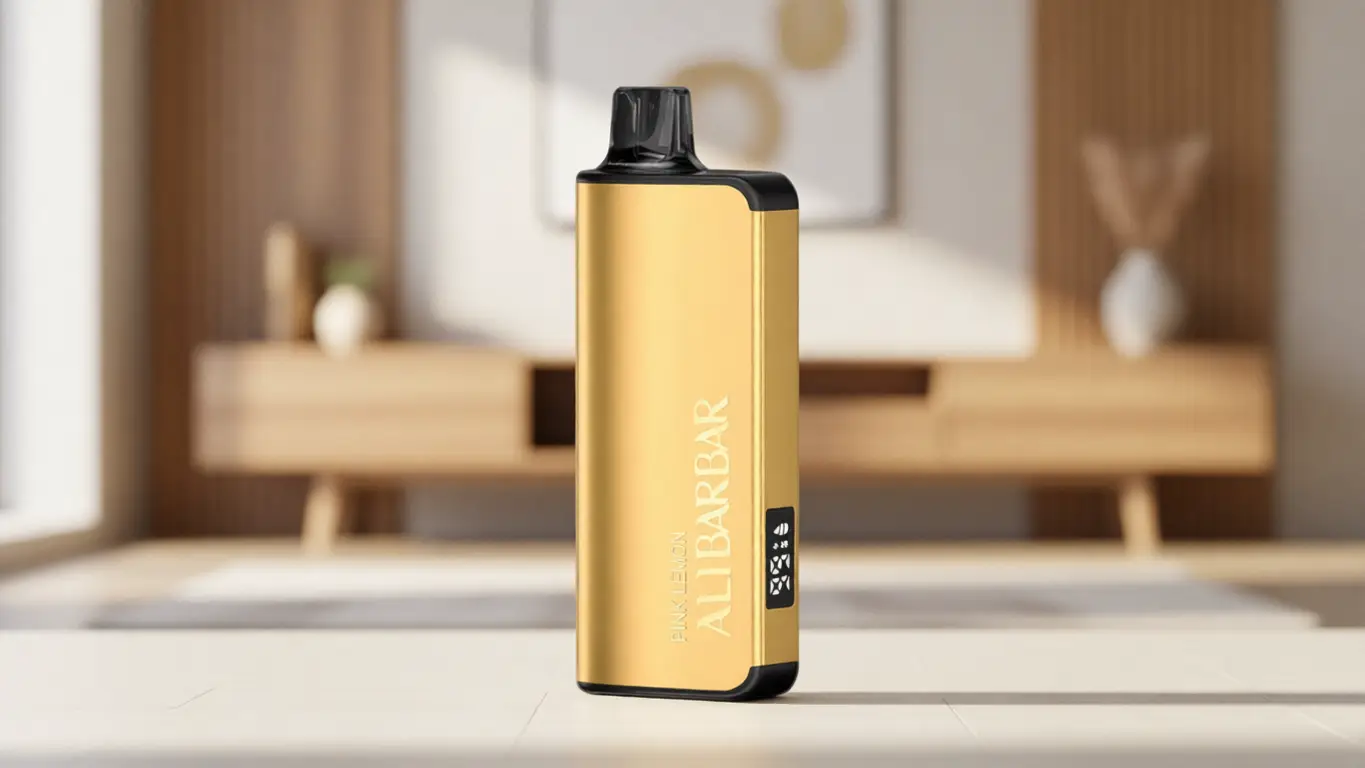
The maturation of the personal electronic device market has moved beyond offering endless adjustable parameters. The current engineering consensus — visible in the ALIBARBAR INGOT and Ice Adjust series — is toward devices that hide complexity behind a simple exterior while providing clear, unambiguous status data to the user. This is not a retreat from sophistication; it is an acknowledgment that the most valuable information for an adult user is the answer to the question “Is this device ready for the next few hours, or should I reach for a backup?” Every design decision flows from whether that question can be answered without ambiguity.
Frequently Asked Questions
Q: Is a Juul device rechargeable?
A: Yes. The battery section is rechargeable via a proprietary magnetic USB dock. It does not support passthrough use while charging.
Q: Can I refill a Juul pod?
A: No. The pods are ultrasonically sealed with an integrated coil and are not designed to be opened or refilled. Attempting to do so risks leakage and erratic performance.
Q: How does nicotine salt differ from freebase nicotine?
A: Nicotine salt formulas include an acid (commonly benzoic) that lowers the pH, creating a smoother sensation at higher concentrations. This enables higher per-puff delivery without the throat harshness associated with freebase nicotine.
Q: What is the typical battery life of a Juul?
A: Battery capacity is approximately 200 mAh, providing around 100–150 puffs under typical conditions before requiring a recharge. Heavy users may need to recharge several times daily.
Q: How does OZVAPE Shop ensure the devices it sells are authentic?
A: OZVAPE Shop sources exclusively from authorised distribution networks and retains factory documentation for traceability. Inventory verification occurs before shipment.
Q: Are there larger-capacity alternatives that maintain the simplicity of a Juul?
A: Yes. Devices in the ALIBARBAR INGOT series provide sealed, draw-activated operation with liquid capacities up to 15,000 puffs, Type-C charging, and clear status indicators, available through OZVAPE Shop.
Q: What should I do if a pod device suddenly stops activating?
A: Inspect the electrical contacts on both the pod and the battery body for lint, moisture, or residue. Clean gently with a dry cotton swab. If the issue persists, test with a fresh pod to isolate whether the fault lies in the pod or the battery section.
Q: How do I know when a pod is truly empty, not just experiencing a wicking delay?
A: Visual inspection through a transparent reservoir is the only reliable method. For opaque pods like Juul’s, the onset of diminished output or a slight change in draw character signals that the pod is approaching depletion — but this signal is unreliable. Carrying a replacement is the standard user strategy.
Q: Does OZVAPE Shop ship to all Australian states?
A: Yes. Dispatch occurs from within Australia, with standard and express options available. Same-day handling is provided for orders received before the cutoff time on business days.
Q: What is the expected operational life of a rechargeable pod battery?
A: Most lithium-ion cells in this category are rated for 300–500 full charge cycles before capacity degradation becomes noticeable in daily use. With partial daily charging, a device may last well over a year.
Where the Information Leaves You
The Juul device is not simply a piece of consumer electronics; it is a case study in how a precisely engineered closed system can reshape an entire category. Its influence is written into the design language of nearly every pod device that followed, even those that deliberately discarded its constraints. Understanding what Juul was — its temperature-control rigour, its proprietary ecosystem, its deliberately minimal interface — equips you with the vocabulary to evaluate anything that claims to be an improvement.
For adult users who have grown weary of ambiguous battery indicators, missing chargers, and pods that expire without warning, the market has moved on. Transparent, high-capacity, clearly communicative alternatives now exist without sacrificing the draw-activated simplicity that made the original template so appealing. A specialist retailer like OZVAPE Shop that curates these alternatives — and documents their provenance — provides a path toward a device that matches your actual daily rhythm rather than a device that demands you reorganise your day around its limitations.
Informed users don’t choose the device with the loudest marketing. They choose the one whose design philosophy aligns with the texture of their own life. That alignment rarely announces itself through a single specification; it reveals itself after a week of ordinary mornings, commutes, and late afternoons, when the device simply does its job and the thought of it fades into the background.