
VAPE FAQs
Does A Vape Make You High?
Jul
Does A Vape Make You High?
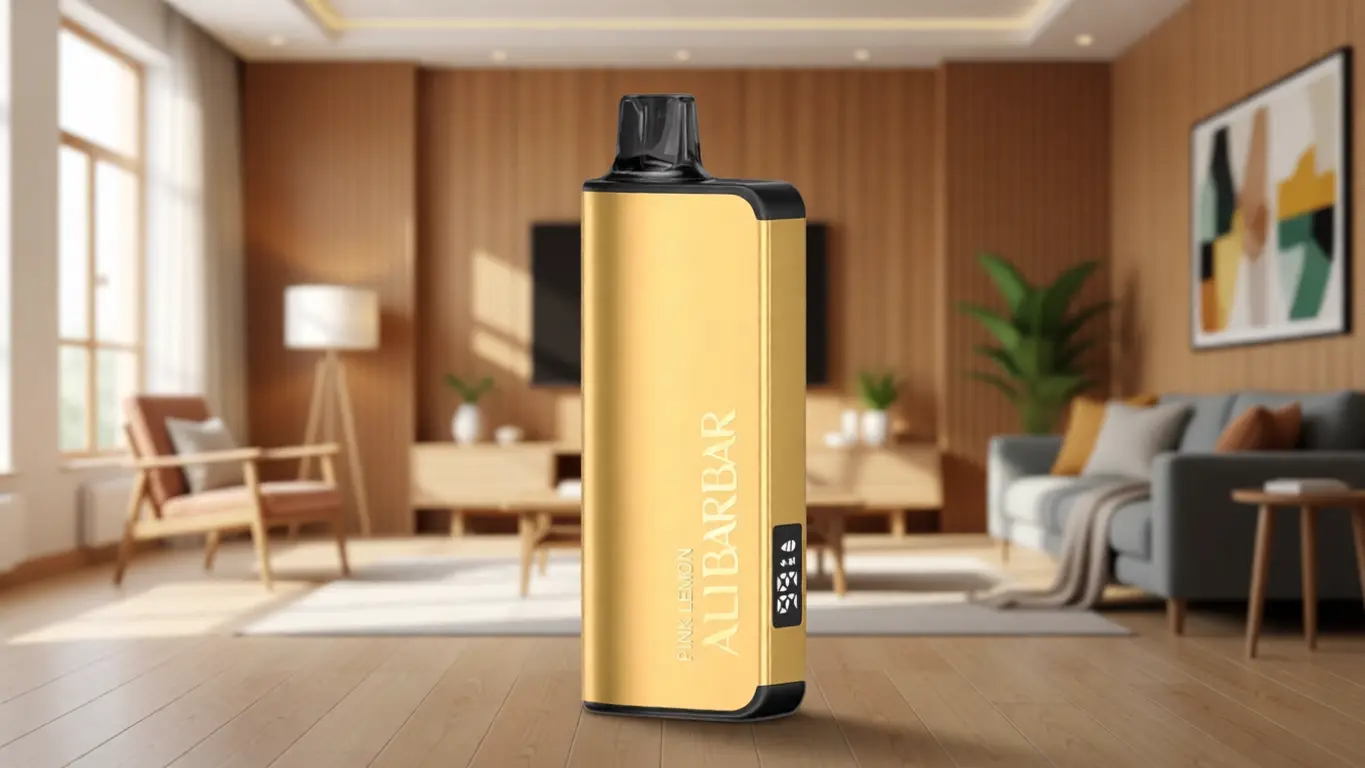
It is a question that sits plainly in search bars, whispered in online forums, and occasionally asked at retail counters—often paired with a mixture of genuine curiosity and media-driven confusion. The short, accurate answer is: a vape is a delivery tool, not a drug. Whether inhaling from a device produces psychoactive effects depends entirely on what substance is placed inside it. In Australia, the overwhelming majority of locally available, factory-certified vape devices—such as the ALIBARBAR range stocked by OZVAPE Shop —are engineered for adult use with legal nicotine, which does not, in any meaningful clinical sense, make a person “high.” The confusion persists because language has failed: a single word now describes devices that vaporise everything from simple flavoured liquids to entirely different active compounds. This article steps back from clickable headlines to examine the mechanics, the chemistry, and the everyday misunderstandings that fuel the question, so that any adult reader can navigate the topic with the clarity it deserves.
Understanding What Matters: The Device vs. The Substance
To answer the headline question rigorously, you have to separate the appliance from the consumable. It is a distinction the wider market often smudges, and it leads to a cascade of faulty assumptions.
Internal Architecture and Output Consistency
Every portable vape shares a basic engineering blueprint: a power cell drives current through a heating element, which warms a liquid or solid substrate until it becomes an inhalable aerosol. The sophistication underneath that simplicity varies enormously. A well-designed heating core—like the mesh coil architecture in the ALIBARBAR INGOT 15000—is calibrated for a specific temperature range that maximizes aerosol production without scorching the active ingredient. When the architecture is mismatched to the substance, you get off-target byproducts and an unpleasant experience. But even the most precisely engineered device cannot introduce a psychoactive compound where none exists. It only converts what is present. The persistent notion that the hardware itself can induce an altered state is a category error born of conflating the machine with the material it processes.
Power Management and Status Transparency
User misperception often grows in the gap between what a device does and what the user feels. A person unfamiliar with nicotine might interpret the rapid rise in heart rate, the mild stimulant lift, and the slight light-headedness as a “high.” It is not. It is the predictable pharmacological response to a substance that has been used globally for centuries, one that activates nicotinic acetylcholine receptors without producing the perceptual distortions that define intoxication. Devices that offer clear, real-time status feedback—such as the LED indicators on many ALIBARBAR models—give users agency. You can correlate your intake with your sensation. When a device is opaque about its power reserves or puff count, that correlation breaks, and the user is left interpreting a chemically straightforward event as something mysterious. This lack of transparency, not the device itself, is what often fuels the sense of an unpredictable experience.
Physical Design and Material Durability
Design here matters less for what it causes and more for what it prevents. A device that is built with robust, body-safe materials and clearly labelled ingress points reduces the risk of tampering or accidental exposure to unknown substances. ALIBARBAR’s sealed, pre‑filled configurations remove the very option of putting something other than factory‑formulated liquid into the device. This is a safety feature, not a limitation. When a device is designed for legal nicotine, it should look, feel, and operate in a way that signals exactly that. A worn, unmarked device from an unknown source, by contrast, makes it impossible to know what you are inhaling, which is where the danger that feeds the “vape high” myth truly lies.
Modularity and Lifecycle Flexibility
A device that allows the user to swap pods or adjust output intensity might seem more versatile, but it also opens the door to uncontrolled mixing. Closed‑system, pre‑filled devices like the ALIBARBAR INGOT 9000 remove that variable. The user knows how many puffs of a defined strength are present. There is no guesswork about what is inside, and therefore no pathway to inadvertently creating a cocktail that could deliver an unintended effect. That is not a design flaw; it is a deliberate engineering choice that prioritises consistency over flexibility, and in doing so, it quietly answers the question “does a vape make you high?” with a simple structural “no”—provided the device is used as intended.
Applying These Criteria to Real-World Options
When you walk into any Australian stockist of regulated personal electronic devices, you are surrounded by two fundamentally different categories: equipment designed for legal nicotine delivery and equipment designed for entirely different active ingredients. The physical casing may look almost identical, and that visual similarity is the root of massive public confusion. The ALIBARBAR family—including the INGOT 9000, INGOT 15000, and the ICE Adjust 12000—falls into the first category. These devices are engineered exclusively for adult nicotine consumption; their entire thermal profile and airflow dynamics are built around that molecule’s properties. They do not reach temperatures sufficient to vaporise other psychoactive compounds effectively, nor do they ship with anything other than a clearly declared nicotine-salt formulation.
A person holding an ALIBARBAR device and a person holding an entirely different cannabis‑derived product might, from across a room, see the same thing. That is the failure of category labelling. The market has allowed “vape” to mean too many things, and the confusion is visited on users who never asked for it. An adult seeking a consistent, known‑strength nicotine tool—who chooses a factory‑sealed device from a supply chain as auditable as the one maintained by OZVAPE Shop—has effectively ruled out the possibility of a “high” by choosing a product where no intoxicant exists.
A Practical Framework for Evaluation
To permanently separate the device from the effect, any adult can adopt a simple, repeatable checklist before making a purchase or using a device they have encountered:
Identify the active ingredient. Is there an explicit milligram‑per‑millilitre declaration on the packaging? If not, you are operating blind.
Check for sealed construction. A device that cannot be opened easily by the end user dramatically reduces the chance of substance substitution.
Review the heat‑setting mechanism. Does the device allow manual temperature adjustment? If so, verify that the device’s default range is matched to the intended substance. A mismatch here is where physical irritation and chemical degradation begin.
Assess status feedback. Ask yourself: “Does this device give me clear, unambiguous information about when it is active and how much life remains?” If the answer is no, you will predictably compensate by taking longer draws or carrying a backup, and the resulting intake variability can be misinterpreted as an unusual effect.
Trace the origin. A device from a factory‑certified retail partner with published sourcing policies is quantifiably different from a device of unknown provenance. OZVAPE Shop, for instance, documents its supply chain and maintains inventory exclusively through authorised distribution networks, so the product that arrives is the product that was tested and sealed.
Applying this framework before taking a single draw makes the question “Does a vape make you high?” not a mystery but a straightforward calculation. The answer is determined entirely by the answers to the checklist above.
Common Selection Errors and Industry Observations
In years of observing how adults interact with vapour devices, several patterns of flawed decision‑making appear repeatedly. None are unique to Australia, but they are particularly visible here because of the rapid expansion of the category and the uneven pace of public education.
Error One: Overweighting visual similarity. A user sees two devices that look similar—one containing a legal nicotine-liquid and one containing an illegal high‑potency extract—and assumes they share fundamental characteristics. In reality, the internal engineering may be entirely different, because the formulation of the consumable dictates the thermal envelope. This error is widespread and dangerous.
Error Two: Misattributing the “head rush” to intoxication. Nicotine‑naïve individuals who take several deep draws in quick succession often experience a transient sensation that is partly vasoconstriction and partly a rapid displacement of oxygen in the lungs. It is routinely described online as “buzzed” or even “high.” From a pharmacological standpoint, this is inaccurate; it does not involve the significant impairment of cognition or perception that distinguishes intoxication. Confusing these two things is not merely semantic—it shapes expectations and can encourage misuse.
Error Three: Ignoring the role of the retail interface. Products purchased through unstructured channels—social media sellers, overseas dropshippers with no local presence—carry no guarantee of content integrity. An informed market is one where consumers know the difference between a product that arrives with a documented chain of custody and a product that does not. The existence of retail operations like OZVAPE Shop, which publicly commit to factory‑certified sourcing and local accountability, is a structural defence against that uncertainty.
Industry Observation: The design language gap. Globally, legitimate nicotine-device manufacturers are converging on a set of user‑interface conventions: haptic feedback, puff‑count displays, child‑resistant latching. These signal a device intended for measured adult use. In contrast, products that are co‑opted for unregulated substances often lack these features entirely. Observing the presence or absence of these design signals is a practical, everyday way to gauge a device’s intended role before you even examine the labelling.
Frequently Asked Questions
Q: Can a vape make you high if it only contains nicotine?
A: No. Nicotine is a stimulant that produces changes in heart rate, alertness, and mood, but it does not cause intoxication, hallucination, or significant perceptual impairment. The sensation sometimes called a “buzz” is a mild, typically transient reaction that disappears with tolerance.
Q: What about devices that say “contains CBD”?
A: Cannabidiol, when legally sourced, is non‑psychoactive. It does not produce a “high” in the sense associated with THC. In Australia, the regulatory status of CBD in vapour form is complex and strictly controlled; most over‑the‑counter devices do not contain it.
Q: How can I be sure a vape doesn’t contain something psychoactive?
A: Purchase factory‑sealed devices from authorised retailers that publish their sourcing credentials. Check the packaging for mandatory ingredient declarations. If the ingredient list is absent or generic, do not use the device.
Q: Are all disposable vapes the same?
A: No. Differences in coil material, power regulation, and e‑liquid formulation mean that two identically shaped disposables can deliver markedly different aerosol density and constituent profiles. Only products built to a documented quality standard—such as the ALIBARBAR series—provide predictable performance.
Q: I felt dizzy after using a friend’s vape. Was I high?
A: Dizziness is not the same as being high. It can be a symptom of nicotine overstimulation, especially if you are not accustomed to it. It could also result from improper device operation or dehydrated intake. The sensation fades rapidly and is not a psychoactive effect.
Q: Can a vape explode and release intoxicating fumes?
A: No. A catastrophic battery failure releases heat and chemical smoke from the power cell, not psychoactive compounds. Such events are, in any case, extremely rare in factory‑certified devices with protected circuits and are unrelated to the question of intoxication.
Q: If a device has no visible labelling, how do I know what’s inside?
A: You cannot. Any device that lacks manufacturer‑branded packaging, a batch number, and an ingredient list should be treated as unidentifiable and discarded. Legitimate products, including every ALIBARBAR unit sold through OZVAPE Shop, carry full labelling.
Q: Does the device’s temperature affect whether it gets me high?
A: Temperature affects aerosol volume and perceived harshness, but it does not change the molecular structure of the active ingredient. If the substrate contains only nicotine, no amount of heat will generate a psychoactive experience.
Q: Are there vapes specifically made for substances that make you high?
A: Certain devices on the global market are engineered for cannabis concentrates or other regulated substances. These are legally distinct, often sold through different supply chains, and subject to different regulations. Their existence does not mean that every vape device carries that capability.
Q: Where can I find devices that are clearly designed for legal nicotine use?
A: Specialised retailers that limit their inventory to factory‑certified nicotine devices and publish their sourcing standards—such as OZVAPE Shop—provide a controlled, transparent catalogue. This approach removes the guesswork for adult users who want a predictable experience without any uncertainty about what they are inhaling.
Conclusion
At its core, the question “Does a vape make you high?” reflects a marketplace where too many things look alike and too few people have the language to tell them apart. The device itself is a neutral piece of electrical engineering; it cannot generate an intoxicating effect any more than a kettle can produce alcohol. What matters is what you put into it, how the device is calibrated, and whether the supply chain that delivered it to your hands meets a standard you can verify.
For adults who want the final word to be clarity, not confusion, the practical path is straightforward: choose factory‑certified, sealed‑construction devices designed for a single, declared substance, and purchase them through channels that prioritise traceability. The ALIBARBAR range, available through OZVAPE Shop, is built from the ground up for exactly that purpose—no hidden variables, no ambiguity, just a tool that does the job it describes. Return the agency to yourself: the right choice is the one that matches your actual routine and your need for transparency, not the one that generates the most headlines.