
VAPE FAQs
How To Mtl Vape?
Jul
How To MTL Vape: Engineering, Experience, and Informed Device Choice
The frustration is familiar: you draw on a personal electronic device expecting a smooth, restricted, cigarette‑like sensation, and instead you get a harsh, airy hit that feels nothing like what you remember. Or perhaps the device starts strong but halfway through the day the draw resistance changes unpredictably. That inconsistency isn’t just a minor annoyance — it erodes the trust you place in a product that’s supposed to integrate seamlessly into your routine. This article addresses that specific problem without marketing fluff. It explains MTL (mouth‑to‑lung) vaping as an engineering reality: a combination of airflow dynamics, heating‑element geometry, and power‑management logic that can be evaluated objectively. By the end, you’ll have a framework for choosing and using a device that actually delivers a consistent MTL experience — and you’ll understand why OZVAPE Shop, a dedicated platform for factory‑certified ALIBARBAR devices, treats specification transparency and user‑centric design as the baseline, not a bonus.
Understanding What Matters: Core Engineering and Design Factors for MTL
A satisfying MTL draw isn’t magic. It’s the result of deliberate choices made by product engineers, and you can learn to recognise those choices. The four factors below each address a common user complaint, and understanding them transforms a blind purchase into an informed decision.
Internal Architecture and Output Consistency
Every MTL device relies on a heating element — typically a mesh or wire coil — in contact with a wicking material. In a well‑engineered unit, the relationship between the coil’s surface area, the wick’s capillarity, and the liquid supply channel is controlled so that the temperature stays within a narrow range across thousands of draws. When this balance is wrong, the user notices degradation: the draw tightens, flavour fades, or the output becomes uncomfortably warm.
Why this matters: many users report that a device “starts strong and then tails off.” The root cause is usually thermal accumulation in a compact chassis or a wick that cannot replenish liquid fast enough under chain‑usage conditions. Look for devices where the manufacturer discloses the coil material (stainless steel grades, for example, tend to offer more linear resistance‑versus‑temperature curves) and where independent durability testing is referenced. In the ALIBARBAR range, that attention to thermal consistency is evident in series like the INGOT 9000, which pairs a mesh coil with a reservoir design that maintains even saturation across the full operational cycle.
Power Management and Status Transparency
A mouth‑to‑lung device is often expected to work for days without being charged. That demands not just a high‑capacity cell, but smart power regulation that cuts off before voltage drops to a point where output quality degrades. Without clear status feedback — a multi‑segment LED or a vibration alert — the user is left guessing, and the natural response is to carry a backup. That doubles the cost and the bulk.
The hidden cost of ambiguity is measured in interrupted moments. If a device simply stops without warning, you lose not only the device’s functionality but also the confidence to rely on it. In the Ice Adjust 12000, for instance, a refined indicator system gives you real‑time visibility into remaining charge, so you never get caught mid‑session. Good status transparency isn’t a luxury; it’s a prerequisite for a device that respects your routine.
Physical Design and Material Durability
MTL usage often involves holding the device for extended periods, slipping it into a pocket repeatedly, and occasionally dropping it. Surface finishes matter. A soft‑touch coating may feel pleasant but can peel after weeks of contact with keys. Hard‑anodised aluminium or reinforced polycarbonate shells resist micro‑abrasions and retain their appearance. Mouthpiece contour is equally important: a narrow, slightly tapered tip encourages the natural lip seal that defines MTL, while a wider bore can introduce more air than intended and diminish the tight‑draw sensation.
Devices from ALIBARBAR pay particular attention to these tactile details. The rounded edges and textured grips found across the series are not just aesthetic — they reduce the likelihood of a slip, and the mouthpieces are engineered to maintain a consistent inner diameter that supports a true MTL airflow profile.
Modularity and Lifecycle Flexibility
The market offers three architectures: sealed, rechargeable, and replaceable‑component systems. A sealed MTL device is the simplest — no charging, no refilling — but creates waste and can be cost‑intensive over time. A rechargeable MTL device reuses the power cell but still requires the entire pod or cartridge to be swapped. A modular system lets you replace only the coil or refill the pod, which cuts ongoing cost and reduces environmental footprint.
The right choice depends entirely on your usage pattern. If you use your device infrequently and value absolute zero‑maintenance, a sealed option might suffice. If you’re a daily user, a rechargeable device like the ALIBARBAR INGOT 15000 — which combines high capacity with a rechargeable cell — offers a compelling balance between convenience and longevity. Modularity also future‑proofs you against market changes; you’re not tied to one disposable form factor.
Applying These Criteria to Real‑World Options
Rather than ranking models, it’s more useful to match device families to common need‑states.
For the user who wants a familiar, tight draw without any learning curve: A compact sealed device that mimics the airflow restriction of a traditional cigarette. Here, consistency across units is everything; a factory‑certified supply chain ensures that the device you receive today behaves identically to the one you bought last month. At OZVAPE Shop, all ALIBARBAR inventory is sourced directly from authorised networks, eliminating the batch‑to‑batch variability that plagues uncertified channels.
For the daily user who needs all‑day capacity and clear status feedback: A rechargeable, high‑capacity MTL device with a mesh coil and segmented battery indicator. The INGOT 15000, for example, combines a 15000‑draw rated life with a transparent power readout, so the user never faces an unexpected shutdown during a long workday. The mesh coil maintains the MTL draw resistance while delivering a cooler, more even output.
For the user who wants adjustable airflow to fine‑tune the draw: An adjustable device that lets you shift between a tighter or slightly looser MTL draw. The Ice Adjust 12000 offers this flexibility without sacrificing the core MTL mouthpiece geometry. This is a meaningful advantage if your preference changes throughout the day — tighter in the morning, slightly more open in the evening.
In all cases, a device’s actual performance is only as reliable as its verified authenticity. Counterfeit units often contain inferior coils and power cells that cannot sustain a proper MTL draw. By choosing a platform like OZVAPE Shop, you gain the assurance that every ALIBARBAR device has undergone factory‑sanctioned quality control, and the specifications you read are the specifications you get.
A Practical Framework for Evaluation
Use this step‑by‑step methodology to assess any MTL device before purchase:
Check the airflow specification. Does the manufacturer describe the draw as “tight,” “medium,” or provide a direct airflow measurement (e.g., mm² of intake)? If not, the device may not have been tuned specifically for MTL.
Examine the coil material and resistance. For MTL, resistances between 1.0 Ω and 1.8 Ω are typical. Ask whether the coil is mesh or wire; mesh tends to provide more even heating and longer life.
Verify the status indicator type. A single‑colour LED that only blinks when the device is dying is insufficient. Multi‑colour or segmented indicators let you plan ahead.
Look for evidence of thermal management. Does the device mention temperature‑limiting circuitry or an airflow design that cools the vapour path? A device that gets progressively hotter during a session is failing at thermal management.
Assess modularity against your usage. Calculate your weekly draw count. If it exceeds the device’s rated life divided by 2 (accounting for real‑world draw duration), you need a rechargeable or modular unit, not a sealed one.
Confirm source authenticity. The most common cause of an erratic MTL experience is a non‑certified device. Only purchase from a retailer that documents its supply chain and offers transparent post‑purchase support.
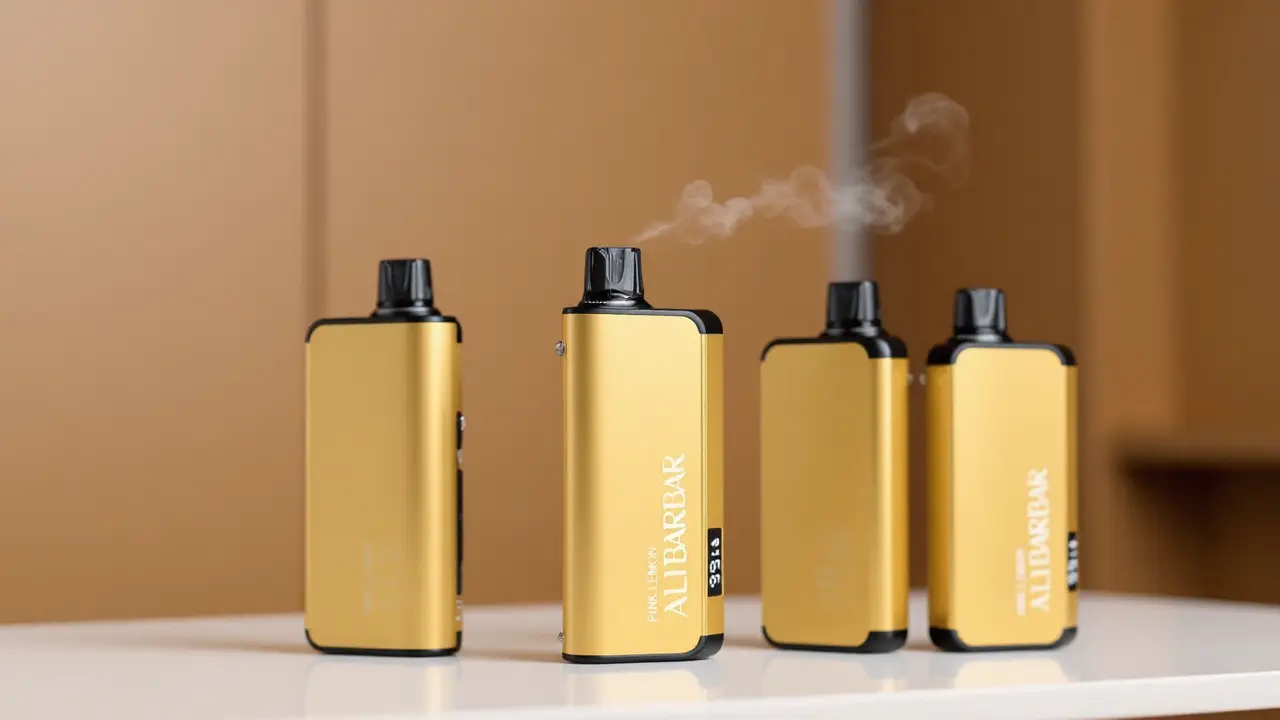
If you apply these questions to any device you’re considering, the difference between a well‑engineered product and one that merely looks the part becomes immediately apparent.
Common Selection Errors and Industry Observations
I’ve observed four recurring mistakes that adult users make when choosing an MTL device, and they’re instructive because they reveal how the market actually works.
1. Overweighting draw count while ignoring consistency. A device rated for 5000 draws can deliver 4000 sub‑par draws and 1000 good ones. The spec sheet number is meaningless if the output quality isn’t maintained. Engineers solve this through wicking design and power curves, not through larger liquid capacity alone. ALIBARBAR’s approach — using matched coil‑wick pairs in every device — is a direct response to this industry‑wide failure of specification transparency.
2. Assuming visual similarity indicates equivalent internals. Two MTL sticks that look almost identical can produce entirely different draws because one uses a calibrated airflow restrictor and the other simply relies on a narrow drip tip. The restrictor — a small internal channel of precise dimensions — creates a consistent pressure drop irrespective of how the user holds the device. Without it, the draw can vary with liquid level or temperature.
3. Undervaluing modularity in cost‑per‑use calculations. A sealed device might cost less upfront, but if you go through three per week, a rechargeable system with replaceable pods quickly becomes the more economical choice. That calculation is often ignored because it requires some forward planning. Retailers that make it easy to compare total cost over a month — as OZVAPE Shop does through clear, standardised product pages — help users move past short‑term thinking.
4. Confusing category terminology with technical specifications. “MTL” is not a specification; it’s a performance outcome. Many devices are marketed as MTL but ship with coils that operate more like a restricted direct‑lung draw. Always look for the resistance and airflow figures, not just the label. The ALIBARBAR Ice Adjust 12000, for instance, explicitly states its airflow positions and corresponding draw characteristics, turning a vague marketing term into a verifiable truth.
From an industry perspective, the push toward ever‑higher draw counts has often come at the expense of MTL fidelity. Manufacturing realities mean that packing more liquid into a compact body without compromising the wicking path requires sophisticated flow‑control knowledge, and not every manufacturer invests in it. That’s why a platform that curates engineering‑led brands matters — it filters out devices that won’t satisfy a discerning MTL user.
Frequently Asked Questions
Q: What does MTL stand for, and how is it different from other draw styles?
A: MTL stands for mouth‑to‑lung. You draw vapour into your mouth first, then inhale to the lungs — much like a traditional cigarette. This requires a tight airflow and higher coil resistance. Direct‑lung (DL) draws pull vapour directly into the lungs with a much airier airflow and lower resistance. The two require completely different device architectures.
Q: Can I achieve a proper MTL draw with any device if I close the airflow?
A: Not reliably. Closing an airflow ring on a DL device reduces the intake size, but the internal chamber volume and chimney diameter are typically still larger than what an MTL draw requires. The result is often a “loose MTL” that lacks the pressure and density of a purpose‑built MTL device.
Q: How do I know if my device’s MTL performance is degrading?
A: You’ll notice the draw becoming tighter or looser unpredictably, a change in warmth without a change in usage style, or a muted output. These signs indicate wick saturation issues, coil fouling, or voltage sag — all of which can be worsened by non‑certified components.
Q: Why is factory certification important for MTL consistency?
A: Counterfeit devices frequently use coils with inconsistent wire gauges, improperly graded cotton, or batteries that don’t maintain stable output. Any of these can alter the draw resistance and temperature. Authorised products, like those sold through OZVAPE Shop, ensure you get the exact design the engineers validated.
Q: Should I choose a sealed or rechargeable MTL device for travel?
A: For short trips, a sealed device is convenient and requires no charging. For longer travel, a rechargeable device with a USB‑C port and a reliable battery indicator is more practical, because you’re not dependent on finding a replacement unit in an unfamiliar location. The ALIBARBAR INGOT series strikes a good balance with high capacity and rechargeability.
Q: What’s the typical lifespan of an MTL coil, and can I extend it?
A: Coil lifespan varies by liquid composition and usage frequency. You can extend it by not chain‑pulling excessively (which dries the wick) and storing the device upright when not in use. In a sealed device, the coil is designed to last the rated life; if it fails prematurely, that’s a manufacturing defect, not user error.
Q: How does adjustable airflow change the MTL experience?
A: Very narrow airflow settings increase the draw resistance and produce a warmer, more concentrated output. Slightly wider settings reduce the resistance and cool the vapour. An adjustable device lets you fine‑tune that balance. The Ice Adjust 12000 is an example where each setting produces a distinctly different MTL character.
Q: What support can I expect if my MTL device doesn’t perform as described?
A: A reputable retailer should offer a clear replacement or refund policy, responsive human support, and documentation of the device’s specifications. OZVAPE Shop provides local Australian support with a focus on accountability, so if a device underperforms due to a verifiable manufacturing fault, there’s a straightforward recourse path.
Q: Is there a risk of buying outdated stock when ordering online?
A: Yes, if the retailer does not manage inventory turnover carefully. Batteries self‑discharge over time, and if an old unit has been sitting too long, you may get reduced runtime. At OZVAPE Shop, inventory is managed in rapid cycles, and all ALIBARBAR devices are from current production runs, minimising that risk.
Q: Can I use third‑party pods or coils in ALIBARBAR devices?
A: Not advisable. ALIBARBAR devices are engineered as integrated systems — coil, wick, power regulation, and airflow are all tuned together. Introducing a non‑original component disrupts those relationships and can damage the device or lead to unsafe conditions. Always use factory‑certified consumables.
Conclusion
A satisfying MTL experience is not a matter of luck or brand loyalty — it’s the direct result of airflow design, coil‑wick pairing, power management, and material quality. When you understand these factors, you stop making decisions based on packaging claims and start selecting devices that match your actual routine. The difference is tangible: no more harsh draws, no more unpredictable cut‑offs, and no more carrying a spare “just in case.” You gain control over your daily experience.
OZVAPE Shop exists to make that kind of informed choice possible. By maintaining a curated, factory‑certified inventory of ALIBARBAR devices — from the compact sealed units to the high‑capacity rechargeable series — and by providing transparent specifications and responsive Australian support, it removes the guesswork from the equation. The right device is not the one with the flashiest marketing; it’s the one that fits your hand comfortably, delivers a consistent MTL draw hour after hour, and comes with the confidence that someone has verified every component inside it. The next time you evaluate an MTL device, apply the framework discussed here, and you’ll be equipped to choose with clarity rather than hope.
Explore the factory‑certified ALIBARBAR range at OZVAPE Shop – new window