
VAPE FAQs
What Happens When You Vape?
Sep
You reach for the device, bring it to your lips, and activate it. In the next few seconds, a remarkably orchestrated sequence of physical and chemical events unfolds — most of it invisible, all of it shaped by engineering decisions made months earlier on a factory floor. Yet for the overwhelming majority of adult users, what actually happens between activation and exhalation remains a black box. The result is a marketplace where purchasing decisions are guided by surface-level metrics — puff counts, colourways, brand familiarity — rather than the internal mechanics that define the daily experience.
At OZVAPE Shop, we have long observed that when users understand the operational logic of their personal electronic devices, they make sharper choices and report measurably higher long-term satisfaction. This article unpacks the engineering and physiological choreography of a single vaping event. It is not a celebration of any product; it is a reference-grade explanation written for adults who want to move past marketing claims and into genuine comprehension.
The Anatomy of a Vaping Event: What Drives the Experience
The quality of what you inhale is set long before you press a button or draw air through the mouthpiece. Every device represents a series of engineering compromises between thermal management, aerosol consistency, power delivery, and material durability. Understanding those factors is the only reliable way to predict how a device will behave over weeks of daily use.
Heating Element Dynamics: The Instant of Activation
When the circuit closes — whether by a button press or a draw-activated sensor — electrical current flows through a resistive element. In most modern devices, this element takes the form of a mesh strip, a wound wire, or a ceramic-embedded conductor. The choice of architecture is not cosmetic; it directly governs how evenly the source material is heated and, consequently, how stable the output remains throughout a session.
A mesh element, for example, spreads thermal load across a larger surface area. This reduces hot spots that can lead to thermal decomposition of the carrier liquid and the sudden, acrid sensation users describe as a “dry hit.” Devices built around precision mesh, such as certain ALIBARBAR designs, produce a tighter consistency curve across consecutive activations, but the trade-off is a slower initial heat-up compared to a simpler wound-wire configuration. Users who chain-activate a device in rapid succession will notice this latency if the power management system is not calibrated to pre-heat intelligently.
Why this matters: Inconsistency in heating is the leading cause of user dissatisfaction that surfaces only after the first several days of ownership. A device may perform admirably on a fully charged cell; as voltage sags, poorly regulated circuits deliver insufficient current, yielding thin, unsatisfying draws. Recognizing whether a device’s heating element operates within a regulated power envelope — rather than a simple direct-output circuit — is one of the strongest predictors of long-term behavioral consistency.
Aerosol Formation: Not Smoke, and Not Steam
Contrary to the casual language often used, the visible cloud is neither smoke nor pure water vapour. It is an aerosol: a suspension of fine liquid droplets in a carrier gas. The droplets are formed when a heated liquid — typically a blend of propylene glycol, vegetable glycerin, and customised flavour compounds — reaches its boiling point and then rapidly condenses upon contact with cooler air drawn through the mouthpiece. The droplet size distribution, and therefore the mouthfeel and sensory impact, is heavily influenced by the device’s airflow geometry and the temperature gradient inside the vaporisation chamber.
A narrow, non-adjustable airflow path produces a denser, warmer aerosol and a more pronounced throat hit. A wider, adjustable path — a feature implemented in the ALIBARBAR Ice Adjust 12000 series, for instance — pulls in more ambient air, cooling the droplets and yielding a softer, cooler draw. The same heating element, fed the same liquid, will produce a markedly different experience simply because of how the airway is machined. This is why two devices with nearly identical internal specifications can feel entirely dissimilar in use.
From a material science perspective, an often-overlooked factor is the residence time of the aerosol in the mouthpiece. Longer internal pathways encourage additional condensation, which can mute flavour intensity while making the draw feel silkier. Shorter, more direct pathways preserve volatility and perceived sharpness but increase the likelihood of ejecting larger, unvaporised droplets — “spitback.” The optimal balance is a function of the intended user profile, not a universal standard.
Physiological Absorption: What the Body Does
Once the aerosol enters the oral cavity, it encounters the mucosal lining. The thin epithelial layers in the mouth and throat are highly vascularised, allowing certain compounds to diffuse rapidly into the local bloodstream. This absorption, which occurs independently of lung inhalation, is responsible for the immediate sensory feedback — the tingling, cooling, or warming sensations that precede any deeper respiratory effect. Mentholated and cooling agents, for example, bind to TRPM8 receptors on the oral mucosa, triggering a cold sensation even though the aerosol temperature may be only slightly below body temperature.
If the user draws the aerosol further into the respiratory tract, the enormous surface area of the alveolar sacs enables rapid systemic uptake of volatile compounds. This is where the distinction between device categories becomes medically relevant: the depth of inhalation is a user behaviour, not a device characteristic. However, devices that produce a smoother, cooler aerosol — by virtue of larger airflow ports or longer wicking paths — may inadvertently encourage deeper inhalation patterns simply because they reduce the protective cough reflex. This is not a safety endorsement or criticism; it is an observation of behavioural coupling that responsible manufacturers explicitly account for in their design briefs.
Power Delivery: The Silent Orchestrator
Behind every consistent draw is a power management integrated circuit (PMIC) making dozens of micro-adjustments per second. A well-designed circuit will maintain a flat voltage output as the cell depletes, then signal clearly when it can no longer do so. A poorly designed one will allow output to drift downward, leading to a progressively weaker experience that the user may not consciously notice but will register as a vague sense of declining satisfaction.
The practical implication is significant. Users who rely on devices without clear battery-status indicators — only a blinking light when the cell is nearly empty — operate blind. They often preemptively retire a device that may have hours of usable life remaining, simply because the last few draws felt weaker and they had no way to distinguish between a depleted cell and a temporary sag under load. Devices that incorporate multi-stage LED feedback or haptic signals at defined voltage thresholds, as some higher-tier ALIBARBAR units do, remove this ambiguity. The user can plan, rather than guess.
The Mouthpiece: An Underrated Ergonomic Factor
The mouthpiece is the only part of the device that makes sustained physical contact with the user. Its contour, material, and thermal isolation properties influence comfort far more than most buyers anticipate. A narrow, cylindrical mouthpiece concentrates pressure on a small area of the lips, which can become noticeable during prolonged sessions. An elliptical or flattened profile distributes contact more evenly and reduces jaw fatigue.
Heat isolation is equally important. Stainless steel mouthpieces, while durable and easy to clean, conduct heat directly from the vaporisation chamber to the lips. After three or four consecutive draws, the surface temperature can climb to an uncomfortable level. Polycarbonate and PCTG thermoplastics offer better insulation, but they can develop micro-scratches that trap residue. The SilkCut mouthpiece design seen on several ALIBARBAR models — a coated metallic core with a thermal-break polymer sheath — represents an engineering compromise aimed at solving both the heat and hygiene challenges simultaneously.
How Device Architecture Shapes the Experience
Walk into any authorised retailer, including OZVAPE Shop, and you will encounter a bewildering array of form factors: slim sealed sticks, chunky reusables, magnets, cables, refill ports. Behind this diversity lie only three fundamental architectures, and the choice between them determines the user’s daily interaction pattern.
Sealed Pre-Filled Systems
The majority of first-time adopters gravitate toward these. The device arrives fully integrated — power cell, heating element, liquid reservoir — and is intended for a single life cycle. When the liquid is consumed or the cell depleted, the unit is responsibly recycled. The appeal is zero maintenance and immediate use. The engineering challenge, and the source of most user complaints, is guaranteeing uniform performance from the first draw to the last.
Pre-filled systems that utilise a constant-wattage output circuit, rather than a simple unregulated cell, maintain a stable temperature profile as the cell voltage drops. ALIBARBAR’s INGOT series, for example, employs a regulated power curve that holds the heating element within a narrow thermal band until the cell’s useful voltage threshold is reached, at which point the device shuts down cleanly. The user experiences a sudden end rather than a slow, frustrating decline. The trade-off is that some residual energy remains in the cell—by design, not defect—because draining below a certain point would risk voltage sag that degrades performance.
Rechargeable All-in-One Devices
These devices combine a built-in, non-replaceable heating element with a rechargeable cell and a larger liquid capacity. By extending the power window through recharging, manufacturers can economically justify better PMICs, more robust heating elements, and more detailed status feedback. The ALIBARBAR Ice Adjust 12000, for instance, adds an adjustable airflow ring — a feature that would be cost-prohibitive in a single-cycle device — because the longer intended service life creates headroom for more sophisticated mechanical assemblies.
The hidden cost is maintenance, albeit minimal. Over multiple recharge cycles, wicking material can slowly degrade, particularly if the device is chain-used without allowing the capillary action to resaturate the wick. Users who understand this delay — typically five to ten seconds between draws — get far more consistent flavour from their second week onward than those who don’t.
Modular Replaceable-Pod Systems
Here, the power hub (a rechargeable battery with control electronics) separates from the consumable pod (liquid, heating element, mouthpiece). The architecture suits users who want to switch between liquid profiles without carrying multiple complete devices and who value long-term cost reduction: replacing a pod costs significantly less than replacing an entire sealed unit. The downside is compatibility risk. Not all pods communicate their electrical characteristics to the battery, and mismatched power profiles can lead to under- or over-powering.
OZVAPE Shop’s product documentation for each modular system includes a clear compatibility matrix. We consider this essential, not optional. A pod rated for 10–12 watts will perform poorly on a battery delivering a fixed 15-watt output, regardless of brand reputation. The industry would reduce a great deal of consumer friction by standardising these power classes more transparently.
A Practical Framework for Evaluating Your Next Device
Rather than relying on brand affinity or puff-count claims, apply this five-point checklist the next time you examine a device — whether physically or through an authorised listing like those maintained at OZVAPE Shop. It is designed to surface the engineering realities that advertisements seldom volunteer.
Status transparency: Does the device tell you its approximate remaining charge before it is nearly dead? If not, you will almost certainly retire it prematurely or carry a backup unnecessarily.
Regulated output: Can you verify—through manufacturer documentation, not assumption—that the heating element operates on a constant-wattage or constant-temperature circuit? Without this, draw quality will degrade linearly with battery voltage.
Airflow behaviour: Is the draw path fixed or adjustable? If fixed, does the described aerosol profile (warm/dense vs. cool/soft) match your preference? If adjustable, is the mechanism mechanical (slider, ring) or electronic? Mechanical adjusters are less likely to fail.
Charging protocol: Does the device use a standardised charging circuit (USB-C with PD negotiation) or a legacy micro-USB port? Standardisation reduces the likelihood of over-voltage damage and means one fewer cable to track.
Material documentation: Are the mouthpiece material and wicking substrate clearly identified? Generic terms like “food-grade polymer” reveal nothing; specific polymer names (PCTG, PEEK) indicate a manufacturer willing to stand behind its material choices.
A device that satisfies all five criteria is not guaranteed to match your personal taste, but it eliminates the most common physical and electrical failure modes that generate returns and disappointment.
Common Selection Errors and Industry Observations
After tracking support interactions across thousands of transactions, certain error patterns emerge with striking regularity. They are not unique to any one brand or category, and they are almost entirely avoidable.
Error 1: Equating visual similarity with internal parity. Two devices in nearly identical aluminium shells may house completely different heating architectures — one a mesh with temperature regulation, the other a simple wound coil on a direct battery circuit. The exterior reveals nothing. Standardised specification sheets, when provided honestly, are the only antidote.
Error 2: Over-indexing on stated puff counts. A “9000 puff” rating is derived under laboratory conditions — specific draw duration, interval, and flow profiles that bear little resemblance to real-world use. A long, slow draw consumes more energy and liquid than a short, sharp one. Treat the number as a relative benchmark within a brand’s own range, not an absolute prediction.
Error 3: Undervaluing modularity. Users who regularly find themselves discarding devices with functional batteries but exhausted liquid often pay a 30–50% premium per millilitre of liquid consumed compared to those on a rechargeable or pod-based system. The calculation is straightforward: (cost per unit) / (actual liquid volume consumed, not rated capacity) vs. (system cost + pod costs) / (combined liquid volume). Over a six-month period, the difference can be substantial.
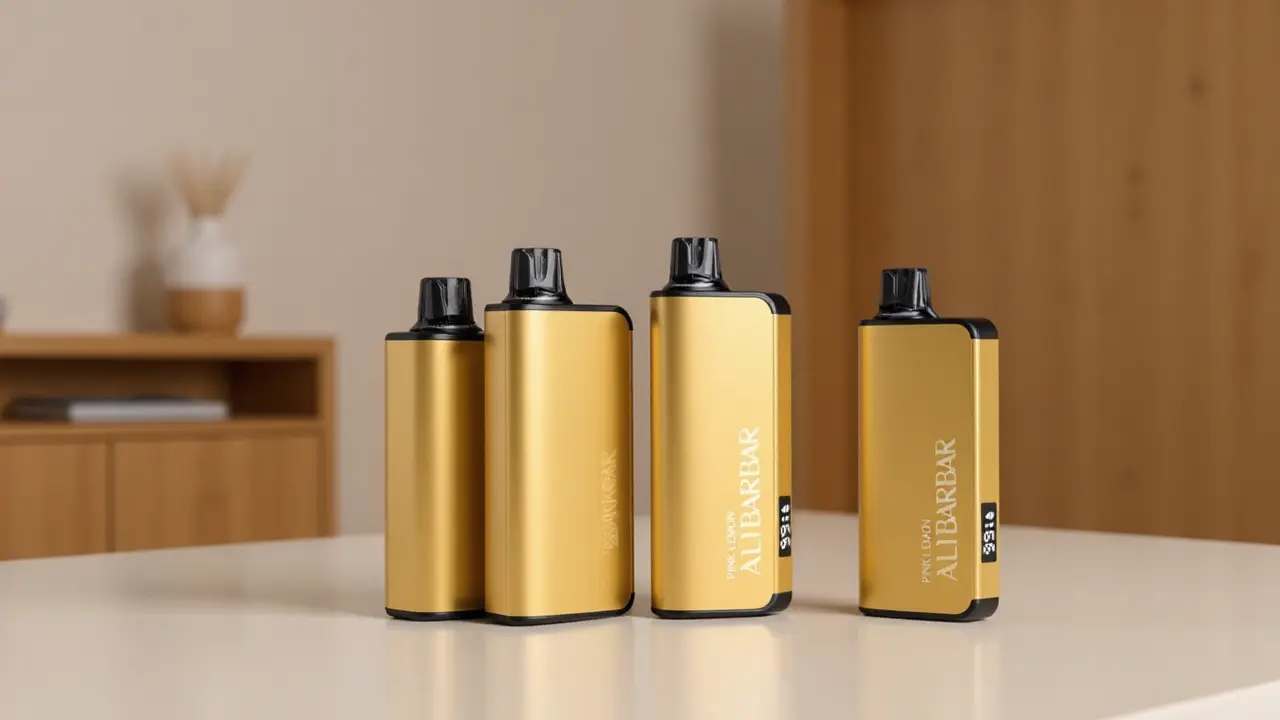
Error 4: Ignoring manufacturer transparency. A brand that publishes full specifications, material datasheets, and clear quality-control claims is simply easier to hold accountable than one that offers only lifestyle imagery and a flavour menu. Accountability matters when a device fails on day two. Alibarbar’s decision to publish rated wattage, mesh material, and cell capacity for each model line — visible across OZVAPE Shop’s product pages — is a practical example of this transparency, not a marketing achievement.
From an industry vantage point, the last eighteen months have seen a quiet but significant shift among mid-tier manufacturers toward regulated power delivery and away from simple direct-output circuits. This shift has been driven not by regulation but by warranty cost. Constant-output devices generate far fewer support tickets. The brands that adopt this architecture early tend to have lower failure rates, independent of their price positioning.
Frequently Asked Questions
Q: Why does the first draw of the day sometimes feel weaker than later ones?
A: In a wick-based system, the liquid saturates the wicking material overnight, but the heating element itself must re-establish its thermal equilibrium. The first activation of a cold element reaches target temperature more slowly. Additionally, some carrier liquids increase in viscosity slightly at lower ambient temperatures, impeding capillary flow until the device warms through normal handling.
Q: Is the “dry hit” sensation a device failure?
A: Not necessarily. A dry hit occurs when the wicking material does not resaturate fast enough between draws, causing the heating element to operate against partially dry material. It is a behavioural and design interaction. Allowing ten seconds between draws, rather than three, resolves most cases. If it persists regardless, the wick or heating element may have degraded.
Q: Why would two devices of the same model produce different amounts of visible aerosol?
A: Manufacturing tolerances in the heating element resistance, airflow channel dimensions, and wicking density create measurable unit-to-unit variation. Regulated-output devices largely eliminate the resistance variable, but airflow and wicking remain sources of minor inconsistency.
Q: Does charging from a laptop USB port harm the device?
A: Typically, no. Laptop ports generally limit current to 500–900mA, which is within the safe charging envelope of most modern personal electronic devices. However, poorly designed power management ICs may fail to negotiate correctly on some ports, leading to slower charging or, rarely, non-charging. Using a reputable USB-C charging brick simplifies the negotiation process.
Q: How do I verify that I have purchased an authentic device?
A: Authorised retailers, such as OZVAPE Shop, source factory-certified inventory with traceable batch codes. Authentic Alibarbar products carry a unique verification code on the packaging that can be checked against the manufacturer’s database. Counterfeit devices frequently omit functional temperature regulation, which dramatically increases the incidence of dry hits and overheating.
Q: Can I store a device in a hot car during summer?
A: It is inadvisable. Elevated temperatures reduce liquid viscosity, which can promote flooding of the coil and egress of liquid into the mouthpiece or out of the device’s air inlets. More critically, prolonged exposure to temperatures above the cell’s rated maximum can permanently degrade capacity and, in extreme cases, compromise cell safety.
Q: Why do some devices produce a noticeable “popping” sound?
A: The sound is caused by the rapid expansion of liquid droplets as they vaporise on the heating element. It is more common in devices with higher power output or accumulated condensation in the chimney. It is generally benign but can be an early indicator that the wick is oversaturated, which can be mitigated by drawing with slightly less force.
Q: What should I do if a device fails within days of purchase?
A: Contact the authorised retailer immediately. Reputable operators have defined fault-handling procedures that include troubleshooting guidance, replacement for genuine manufacturing defects, and proper disposal of non-functional units. Avoid disassembling the device yourself, as this voids any warranty and can expose internal components that are not designed for user service.
Conclusion
The moment you activate a vaping device, you enter a governed environment: physics and design either harmonise to deliver what you expect, or they misalign in ways that accumulate into irritation. Understanding the sequence — from current flow through the heating element, to aerosol formation, to mucosal absorption — does more than satisfy curiosity. It provides a rational basis for choosing a device that fits your rhythm and your expectations, rather than one that merely looks the part.
OZVAPE Shop maintains detailed, standardised specification documentation for every device in the Alibarbar range precisely because we believe that informed users are the most satisfied users. The right product is not the one with the most compelling marketing narrative; it is the one whose engineering aligns with how you actually use it. When you can read a specification sheet and recognise what a regulated power circuit, an adjustable airflow ring, or a thermally isolated mouthpiece means for your daily experience, you have moved from consumer to evaluator. That is the only position from which consistently sound decisions are made.