
VAPE FAQs
How To Use A Vape Cartridge Without Battery?
Sep
It’s a frustrating moment. You have a cartridge, you can see the contents, but the battery that normally powers it is missing, depleted, or broken beyond recovery. The instinct is to ask whether the cartridge can be used without a battery at all — perhaps by applying direct heat, tapping into exposed contacts, or repurposing a USB cable. The question isn’t just about curiosity; it’s born from wanting to access something you already own without waiting for a replacement part. Before anyone attempts to improvise, it’s important to understand exactly what a cartridge is, why a power source is non‑negotiable, and what smarter alternatives exist that make the whole problem irrelevant. At OZVAPE Shop, we regularly hear from users who find themselves in exactly this situation, and the most valuable thing we can offer is a clear, technically accurate explanation — and a path toward a setup that never leaves you without power again.
Understanding What Makes a Cartridge Work – and Why a Battery Is Essential
Most cartridges designed for personal electronic devices follow a consistent engineering blueprint: a cylindrical or pod‑shaped reservoir, a 510‑threaded connection point at the base, and an embedded coil — essentially a small resistive wire — that sits in contact with a wicking material. When current passes through that coil, it generates precisely controlled heat, which transforms the contained liquid into an aerosol. Without that current, nothing happens. It’s not a suggestion; it’s a physical requirement.
The ubiquitous 510 thread — named for its 5 mm length and 10 threads — was standardised to provide a mechanical and electrical interface. The centre pin on the cartridge is the positive terminal; the threaded body is the ground. A matching battery includes a spring‑loaded centre contact and a voltage regulator that delivers a steady output, typically between 3.3 V and 4.2 V depending on the charge state. Attempting to bypass that regulator by connecting the cartridge directly to a raw power source is where serious hazards begin.
Internal Architecture and Output Consistency
The cartridge’s coil is a delicate component. It’s designed for a specific resistance range, usually between 1.2 Ω and 1.8 Ω, which determines the wattage at a given voltage. A regulated battery maintains that voltage within tight tolerances, ensuring consistent vapour production and avoiding thermal runaway. When a user hooks the cartridge up to an unregulated USB output (5 V, often capable of 2 A or more), the coil instantly overheats. This can melt internal insulation, scorch the wicking material, release compounds that shouldn’t be inhaled, and potentially cause the cartridge housing to distort or leak.
This isn’t a matter of “might be unsafe” — it’s an established failure mode. Even in seemingly innocent online “life hack” videos, the momentary puff of vapour is usually accompanied by a burnt taste and irreversible damage. From a reliability standpoint, the cartridge’s output consistency after such an event is zero.
Power Management and Status Transparency
A well‑designed battery does more than supply power; it communicates. Basic units have press‑and‑draw firing mechanisms. Better designs incorporate multi‑colour LED indicators that tell you remaining charge at a glance. The absence of that transparency is what drives people to carry backup devices in the first place. If your battery dies silently, you’re stranded. That’s why integrated systems — where the power source and pod are purpose‑built as a single sealed device — simply remove the guess‑work. A full bar or a clear light sequence right on the housing eliminates the anxiety of not knowing.
Physical Design and Material Durability
Separate 510 batteries are often slim cylindrical sticks made from zinc alloy or aluminium, with a threaded interface. That threaded connection is a wear point. Over time, the centre pin can become recessed, leading to poor electrical contact. Dropping the battery can strip threads or crack the internal solder joints. Even a minor drop that causes no visible damage can loosen the regulator board. When someone asks how to use a cartridge without a battery, very often the real problem isn’t the absence of a battery — it’s that a worn‑out battery is no longer making contact.
Modularity and Lifecycle Flexibility
A modular system has benefits: you can keep multiple cartridges and swap them onto one battery. But it also multiplies points of failure. If you lose the battery, all those cartridges become inert. For users who value simplicity and dependability, a sealed, self‑contained device with a built‑in battery and a reservoir that matches its expected operational life is often the more sensible engineering solution. There’s nothing to thread, nothing to carry separately, and no power‑accessory to misplace.
Applying These Criteria to Real‑World Options
When you shift the question from “How do I use a cartridge without a battery?” to “What configuration ensures I’m never caught without power?” the design brief changes entirely. You’re no longer looking for a hack; you’re looking for a device whose architecture anticipates real‑world unreliability.
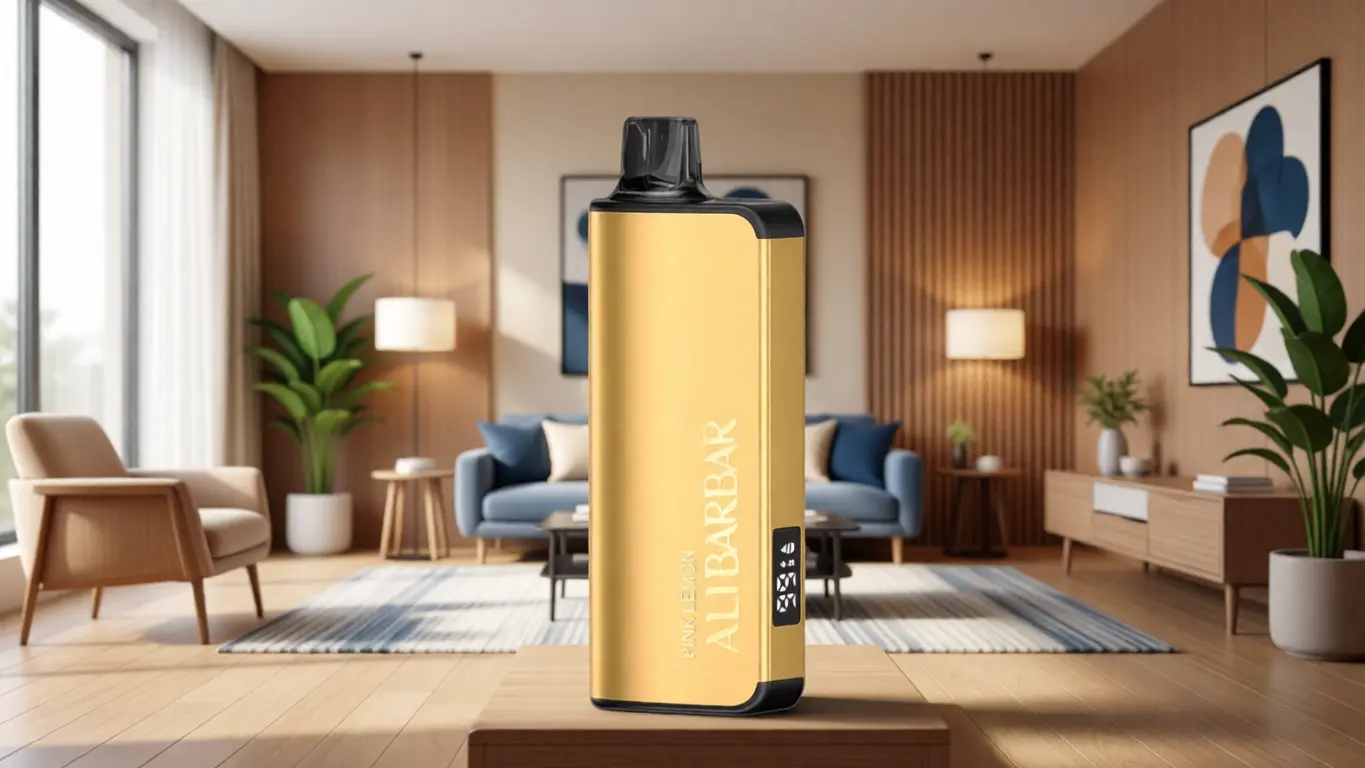
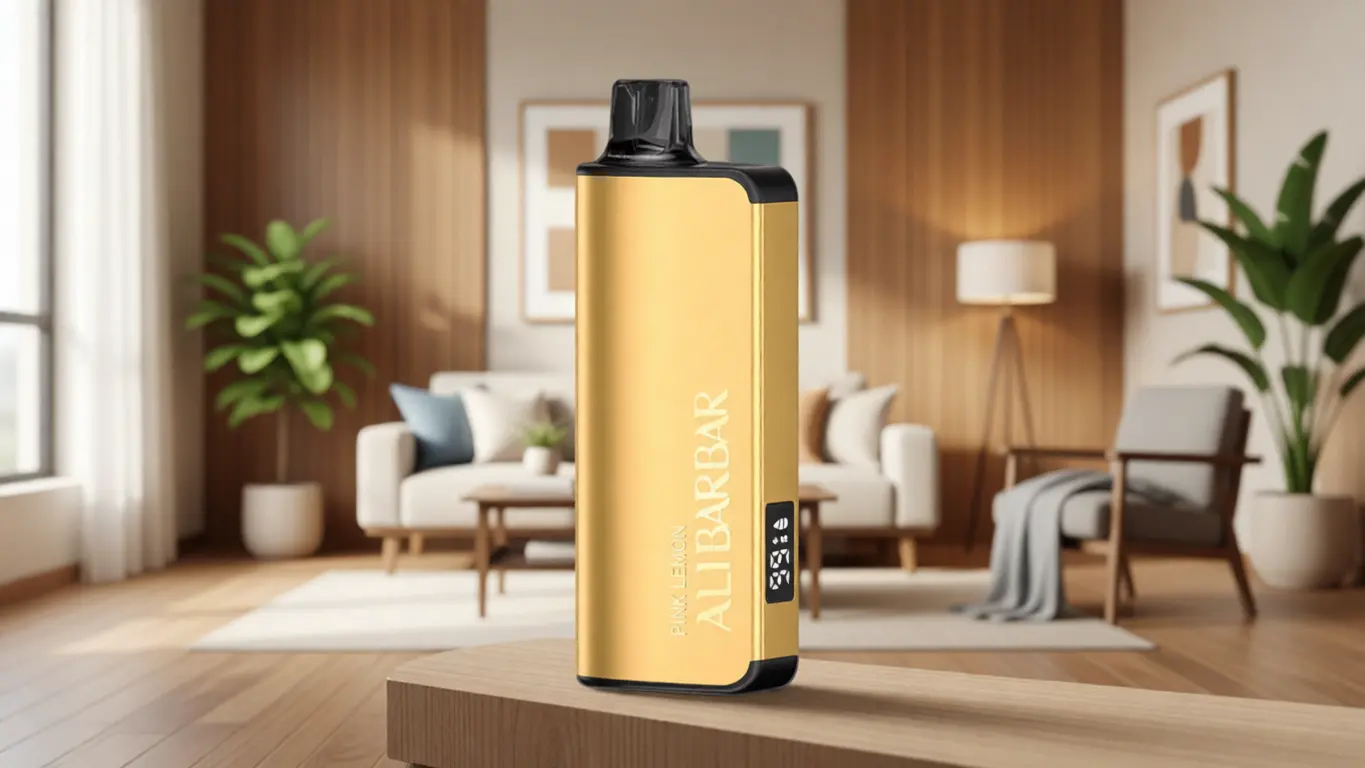
Among the options available to Australian adults, the ALIBARBAR family is a case study in this exact design philosophy. Every current‑generation ALIBARBAR unit — from the compact INGOT 9000 to the higher‑capacity INGOT 15000 and the adjustable‑output Ice Adjust 12000 — is built as a self‑contained system. The power cell, control circuitry, reservoir, and coil are integrated into a single chassis. There is no 510 thread to strip, no separate charging accessory that can be misplaced, and no ambiguity about compatibility. The internal battery is sized specifically for the volume of the reservoir, meaning the device is designed to deliver its full rated life without requiring an external power source midway. That’s a fundamentally different reliability equation than a cartridge‑plus‑battery pairing.
Take the power‑status transparency these devices offer. A glance at the indicator tells you whether there’s enough charge for the day ahead. This might seem trivial until you’ve experienced the alternative: a suspiciously quiet cartridge at the moment you need it. The INGOT 15000, for example, uses a straightforward LED feedback system that removes that doubt. For someone who has previously been let down by a dead 510 stick battery, that clarity is directly useful.
Thermal management also deserves attention. Because the coil and battery share a common thermal envelope in an integrated device, the engineering team can control heat dissipation more predictably than in a threaded assembly where heat transfer depends on the quality of the mechanical connection. ALIBARBAR’s architecture uses a calibrated resistive load that doesn’t drift over the device’s operational life, so the output remains consistent from the first draw to the last. That’s the opposite of a fatigued 510 battery that gradually delivers weaker hits as contact resistance increases.
None of this is to suggest that cartridge‑based systems are obsolete. They have their place. But if your core frustration is, “The battery is gone and I can’t use what I have,” then the integrated approach removes that vulnerability entirely.
A Practical Framework for Evaluation
If you’re assessing any personal electronic device — whether a traditional cartridge setup or an integrated system — through the lens of avoiding a dead‑battery scenario, you can apply a simple, repeatable checklist:
Does this device require a separate power source that can be lost or damaged?
If yes, ask how easy it is to obtain a compatible replacement on short notice.
Is there a clear, unambiguous battery life indicator?
A device that gives no warning before power runs out will, in practice, cause you to carry a backup — or be caught unprepared.
Does the electrical interface involve a threaded connection that wears over time?
Thread damage is progressive and often invisible until performance drops. A system with no user‑serviceable threading removes that variable.
Is the power cell sized to outlast the consumable portion of the device?
If the battery tends to expire before the reservoir is empty, the design hasn’t been fully thought through. A properly engineered device will see both components reach end‑of‑life together.
What does the manufacturer specify about output consistency over time?
Look for evidence that coil resistance and power delivery are stable for the full rated life, not just the first few uses.
This framework doesn’t favour one brand. It’s a rational evaluation tool. Apply it to any product you’re considering, and the answer to “Will I ever find myself with an unusable cartridge?” becomes clear.
Common Selection Errors and Industry Observations
Many users make the same handful of miscalculations when choosing a portable electronic device, and nearly all of them lead back to that moment of powerlessness that sparked this article.
Error 1: Overweighting the versatility of a 510 cartridge system while underestimating its fragility.
The ability to swap cartridges is valuable, but it only works if the battery isn’t lost, broken, or discharged. A modular system multiplies convenience — and the number of ways things can go wrong. I’ve seen users who bought a high‑quality cartridge only to find the battery was a cheap aftermarket unit with no under‑voltage protection, which deep‑discharged the cell in a week. The cartridge became useless because the power source was compromised.
Error 2: Assuming all integrated devices are the same internally.
A sealed body does not guarantee good engineering. Some lower‑cost units use undersized batteries that can’t sustain the current draw for the full liquid volume, leading to a drop‑off in output halfway through the device’s rated life. The ALIBARBAR range was built specifically to avoid that — the battery capacity is matched to the coil’s demand curve, a detail that’s invisible unless you know to look for it.
Error 3: Using a USB cable as a temporary power source without understanding the risks.
This is the most dangerous improvisation. Connecting a cartridge’s 510 centre pin to a USB wire’s positive voltage and touching the thread to ground can produce vapour, but it also exposes the coil to five volts, well above its rated limit. I’ve seen documentation of cartridge housings deforming, insulation melting, and even minor burns on fingertips. It’s not a “life hack”; it’s an uncontrolled thermal event. Any article that suggests otherwise without a severe warning is failing its readers.
Error 4: Confusing a “disposable” with a cartridge without a battery.
Some people refer to any pre‑filled unit as a “cartridge,” but a properly designed disposable is an entirely different class of product. It includes its own battery, power management, and draw‑activated switch, all tuned to work together. Thinking of it as “just a cartridge” obscures the safety‑critical integration that already exists.
From an industry perspective, the rise of sealed, purpose‑built devices has been driven by exactly these safety and user‑experience shortcomings. Early cartridge‑battery pairings gave the user flexibility but placed the burden of electrical knowledge and maintenance on them. Modern integrated systems move that responsibility back to the manufacturer, who can validate the entire design as a single unit. That’s a more defensible approach for a product intended for daily, unmonitored use.
Frequently Asked Questions
Q: Can a vape cartridge be used without any battery at all?
A: No. The cartridge’s heating element requires electrical current to operate. Without a power source, no vapour can be produced.
Q: Is there a safe way to power a cartridge if the original battery is lost?
A: Only by using a regulated 510‑thread battery designed for that purpose. Attempting to connect a cartridge to a USB port, phone charger, or unprotected lithium cell bypasses every safety mechanism and creates a serious fire, burn, and inhalation risk.
Q: What type of device eliminates the need to carry a separate battery?
A: Integrated devices with a built‑in power cell, such as the ALIBARBAR INGOT 9000, INGOT 15000, and Ice Adjust 12000, are designed as self‑contained units. They house the battery, coil, and reservoir in one chassis, so you never have to source a separate power source.
Q: My 510 battery stopped making contact with the cartridge. Can I fix it?
A: You can try gently lifting the centre pin with a non‑conductive tool, but if the pin is permanently depressed or the threading is worn, the battery should be retired. Continued use with intermittent contact can cause arcing and further damage.
Q: Why do some cartridges work with one battery but not another?
A: Different batteries have different regulator topologies and output voltages. Some cheaper units lack stable voltage regulation, causing poor performance with certain coil resistances. Always match the cartridge to a battery from a reputable source.
Q: Are disposable devices just cartridges glued to a battery?
A: No. Disposables undergo validation as a complete system. The battery’s discharge curve, the coil’s resistance, and the airflow path are designed as a single package, which is why output remains consistent throughout the device’s life.
Q: How long should a fully charged integrated device last?
A: It varies by model. A device like the ALIBARBAR INGOT 15000 is engineered so the battery capacity lasts for the entire volume of the pre‑filled reservoir under normal usage. No recharging is needed; the device is used until empty.
Q: What should I do with a cartridge that has no battery and is partially used?
A: Safely store it upright away from heat until you can obtain a compatible, regulated battery. Do not attempt to extract or manipulate its contents, as this can damage the sealing and introduce contaminants.
Q: How can I verify that a device I purchase online is genuine and safe?
A: Look for retailers who transparently disclose their sourcing practices and offer post‑purchase support. Factory‑certified inventory and clear documentation are strong trust signals. A retailer that cannot explain where its stock originates should be approached with caution.
Q: Why might a cartridge perform well at first and then degrade?
A: This often points to a power source issue, not a cartridge fault. As a battery’s voltage sags under load or contact resistance builds up, the effective wattage drops, producing thinner vapour and a muted experience. A sealed system avoids this variable entirely.
Conclusion
The question “How to use a vape cartridge without a battery?” ultimately resolves into a deeper truth about reliability: a device that cannot be separated from its power source is, by definition, always ready to work. The most sensible answer is not to jury‑rig a dangerously unstable connection but to choose a platform that has already closed the gap between the energy store and the heating element. For adults who value predictability and safety, that points toward integrated systems like those from ALIBARBAR — units where the battery, coil, and reservoir are conceived as a single whole, tested as one, and designed to last exactly as long as they’re supposed to. Accessing these devices through a curated, accountable channel like OZVAPE Shop adds a layer of assurance that what you receive matches what was described. The right device is the one that fits your actual routine, not the one that works perfectly under a YouTube tutorial filmed with insulated pliers and crossed fingers.