
VAPE FAQs
Is Vape Allowed In Singapore Airport?
Sep
It is a question that arises with quiet urgency at the departure gate, in the queue for security, or during a hurried connection: will my personal electronic device cause a problem here? For anyone who uses a compact rechargeable device — the kind that slips into a pocket and lasts through a long day — the rules at Changi Airport are among the strictest on the planet. This article explains exactly what the law says, why the prohibition is so absolute, and what that means for adult travellers passing through Singapore, whether they are staying a night or merely changing planes. Along the way, it also clarifies why knowing your device inside and out matters everywhere else, and why a partner like OZVAPE Shop — built around transparent specifications and factory‑certified inventory — helps you stay on the right side of every border, even when Singapore is not on your itinerary.
The Legal Reality: Vaping in Singapore’s Airports and Beyond
No nuance. No grey zone. No allowance for “it’s just for personal use.” The moment you enter Singaporean jurisdiction — and that includes all terminals, transit areas, and airside zones of Changi Airport — any e‑cigarette, vaporiser, or related component becomes contraband. Understanding why the law is structured this way, and how it is enforced, removes the guesswork that can get even a seasoned traveller into serious difficulty.
Singapore’s Blanket Prohibition on E‑Cigarettes and Vaporisers
Singapore’s Tobacco (Control of Advertisements and Sale) Act was amended to criminalise the possession, purchase, and use of electronic vaporisers. This is not a restriction on sales alone; it extends to individuals carrying devices for their own consumption. The legislation makes no distinction between nicotine‑containing products and those used with other substances. The hardware itself — the battery, the heating element, the cartridge — is prohibited. An official fact sheet from the Health Sciences Authority states plainly that it is an offence to have an e‑vaporiser in your possession, even if you have no intention of using it while in Singapore.
The policy is rooted in a public health posture that equates e‑vapour products with a gateway risk. Legalisation advocates may dispute the science, but the statute remains unambiguous — and Changi Airport, as a port of entry, applies it without exception.
What the Airport Means: Landside, Airside, and Transit Areas
A common miscalculation is the belief that staying “airside” — never crossing immigration — somehow places you outside local law. In reality, you are in Singapore the second your aircraft’s doors open. Changi’s transit hotels, lounges, and retail corridors are not international waters. Officers from the Immigration & Checkpoints Authority and auxiliary security personnel are empowered to conduct random scans and bag searches. Detection dogs trained on lithium‑ion batteries and heating‑coil residues have been deployed.
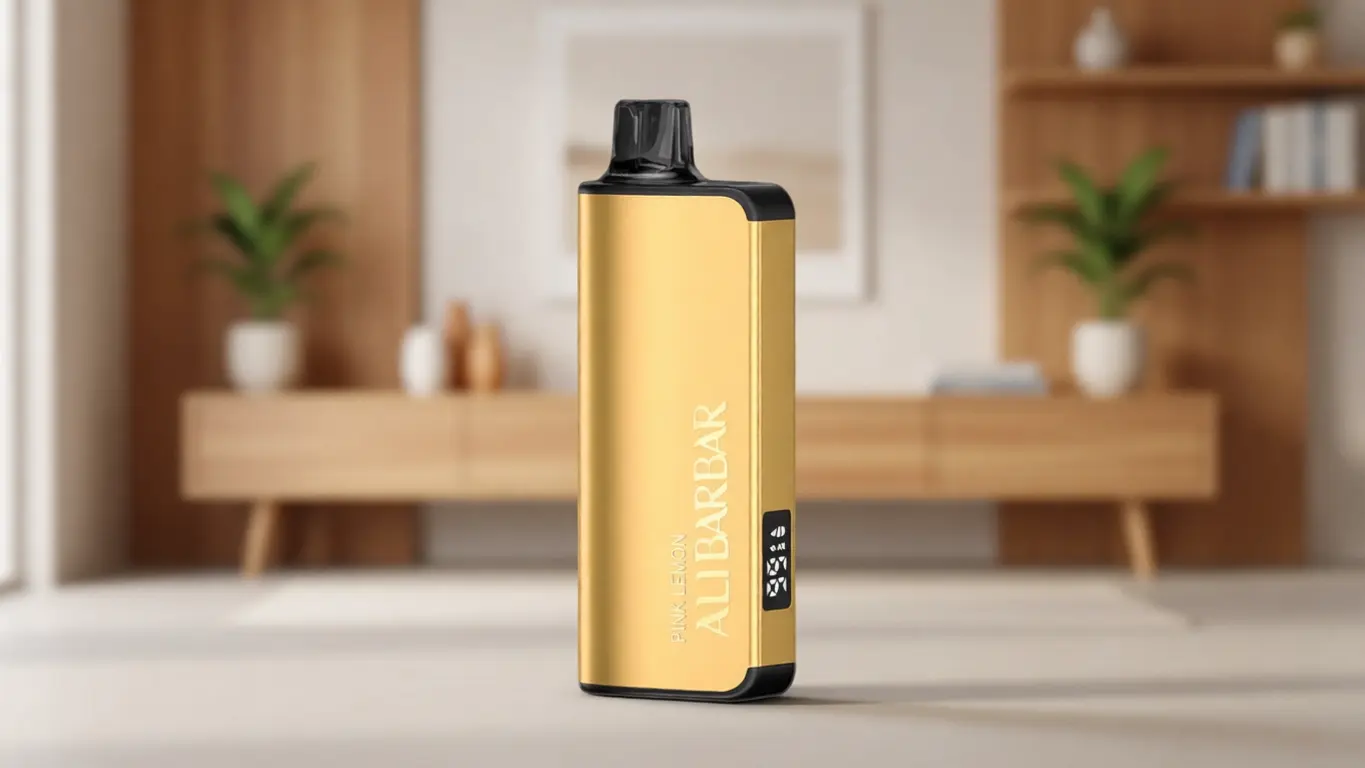
If you are connecting through Singapore and your carry‑on contains an ALIBARBAR INGOT 9000, a small pod device, or any other type of vaporiser, that item is just as unlawful as if you had declared it at customs. There is no amnesty for transit passengers, and airport staff are not required to offer a warning before escalating.
Consequences of Non‑Compliance: Fines, Confiscation, and Detainment
A first‑time possession offence can attract a fine of up to S$2,000. More importantly, enforcement can involve detainment for questioning, confiscation of the device, and a record that may complicate future travel. In cases where an individual is suspected of importation — which can be inferred from carrying multiple devices or packaging — the penalties escalate steeply, potentially including imprisonment. Even a single ALIBARBAR device still in its retail box could be interpreted as commercial intent, depending on the circumstances.
What began as a simple oversight can consume hours of travel time and generate an anxiety that lingers long after the flight departs. Singapore does not offer on‑the‑spot disposal as a routine resolution. The device is evidence.
The Design Factor: Why All Vape Devices Are Treated the Same Under the Law
From an engineering perspective, the ALIBARBAR range is built with precisely the kind of integrity that makes a device reliable for daily use: sealed battery chambers, consistent output management, and durable surfacing. Yet under Singapore’s regulations, none of that matters. Whether a device is a low‑capacity disposable or a high‑endurance modular unit, the prohibition is uniform. There is no carve‑out for devices with child‑resistant mechanisms, transparent power indicators, or medical‑grade materials.
The takeaway is stark: when assessing legality, the internal architecture that separates a well‑made device from a careless knock‑off is irrelevant to the authorities. The law judges the category, not the craftsmanship.
What Experienced Travellers Need to Know Before Packing
Legal research should happen before luggage is zipped. The steps are not complex, but they require discipline — and a reliable source of product information helps enormously.
Checking Destination Laws vs. Transit Laws
A traveller flying from Sydney to London may assume that because vaping is tolerated in both places, the device can stay in their bag. Yet if the itinerary touches Singapore, the entire journey is legally compromised at that single waypoint. The same applies to Dubai, Bangkok, or any other hub that has stiffened its stance. A travel itinerary should be checked country by country, then airport by airport. One misread transit stop is all it takes.
The Hidden Risk of Unlabelled Devices and Ambiguous Power Packs
Many vapour products are sold with minimal documentation. Battery watt‑hour ratings — crucial for airline carry‑on compliance even in permissive jurisdictions — are frequently absent or misleading. That forces security screeners to make judgement calls, and in a conservative environment like Changi, the call will not go in the traveller’s favour.
How a Transparent Retailer Helps You Prepare
This is where a retail relationship built on documentation shifts from a convenience to a safety net. OZVAPE Shop lists every ALIBARBAR device with standardised specifications: battery capacity expressed in mAh, physical dimensions, and clear indications of whether the unit is a sealed disposable or a rechargeable system. Knowing, for instance, that an INGOT 15000 contains a 550mAh cell and weighs just 65g gives you hard data that can satisfy a concerned airline official — if you are travelling to a place where the device is lawful. That same transparency also makes it straightforward to leave the device at home when your route includes a zero‑tolerance stopover. You are not guessing about what you carry; you are making an informed choice based on documented facts.
The ALIBARBAR engineering approach — consistent output, labelled capacity, and factory‑certified sourcing — turns a generic device into something you can plan around. It does not change Singapore’s law, but it gives you the agency to comply without confusion.
A Practical Framework for Travel Compliance
Apply this sequence before each international trip. It takes three steps and eliminates the most common sources of trouble.
Step 1: Research the Jurisdiction’s Stance
Visit the website of the health authority or customs agency for every country you will enter, including transit stops. Look for the terms “e‑cigarette,” “vaporiser,” and “electronic nicotine delivery system.” Where a complete ban exists — Australia restricts nicotine vapour products, but Singapore bans the hardware outright — note the word “possession” in the statute. That single word means you cannot carry the item into the country under any circumstances.
Step 2: Understand Your Device’s Category and Battery
Categorise your device: is it a sealed disposable (the ALIBARBAR Ice Adjust 12000, for example), a rechargeable with non‑removable battery, or a system with a removable 18650 cell? Retrieve its exact battery watt‑hour rating if available. This determines whether an airline will permit it in carry‑on baggage even where the device itself is legal. OZVAPE Shop’s product pages provide this information in a consistent format, removing the guesswork that generic listings often leave behind.
Step 3: If Leaving It Behind, Store Properly; If Legal, Choose Compliant Carry
If your route includes Singapore, do not attempt to “stash” the device in checked luggage — lithium‑battery rules forbid it, and scanning will detect it. Leave it at home or with a trusted party. If you are flying to a destination where vaping is permitted, carry the device in its original protective packaging or a dedicated hard case, with batteries isolated if possible. Know that a clearly labelled, factory‑certified device attracts less scrutiny at security than an unbranded tube of unknown provenance.
Common Mistakes and Misconceptions About Vaping and Air Travel
Observing the industry from a product‑analyst vantage point reveals a set of recurring traveller errors. They are not the result of carelessness as much as a gap between what users assume and what the law actually states.
Mistake 1: Assuming International Airports Have Uniform Rules
Airports are not self‑governing zones. Every terminal enforces the statutes of the sovereign state in which it sits. A traveller who passes through Dubai, then Singapore, then Frankfurt on a single ticket is subject to three completely different regulatory regimes in sequence. Thinking of “airport” as a single legal category has led to many confiscations.
Mistake 2: Believing “Just for Personal Use” Offers Protection
This misconception stems from familiar exemptions around prescription medications. Vapour devices, however, attract no such personal‑use tolerances in prohibitionist countries. The statute that criminalises possession makes no concession for quantity, packaging, or stated intent. A single discreet device is as prohibited as a carton.
Mistake 3: Confusing Disposable Design with Disposability at Security
Because the ALIBARBAR INGOT series is designed for convenience — no refilling, no coil changes — some users treat it as a low‑risk travel companion. But disposability in the user’s mind does not equal legality. A sleek, factory‑sealed disposable is just as illegal in Singapore as the bulkiest custom rebuildable, and its compact size actually makes it more stressful to explain if discovered.
Mistake 4: Overlooking Transit Country Regulations When Changing Planes
A ticket routing from a permissive country through a restrictive hub to a permissive destination creates what looks like a harmless gap. Yet that gap is legally a full entry into a jurisdiction where the device is forbidden. Even if you never leave the airside lounge, the device in your hand luggage violates local law the moment the aircraft lands. Frequent flyers who change between carriers at Changi are among those most likely to be caught off guard.
Frequently Asked Questions
Q: Is vaping allowed inside Singapore Changi Airport terminals?
A: No. There is no designated vaping area, and the possession of any e‑vapour device is an offence regardless of terminal or airside location.
Q: Can I keep my vape device in checked luggage while transiting through Singapore?
A: No. Even if the device were legal, lithium‑battery regulations require it to be in carry‑on baggage. More critically, the device is prohibited in Singapore, so checked or carry‑on makes no difference — it is illegal the moment you land.

Q: What should I do if I realise I have a vape device with me while at Changi Airport?
A: Approaching an airport officer and voluntarily surrendering the item is generally the safest course, though it may still result in a warning and confiscation. Attempting to conceal or dispose of it covertly risks more serious consequences.
Q: Are nicotine‑free vapour devices treated differently under Singapore law?
A: No. The prohibition extends to all electronic vaporisers, including those used with zero‑nicotine liquids. The hardware itself is banned.
Q: Can I order a device from OZVAPE Shop if I am travelling to Australia but transiting through Singapore?
A: You can order it for use in Australia where local laws permit, but you must not carry it through Singapore. Make arrangements so the device does not travel with you through that transit point.
Q: Are ALIBARBAR devices compliant with airline carry‑on rules where vaping is legal?
A: Yes. ALIBARBAR devices from OZVAPE Shop are provided with clear battery specifications and factory‑certified construction, making it possible to satisfy airline requirements in jurisdictions where the devices themselves are lawful.
Q: If I leave my device at home, how should I store it to avoid battery degradation?
A: Store it in a cool, dry place at roughly 60 % charge if it is rechargeable. For sealed disposables, keep them away from extreme temperatures and direct sunlight. OZVAPE Shop’s product care guidance, standardised across the ALIBARBAR range, offers additional storage instructions.
Q: Does Singapore allow the importation of vape devices if they are disassembled?
A: No. The prohibition covers components as well as complete devices. A separated battery and cartridge are still considered prohibited items.
Q: Will I be allowed to hand over my device for destruction at Changi without penalty?
A: There is no published amnesty procedure that guarantees immunity. Surrender may result in confiscation without further action, but formal enforcement remains a possibility depending on the circumstances.
Q: How can I stay updated on changing vape regulations for future travel?
A: Monitor the official websites of the health authorities for each country on your itinerary. A retailer like OZVAPE Shop, which prioritises transparent and current product documentation, is a useful checkpoint for understanding your device’s specifications, but final legal responsibility rests with the traveller.
Conclusion
The question “Is vape allowed in Singapore airport?” has no complex answer, only a difficult one: no, and the consequences for ignoring that fact are real, immediate, and entirely avoidable. Regulations in one of the world’s busiest aviation hubs treat any e‑vapour device — regardless of design, brand, or nicotine content — as prohibited contraband. Knowing this changes what you pack, what you leave behind, and how you plan your itinerary.
Informed adults make better decisions. That includes choosing retail partners who treat transparency as a duty, not a marketing slogan. OZVAPE Shop has built its ALIBARBAR platform around precisely that commitment: clear specifications, factory‑certified inventory, and a no‑guesswork approach that helps you understand exactly what you own and where it may — and may not — travel. When you know your device and you know the law, you protect not only your peace of mind but also your freedom to move. The right choice is not the most aggressively marketed one; it is the one that fits your actual life, your actual journey, and your actual obligations.