
VAPE FAQs
What Is Ice In A Vape?
Sep
What Is Ice In A Vape?
It begins with a simple expectation. A user selects a device labelled “ice,” anticipating a crisp, cold sensation. Instead, they encounter something closer to medicinal mint, or perhaps a chemical sharpness that overwhelms the intended flavour. The mismatch is common, and it stems from a widespread misunderstanding: the term “ice” in the world of portable electronic devices is not a regulated descriptor. It can refer to menthol, a synthetic cooling agent, a mechanically adjustable airflow that mimics cold, or some combination of all three. Without a clear grasp of what sits behind the label, the user is effectively choosing an experience blind.
At OZVAPE Shop, where standardised product information is treated as a core responsibility, we see this confusion frequently. The purpose of this article is to provide an authoritative, technically grounded explanation of what “ice” actually means — how the cooling sensation is engineered, why different implementations behave differently, and how an informed user can evaluate a device before committing. By the end, you will have a framework for assessing ice features not as a vague marketing term, but as a set of measurable, comparable engineering choices.
Understanding What Matters: The Mechanisms That Produce an Ice Sensation
A cooling sensation in a handheld device does not appear by accident. It is the deliberate outcome of chemical formulation, hardware design, and sometimes a calibrated interplay between the two. To cut through the ambiguity, it helps to examine the underlying factors that determine whether an ice profile will feel refreshing, synthetic, or absent.
The Chemistry of Cooling: Agents and Their Signatures
At the molecular level, the perception of cold is triggered by compounds that activate the TRPM8 receptor — the same ion channel that responds to low temperatures. The two most common agents used in portable electronic devices are menthol (natural or synthetic) and WS‑23, a high‑purity synthetic coolant that delivers a clean cooling effect without the minty taste. Menthol carries an unmistakable herbal, sometimes medicinal flavour; WS‑23 is largely flavour‑neutral. Some formulations blend both to create a cooling assault that is simultaneously intense and flavoured.
Why this matters: a device described simply as “ice” could be built around either agent, and the user experience diverges dramatically. A menthol‑heavy device will impose a minty character on whatever flavour it accompanies. A WS‑23‑based device will cool the palate without altering the primary taste, but it can feel hollow or chemical to users accustomed to menthol’s complexity. The absence of this distinction in most retail descriptions is a significant source of user dissatisfaction.
Device Architecture and Adjustable Cooling
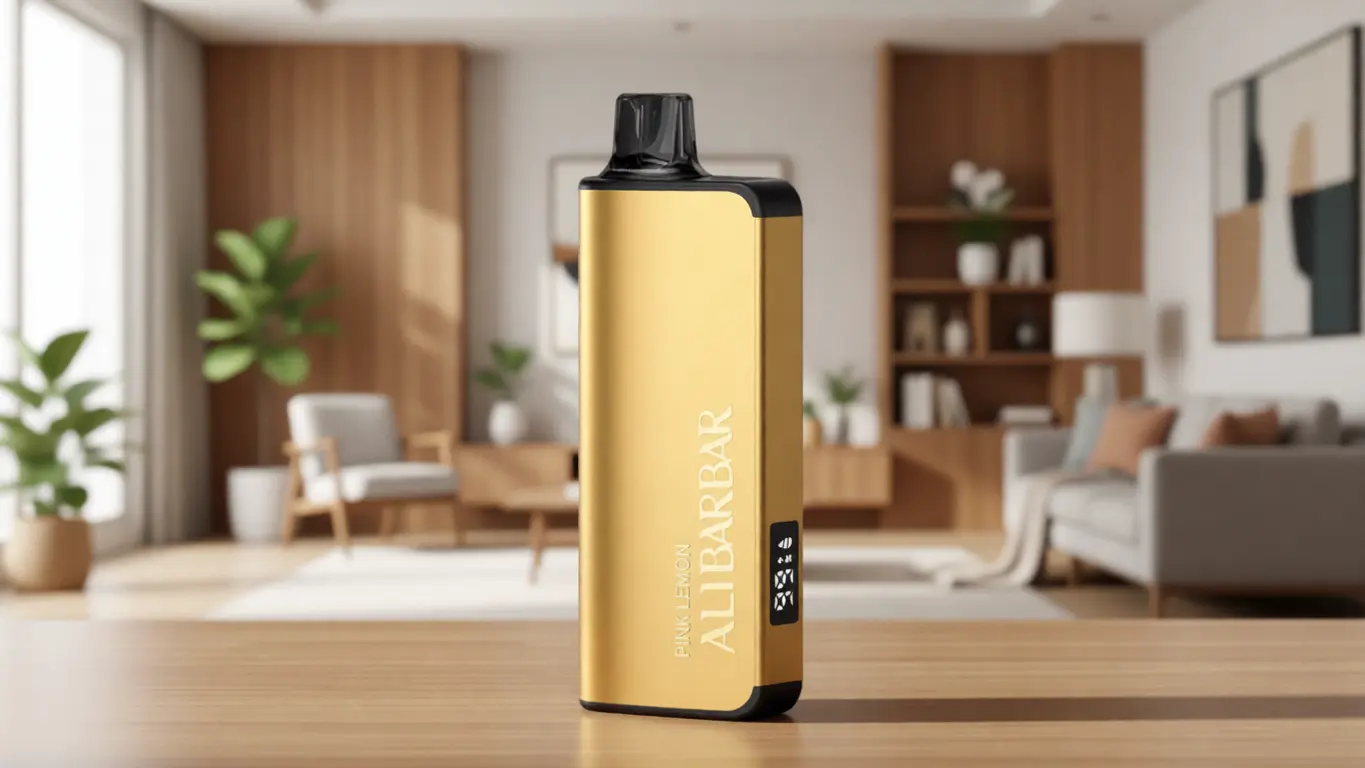
Beyond the liquid formulation, certain devices incorporate mechanical or electronic controls that allow the user to modulate the cooling intensity. This is a fundamentally different engineering approach from simply adding coolant to a fixed‑ratio recipe. An adjustable ice system, such as the one found in the ALIBARBAR Ice Adjust 12000, separates the cooling element from the base flavour output. By altering the airflow path or the power delivered to a dedicated cooling coil, the device enables the user to dial the sensation from a faint chill to an aggressive sub‑zero blast.
The practical implication is substantial. Fixed‑ice devices commit the user to one cooling level for the entire operational life of the unit. If that level turns out to be too harsh or too subdued, there is no recourse. Adjustable systems trade simplicity for control, and they appeal strongly to users who value flexibility across different settings or times of day.
Interaction with Flavour Profiles
Cooling agents do not simply sit alongside a flavour; they actively reshape its perception. WS‑23 can suppress the sweetness of fruit notes while amplifying acidity, making a berry blend taste sharper and less ripe. Menthol, with its own aromatic load, can blend harmoniously with tobacco or mint profiles but clash violently with delicate pastry or cream flavours. An informed user, therefore, does not evaluate ice in isolation. They consider the pairing — and some device families are engineered with this pairing in mind, offering ice variants only for specific flavour categories that benefit from the cooling overlay.
Longevity and Consistency of the Ice Effect
A less discussed but equally critical factor is how the cooling sensation behaves over the device’s operational lifespan. Low‑grade synthetic coolants can fade perceptibly after the first few weeks, leaving the user with a weak, uneven chill. The problem compounds in sealed‑unit devices where the power output does not adjust to compensate for coolant depletion. High‑quality coolant formulations, stabilised at the manufacturing stage, maintain their receptor‑activation potency far longer. When evaluating any ice‑branded device, the user should ask: will the cooling be the same on day 30 as it is on day one? The answer hinges on the purity and concentration of the agent, and on whether the device’s architecture can compensate for natural sensory adaptation — a phenomenon where the palate becomes desensitised to chronic cold stimulation.
Applying These Criteria to Real‑World Options
Not all ice implementations are created equal, and the market reflects that. Some devices treat ice as an afterthought — a splash of menthol in an otherwise standard recipe. Others build the entire product around the cooling experience.
Consider the category of adjustable‑ice devices. The ALIBARBAR Ice Adjust 12000 is instructive here because it makes the separation between base flavour and cooling intensity explicit. Rather than infusing the entire liquid reservoir with coolant, it employs a dedicated cooling mechanism that the user can tune across multiple levels. This architecture solves one of the most persistent complaints about ice devices: the tendency for the cooling to dominate and obliterate nuance. At lower settings, the ice recedes into a background freshness; at higher settings, it asserts itself without chemically blending with the flavour concentrate. The trade‑off, naturally, is that the device is slightly larger and more complex than its non‑adjustable equivalents.
In contrast, many fixed‑ice devices adopt a “set and forget” philosophy. They are simpler to operate and often more compact. Their weakness, however, is inflexibility. If a user purchases a fixed‑ice device with a menthol‑forward formulation and later discovers they prefer WS‑23‑style cooling, there is no way to adjust — the only option is to replace the device entirely. This is not a flaw so much as a design choice that favours convenience and compactness over adaptability.
Another observable industry pattern is the rise of ice as a modifier rather than a standalone category. Some product families, including several beyond the ALIBARBAR range, now offer ice versions of their most popular non‑ice flavours. This modular approach to flavour design acknowledges that cooling is often a complement, not a destination. It also allows the user to make a direct, side‑by‑side comparison of the same flavour with and without ice — an exercise that sharpens understanding of how coolant agents alter taste perception.
A Practical Framework for Evaluating Ice in a Device
Given the variability in what “ice” can mean, a structured evaluation method protects against disappointment. The following diagnostic questions can be applied to any device, whether purchased online or in a physical retail environment.
What cooling agent is used? If the manufacturer does not disclose whether it is menthol, WS‑23, or a blend, the user is operating with incomplete information. A simple enquiry to the retailer can clarify this.
Is the ice level adjustable or fixed? An adjustable system adds complexity but delivers control. A fixed system reduces decision fatigue but locks in the experience. There is no universal superior choice — only a better fit for the individual’s tolerance and curiosity.
How does the device communicate its ice setting? Some adjustable units display the cooling level through LEDs or haptic feedback. Others require the user to count button clicks. This matters more in low‑light or social settings where glancing feedback is essential.
What is the rated operational life, and does it account for coolant stability? A high‑capacity device is only valuable if the cooling sensation remains consistent throughout that capacity. A specification that states “up to 12,000 puffs” says nothing about whether the ice will be potent at puff 11,000.
Does the device pair ice with a specific flavour, or is it a universal cooling overlay? This determines whether you are getting an engineered pairing or a generic add‑on.
Using a standardised comparison table — even a mental one — can reduce decision paralysis. List the cooling agent, adjustability, flavour compatibility, and rated lifespan for each candidate. The choice often becomes clearer when these variables are placed next to each other rather than buried in marketing language.
Common Selection Errors and Industry Observations
After observing how adult users approach the ice category, several patterns of misjudgement emerge with regularity.
Overweighting the “ice” label while ignoring the underlying agent. A device labelled “Ice Mint” might sound similar to “Ice Blueberry,” but the former likely relies on menthol for both cooling and flavour, while the latter may use WS‑23 to cool a fruit recipe. The word “ice” tells you almost nothing; the combination with the flavour name gives a clue, but only the disclosed agent confirms.
Assuming all adjustable‑ice devices operate identically. Some adjustable systems increase coolant flow; others increase airflow velocity to create a wind‑chill effect. The latter approach feels different — it cools by evaporation rather than chemical stimulation — and may not satisfy a user seeking deep, TRPM8‑mediated cold. Knowing which principle a device uses prevents post‑purchase dissonance.
Neglecting device architecture when comparing longevity and cost. A sealed, non‑replaceable device with ice that fades before the power cell depletes represents poor value, no matter how low the initial price. A modular system that allows the user to replace only the cooling or flavour cartridge can extend useful life, though it usually commands a higher upfront cost.
From an industry perspective, we are witnessing a quiet shift away from menthol‑dominant ice. As more users seek clean cooling that does not interfere with complex flavour profiles, WS‑23 and similar synthetic coolants are gaining ground. Simultaneously, adjustable systems are moving from a premium differentiator to a standard expectation in the mid‑range segment. The brand that can stabilise coolant potency over a longer operational period while offering fine‑grained control will likely define the next generation of ice devices. None of this is visible in flashy marketing, but it is plain when analysing the trajectory of device engineering and user feedback.
Frequently Asked Questions
Q: Is “ice” the same as menthol?
A: Not necessarily. Menthol is one specific cooling compound with a distinct mint taste. Ice can also be produced by synthetic coolants like WS‑23, which provide cold without the mint flavour, or by combinations of several agents.
Q: Can a device taste icy without any chemical coolant?
A: Some devices create a cooling sensation through increased airflow, which accelerates the evaporation of moisture on the palate and produces a physical chill. This is less intense and shorter‑lived than chemical cooling.
Q: Does an adjustable‑ice device require more maintenance?
A: Generally, no. The adjustment mechanism is typically a mechanical slider or electronic switch that does not introduce additional consumable parts. However, if the cooling element is a separate coil, it may affect overall device longevity, and users should check the rated lifespan for each component.
Q: How can I tell if a device uses menthol or WS‑23?
A: The most reliable method is to consult the product specification sheet or ask the retailer directly. Some manufacturers disclose this information; others do not. If undisclosed, a strong minty taste on the palate usually indicates menthol, while a sensation of coldness without mint suggests WS‑23.
Q: Why does the ice sensation fade after extended use?
A: Two factors are at play: coolant degradation in the formulation, and sensory adaptation, where the palate becomes less responsive to prolonged cold stimulation. High‑quality devices use stabilised coolants that minimise chemical breakdown, but sensory adaptation is a physiological phenomenon that no device can eliminate.
Q: Can I use an ice device if I dislike mint?
A: Yes, provided the device relies on a non‑menthol cooling agent. Many fruit‑flavoured ice devices use WS‑23 to add a clean chill without any mint character.
Q: Are adjustable‑ice devices worth the extra cost?
A: The answer depends on your sensitivity to cooling and your desire for flexibility. If you find most fixed‑ice devices either too mild or too aggressive, the ability to fine‑tune the level directly addresses that frustration. If you have already found a fixed‑level product that suits you perfectly, adjustability adds little.
Q: Does ice affect how long a device lasts?
A: The cooling agent itself does not drain the power cell or reduce the volume of the flavour reservoir. However, adjustable systems may consume slightly more power when run at higher cooling settings, and any device that uses a separate cooling coil will have a defined operational life for that coil. Always check the combined lifespan specification.
Q: What should I do if my ice device doesn’t feel as cold as it used to?
A: For non‑adjustable devices, this often signals that the coolant is depleting or that sensory adaptation has set in. With adjustable devices, try increasing the setting first. If the sensation remains weak, the coolant may have degraded, and replacement of the relevant cartridge or the entire device may be necessary.
Q: Is it better to choose a device that focuses entirely on ice or one that offers it as an option?
A: A dedicated ice device often delivers a more intense, engineered cooling experience. A multi‑option device trades some of that intensity for versatility. Your choice should be guided by whether you see cooling as the main event or a complementary enhancement.
Conclusion
The word “ice” on a device label promises clarity but delivers ambiguity. By deconstructing the term into its component parts — cooling agent chemistry, adjustability, flavour interaction, and longevity — users can replace guesswork with a direct, repeatable evaluation method. The conversation shifts from “Is this one good?” to “Which cooling mechanism best matches my preferences and routine?”
Access to standardised, accurate information turns a confusing product category into a navigable one. When sourcing information or purchasing devices, turning to retailers that maintain consistent, factual product records helps close the gap between marketing language and lived experience. At OZVAPE Shop, we structure our listings and guidance around this very principle: that a well‑informed user is the most satisfied one.
Ultimately, the right ice device is not the one with the most aggressive marketing or the highest puff count. It is the one whose cooling signature — menthol or clean, fixed or adjustable, intense or subtle — aligns with what you actually enjoy, hour after hour, day after day.