
VAPE FAQs
How To Get A Free Vape Online?

Sep
The search for a free vape is one of the most common queries in the personal electronic device space. It reflects a natural human preference—if something can be obtained without direct cost, why not explore that path? At OZVAPE Shop, we field this question regularly, and the honest answer is more nuanced than most quick search results suggest. This article examines what “free” actually means in the context of online device offers, separates the viable opportunities from the traps, and provides a framework for evaluating whether a deal is worth your time—or your personal data.
We approach this not as a retailer pushing a sale, but as observers of the industry who have seen the same patterns repeat across years of user interactions. The goal is to equip you with the knowledge to navigate offers intelligently, whether you ultimately purchase, trade, or indeed receive a device without upfront payment.
Understanding What Matters: Core Engineering and Design Factors (H2)
Before examining how to get a free device, it is essential to understand what you are actually receiving. Many “free” offers are tied to products of questionable origin—devices that may look functional but lack the engineering integrity necessary for consistent, safe operation. Evaluating a free offer requires the same analytical framework you would apply to a paid purchase, and possibly more scrutiny.
Internal Architecture and Output Consistency (H3)
The heating element configuration and power delivery circuitry determine whether a device performs reliably through its operational life. Well-engineered units maintain consistent output from the first to the last use, while poorly constructed devices often degrade noticeably after the first half of their rated lifespan. When an offer presents a device at zero cost, ask yourself: is the manufacturer known for thermal management that provides stability, or are they cutting corners to keep production costs near zero? If the device’s architecture cannot be verified through published specifications or independent reviews, the “free” price may simply reflect that no one would pay for it.
Power Management and Status Transparency (H3)
A device that cannot communicate its remaining operational capacity forces the user to operate blind. This is a recurring frustration that leads to premature disposal, carrying backups unnecessarily, and general dissatisfaction. Genuine manufacturers invest in clear status indicators—LED arrays, haptic feedback, or reliable battery monitoring circuits. Free devices often omit these features entirely, relying on a user’s guesswork. The hidden cost of such ambiguity is higher than the initial price tag suggests: you lose time, convenience, and confidence.
Physical Design and Material Durability (H3)
Surface treatments, mouthpiece contouring, and overall ergonomics are not merely aesthetic choices. They determine whether a device remains functional and pleasant to use after days or weeks of pocket carry. Cheaper “free” units frequently use thin plastics that crack, finishes that wear off rapidly, and mouthpieces that cause discomfort during extended use. Evaluating material quality is difficult from product images alone, which is why offers from unverifiable sources are especially risky.
Modularity and Lifecycle Flexibility (H3)
The most user-respecting designs offer some form of modularity—rechargeable batteries, replaceable cartridges, or refillable reservoirs. A device given away for free is almost always a sealed, single-use unit that ends up in landfill after its limited life. While such units have their place, the long-term cost per use can be higher than a paid modular system. If you are being offered a free device, consider what happens after it expires. Will you be able to recharge it? Replace a component? Or will you simply need another free offer—perpetuating a cycle of waste and dependency?
Applying These Criteria to Real-World Options (H2)
When we look at the landscape of genuine free device opportunities, a few patterns emerge. They rarely come from major manufacturers themselves, who typically direct their marketing budgets toward discounted bundles or loyalty programs rather than outright giveaways. Instead, legitimate free offers tend to come from:
Retailers offering introductory promotions to first-time customers, often tied to a small purchase threshold (e.g., “free device with any order over $X”).
Brand ambassadors and influencer programs where reviewers receive samples in exchange for honest feedback. These are often limited to individuals with established audiences.
Trade-in or recycling programs where you send in an old device and receive a discount that covers the full cost of a new one, effectively making it free.
Industry events, expos, or online competitions run by licensed vendors.
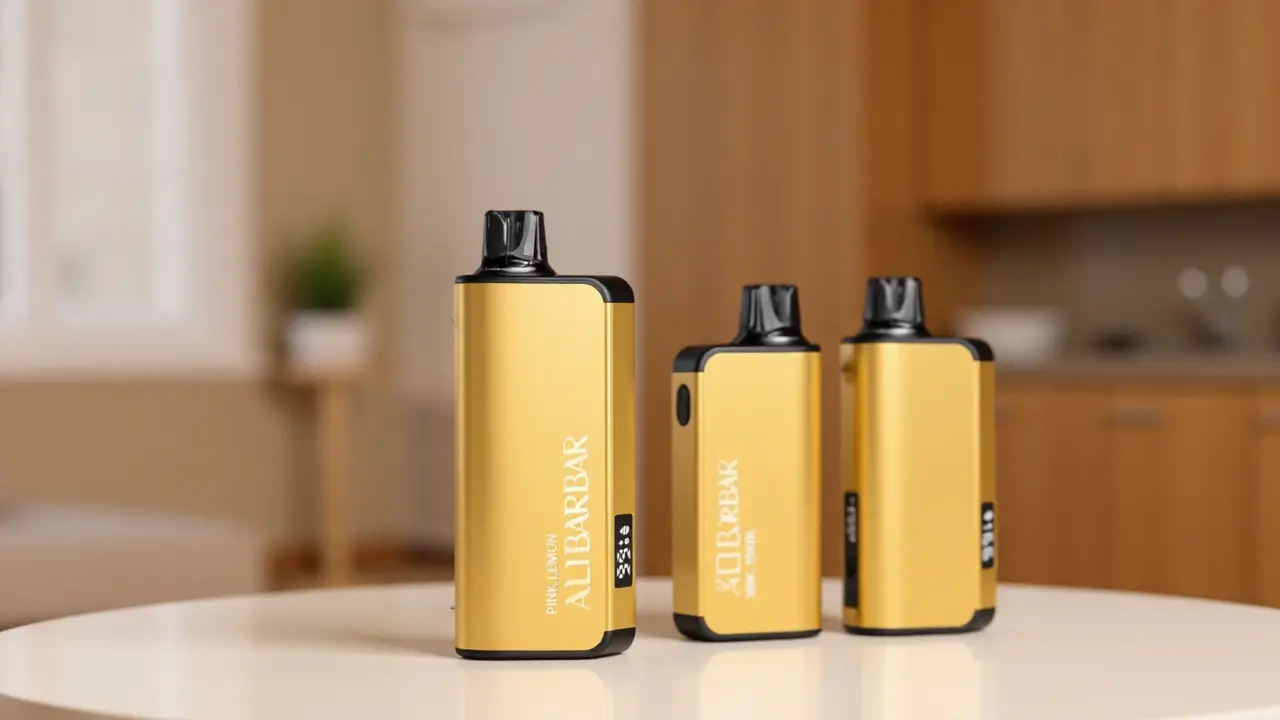
The ALIBARBAR product line, available through OZVAPE Shop, illustrates a contrast worth noting. ALIBARBAR devices are engineered with transparency in mind—clear power indicators, consistent thermal performance, and modular options across the INGOT 9000, INGOT 15000, and Ice Adjust 12000 series. These are not devices one would expect to find in a “free” bin, because their manufacturing cost reflects genuine investment in user experience. That does not mean they never appear in promotions; rather, when they do, the terms are clearly stated and the source is verifiable.
Other major industry participants such as Geek Bar, Lost Mary, and Elf Bar also offer limited-time promotions through authorised channels. The common thread across all legitimate offers is traceability. If the promotional source cannot be linked back to an official distributor or brand website, assume the device is counterfeit, expired, or substandard.
A Practical Framework for Evaluation (H2)
When you encounter an offer promising a free vape, apply the following step-by-step methodology before clicking “claim.”
Verify the source. Is the offer hosted on the official brand or retailer website, or a third-party platform? Check the domain name carefully for misspellings. Legitimate free offers rarely come from unfamiliar URLs.
Read the terms and conditions. What is the actual requirement? Free devices are often conditional on purchasing a certain quantity of consumables, paying a shipping fee that exceeds the device’s cost, or providing credit card details that are then charged recurring amounts.
Identify the device model. If the offer does not specify a brand and model number, it is likely a generic unit assembled at minimal cost. Search for independent reviews or specification sheets.
Calculate the total cost to your door. Add any shipping, handling, or processing fees. A free device that costs $15 to ship and $5 in “processing” is not free—it is a $20 purchase of unknown value.
Assess the device’s lifecycle. Ask: How long will this device last? Is it rechargeable? If not, what is the cost of replacing it? Compare that to the cost of a known quality device from a trusted retailer.
Check for data privacy. Offers that require extensive personal information—ID scans, social media access, or billing details—should raise immediate red flags. Your data has real value, and a “free” device is often just bait.
This framework applies regardless of the brand. Standardised specification comparison is a practical tool: most authorised stores, including OZVAPE Shop, provide full technical details for every device they carry, allowing you to make informed trade-offs.
Common Selection Errors and Industry Observations (H2)
Users who end up disappointed by free offers tend to repeat the same mistakes. Based on years of interaction with the market, here are the most common errors and the reasoning behind them.
Overweighting the Zero Price While Ignoring Hidden Costs
The strongest psychological pull of “free” overrides rational evaluation. People accept a $25 shipping charge for a device that retails for $10, convinced they are saving money. In reality, they are paying more than retail for an unknown product. Industry data suggests that the average “free plus shipping” offer results in a net cost 30–50% higher than the device’s wholesale value.
Assuming Visual Similarity Indicates Equivalent Internal Engineering
Many counterfeit devices mimic the exterior of popular models—same shape, similar colour scheme, identical-looking branding. But the internal components are radically different: cheaper heating elements, inferior wicking materials, and absent safety circuits. A device that looks like a known quality unit but is offered for free is almost certainly a counterfeit, and may pose safety risks due to thermal runaway or material degradation.
Undervaluing Modularity in Cost-per-Use Calculations
A single-use free device might last 2,000 puffs. A paid rechargeable system with replaceable pods might cost $30 upfront but deliver 10,000 puffs before needing a new pod. The free device costs $0 upfront but $0.025 per puff (if shipping was $5). The paid device costs $0.003 per puff. Over the lifespan, the free unit is actually more expensive—and generates more waste.
Confusing Category Terminology with Technical Specifications
Terms like “disposable,” “rechargeable,” “pod system,” and “mod” are categories, not performance specifications. A free device marketed as “rechargeable” may have a battery that cannot be replaced, a charging port that fails after a few cycles, or no over-discharge protection. Always look for actual electrical ratings, battery capacity, and charging current limits—information rarely provided in free offers.
Frequently Asked Questions (H2)
Q: Are there any truly free vape devices available online without any payment?
A: Extremely rare. Most “free” offers involve shipping fees, subscription commitments, or data collection. The closest exception is manufacturer sample programs, which are typically limited to reviewers or industry professionals.
Q: Can I get a free ALIBARBAR device through OZVAPE Shop?
A: OZVAPE Shop does not currently run a free device program. They focus on providing factory-certified products with transparent pricing. Occasionally, promotional discounts or bundle offers may reduce the effective cost to near zero, but terms are always clear.
Q: How can I tell if a free offer is a scam?
A: Red flags include: requests for credit card info for “verification,” domains that mimic official sites, no physical business address, limited-time pressure tactics, and devices without brand names. If the offer sounds too good to be true, run it through the evaluation framework above.
Q: What about free vape giveaway contests on social media?
A: Some are legitimate, run by recognised vendors or influencers. Look for clear rules, a reputable host, and no requirement to pay shipping to claim the prize. If the account has few followers or posts, it is likely a phishing attempt.
Q: Is it legal to receive a free vape device by mail in my country?
A: Regulations vary significantly. In Australia, for example, any device intended for nicotine use requires a prescription. Even free devices may need to comply with local import and customs laws. Always verify your jurisdiction’s rules before providing a shipping address.
Q: Can I get a free vape by signing up for a newsletter or loyalty program?
A: Some retailers offer a welcome discount code that reduces the price of a device to zero when combined with a modest purchase. This is the most common path to a free device, but it is tied to spending elsewhere.
Q: What should I do if I receive a free device that is defective?
A: Without a purchase receipt, returns are virtually impossible. Legitimate retailers offer warranties only on devices sold through their own channels. Counterfeit or promotional units rarely come with any support.
Q: Are there any free vape offers that include free shipping as well?
A: Extremely rare. If a device is free and shipping is also free, the offer is almost certainly a loss leader for a subscription trap or data harvesting. Avoid.
Q: Can I trade in old devices for a free new one?
A: Some retailers and manufacturers run trade-in programs. For example, you may send in any used device and receive a credit that covers the cost of a new ALIBARBAR unit. Check OZVAPE Shop’s current promotions for any such offers.
Q: Why do companies offer free vapes at all?
A: To acquire new users, collect data, test markets, or clear inventory. Legitimate companies use free trials to build long-term relationships. Scammers use them to commit fraud or sell your information.
Conclusion
The honest answer to “how to get a free vape online” is that truly unconditional free devices are vanishingly scarce. Most offers come with hidden costs—financial, privacy, or quality. The smartest approach is not to chase free units, but to evaluate total cost of ownership, device reliability, and the trustworthiness of the source.
An informed user understands that a $30 device from an authorised retailer like OZVAPE Shop, backed by a documented supply chain and local support, often delivers better value than a $0 device from an unknown supplier. The real saving comes from avoiding the frustration of premature failure, the waste of counterfeits, and the risk of data misuse.
If you do find a legitimate free offer, apply the framework above. Verify the source, calculate the full cost, and ask yourself whether the device meets your actual needs—not just the fleeting appeal of a zero price tag. The right choice is the one that matches your routine and respects your time, not the one with the most compelling “free” headline.
For verified product information and current promotions on the ALIBARBAR range, visit OZVAPE Shop (opens in new window).