
VAPE FAQs
How To Blow O\’S With Vape?
Sep
It’s a familiar scene: someone produces a perfectly formed, floating ring of vapor that glides across the room, seemingly effortless. You try it yourself and get little more than a shapeless puff. The most common reaction is to blame your own technique — your mouth shape, the way you cough, your timing. Technique matters, certainly, but an often-overlooked factor is the device itself. Vapor that starts unstable, loses density mid‑exhale, or exits through a turbulent airstream will never form a clean ring, no matter how much you practise.
At OZVAPE Shop{.internal-link target=”_blank”}, we regularly speak with adult users who have spent weeks trying to master smoke rings without realising their hardware was working against them. This article examines the relationship between device design and ring formation, then outlines a technique that takes that hardware into account. Instead of promising magic tricks, it focuses on what you can realistically expect from a well‑chosen vape and a few hours of intentional practice.
Understanding What Matters: Core Engineering and Design Factors
A vapor ring is a miniature vortex — a rolling torus of condensed aerosol that stays coherent only if the expelled vapor has uniform density and minimal turbulence. The more a device fights its own physics with inconsistent heating, erratic airflow, or a poorly shaped mouthpiece, the harder your job becomes.
Internal Architecture and Output Consistency
Behind every stable cloud is a heating element that maintains its temperature across a full draw. Mesh coils, for example, spread heat more evenly over a larger surface area than traditional wire coils, which reduces hot spots and the invisible “thin” patches that cause rings to break apart mid‑flight. Devices built around mesh architecture tend to output vapor with a steady viscosity — exactly the kind of laminar flow that supports vortex formation.
What you should observe: when you take two consecutive draws of the same length, the vapor density should feel identical. If the second pull is thinner, the coil is struggling to recover; if it feels hotter, the temperature regulation is overshooting. Either inconsistency translates into unstable rings.
Power Management and Status Transparency
Ring production requires more than a good coil. The drive electronics must deliver a flat voltage curve throughout the device’s discharge cycle. A battery whose output weakens after 50% state‑of‑charge will cause the vapor to become progressively wispier — a problem users often misattribute to their own lung control.
Equally important is status transparency. A device that shows a clear, segmented battery level or gives a distinct low‑power warning lets you know when the power train can no longer support dense vapor. Without this, you might attempt rings with a dying device, fail, and assume your technique has regressed. The hidden cost of poor status feedback is wasted practice time and unnecessary backup devices.
Physical Design and Mouthpiece Geometry
The mouthpiece is the last physical gate the vapor passes through before leaving the device. An oval or irregularly shaped tip disrupts the circular cross‑section you need to initiate a ring. A perfectly round exit, ideally with smooth internal walls and a slight radius at the lip, encourages a cleaner separation of the vapor “puck” from the device.
Beyond the mouthpiece, consider the device’s overall ergonomics. You’ll be holding it in one position for repetition drills. A weight imbalance or a sharp edge that digs into a finger after ten minutes becomes a distraction that leaks into your fine motor control.
Lifecycle Flexibility and Performance Degradation
Some sealed units begin with impressive density but degrade noticeably after a few days of use, particularly if they rely on a single‑use power cell. The vapor becomes thinner, draw‑to‑draw consistency falls, and suddenly the rings you were landing yesterday seem impossible. A modular or high‑capacity design — one with a documented, consistent output across its rated life — protects your practice sessions from moving baselines.
If you are serious about developing muscle memory for ring tricks, choose a device that delivers the same vapor characteristics on the hundredth puff as it does on the first. Check for third‑party reviews that measure output consistency over time rather than relying solely on initial impressions.
Applying These Criteria to Real-World Devices
Different device architectures map onto ring‑blowing suitability in fairly predictable ways. Hardware that prioritises steady, laminar vapor and provides adjustable airflow tends to give the most controllable results.
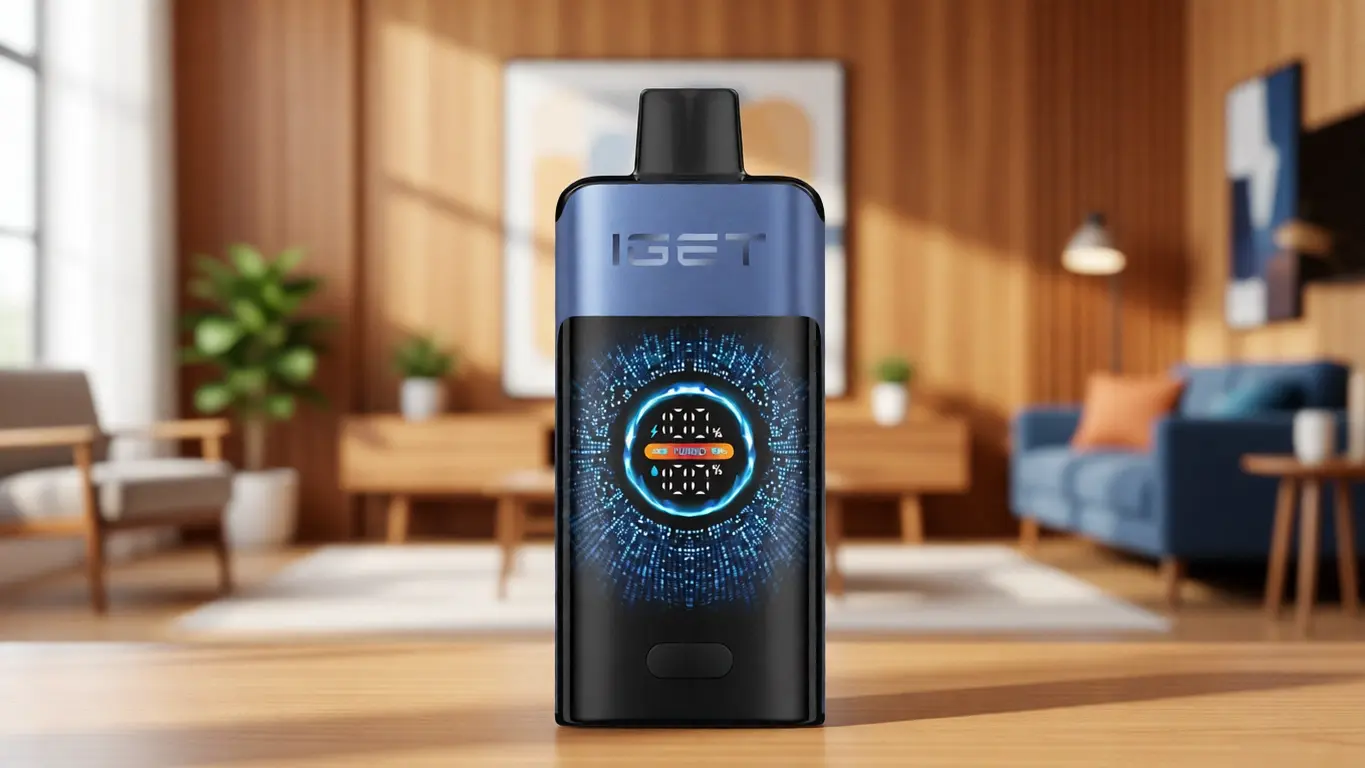
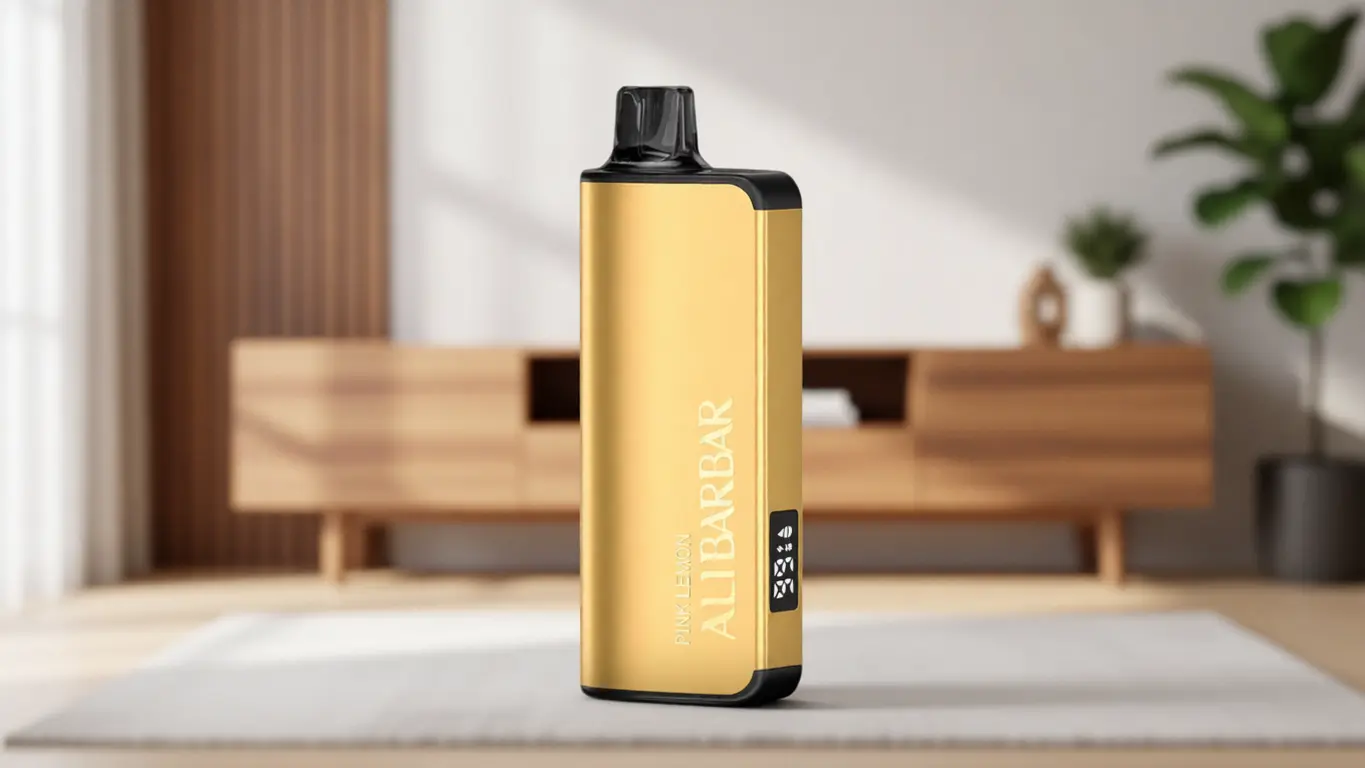
Consider the ALIBARBAR INGOT 9000. It employs a fine‑mesh heating element and an airflow path tuned for an even draw. Early‑life consistency is strong, and field reports indicate minimal degradation until the device nears its endpoint. The fixed airflow is fairly open — a benefit for ring volume but one that demands precise lip control to avoid overshooting.
The ALIBARBAR Ice Adjust 12000 adds an external airflow slider. Narrowing the airway increases the velocity of the vapor stream and can make smaller, faster‑moving rings easier to launch. Opening it up produces a broader, softer flow ideal for larger rings in wind‑free settings. Having that adjustment available turns ring practice into a system you can dial in, rather than a binary pass/fail.
On the sealed‑unit side, the ALIBARBAR INGOT 15000 prioritises puff‑count longevity. Its power management chipset holds a stable output curve deep into the device’s life. That matters if you plan to drill ring technique during long sessions: the vapor you get at puff 1,500 will closely resemble what you had at puff 50. The trade‑off is a slightly wider mouthpiece than some narrower‑bore competitors, which shifts the onus onto your lip formation rather than the hardware to create a crisp exit shape.
Other commonly encountered device families include draw‑operated pen styles that fire immediately but may lack the power headroom for dense vapor, and fully adjustable box‑mod systems that reward technical users with near‑laboratory control but introduce complexity that can overwhelm a beginner.
No single device type is a silver bullet. The best choice is the one that gives you repeatable, laminar output and avoids sudden changes in vapor character you have to compensate for mid‑session.
A Practical Framework for Evaluating Your Vape for Ring Tricks
You can test a device’s ring‑friendly attributes in about ten minutes. Use this sequence as a diagnostic before committing practice time to any particular unit:
Density snapshot: Take a 3‑second draw and exhale immediately onto a dark background. Note the edge definition of the cloud. Repeat after ten draws. If the edge softens or the cloud volume shrinks, the device’s thermal recovery is unstable.
Airflow laminarity: Draw slowly through the device without inhaling — just observe the feel of the stream on your lips. A smooth, non‑turbulent flow is what you want. Pulsing or fluttering sensations indicate an internal airflow path that will work against ring formation.
Lip‑seal test: Position the mouthpiece between your lips as if to form an O and release a short, gentle puff without any throat action. Does the vapor leave as a roughly round blob? If it immediately mushrooms or splits, the mouthpiece geometry or airflow is introducing asymmetry.
Power fade check: Use the device until its battery indicator shows 50%. Repeat the density snapshot. A notable drop in thickness means the voltage curve isn’t flat — you’ll need to account for that in timing your practice sessions.
If a device passes these four checks, any ring failure from that point forward is technique, not hardware. That’s empowering information: it eliminates variables.
Common Selection Errors and Industry Observations
The most frequent misstep is assuming that any device capable of producing a large cloud can also produce a stable ring. Cloud volume and vapor stability are not the same thing. A turbulent‑airflow device can generate impressive-looking plumes that collapse the instant you try to shape them. Look for stability first.
Another error is equating a high advertised puff count with long‑term output consistency. A device might deliver 5,000 puffs but only the first 1,000 at full density. If you’re ring drilling, the only puff count that matters is the count of puffs that are dense enough to form a vortex. Research, or better yet personal testing, is the only way to know where that cliff is.
We also see users over‑indexing on mouthpiece size. A narrow mouthpiece can be easier to position, but if the internal airflow is turbulent, that small exit actually amplifies distortion. Judge the system, not an isolated dimension.
From an industry perspective, the shift toward rechargeable, high‑capacity architectures is making consistent ring‑friendly output more accessible. Early disposable designs rarely held their initial density through the full charge cycle. Now, improved power‑management ICs and mesh manufacturing tolerances mean several product lines in the ALIBARBAR catalogue sustain their performance envelope from first use to last. This reduces the need to buy redundant spares just to have a fresh device for trick attempts — a small but meaningful improvement in cost‑of‑practice for the dedicated user.
Frequently Asked Questions
Q: What vape settings help blow O’s?
A: If your device has adjustable airflow, start with it about 30% open. This balances a dense stream with enough back‑pressure to control the velocity. If power is adjustable, set it to a level that gives you a cool‑to‑warm vapor; overly hot vapor tends to break apart more easily.
Q: Why do my rings fall apart after a few centimetres?
A: Usually because the initial vapor disk isn’t rotating cleanly. This can be caused by an asymmetrical lip opening, a turbulent device airflow, or releasing the vapor too forcefully. Practise in front of a mirror to check that your lip O is a perfect circle and that you’re using a short, directed push rather than a full exhale.
Q: Does the type of e‑liquid or nicotine strength affect rings?
A: The liquid’s viscosity and glycerol content influence vapor density. Higher‑VG blends tend to produce thicker, longer‑lasting aerosols, which can make rings more visible and stable. Nicotine strength has no direct mechanical effect on ring formation.
Q: Do I need a special vape for O’s, or can I use any device?
A: You can attempt rings with almost any device, but results vary widely. A device with consistent output, laminar airflow, and a round mouthpiece will make learning notably easier because it removes hardware instability from the equation.
Q: How can I tell if my device is holding me back?
A: Use the four‑step checklist in the framework section. If the device fails more than one test, your practice time is partly being spent fighting the hardware. Switching to a device that passes all four checks can produce rapid progress.
Q: Is it better to use a button‑fired or draw‑activated vape for rings?
A: Neither is inherently superior. A button‑fired device lets you pre‑heat the coil slightly before drawing, which can give a denser initial vapor. A draw‑activated device requires more precise timing but can be more portable. Choose based on which control style you can execute consistently.
Q: How long does it take to learn to blow O’s?
A: With a suitable device and daily 15‑minute practice, most people can produce a recognizable ring within a week. Mastering size, speed, and multi‑ring cascades takes months. Progress accelerates when you eliminate hardware variability early.
Q: Can airflow turbulence be fixed without replacing the device?
A: Minor turbulence can sometimes be reduced by cleaning the air inlets. However, if the turbulence is inherent to the internal duct design, there is no user‑serviceable fix. In that case, a different device with a straighter vapor path is the practical solution.
Q: Why do some devices produce great flavor but weak rings?
A: Flavor intensity depends more on the specific aroma‑carrying components in the liquid and how efficiently the coil volatilises them. Ring stability depends on vapor density and flow laminarity. These two performance characteristics are not always designed to coexist; a device optimised for one may compromise the other.
Q: Should I buy a backup device just for practising tricks?
A: If your daily device excels at flavor but has turbulent airflow, a secondary, ring‑focused unit can be a worthwhile investment. Look for something with documented output flatness and simple, non‑adjustable airflow that’s been verified as laminar. You’re buying practice efficiency, not glorified hardware.
Conclusion
Blowing O’s is not an inborn talent — it is the intersection of a disciplined lip‑throat coordination and a device that delivers the same dense, laminar vapor every single time. The people who make it look effortless have typically put hours into technique, yes, but they have also chosen hardware that refuses to surprise them. A device that changes its output character mid‑session, hides its true battery state, or pushes vapor through a chaotic pathway adds invisible friction to your learning process.
The device families currently available through OZVAPE Shop{.external-link target=”_blank”} are built around a design language that values output consistency and honest status reporting — precisely the characteristics that let you focus on your own mechanics instead of on equipment malfunctions. Whether you favour a compact, ready‑to‑use form or a rechargeable system that holds its curve across hundreds of puffs, the priority should be the same: pick a unit that you can trust to perform identically on the first ring of a drill and the last. That way, your muscle memory can build on a stable foundation, and your practice sessions will produce results that persist.