
VAPE FAQs
What Happens When U Put A Vape In Water?
Jun
Water entering a personal vaporizer triggers a chain of physical and chemical events that few users fully understand until it is too late. A dropped device, a sudden downpour, or an accidental dunk in a sink—these moments are common, yet the immediate panic often leads to actions that make a bad situation worse. The purpose of this article is to move beyond guesswork and explain exactly what occurs inside a vape when it meets water, why those events are hazardous, and what you can realistically salvage. Along the way, we will reference the construction choices that make some devices slightly more resistant to moisture than others, and why knowing those details matters when you eventually need a replacement from a source like OZVAPE Shop.
Understanding What Matters: Core Engineering and Water Exposure
A vape is not one thing—it is an assembly of a power source, heating element, liquid reservoir, and control circuitry, all packed into a portable casing. Water interferes with every one of these subsystems in a different way. Knowing how they fail gives you the diagnostic power to assess a mishap rationally.
The Immediate Electrical Risk: Short Circuits and Battery Failure
The most dangerous consequence of submersion is a short circuit across the battery terminals or control board. The lithium-ion cells used in virtually all modern personal vaporizers deliver high current, and water—especially if it contains dissolved salts or minerals—acts as a conductive pathway. A short can cause an instant voltage drop that permanently damages the battery’s internal structure. More critically, it can trigger a thermal runaway: the cell heats uncontrollably, the electrolyte decomposes, and the battery may vent flammable gases or even rupture. Even if the device appears dead but cool to the touch, microscopic dendrite formation inside the cell can lead to a delayed internal short days or weeks later. The physical integrity of that battery is compromised, and recharging it after drying is never a safe gamble.
E-Liquid Contamination and Wick Saturation
In refillable or pod-based systems, water intrusion often begins at the mouthpiece or airflow slots. When liquid enters the reservoir, it mixes with the e-liquid, diluting the nicotine and altering the vaporisation temperature profile. The cotton wick, designed to draw a specific viscosity of liquid, now struggles to saturate properly, resulting in dry, burnt-tasting puffs even after the water has evaporated. Water trapped within the porous ceramic or cotton of the coil itself can create hot spots and spitting. In disposable devices, the sealed reservoir may keep water out for a time, but if the external pressure forced water past the air intake, the coil and filling material are almost certainly ruined beyond recovery.
Circuit Board and Sensor Damage
Modern vapes rely on a miniature printed circuit board that interprets button presses, monitors airflow via a microphone or pressure sensor, and manages output to the coil. Water causes near-instant corrosion on exposed copper traces and the pins of integrated circuits. The airflow sensor, which is essentially a tiny membrane that deforms under suction, is especially vulnerable—once distorted or crusted with mineral residue, it either fails to activate or triggers erratically. In many devices, the sensor assembly is the first component to die after even brief moisture exposure, leaving the user with a unit that lights up but produces nothing.
Material and Structural Degradation
The chassis of a vape may be metal alloy, polycarbonate, or a combination of both. Water alone does little to plastics, but the adhesives that bond the body panels, secure the battery pack, and seal the display window can soften and fail. Metal components—spring-loaded 510 connectors, USB ports, and internal grounding tabs—begin to rust almost immediately. Over time, this corrosion creates high-resistance connections that degrade performance even if the electronics survive. A device that was once reliable may suddenly deliver inconsistent power or refuse to charge, with the root cause traceable back to a single accidental soak.
Applying These Criteria: Why Some Devices Survive Accidents Better Than Others
No personal vaporizer is designed to be submerged. There is no standardized IP rating for these products, and manufacturers rightly warn against any contact with liquids beyond the e-liquid itself. However, the physical architecture of the device does influence how rapidly water reaches the vulnerable internals.
Disposable vape bars, such as the ALIBARBAR INGOT 9000 and INGOT 15000, are constructed as sealed units. There are no removable tanks, no user-accessible battery doors, and no exposed charging ports in the case of purely disposable models. The plastic casing is welded or clipped together, and the airflow path is the only intentional opening to the outside world. In a brief splash scenario—say, dropping it into a shallow puddle and retrieving it instantly—water might penetrate only the outermost air channel, leaving the battery and circuitry momentarily protected. That protection is measured in seconds, not minutes, and it does not guarantee safety, but it does mean there is a window to react. Modular and rechargeable systems like the ALIBARBAR Ice Adjust 12000, which incorporate a USB-C port and replaceable components, inevitably have more ingress points. Each seam and socket becomes a potential entry for moisture, and the corrosion risk extends to the contact pins that interface with the pod or atomizer.
From an industry perspective, the move toward integrated, non-user-serviceable designs is driven as much by reliability in everyday mishandling as by manufacturing efficiency. A sealed chassis, when executed with tight tolerances, reduces the number of pathways through which dust, pocket lint, and moisture can cause silent damage. That does not make the device waterproof—no lithium-ion powered consumer electronic should ever be considered as such—but it does mean that when the inevitable accident occurs, the user may have a narrow chance to salvage the unit if their response is immediate and correct.
A Practical Framework for Handling a Water-Exposed Vape
What you do in the first few minutes determines whether the device is a total loss or a candidate for cautious, temporary revival. Follow these steps without deviation:
Remove from water immediately. The longer the submersion, the deeper the capillary action will draw water into the body.
Do not attempt to fire the device. Pressing a button or drawing on the mouthpiece sends current through potentially wet circuitry, instantly causing electrolytic corrosion that is irreversible.
If the device has a removable battery or pod, separate them now. A modular unit must be broken down to its core components. For a sealed disposable, skip this step—resistance to disassembly is a safety feature.
Shake out excess water gently. Do not use heat guns, hairdryers, or direct sunlight; excessive heat can warp plastics and further damage the battery.
Place the disassembled parts in a container with silica gel packets or uncooked rice as a desiccant. Leave it for at least 48 hours in a dry, room-temperature environment.
After drying, inspect for visible residue. If white mineral deposits are visible on electrical contacts or inside the pod, the contamination is likely too deep for safe use.
If the device powers on, watch for abnormal heat, erratic activation, or reduced performance. Any of these signs indicate internal damage that could accelerate into a battery fault.
For sealed disposable units that have been fully submerged, the most prudent course is to recycle the device and obtain a replacement. The cost of a new unit is trivial next to the risk of a compromised lithium cell stored in your pocket.
Common Selection Errors and Industry Observations
Experience shows that users consistently make a few predictable mistakes when they evaluate the durability of their device after water exposure—mistakes that can lead to serious consequences down the line.
Error 1: Assuming “it works now, so it’s fine.” A lithium battery that has been internally damaged may perform normally for a short time before its internal resistance climbs to a point where every charge cycle becomes a gamble. The absence of an immediate explosion does not mean the cell is stable. Long-term degradation is invisible until it isn’t.
Error 2: Charging the device as a way to “test” it. Plugging a damp device into a power source—even if the device appears dry externally—forces current through corroded traces and can ignite residual moisture that is trapped within the PCB. The resulting short can be the final, violent failure of an otherwise salvageable shell.
Error 3: Overestimating the value of “water-resistant” marketing. No vape manufacturer certifies their product against immersion. Some may use hydrophobic nano-coatings on the circuit board to mitigate humidity, but such treatments are designed for condensation, not liquid submersion. Treat any claim of water resistance without a recognized IP rating as a hopeful suggestion, not a guarantee.
Error 4: Ignoring the e-liquid quality post-dunk. Even if you manage to dry the electronics, the coil and wick material will have absorbed water that permanently changes their porosity. That coil will never perform to specification again; it may deliver harsh, thin draws or leak from micro-cracks formed during drying. In a refillable pod system, the coil and pod are consumables—replace them. In a disposable, the entire unit is the consumable.
Frequently Asked Questions
Q: What should I do the exact moment my vape falls in water?
A: Retrieve it, do not press any buttons, and separate the battery or pod if the design allows. Begin drying immediately with absorbent material and store the components in a desiccant environment for 48 hours.
Q: Can I put my wet vape in rice?
A: Uncooked rice acts as a mediocre desiccant and can introduce starchy dust into ports and seams. Silica gel packets are far more effective and cleaner. If rice is your only option, wrap the device in a breathable cloth first.
Q: Is it safe to charge a vape after it has dried out completely?
A: No. There is no way for a consumer to verify that internal corrosion or lithium plating hasn’t already damaged the battery’s safety mechanisms. The risk of a delayed thermal event outweighs the cost of a new device.
Q: Does a disposable vape get completely ruined if it gets water splashed on it?
A: A splash that hits only the outer body may be harmless if immediately wiped off. However, if water entered the mouthpiece or airflow slot, the internal coil and wick are likely saturated and the device should be considered unusable. There is no way to dry a sealed disposable’s coil safely.
Q: Will my vape explode if it gets wet?
A: Immediate explosions are rare, but the conditions for thermal runaway are created rapidly. Short-circuiting a lithium-ion cell generates heat and gas. The battery casing can burst if the pressure exceeds the venting design, leading to a fire. This is why “don’t charge, don’t use” is the only safe advice.
Q: How can I tell if the battery is damaged after a water incident?
A: Warning signs include an acrid chemical odor, any noticeable swelling or deformation of the device body, hissing sounds, or excessive heat even when idle. If you observe any of these, place the device in a fireproof container outdoors and contact a hazardous waste facility.
Q: What if only the pod got wet but the battery section stayed dry?
A: If you are certain the pod and coil are the only wet components, you can replace them. The battery should be inspected carefully for any moisture at the connector pins. If any water bridged the contacts, internal corrosion has likely already begun.
Q: Can I clean my vape tank with water after it’s been submerged?
A: Rinsing a tank with distilled water is standard maintenance. But after submersion in non-distilled water, mineral residues will have deposited inside the coil housing and on the silicone seals. It is safer and more predictable to replace the entire coil and thoroughly dry and inspect all seals before reassembly.
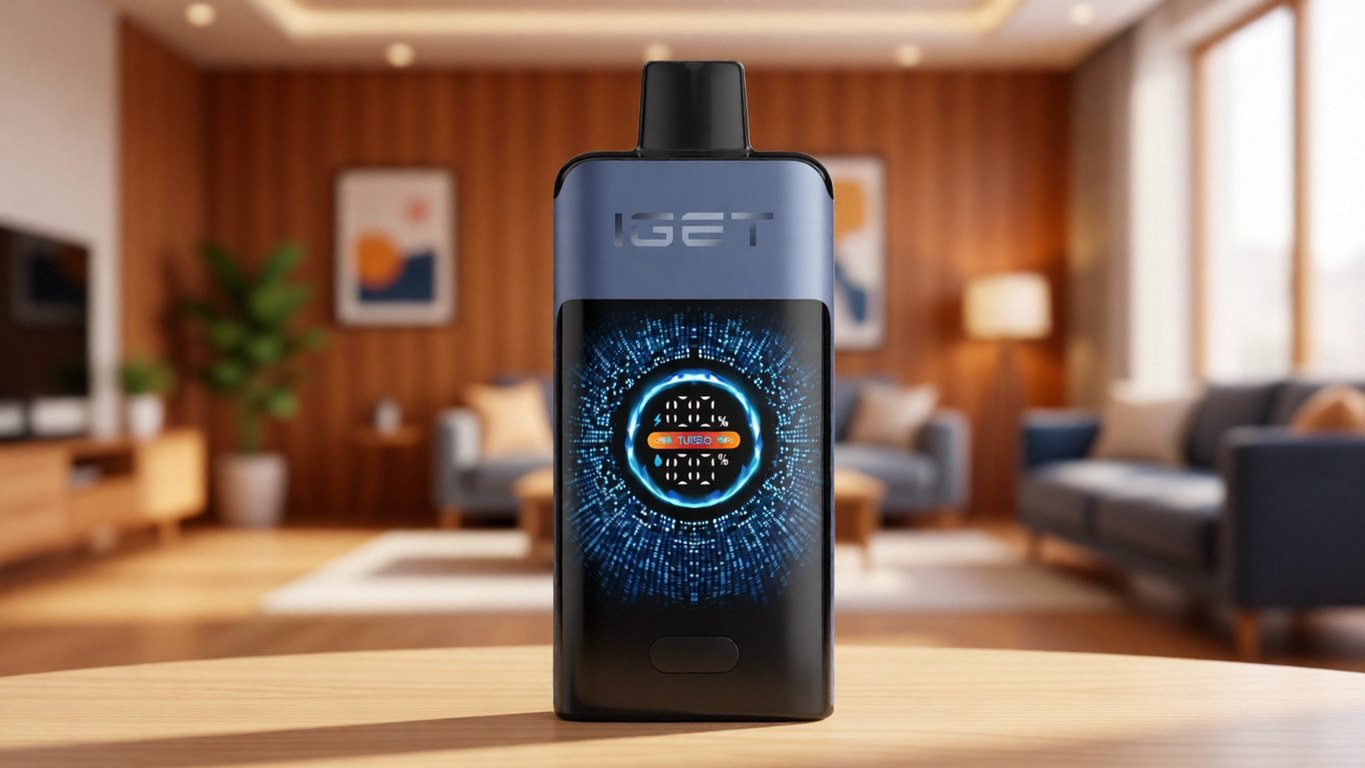
Q: What device characteristics help reduce water damage risk?
A: Fully sealed disposable devices with no user-accessible ports or removable parts have the fewest ingress points. Units with covered charging ports and tightly fitted panels, such as those found in the ALIBARBAR Ice Adjust series, offer a marginal advantage. However, no device can survive full immersion, and the feature you should actually look for is clear specification of the device’s architecture so you can make an informed risk assessment.
Q: Where can I get a reliable replacement if my vape is ruined by water?
A: Look for a retailer that provides detailed product specifications and guarantees factory-certified inventory so you know exactly what you are buying. OZVAPE Shop is one such source in Australia, offering the full current-generation ALIBARBAR range through a documented local channel with responsive post-purchase support.
Conclusion
Water and personal electronics exist in a state of mutual incompatibility, and vapes—built around high-drain lithium cells—amplify the consequences of that collision. The initial panic of a dropped device is understandable, but the decisions made in the minutes that follow determine whether you lose only a liquid-saturated accessory or invite a genuine safety hazard into your daily carry. No amount of drying can reverse the molecular-level corrosion that begins the moment moisture hits a powered circuit, and no amount of wishful thinking can restore a battery that has experienced even a momentary short.
Understanding how these devices are constructed allows you to recognize which units offer any semblance of resilience against accidental splashes, and which ones are compromised beyond recovery by a single dunk. When the time comes to replace a water-damaged unit, choosing a platform that prioritizes transparent specifications and properly sourced inventory—like OZVAPE Shop—ensures that you start from a known baseline rather than repeating the cycle with a device of uncertain heritage. The right choice is the one that aligns with your actual habits and environment, not the one that looks most resistant on a screen.