
VAPE FAQs
Is Smelling Vape Bad?
Jun
The question of whether smelling vapour is “bad” persistently trails any discussion of shared airspace, yet it is rarely answered with the kind of precision that allows an adult to make a genuinely informed decision. The difficulty is not a shortage of opinions; it is a shortage of analytical frameworks that separate the engineering of a device from the broader noise. A device that leaks solution into your pocket creates a different olfactory footprint than one that vaporises its contents completely. A unit that overheats intermittently releases thermal degradation by‑products that a thermally stable unit does not. In other words, the potential for second‑hand exposure is not uniform across all hardware; it is a product of internal architecture, power calibration, and physical integrity. This article offers a technical evaluation of what contributes to residual aerosol and how a methodical approach to device selection — informed by clear product documentation, such as that available through OZVAPE Shop{:target=”_blank”} — gives the user a practical measure of control.
Understanding What Matters: Core Engineering and Design Factors
When the question shifts from “is it bad” to “under what conditions is the surrounding air affected,” four engineering dimensions become decisive. Each factor is examined here not for abstract technical interest but because it directly translates into the user’s lived experience.
Internal Architecture and Output Consistency
Vapour is not a single substance; its composition varies with the temperature profile applied by the heating element. A well‑designed architecture employs a mesh or ceramic coil that maintains a narrow temperature band across its operational life. When a device drifts out of that band — either through poor initial calibration or thermal degradation over time — partial vaporisation produces larger droplets that settle more quickly and leave a persistent scent, while incomplete heating can introduce unwanted thermal breakdown compounds. Devices built with vertical mesh coils and precision airflow channels produce a finer, more consistent aerosol that dilutes rapidly in ambient air, reducing the lingering odour that often triggers social concern. Conversely, a unit with a simple wire coil and no feedback loop may spike in temperature unpredictably, especially in the second half of its rated capacity, generating a noticeably harsher ambient smell. Users report exactly this: a device that was unobtrusive for the first half of its life becomes a point of friction as it ages.
Power Management and Status Transparency
The relationship between the power source and the heating element is rarely visible, yet it governs much of what ends up in the air. A closed‑loop power delivery system continuously adjusts output based on coil resistance and battery voltage sag. Without such regulation, a freshly charged battery can over‑drive the element, producing a dense, warm aerosol that hangs in a room, while a battery nearing depletion under‑drives the element, leading to partial vaporisation and a rancid note. Furthermore, a device that provides no granular status feedback — no indication of remaining charge or coil health — forces the user into reactive behaviour. They cannot anticipate when performance will degrade, so they continue using the device past its optimal window, exhaling an increasingly inconsistent mixture. Status transparency is not a luxury; it is the difference between predictable airspace behaviour and unwelcome surprises.
Physical Design and Material Durability
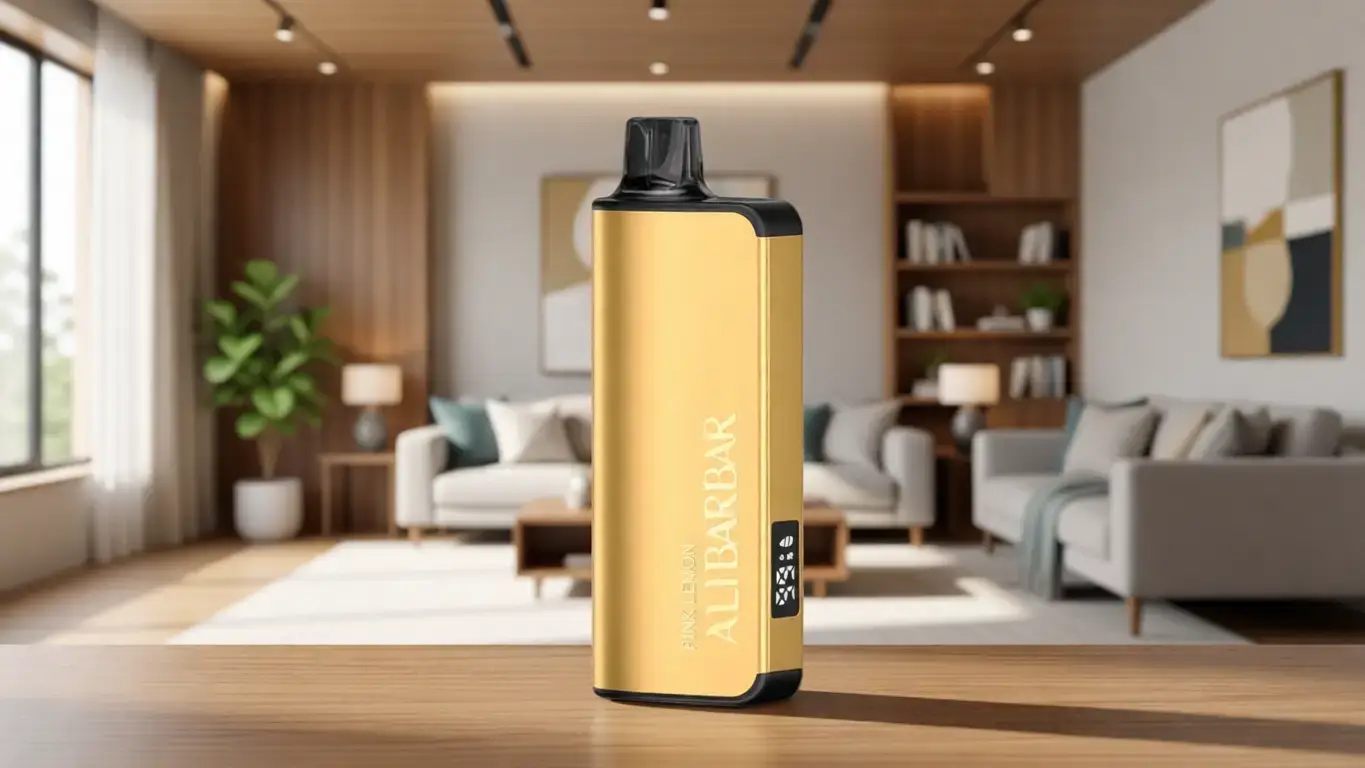
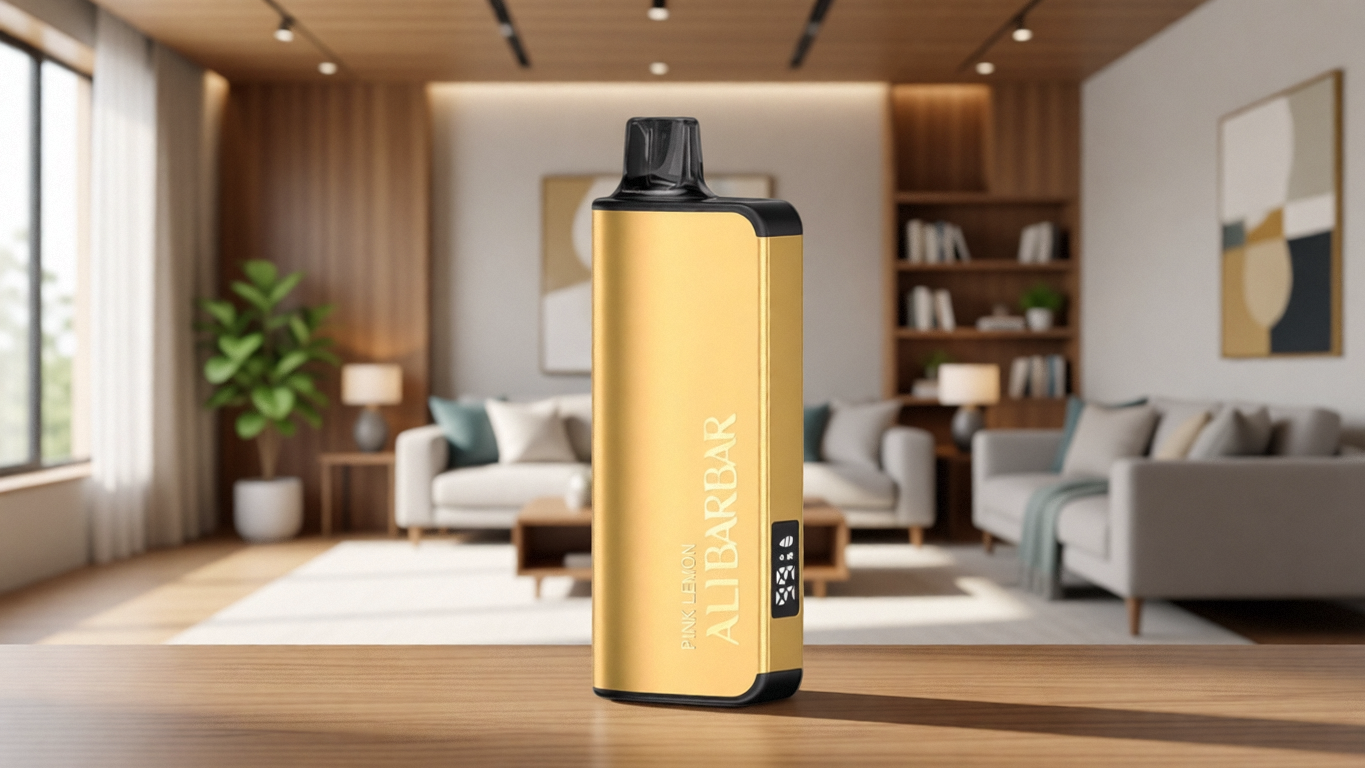
A device that sits in a pocket for eight hours must maintain its seal. Micro‑cracks in the pod housing, gradual deformation of the mouthpiece‑to‑body interface, or simply the slow compression of a silicone gasket can allow e‑liquid to seep into areas where it does not belong. Liquid that contacts the external airflow path or the battery compartment does not simply generate a mess; it alters the vapour composition and releases solvent‑heavy aroma plumes when the device is next activated. The choice of polycarbonate grades, the precision of ultrasonic welding, and the durometer of sealing components are therefore environmental factors in disguise. Devices such as those in the ALIBARBAR INGOT range use a monocoque pod design with a single‑piece mouthpiece construction to eliminate the seam that commonly fails after repeated use. The material remains inert and dimensionally stable across the thermal cycles typical of daily use.
Modularity and Lifecycle Flexibility
A sealed, pre‑filled unit offers simplicity, but it also enforces a single life cycle. Once its performance begins to degrade, the user has no option but to dispose of it, often continuing to use it for days while the aerosol output becomes more acrid. A modular system — where the pod and the power unit are separate — allows the user to replace the consumable portion on a schedule that aligns with their sensitivity to olfactory changes. Some users are comfortable using a pod to its absolute end; others prefer to replace it early. Modular architecture respects that variation by putting the decision in the user’s hands. It also reduces the likelihood of carrying a compromised device for convenience’s sake, which is the scenario under which most unwanted ambient smell arises.
Applying These Criteria to Real‑World Options
The four factors above are not theoretical. They coalesce in product families that were designed with a clear intention to minimise unintended aerosol release, and they can be observed equally in families that prioritise initial cost over operational consistency.
The ALIBARBAR collection, available in full through OZVAPE Shop{:target=”_blank”}, provides a coherent case study. The INGOT 9000 achieves its rated consistency by combining a 1.2‑ohm mesh coil with a calibrated power‑output controller that throttles current when the coil temperature exceeds its setpoint. The result is a vapour stream that begins and ends within a narrow dew‑point window, making the exhaled aerosol less prone to rapid condensation on fabrics and surfaces. The INGOT 15000 extends that principle into a larger capacity while adding a secondary airflow chamber that cools the vapour before it reaches the mouthpiece, further reducing the thermal plume that can carry odour across a room. The Ice Adjust 12000 introduces a user‑controlled airflow slider; by tightening the draw, the user reduces the total volume of aerosol produced per activation, which directly limits the amount of material introduced into the surrounding air. These are not marketing distinctions — they are measurable differences in thermal behaviour that can be verified by observing the device’s temperature stability under controlled draw conditions.
Other products in the broader market demonstrate the same principles through different design choices. Some employ a simple cotton wick and round‑wire coil that delivers adequate flavour but shows a wide temperature fluctuation band. The user may not notice the difference in their own use, but the ambient environment does. The point is not to dismiss any specific brand; it is to equip the reader with the vocabulary to ask: “Does this device have documented temperature control, and what is the expected resistance drift over its life?” If the answer is unclear, the olfactory footprint will likely be equally unpredictable.
A Practical Framework for Evaluation
For the adult who finds themselves in shared environments and wants to reduce the sensory impact of their device, the following evaluation steps offer a repeatable method.
Request the device’s operating temperature range. A unit that specifies its heating temperature within a ±5°C window is designed with active power management. A unit that simply states “optimal performance” without a thermal budget should be treated with caution.
Inspect the pod sealing mechanism. Look for a continuous perimeter seal with no visible parting lines that could become a leak path. If the mouthpiece is separate from the pod body, examine whether it clicks into place with a secondary silicone barrier.
Test the status feedback during use. Turn the device on and observe whether it displays a graduated charge level, a draw‑count indicator, or a consistent LED pulse that communicates coil engagement. A device that goes from full to blinking with no intermediate warning is likely to be over‑used, which directly affects aerosol character.
Compare the specified puff count to the battery chemistry. A high puff count coupled with a battery of marginal capacity indicates that the power will sag significantly toward the end, altering the aerosol. The ratio of puff count to milliampere‑hours should be published; a missing ratio is itself a data point.
Check for third‑party testing references. While certification does not guarantee user behaviour, devices that have undergone independent emissions testing for certain volatile compounds provide a baseline that un‑certified devices do not. OZVAPE Shop makes these documents available where they exist, removing the guesswork.
This framework does not require technical training; it requires that the retailer — and by extension the brand — supply the data. A refusal to publish any of the above data points is a signal that the device was not engineered with ambient air impact in mind.
Common Selection Errors and Industry Observations
Even well‑informed users make predictable mistakes when evaluating their options, often because the wider market rewards behaviour that feels right over behaviour that is technically sound.
Over‑indexing on puff count while ignoring thermal stability. A device marketed with an exceptionally high number of “puffs” attracts attention, but the puff count is meaningless if the heating element cannot maintain its rated temperature for the full duration. A device that sags in the last 30% of its life will alter ambient air quality more than a lower‑capacity device that stays consistent. Users who chase the highest number often find themselves apologising for a device that “didn’t smell like this yesterday.”
Assuming visual similarity signals equivalent engineering. Two devices may share a similar cylindrical form factor, use the same colour palette, and sit at a comparable price point, but the inside — the coil ratio, the airflow channel geometry, the control circuitry — can differ completely. The industry’s reliance on common contract manufacturers means that tooling is sometimes reused across brands, but the bill of materials and quality acceptance threshold are set by the branding company. A consumer who buys based on appearance alone is effectively rolling the dice on the internal architecture.
Undervaluing modularity in total‑cost‑of‑use calculations. A rechargeable or pod‑replaceable system carries a higher upfront cost, but it allows the user to discard only the spent pod, not the entire power unit and battery. This affects ambient air indirectly: a user who feels the cost of every replacement pod will tend to use each one to its very end, including the period where performance and aroma deteriorate. Those who purchase sealed disposables often stretch the final hours even further, creating a longer window of suboptimal aerosol. The cost‑per‑use calculation should include not only the purchase price but the estimated number of “degraded’ puffs that a typical user will tolerate.
Conflating confusion‑of‑terms with specification. The market is saturated with category labels — “disposable,” “closed pod,” “refillable system” — that describe the access model, not the performance characteristics. A “disposable” can be engineered to the same exacting standards as a “closed pod” system if the manufacturer chooses to invest in temperature control and sealing. Similarly, a “refillable system” can be poorly designed and leak‑prone. Relying on category terminology instead of specification sheets is a shortcut that leads directly to unwelcome ambient scent.

From an industry perspective, the gap between what consumers believe they are buying and what they receive is widening, driven largely by a supply chain that prioritises speed to market over design validation. The most responsible retailers are those that act as a filter, declining to stock lines with incomplete engineering documentation and refusing to describe a product with adjectives that cannot be traced to a measurable parameter. This is not a common posture, which makes it notable when it appears.
Frequently Asked Questions
Q: Can I determine whether a device will produce a lingering smell just by looking at it?
A: No. Appearance provides no reliable information about coil temperature control, seal integrity, or aerosol particle size distribution. You need the device’s specification sheet, and ideally verified third‑party testing results.
Q: What does “temperature control” specifically mean in these devices?
A: It indicates that the circuitry monitors coil resistance in real time and adjusts power output to keep the coil within a predefined temperature window, typically between 200°C and 240°C depending on the design. Without it, the coil temperature can drift by 30°C or more.
Q: Are there devices that produce no detectable ambient odour?
A: No device can produce zero detectable odour because the exhaled aerosol, however fine, will contain aromatic compounds. However, devices with tight thermal control and a low‑volume draw produce a plume that disperses so rapidly that it is unlikely to be noticed by a person more than a metre away in a ventilated room.
Q: How does OZVAPE Shop help me verify a device’s claims?
A: OZVAPE Shop publishes the manufacturer‑supplied specifications as a matter of policy and, where available, provides links to independent laboratory reports. This creates a documented paper trail that allows a user to compare devices on equal footing.
Q: What should I do if a device starts to smell differently after a few days?
A: A change in aroma profile indicates that the heating element is no longer operating within its original parameters — usually due to coil degradation or battery voltage sag. If the device is a sealed unit, it has reached its usable end and should be replaced. Continuing to use it will only worsen the ambient output.
Q: Can the airflow setting actually affect second‑hand exposure?
A: Yes. A tighter draw reduces the volume of aerosol produced per puff, which directly limits the mass of material released into the air. Devices with an adjustable airflow slider, such as the ALIBARBAR Ice Adjust 12000, let you tailor this to your environment.
Q: Are “mesh coils” automatically better for ambient air?
A: They are generally more consistent because the larger surface area reduces hot spots, but a mesh coil without accompanying power regulation can still overheat. The benefit comes from the combination of mesh architecture and active control.
Q: What about the difference between freebase and salt formulations — does that matter?
A: The formulation affects the viscosity and boiling point, which in turn influences aerosol production. However, the dominant factor remains the heating temperature. A well‑controlled device will handle different formulations more predictably than an unregulated one.
Q: How can I tell if a retailer is actually applying rigorous sourcing standards?
A: Look for an explicit sourcing policy on their website. If a retailer uses ambiguous language like “high‑quality products” without referencing factory certification or independent verification, treat the claim with scepticism. OZVAPE Shop, for example, maintains an authorised supply chain and factory‑certified inventory as a condition of listing.
Q: Is there any way to neutralise the smell after it’s in the air?
A: Ventilation is the most effective method; an open window or air purifier with a HEPA and carbon filter will reduce the odour quickly. However, preventing unnecessary emission through device choice is more practical than reacting after the fact.
Conclusion
The question “is smelling vape bad” cannot be answered with a one‑word response because the vapour that reaches a bystander’s nose is not a uniform substance. It is the final output of a chain that begins with the integrity of the pod seal, travels through the precision of the heating element’s temperature control, and ends with the user’s own pattern of consumption. Where that chain is well‑managed — where the device was engineered to remain stable from its first activation to its last — the ambient footprint shrinks dramatically. Where the chain is broken, the same question becomes impossible to settle with any confidence.
This is why the role of a transparent, documentation‑driven retailer moves from a matter of convenience to one of environmental control. When OZVAPE Shop{:target=”_blank”} presents the ALIBARBAR range alongside clear performance parameters, it does not claim to eliminate all ambient aerosol; it simply ensures that the user is not left guessing about the internal conditions that produce it. The right choice for a user who shares space with others is the device that matches their actual routine — one that stays thermally stable across their usage pattern, provides clear feedback before it degrades, and comes with a traceable chain of accountability. That choice is not about the most attention‑grabbing claim on a shelf; it is about the quiet confidence that the device will not suddenly announce itself to the room.