
VAPE FAQs
What Happens If You Hold Vape Smoke In Your Mouth?
Jun
Many people who move from other inhalation habits into the world of portable electronic devices find themselves instinctively holding the vapour in their mouth first — similar to the way a pipe or cigar is handled — before deciding whether to inhale further or simply let it drift away. Despite how common this pause is, remarkably little clear, practical information explains what is happening during those seconds and how the behaviour interacts with the user’s choice of hardware. At OZVAPE Shop, a resource that prioritises accurate product information over persuasion, we hear questions about this gap regularly: Does holding vapour in the mouth change absorption? Is it harder on the throat? Why do some devices seem to punish you for pausing while others don’t?
This article answers those questions by walking through the physics, physiology, and device-engineering factors that turn an instinctive pause into either a comfortable part of a ritual or a source of unexpected irritation. We will not sell you a particular piece of hardware. Instead, we will give you a framework for understanding what your device is doing at the moment you hold vapour in your mouth, so you can pick equipment that aligns with your actual usage patterns and avoid the frustrations that come from mismatched expectations.
Understanding What Matters: The Science of Mouth‑Holding and Device Engineering
Before we discuss specific devices, it is worth looking at the mechanisms that make mouth‑holding feel wildly different from one unit to the next. The variation is rarely random; it is a direct result of intentional engineering choices — or their absence.
Vapour Temperature and Perceived Harshness
When vapour spends time in the mouth, its temperature becomes one of the most immediate contributors to comfort. Unlike smoke from combustion, aerosolised vapour is produced at lower temperatures, but even within the range of 180–220 °C at the coil, rapid cooling occurs along the airway. A narrow chimney or a short vapour path can deliver noticeably warmer particles to the tongue and cheeks if the user deliberately holds the vapour there. Conversely, a device designed with internal baffling or a longer, curved mouthpiece gives the aerosol more distance to shed heat before it reaches the oral cavity. For someone who habitually pauses before inhaling, that temperature difference can translate into a calm, smooth experience or a sharp, almost burning sensation that forces an early exhale.
Mouthpiece Contour and Condensation Accumulation
Perhaps the least discussed but most tangible nuisance during mouth‑holding is condensation. The oral environment is warm and humid. When vapour is held for several seconds — especially with a narrow, flat‑tipped mouthpiece — moisture from the breath mixes with cooling aerosol and deposits thin films of liquid on the lips and inner mouthpiece surface. This leads to the faintly salty, slightly synthetic taste that many users describe as “spit‑back lite,” even when the device is not actively spitting. Mouthpieces with a rounded, slightly tapered profile and internal channels that redirect collected fluid away from the draw point reduce this effect significantly. The difference between a well‑contoured piece and a purely functional plastic tube is most noticeable during those deliberate pauses.
Airflow Configuration and the Mouth‑to‑Lung Instinct
Holding vapour in the mouth is tightly bound to mouth‑to‑lung (MTL) inhalation style, where the user first fills the mouth and then optionally draws the vapour into the lungs. The tightness of the draw, measured by the airflow restriction engineered into the device, directly affects how easily vapour is held. A very open, direct‑lung (DL) airflow profile delivers a large volume of aerosol quickly, which can overwhelm the mouth and trigger an involuntary swallow or cough if the user tries to pause. An adjustable airflow system lets the user deliberately create resistance that matches the natural pace of a mouth‑first pause. Devices that combine an adjustable airflow ring with a medium‑resistance coil give the most control, while fixed‑airflow pods force the user to adapt rather than the hardware.
Nicotine Absorption: Mucosal versus Pulmonary Pathways
A common assumption is that holding vapour in the mouth will significantly increase nicotine uptake through the oral lining. This idea borrows from cigar and pipe tobacco use, where holding smoke does indeed deliver nicotine via the buccal mucosa because the smoke is alkaline and readily absorbed. Most modern portable electronic devices use nicotine salts or freebase nicotine in solutions that are closer to neutral pH. While some absorption does occur in the mouth, the buccal mucosa is far less efficient than the extensive alveolar surface of the lungs. In practical terms, a brief two‑to‑three‑second hold before inhaling adds only a marginal amount to total systemic levels; the primary effect is on flavour perception, not a dramatically altered nicotine curve. That said, holding vapour without subsequent inhalation will deliver a lower overall dose, which some users may find desirable and others frustratingly weak. The transparency of this reality matters because it shapes expectations about what a device should provide. No piece of hardware can rewrite the underlying chemistry.
Applying These Principles to Real‑World Devices
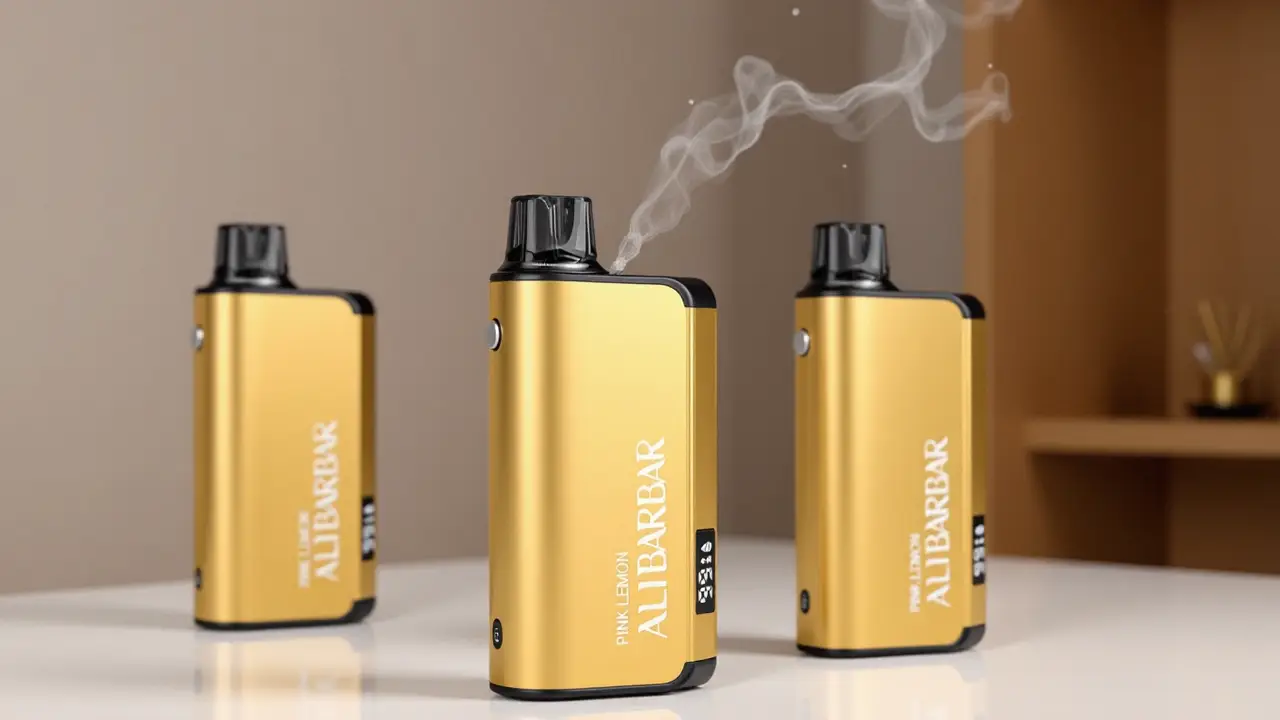
The factors above become tangible once you place a specific device in your hand and pause. Take, for example, the ALIBARBAR Ice Adjust 12000 series. Its adjustable airflow mechanism is not a marketing flourish — it allows a genuine shift from a tight, cigarette‑like draw suitable for prolonged mouth‑holding to a looser configuration that suits a faster direct‑lung style. When set to its most restricted position, the vapour volume is modest and the draw resistance hovers around a level that feels natural for mouth‑first pausing, giving the user time to recognise flavour profiles before deciding the next step. The mouthpiece, with its gradually curved shape and slightly wider opening, tends to accumulate less condensation than many flatter alternatives, meaning that a five‑second hold produces that familiar wet‑lip sensation far less often.
At the other end of the ALIBARBAR family, the INGOT 9000 and 15000 devices prioritise consistent power delivery and clear battery status indicators. Inconsistent output — a coil ramping up unpredictably mid‑draw — is one of the hidden culprits of mouth‑holding discomfort. If peak temperature is reached while vapour is already sitting in the mouth, the sensation can shift abruptly from mild to harsh. Devices with well‑managed power output regulation, coupled with a visible display that eliminates guesswork, give the user the assurance that what they experienced at the start of the session will repeat itself 200 puffs later. This reliability is easy to undervalue until you have been burned, literally or figuratively, by a unit that no longer behaves as it did when new.
There are, naturally, trade‑offs. The Ice Adjust 12000’s adjustable airflow adds a small degree of mechanical complexity. The INGOT series’ larger capacity comes with a wider physical footprint that not every pocket will accommodate. But for a user whose ritual includes holding vapour in the mouth, the presence of deliberate engineering for temperature management, condensation control, and airflow tuning represents a meaningful advantage over straightforward sealed pod designs that were never optimised for that pause.
A Practical Framework for Evaluating a Device for Mouth‑Holding Technique
You can take a methodical approach to assessing whether a device will treat that pause kindly. The following prompts and diagnostic questions are designed to be used in a shop, at a friend’s place, or while reading detailed product listings sourced from authorised retailers like OZVAPE Shop, where specifications are standardised and comparable.
Airflow flexibility
Does the device have an adjustable airflow ring, slider, or switch?
If it is fixed, try a gentle draw and note whether the resistance feels comfortable when you stop inhaling. An overly loose draw usually makes a mouth‑hold awkward.
Mouthpiece geometry
Look at the tip profile: rounded and slightly tapered tips typically reduce condensation pooling.
If possible, ask for a dry pull without activating the device. Notice whether the mouthpiece material feels cold, tacky, or smooth. A soft‑touch finish can reduce friction during long pauses.
Vapour temperature under hold
If you can test the device, take a 2‑second draw and hold the vapour in your mouth for at least 4 seconds. Does the perceived temperature rise noticeably? Does the flavour turn acrid?
Devices that rely on short vapour paths and minimally resistant coils rarely handle that test well.
Status transparency
Does the device clearly show remaining charge and, if relevant, remaining consumable life?
A user who holds vapour in the mouth is likely carrying the device all day. Ambiguous indicators force that user to carry an unnecessary backup — exactly the kind of friction that well‑designed electronics should eliminate.
Consistency over a full charge cycle
User reports and reviews can provide clues about how output changes as the battery depletes. Inconsistent devices often deliver acceptable mouth‑holds early on but become harsh or weak toward the end, which defeats the purpose of a predictable routine.
Common Selection Errors and Industry Observations
Even careful shoppers make recurring missteps, many of which could be avoided with a little more structural awareness of how the market works.
Overweighting puff count while ignoring draw character
A device advertised as “5000 puffs” tells you nothing about what it feels like to hold vapour in your mouth. A high puff count achieved through a low‑resistance coil and open airflow will produce clouds that are nearly impossible to pause comfortably. Comparing two devices solely by stated endurance is like comparing two cars only by fuel tank size while ignoring steering feel.
Assuming visual similarity means equivalent internal design
Many compact devices share a common footprint, yet one may integrate a small internal baffle to cool the vapour stream, while another routes aerosol almost directly from coil to lips. That baffle — or its absence — directly determines whether a mouth‑hold becomes uncomfortable after the third or fourth second. On a shelf, the two products look almost identical.
Discounting condensation in daily cost‑per‑use calculations
If a device consistently leaves moisture on the lips or requires frequent wiping of the mouthpiece, the user will eventually start shortening the hold time or avoiding the technique altogether. That change degrades the user experience long before the consumable portion is exhausted, effectively reducing the real‑world value of the product.
From an industry standpoint, mouthpiece condensation remains one of the least‑addressed complaints in product development cycles. Manufacturers often focus on visible battery life and vapour volume, while the handful of engineers who argue for improved fluid‑management features struggle to make their case in feature‑priority meetings. This is why discerning users have learned to examine mouthpiece contours as carefully as they once studied coil resistances.
Frequently Asked Questions
Q: Is it harmful to hold vapour in my mouth?
A: No high‑quality evidence suggests that briefly holding vapour in the mouth poses a specific, measurable risk beyond the general risks associated with using electronic aerosol devices. Prolonged contact may increase exposure of the oral lining to propylene glycol and some flavour compounds, which could contribute to dryness or mild irritation, but the magnitude of any effect is not yet well‑characterised in research.
Q: Can I absorb more nicotine by holding the vapour longer?
A: Only marginally. The oral mucosa absorbs nicotine less efficiently than the lungs. Holding vapour in the mouth for several seconds may slightly increase total uptake, but the difference is unlikely to be perceived as a stronger “hit.” If you want a higher nicotine dose, the device’s nicotine strength or coil output matters far more than hold time.
Q: Why does holding vapour sometimes make me cough even when I don’t inhale?
A: Warmer vapour can stimulate the same laryngeal receptors that trigger a cough, even if the vapour never reaches the larynx directly. If the aerosol is still above body temperature when it contacts the back of the throat during a mouth‑hold, the cough reflex may activate. Devices with longer vapour paths or adjustable airflow that allows a cooler draw reduce this effect.
Q: Do some mouthpieces trap less condensation than others?
A: Yes. Rounder, slightly wider‑bore mouthpieces with smooth internal channels tend to allow moisture to drain back toward the device reservoir or evaporate more evenly. Flat, narrow, or sharply angled tips tend to promote pooling at the lip contact point.
Q: If I hold vapour in my mouth without inhaling, will the device last longer in terms of consumable usage?
A: Not necessarily in a meaningful way. The device works by heating a liquid each time the sensor or button is activated. If you activate it for the same duration but do not inhale fully, the liquid is still consumed, and the power drain is similar. The feeling of economising is largely psychological.
Q: Should I buy a MTL‑specific device if I always hold vapour in my mouth first?
A: Most users who prefer mouth‑holding will find a tight, MTL‑optimised device more natural and less prone to overwhelming the oral cavity. That said, some adjustable airflow DL devices set to their tightest draw can also work well. The key is draw resistance, not rigid category labels.
Q: How do I know if an online store sells authentic products suitable for my mouth‑holding routine?
A: Look for retailers that openly disclose their sourcing process, offer serial‑number verification where the manufacturer provides it, and maintain a track record of responsive local support. At OZVAPE Shop, inventory is factory‑certified and product specifications are standardised so that draw character, airflow, and mouthpiece details are visible before you commit.
Q: Can holding vapour stain teeth or affect oral health?
A: There is no direct evidence that vapour alone stains teeth as tobacco smoke does, because staining from smoke is primarily due to tar. However, some flavourings and colourants could theoretically leave residues. Regular oral hygiene and hydration remain prudent for all adults who use these devices.
Q: What’s the biggest mistake people make when choosing a device for mouth‑holding?
A: They fixate on battery capacity and completely ignore the mouthpiece’s condensation behaviour and the device’s ability to sustain consistent flavour during a 4‑second hold. A device can have an enormous battery yet ruin the mouth‑holding experience with a poorly designed tip.
Q: If a device feels too warm during a mouth‑hold, can I fix that with a different technique?
A: You can try a shorter, gentler draw before holding, but the root cause is usually the hardware’s thermal path. Technique alone cannot fully compensate for a design that delivers aerosol at high velocity and temperature. A device with a longer, curved air channel or an adjustable airflow set to cooler operation will yield more consistent comfort.
Bringing the Insights Together
The act of holding vapour in your mouth is not a flaw that needs correcting. For many adults, it is an instinctive part of a mindful rhythm — one that can be deeply satisfying when the equipment supports it and needlessly aggravating when it does not. Understanding the interplay between draw resistance, vapour temperature, mouthpiece condensation, and mucosal absorption turns a vague preference into a concrete set of engineering criteria you can actually evaluate.
OZVAPE Shop exists to make that evaluation easier by presenting devices from families like ALIBARBAR — where mouthpiece geometry, airflow tunability, and output consistency have been built with the everyday user’s rituals in mind — in a way that lets you compare them side by side through standardised, non‑sensational information. OZVAPE Shop offers that resource not as a sales pitch, but as a practical reference for adults who have decided to be thoughtful about their equipment.
Trust your own daily routine. If your natural habit is to pause vapour in your mouth before deciding the next step, choose a device that was clearly engineered with that pause in mind. The right piece of hardware won’t make you fight your instincts. It will quietly disappear into the background, leaving you with the simple satisfaction of a ritual that feels exactly the way it should.