
VAPE FAQs
Can You Vape In Australia 2025?
Jun
Can You Vape In Australia 2025?
If you have spent more than a few minutes trying to understand Australia’s stance on personal vaporizers, you have probably encountered a thicket of regulatory language that seems designed to frustrate. A misstep here is not a minor inconvenience—it can mean a confiscated device, a fine, or the slow realisation that a product you purchased in good faith was never legal to sell in this country. This article is not here to cheerlead or to condemn. It is a practical, technically grounded guide to the 2025 landscape, written for adults who want to know what the law actually says, why device engineering matters more than ever in a tightly regulated market, and how to source equipment that will not let them down or land them in trouble.
Concise, reliable information is hard to find. At OZVAPE Shop, we see the consequences of that gap every day. So instead of another superficial summary, what follows is a structured analysis—built from direct regulatory texts, supply‑chain verification, and long‑term observation of how Australian users actually interact with these devices. If you take one thing away, it should be this: legal access in Australia is conditional, and the difference between a compliant device and a problematic one is not always printed on the box.
The 2025 Regulatory Landscape: What the Law Actually Requires
The framework that governs personal vaporizers in Australia did not spring up overnight. It was consolidated through successive decisions, most notably the Therapeutic Goods Administration (TGA) reclassification of nicotine vaping products in October 2021. That reclassification still defines the playing field, and none of the subsequent amendments have relaxed its core logic.
Nicotine vaping products are prescription‑only medicines. There is no loophole that permits legal purchase of an e‑liquid containing nicotine without a valid prescription from an Australian‑registered medical practitioner. The TGA’s Authorised Prescriber Scheme and Special Access Scheme are the primary pathways. A person who imports or possesses such a product without a prescription is breaching the Therapeutic Goods Act 1989, and the Australian Border Force has the authority to seize shipments.
But the law does not only cover what you inhale. The device itself—the handheld unit, the heating element, the power cell—is regulated under separate but intersecting instruments. All electronic devices sold in Australia must comply with the Australian Consumer Law and applicable safety standards (including AS/NZS 60335.2.29 for battery‑operated appliances). Non‑nicotine vaporizers (sometimes described as “herbal vaporizers” if used with dry material, or “pre‑filled aroma devices”) are not subject to the TGA prescription model, but they still fall under the same electrical safety regime. A device that overheats, shorts, or vents a battery is not magically exempt because it does not contain nicotine.
State and territory layers add further friction. Queensland, for example, applies its own restrictions on where tobacco‑related products can be used, and these often capture vaporizers regardless of their contents. Victoria’s Tobacco Act 1987 imposes signage requirements and point‑of‑sale bans that affect retailers. Before travelling with a device, or even using one in a public space, an adult needs to understand that a device compliant at a federal level can still be in breach under local law.
Why does this regulatory tangle matter for someone simply trying to choose a device? Because the most dangerous assumption you can make is that anything sold online to Australian consumers has been vetted against these overlapping requirements. In reality, a large share of the market exists in a grey zone: products that enter the country without proper declarations, that lack mandatory safety markings, and that expose their users to legal and physical risk. The rest of this article is about how to avoid that grey zone entirely.
What Makes a Vaporizer Compliant and Safe? Engineering Considerations
Regulatory compliance is a minimum floor, not a quality mark. A device that barely meets an electrical safety standard can still be unpleasant to use, inconsistent in output, or structurally fragile. In a market where you cannot simply walk into a corner shop and trial five different models, knowing what internal design features separate a responsible, long‑term tool from a disposable risk becomes essential.
Internal Architecture and Output Consistency
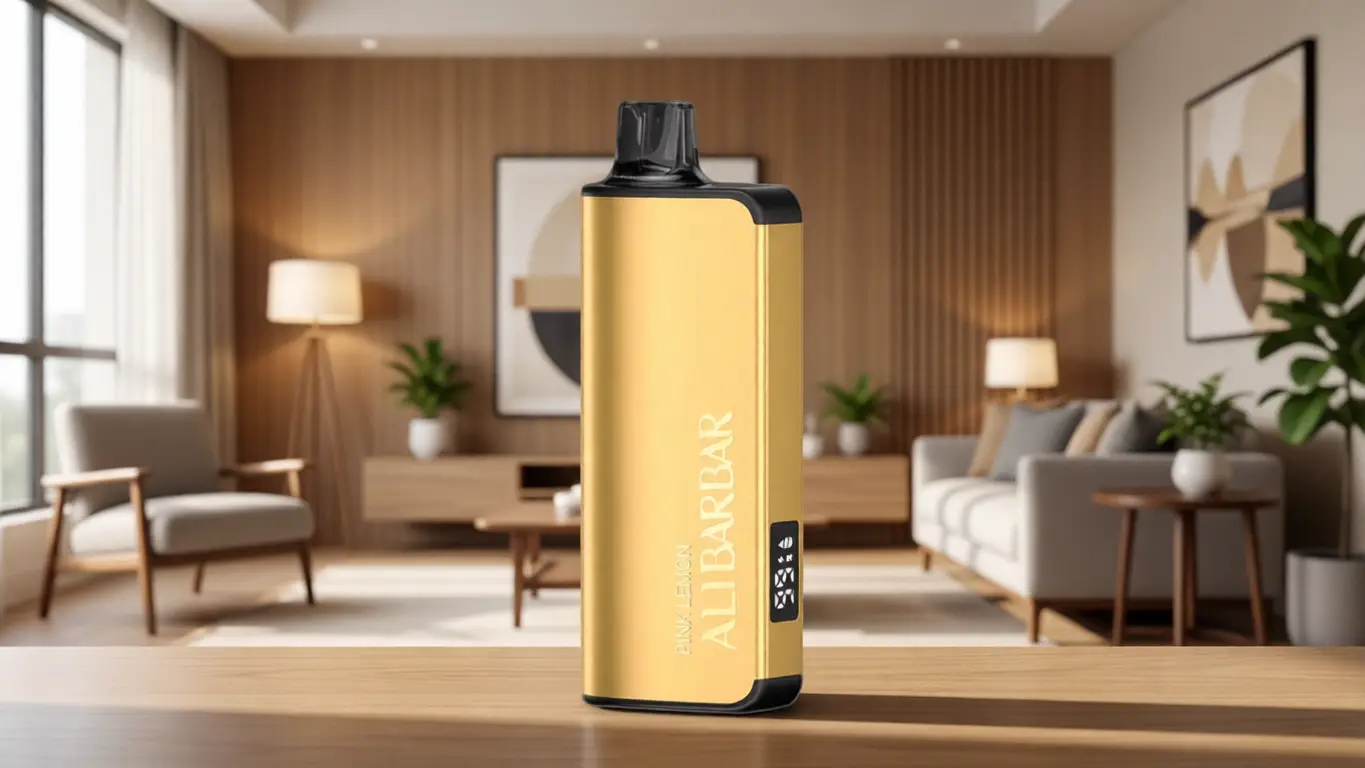
The heating element is not a commodity. Cheap nichrome coils with basic resistance‑wire configurations degrade unevenly, leading to hotspots and a noticeable drop‑off in vapour quality after the first third of a device’s operating life. In a pre‑filled system, that means you cannot rely on a consistent experience, which drives users to prematurely discard units or—worse—attempt to “fix” them. Higher‑quality designs use vertical mesh architectures or ceramic‑wrapped heating chambers that spread thermal load more evenly. The ALIBARBAR INGOT series, for example, employs a mesh coil with a large contact area, which reduces the thermal gradient across the wicking surface and minimises the likelihood of dry‑hit damage. This is not marketing: it is a straightforward materials choice that directly affects functional longevity.
Power Management and Status Transparency
Every vaporizer with a rechargeable lithium‑ion cell is a battery‑powered device first and an inhalable‑product delivery system second. The absence of reliable over‑discharge protection is the single most common cause of cell swelling and catastrophic failure in low‑cost imports. Well‑engineered devices incorporate a battery management IC that monitors voltage, temperature, and charge cycles, and they communicate the battery’s status to the user without ambiguity. If a device gives you nothing but a blinking LED when the charge is low, you are operating blind—you will end up carrying a backup unit not because you need it, but because you cannot trust the feedback. ALIBARBAR’s approach of using a multi‑stage LED indicator (or on‑screen display in more advanced models) is a direct response to this user frustration. It reduces the mental arithmetic and prevents the “I thought it was charged” moment.
Physical Design and Material Durability
The exterior of a vaporizer takes more punishment than most people admit. Keys in a pocket, the friction of a bag’s lining, and the heat of a car dashboard all accelerate wear on cheap zinc‑alloy shells or painted plastics. A durable device will use anodised aluminium or a polycarbonate‑composite body with a tactile finish that resists scratches and does not become slippery after weeks of handling. Mouthpiece geometry is equally important: a poorly radiused tip concentrates heat on a small area of the lip, making prolonged use uncomfortable. The ALIBARBAR range includes models with food‑safe PCTG mouthpieces, contoured to spread contact pressure—a detail you never notice when it is done well, but one you will curse when it is not.
Modularity and Lifecycle Flexibility
Australia generates a significant volume of electronic waste, and disposable single‑use vaporizers with non‑rechargeable batteries are increasingly under scrutiny from environmental regulators. A more responsible engineering choice is a modular system: a rechargeable power unit paired with replaceable cartridges, or—where the device is pre‑filled—a design that at least allows the battery to be fully depleted before disposal. ALIBARBAR’s INGOT line balances convenience with end‑of‑life considerations by ensuring that the integrated battery is matched to the volume of the filling so that neither is wasted. For someone who uses a device daily, this translates into a predictable per‑unit cost and a smaller environmental footprint, without the complexity of a refillable system.
These four factors—thermal consistency, power management, material integrity, and lifecycle design—form a framework you can apply to any vaporizer you encounter. In the next section, we will see how they play out when applied to real‑world options available through traceable, authorised channels.
Applying These Criteria to Real‑World Options
If you are standing in front of a display of identical‑looking devices, the framework above is what prevents a choice based solely on colour and marketing language. Let’s walk through how the criteria filter out common pitfalls.
A product from the ALIBARBAR INGOT 9000, for instance, gives you a mesh‑coil architecture that is fully sealed within a PCTG shell—no exposed wires, no opportunity for e‑liquid to migrate into the electronics. The integrated power cell is calibrated so that the charge remains stable for the entire volume of pre‑filled content; the output does not wane after the first 30% of use. Compare that to a generic device purchased from an unverified online seller: the battery might be oversized relative to the cartridge, overheating the coil and producing a burnt note long before the device is declared empty. The economic difference is not the price tag—it is the number of units you discard in frustration.
That is not to say ALIBARBAR is the only engineered line on the Australian market. Competitors operating within the same authorised distribution networks (such as IGET or Haka, to name two widely referenced families) have their own approaches to coil design and battery calibration. But what distinguishes ALIBARBAR in this cross‑section is the transparency of its status indicators and the consistency of its finish durability under repeated carry. A device that looks pristine after two weeks of pocket duty tells you something about the anodisation process; one that flakes tells you something else entirely.
At OZVAPE Shop, the decision to stock the ALIBARBAR range was not based on margin or trend—it followed a systematic evaluation against this exact framework. We needed a line where the engineering documentation matched the physical product, and where the factory‑certified supply chain provided verifiable compliance with Australian electrical safety standards. That combination remains surprisingly rare.
A Practical Framework for Evaluating Any Vaporizer Before You Purchase
You do not need to be an electrical engineer to avoid a bad purchase. You just need to ask the right questions, and you need to be disciplined about where you accept answers from.
Check the device’s regulatory status relative to its contents.
If the unit is intended for use with a nicotine‑containing preparation, you must have a valid prescription. A retailer that ships the product without verifying your prescription is breaking the law—and so are you. For non‑nicotine devices, confirm that the supplier is an Australian registered business and that the device carries the RCM (Regulatory Compliance Mark). The RCM alone does not make a product good, but its absence is an immediate red flag.
Interrogate the power management.
Ask: “How does this device communicate battery state?” If the answer is a single blinking light that appears only when the battery is about to die, you are buying uncertainty. A multi‑stage indicator is a minimal expectation. Also, verify whether the device has over‑charge and over‑discharge protection. This information should be in the product’s technical specifications; if it is not provided, the manufacturer is either hiding something or does not understand its own circuit design.
Examine the heating element design.
Look for terms like “mesh coil,” “ceramic coil,” or “temperature control.” A basic wire coil will degrade faster. If the device is pre‑filled, ensure that the coil rating is matched to the reservoir volume—this prevents the empty‑tank burn problem.
Assess modularity against your own routine.
If you use a device infrequently, a rechargeable unit with long shelf life makes sense. If you use it heavily, a high‑capacity pre‑filled system like the INGOT 15000 might reduce the number of units you cycle through per month, lowering cost and waste. There is no universal “best”—only the configuration that maps to your actual consumption pattern.
Verify the supply chain.
Purchase only from Australian retailers that explicitly state they source from factory‑certified distribution. Generic marketplace listings, social‑media storefronts, and overseas websites without an Australian business number should be treated with extreme scepticism. You want a paper trail that matches the physical product, and you want a local entity that can be held accountable under Australian consumer law.
Applying this framework takes five minutes. The cost of skipping it can be a device that fails, a wasted investment, or a legal headache that consumes a great deal more time than five minutes.
Common Selection Errors and Industry Observations
The Australian vaporizer market has matured enough that certain patterns of error have become predictable. I have grouped four of the most common here, alongside observations from within the industry that may help you understand why these pitfalls persist.
1. Treating a regulatory nod as a comprehensive quality assessment.
Compliance with the relevant safety standard tells you the device will not spontaneously combust under normal use. It does not tell you whether the coil will taste burnt after two hours, or whether the mouthpiece will crack if dropped on concrete. The RCM is a starting point, not a conclusion. A well‑chosen device must meet both regulatory requirements and daily‑use expectations.
2. Assuming visual similarity equals internal equivalence.
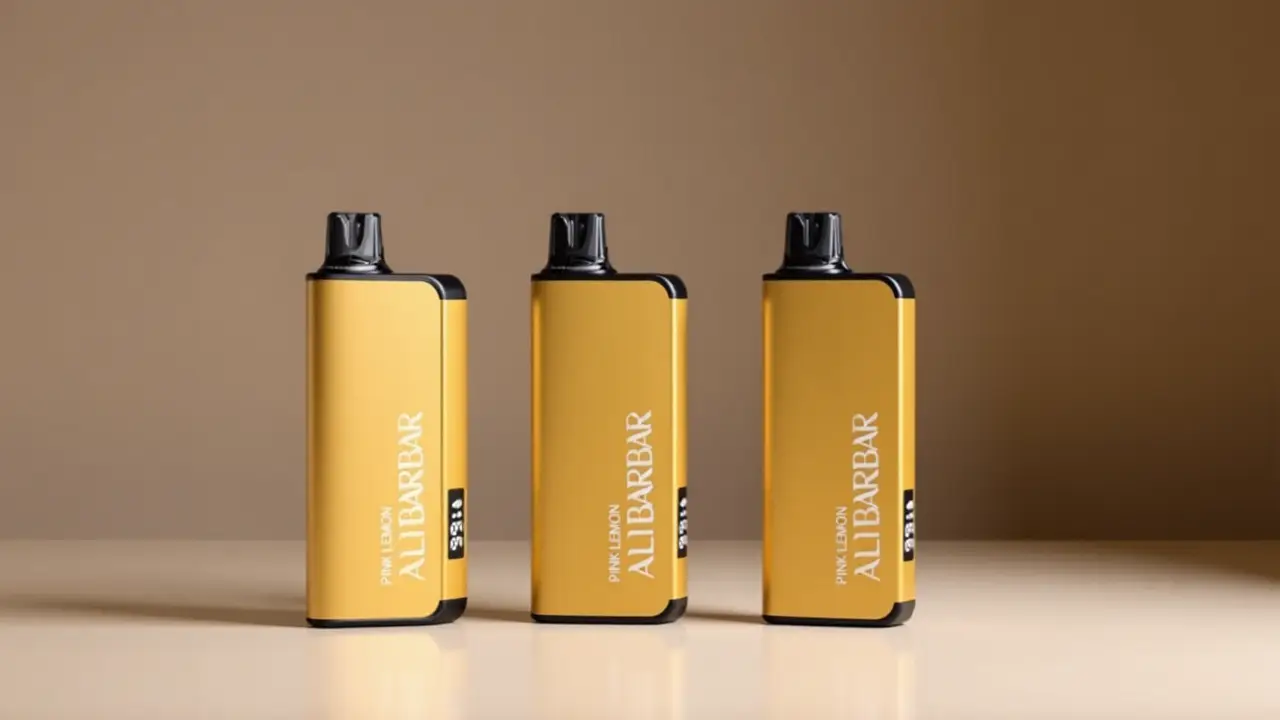
Two devices in similar aluminium shells can house radically different electronics. The rise of white‑label manufacturing means that a single cosmetic design is often shared across half a dozen factories, with only the internal components differing. Without technical documentation, you cannot tell them apart. This is why sourcing from a retailer that maintains direct relationships with authorised factories—as OZVAPE Shop does with ALIBARBAR—is a practical safeguard.
3. Forgetting that the prescription requirement is not a suggestion.
A surprisingly large number of users continue to believe that the TGA’s prescription model will not be enforced against individuals. The Australian Border Force’s seizure data and state‑level prosecutions suggest otherwise. The fines for importing a nicotine vaping product without a prescription can exceed $11,000 per offence. That risk is completely unnecessary when the legal pathway, though inconvenient, is well‑documented and accessible through telehealth services.
4. Undervaluing modularity in cost‑per‑use calculations.
A cheap disposable that lasts a day looks economical on first glance. Multiply that over six months, and the figure becomes substantially larger than a rechargeable unit with replaceable cartridges, even when you account for the cartridges’ cost. Moreover, the environmental burden of single‑use electronics is no longer a fringe concern; both consumers and regulators are beginning to factor it into their evaluation. ALIBARBAR’s design philosophy—matching battery life to content volume—is not just an engineering convenience. It is a response to a market that is slowly maturing beyond the “use and discard” mentality.
Industry perspective: The Australian regulatory environment is set to tighten further, not relax. State governments are considering additional e‑waste levies, and the TGA has signalled ongoing reviews of its nicotine vaping framework. A device purchased today might face tighter requirements tomorrow. Building a routine around modular, compliant equipment from traceable sources is the most future‑resistant strategy available.
Frequently Asked Questions
Q: Do I need a prescription for all vaporizers in Australia?
A: No. A prescription is required only for devices intended for use with nicotine‑containing preparations. Non‑nicotine vaporizers (such as aroma devices or herbal vaporizers) do not require a prescription, but they must still meet Australian safety and consumer law requirements.
Q: Can I bring a vaporizer into Australia from overseas?
A: For a non‑nicotine device, yes, provided it complies with electrical safety standards and you are not bringing in a restricted quantity of a tobacco‑related accessory. For a nicotine device or nicotine‑containing liquid, you must hold a valid Australian prescription and comply with the border declaration requirements. Failure to declare can result in seizure and fines.
Q: What makes ALIBARBAR devices different from cheaper alternatives?
A: ALIBARBAR devices are engineered around mesh‑coil consistency, transparent battery status feedback, and durable material choices. They are sourced exclusively from authorised factory networks, which means each unit’s compliance with Australian electrical standards can be verified. Cheaper alternatives often use generic internal components with no documented safety testing.
Q: How can I tell if a retailer like OZVAPE Shop is selling genuine products?
A: Look for explicit statements about authorised distribution, traceable supply chains, and willingness to provide compliance documentation. OZVAPE Shop{target=”_blank”} publishes its sourcing standards and provides direct product support, which are signals of a legitimate operation.
Q: What is the penalty for importing nicotine vaping products without a prescription?
A: Under the Therapeutic Goods Act, individuals can face penalties exceeding $11,000 per offence, and the goods may be seized by the Australian Border Force. The risk is significant and enforcement is not theoretical.
Q: Are all pre‑filled devices the same as disposables?
A: Not entirely. While many pre‑filled devices are single‑use, some (like the ALIBARBAR INGOT series) are engineered to match battery capacity with content volume, ensuring neither is wasted. True disposables often have non‑rechargeable batteries and are increasingly targeted by environmental regulations.
Q: Can I use a nicotine prescription with any device?
A: Legally, yes, as long as the device is compliant with Australian safety standards and you are using it with prescribed nicotine liquid. However, the device should be matched to the formulation. Using a sub‑standard device can lead to inconsistent dosing or device failure.
Conclusion
The ability to vape in Australia in 2025 is conditional, not absolute. The law has drawn a clear line: nicotine products require a prescription, and all devices must meet safety benchmarks that are not negotiable. Beyond the legal floor sits the harder, more important question: does the device you are holding reflect genuine care in its engineering, or is it a commodity built to a price point with no thought for what happens after the first week of use?
Throughout this analysis, we have returned repeatedly to the same principle: an informed user is a protected user. Knowing how to evaluate a coil architecture, why a multi‑stage battery indicator matters, and what traceable sourcing looks like is more powerful than any brand‑driven shortcut. The ALIBARBAR range, available through OZVAPE Shop{target=”_blank” rel=”noopener”}, represents one implementation of those principles—not because it is the only choice, but because its design documentation aligns with the evaluation framework described here and its supply chain is auditable.
The Australian market will continue to evolve, and regulations will shift. The consistent variable is your own diligence. In five years, the devices that last and the routines that survive will belong to those who chose based on understanding, not hype. If this article has made that understanding a little more accessible, it has served its purpose.