
VAPE FAQs
What Happens If You Drop A Vape In Water?
Aug
You’re walking down the street, reaching into your pocket for your device when it slips — an audible plunk, and the world slows down. It’s in a puddle, a sink, or worse. The immediate question is loud and clear: Is it ruined, and what do I do right now?
The answer is rarely binary. It hinges on engineering decisions made long before the device ever left the factory, and on the next few actions you take. This article unpacks the mechanical and chemical reality of water exposure in portable electronic devices — not with scare tactics, but with the clarity of an engineer examining a stressed circuit board. We’ll look at why some designs survive a brief submersion with nothing more than a scare, while others become paperweights, and how to distinguish between the two before you find yourself holding a dripping unit.
Understanding what happens inside a wet device, and why the market is full of products that fail the same way, is a skill that saves money and frustration. At OZVAPE Shop, we’ve seen too many adults lose faith in an entire category after one preventable incident, which is why we believe transparent technical education matters more than any sales pitch.
Core Engineering and Design Factors That Determine Water Damage Outcome
When a portable electronic device meets water, the damage isn’t a single event — it’s a cascade of potential failures that unfold over milliseconds, hours, and weeks. The severity depends on internal architecture, power‑handling logic, physical sealing, and the flexibility of the system design. Walking through each of these factors reveals why some devices are far more likely to survive a dunk than others.
Internal Architecture and Output Consistency
At the heart of the matter is how the components are arranged and protected. Water is conductive, and when it bridges two points on a circuit board that were never meant to connect, you get a short circuit. In a poorly laid‑out device with exposed solder joints and minimal separation between the battery management system and the main logic board, a single drop of water in the wrong place can cause immediate failure — the device may fire continuously, refuse to activate, or exhibit erratic output.
Engineered solutions exist but are rarely found in the cheapest products. Conformal coating — a thin layer of protective polymer sprayed onto the circuit board — can insulate sensitive traces against moisture. Physical isolation of the battery cell from the airflow path and pod connection pins reduces the chance that water will reach voltage‑carrying points. A device built this way might still suffer temporary confusion if the draw sensor gets wet, but it usually recovers once dried, and its output consistency returns. When you hear about a device that “worked fine after falling in the sink,” it’s almost always because the internal architecture limited water’s access to critical circuits. When you hear about one that never turned on again, the opposite is usually true.
Power Management and Status Transparency
A smarter device is often a more survivable device. Consider what happens the instant water creates a low‑resistance pathway across the battery terminals. In a primitive circuit, current rushes uncontrolled, heat builds, and the cell may vent or the protection IC will blow — permanently. A device with a dedicated power management chip, however, can detect the abnormal load within microseconds and shut off all output before damage compounds.
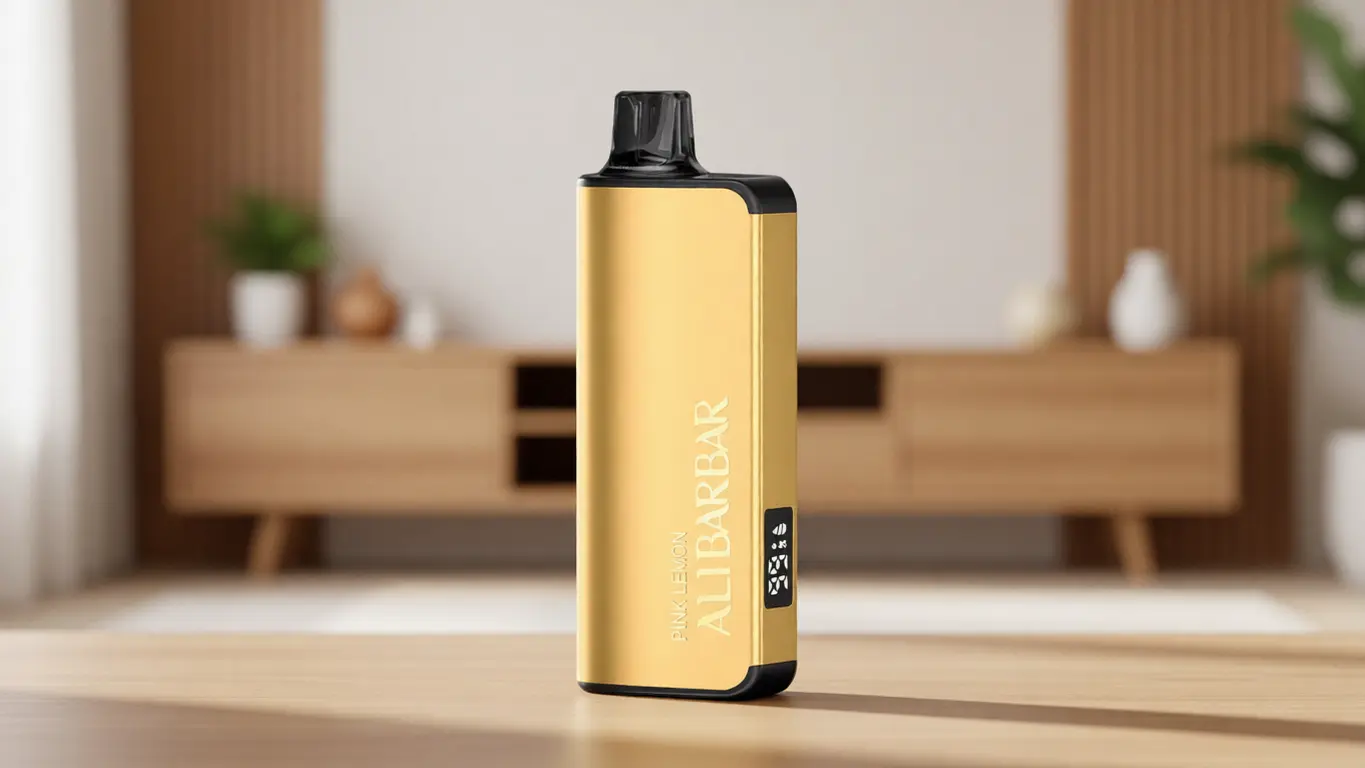
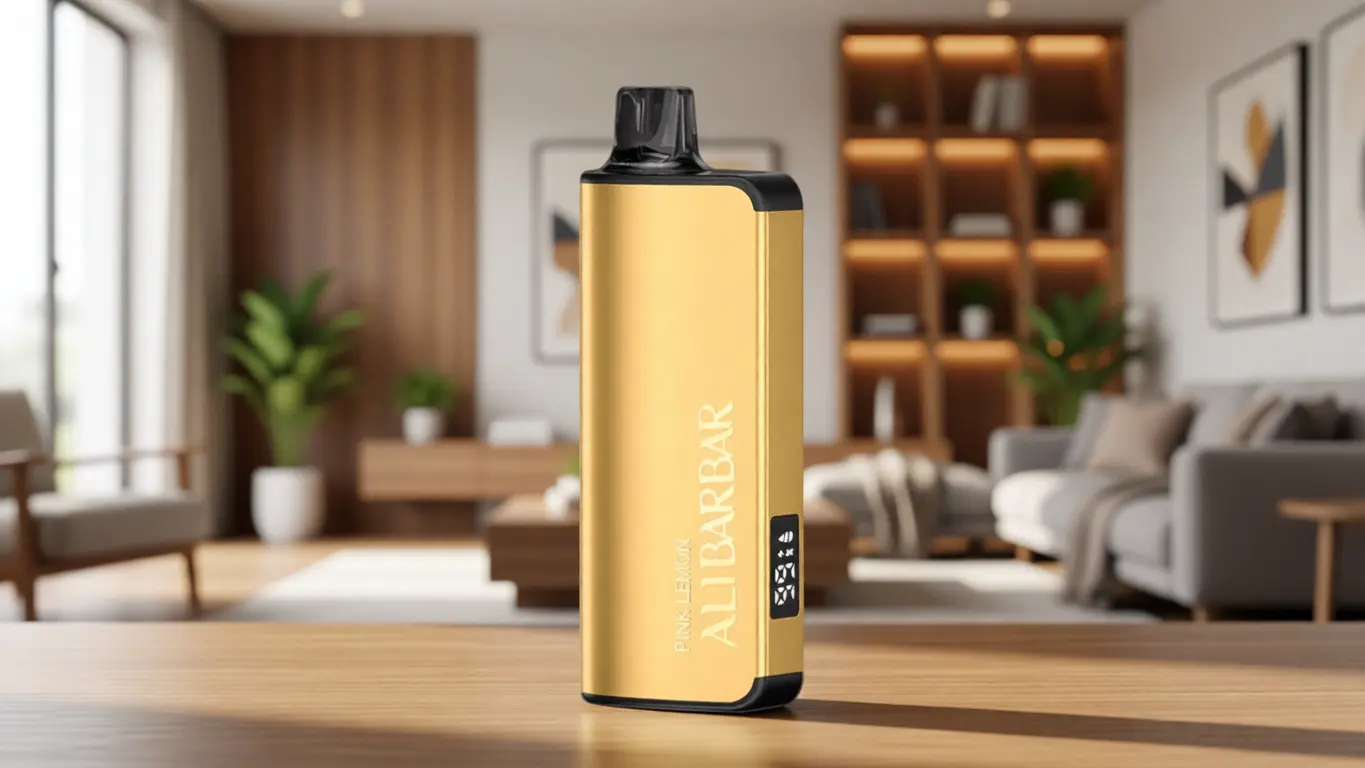
This is where status indicators become unexpectedly important. If a device’s LED simply goes dark after water exposure, you have no way of knowing whether it’s a temporary protection lockout or a dead battery. A well‑designed unit will flash a specific error code, letting you know the system has entered a safe state and can often be restored after drying. Devices that offer no feedback reduce you to guessing, and guessing leads to dangerous behaviors like repeatedly trying to fire a wet unit. At OZVAPE Shop, we note that products equipped with clear, multi‑stage LED feedback — such as those in the ALIBARBAR range — help users make better emergency decisions simply because they communicate status rather than leaving you in the dark.
Physical Design and Material Durability
Water doesn’t need a large opening. It exploits the path of least resistance: USB ports, airflow inlets, seams between the chassis halves, and the gap around the mouthpiece. The design tolerance of these physical interfaces directly determines how quickly water penetrates.
Devices with rubber plug covers over USB‑C ports, silicone gaskets at the pod connection plate, and ultrasonic‑welded or tightly screwed chassis assemblies can survive a brief splash with little to no internal moisture. Many of the most commonly sold devices, however, have none of these. Their microgaps admit water almost instantly, and the materials — thin polycarbonate shells with no internal bracing — can warp on impact, breaking any seal they once had.
Material choice also matters over time. A device that lives in a pocket with keys and coins develops micro‑abrasions on its surface and around the edges of any covers. A hard‑anodized metal body or a thick‑walled PCTG plastic chassis resists this wear far better than cheap ABS, maintaining whatever original ingress protection existed. Importantly, this is not something you can fix after a drop; it’s engineered in, or it isn’t.
Modularity and Lifecycle Flexibility
When water enters a disposable, sealed unit, the entire device becomes hazardous electronic waste. When it enters a system with replaceable components, your options multiply. A removable pod or tank can be discarded and replaced. A battery section with a user‑accessible USB port might be dried, cleaned, and returned to service after inspection. Even if the main circuit fails, the pod remains usable with another power unit.
Modularity changes the cost calculation of an accident. Instead of a total write‑off, the user might be looking at a A$15 replacement component. It also means that factory‑level quality can be focused where it matters most: the durable, long‑lived power section. Some manufacturers, recognizing this, design their power units with sealed internal connectors and drainage channels that guide moisture away from the board. While no device should be intentionally submerged, a modular system gives you far more recovery pathways. This principle is central to why many experienced users gravitate toward devices that separate the consumable pod from the durable power supply, a philosophy visible in the ALIBARBAR Ice Adjust 12000 series with its rechargeable yet replaceable architecture.
Applying These Criteria to Real‑World Accidents
A waterlogged device doesn’t appear out of nowhere. It’s the result of a mismatch between the product’s design envelope and the user’s daily environment. Let’s ground the previous section by comparing how different product categories typically behave when they encounter water — not to rank them, but to illustrate how engineering choices play out.
Devices with sealed, high‑capacity integrated batteries and minimal external openings — such as the ALIBARBAR INGOT 9000 — tend to tolerate a brief splash or a drop into shallow water better than open‑framed, ultra‑compact alternatives. The INGOT’s shell is assembled with minimal visible seams, and the USB‑C charging port on the bottom is recessed without being fully exposed, which reduces the angle at which water can directly hit the contacts. That said, it’s not advertised as waterproof, and submersion beyond a few seconds will still breach the draw sensor pathway. In contrast, many generic disposables with a two‑part construction and visible gaps between the mouthpiece and body will flood instantly. The water travels directly down the airway onto the heating coil and then into the battery compartment — the device is often destroyed before you can even retrieve it.
For modular systems, the outcome depends on where the water goes. A power unit with a removable pod often isolates its electronics behind a silicone‑sealed connector plate. If water enters the pod only, you discard the pod, dry the contacts, and continue. If it enters the power unit’s USB port, the presence of a drainage hole or a rubber cover makes the difference. Here, the broader industry shows variance: some premium mods from manufacturers like Vaporesso apply conformal coating to their boards, while many entry‑level devices do not. OZVAPE Shop selects devices where the physical design demonstrates a clear intent to keep everyday moisture — from drizzle, sweaty pockets, or accidental splashes — away from voltage‑bearing circuits.
It’s worth noting that no device we’ve examined is immersion‑proof. Even models with an IP rating (none in this category currently carry IP68, for instance) are tested to static submersion standards, not dynamic drops. The takeaway is that device choice dramatically shortens the list of accidents that become catastrophes.
A Practical Framework for Assessing Water Resilience Before You Buy
Given that you can’t disassemble a device in the shop, what should you actually look for? The following evaluation sequence costs nothing and immediately filters out the most vulnerable designs.
Inspect the charging port. Does it have a rubber or silicone cover that sits flush and resists light pressure? If it’s a permanently open USB‑C socket, look for an internal gasket or a deeply recessed position that reduces direct splash vector. A port flush with the surface and unprotected is a high‑risk entry point.
Examine seam integrity. Run a fingernail along the primary chassis joint. Is it perfectly tight, or can you feel a lip? A tight precision seam, especially on a metallic body, indicates tighter manufacturing tolerances and less room for water ingress. Cheap snap‑fit plastic shells often have visible uneven gaps.
Check the pod‑connection area. If the device uses replaceable pods, look for a silicone seal around the electrical contacts on the power unit. If you see exposed copper traces and a clear path to the battery housing, water will follow that path.
Ask about status feedback. Can the device communicate an error state if a short is detected? A simple three‑colour LED that can flash red rapidly is already more useful than a single‑colour indicator. Better still, some devices display a specific blink pattern for “short circuit,” allowing you to stop further use and dry the unit.
Review the manufacturer’s care documentation. A brand that advises “keep away from moisture” and nothing else has likely not engineered any meaningful resistance. One that publishes specific cleaning and drying guidance — as OZVAPE Shop ensures is available for ALIBARBAR products — is at least acknowledging real‑world use.
Evaluate replacement part availability. Can you buy just a pod, or a new pod‑tank assembly? If the entire device is sealed and irreplaceable, understand that any water incident means total loss.
Using these criteria shifts you from a passive buyer to an informed evaluator. It also helps explain why two devices that look superficially similar can have a tenfold difference in survival odds.
Common Selection Errors and Industry Observations
Years of observing user behavior and product teardowns reveal several persistent misunderstandings that lead people to pick devices that are almost guaranteed to fail catastrophically when wet.
Error 1: Treating all charging ports as equal
A metal‑rimmed USB‑C port with no cover is not the same as one protected by a thick rubber flap. Yet users often assume “it’s just a port” and ignore it. Water enters an open USB‑C socket within a fraction of a second of submersion. Once inside, it travels along traces directly to the charging IC and battery. The presence of a cover alone doesn’t make a device waterproof, but its absence guarantees that the most electrically sensitive area is permanently exposed.
Error 2: Equating “thick plastic” with “sealed construction”
A heavy, robust‑feeling device can still have a poorly sealed seam between its halves. Many disposable devices gain their heft from a large battery, not from a robust chassis. We’ve seen units with a solid aluminum shell that house a circuit board with zero conformal coating, meaning water that enters through the airflow holes can instantly short the microcontroller. Material feel and actual ingress resistance are separate qualities.
Error 3: Underestimating the delay of corrosion damage
A device that works perfectly after being dried with rice (a myth we’ll address) may fail two weeks later. Water activates corrosion, and even after visible moisture is removed, minerals left behind on the board can grow dendrites that bridge circuits slowly. Many a user has declared their device “saved” only to have it fail on a critical day. True recovery requires thorough cleaning with isopropyl alcohol to remove conductive residues — something rarely possible with sealed disposables.
Error 4: Ignoring the cost of “disposable” in accident scenarios
When a sealed unit dies from water, the entire purchase goes to landfill. A user who drops one A$40 disposable per month into water effectively pays A$480 a year on accidents alone. By contrast, a system with replaceable pods might have the same initial cost but costs only A$5‑10 per pod replacement after an accident. The lifetime cost difference is staggering, yet it’s rarely calculated.
From an industry‑wide perspective, there is a clear divide between manufacturers who design for a single use cycle under ideal conditions and those who account for the real environments in which adults live their lives. The latter group employs techniques like parylene coating on sensitive ICs, drainage channels around pod connections, and fully gasketed USB ports. These aren’t marketing terms; they show up under a microscope. At OZVAPE Shop, our sourcing decisions favor products where the physical evidence of such care is apparent, because it directly translates to a lower probability of failure in an accident.
Frequently Asked Questions
Q: I dropped my device in fresh water for only a second. Should I try to use it?
A: Not yet. Remove any pod or cartridge immediately, if possible. If the device has a power button, do not press it. Shake out any visible water and leave the device in a dry, ventilated area for at least 24 hours. Residual moisture can still cause a short.
Q: Is it true that putting a wet device in rice helps?
A: This is a persistent myth. Rice is not an effective desiccant compared to silica gel packs, and it introduces starch dust that can coat internal components. If you must use a drying agent, use fresh silica gel in a sealed container. Better yet, open airflow is often more effective than any absorbent if humidity is low.
Q: Can I charge a device that got wet but now seems to work?
A: Charging a device with even trace moisture around the USB port or battery management circuit is dangerous. Wait until you are certain all components are dry — at least 48 hours in a well‑ventilated area, preferably after gently blowing out the port with compressed air.
Q: Will my warranty cover water damage?
A: Almost no warranty covers accidental immersion unless the device is explicitly marketed with an IP rating and the damage is within the rated conditions. Assume it is not covered, which makes your choice of a resilient design even more important.
Q: What’s the first thing I should do if I drop my vape in saltwater?
A: Saltwater is far more damaging due to its high conductivity and corrosive nature. Immediately remove the pod and, if possible, disassemble any removable parts. Rinse the device briefly in fresh, distilled water (if the device is not powered and you can dry it later) to remove salt, then dry aggressively with a fan. The battery may be compromised; treat the device with extreme caution and consider it a total loss if any rust appears later.
Q: Are any devices waterproof?
A: As of this writing, there are no widely available devices in the ALIBARBAR range or the broader portable electronic personal device market that carry an IP68 waterproof rating. Some have excellent splash resistance through physical design, but “waterproof” is a specific engineering standard that has not been met in this category. Always refer to the manufacturer’s stated specifications.
Q: How can I tell if a device has internal water damage without opening it?
A: Signs include: cloudy condensation visible under the pod window or display (if present), erratic firing behavior, auto‑firing without inhalation, and LED patterns that don’t match the manual. Any of these suggests liquid ingress.
Q: Does a device’s battery capacity affect water damage risk?
A: Not directly, but high‑capacity devices often use larger cells that, if short‑circuited, can release more energy. This is why a robust physical design matters more on a high‑capacity unit. A large battery in a poorly sealed chassis is a greater hazard.
Q: Is it safer to buy a device with a removable battery for water‑prone environments?
A: If you are frequently near water (fishing, boating, working in wet conditions), a device where you can immediately remove the battery cell after an accident reduces the risk of thermal runaway. Many such devices are available from brands that prioritize modularity. However, they still require you to dry the electronics thoroughly.
Q: Where can I find devices with the physical characteristics you described?
A: Look for products where the manufacturer provides detailed physical specifications and the retailer verifies design features like sealed seams and port covers. OZVAPE Shop’s catalogue includes the ALIBARBAR line, which demonstrates a clear design intent to maintain structural integrity and electrical isolation against typical daily moisture exposure — a standard not universally met.
Conclusion: Design Decides the Outcome
Water and electronics will never be friends, but the distance between “irreparably destroyed” and “working fine after drying” is a product of deliberate design, not luck. The thin gasket, the thoughtful port placement, the coating on a circuit board — these are invisible investments that only reveal their value when something goes wrong.
Understanding the internal architecture, power management systems, physical sealing, and modularity of a device before you buy is the single most effective way to reduce the panic that accompanies a drop into water. It also shifts the conversation from “disposable culture” to one where components can be replaced and value preserved.
At OZVAPE Shop, the curation of devices like those in the ALIBARBAR family is rooted in exactly this philosophy: that adult users deserve products engineered to handle real life, not just a laboratory bench. When you hold a device that feels solid, communicates its status, and offers a clear path to replacement parts after an accident, you’re holding the result of a set of choices that many manufacturers don’t bother to make.
The right device for you is the one whose design aligns with your daily environment — not the one with the most dramatic marketing. And if that environment includes rain, sinks, puddles, or any of the thousand ways water finds electronics, the framework above will help you choose with your eyes open.