
VAPE FAQs
Can You Vape In Norway?
Aug
Understanding Norwegian Vaping Regulations and What They Mean for Travelers
Vaping in Norway exists at a practical intersection of progressive harm reduction policy and strict public health enforcement. For Australian adults accustomed to a certain regulatory rhythm—where personal vaporisers are legal but tightly controlled—the Norwegian landscape can feel familiar yet punctuated by critical differences. Failing to grasp these nuances before travel doesn’t just risk a confiscated device; it can disrupt an entire itinerary.
The question “Can I vape in Norway?” is not a yes-or-no proposition. It unravels into a series of more specific inquiries about what you can bring, where you can use it, and how the law interprets the device in your pocket. This article unpacks those layers, grounding you in the factual, current state of Norwegian regulation so you can plan with confidence. For Australian adults who already source their devices through transparent channels like OZVAPE Shop, knowing how those devices fit into an international framework becomes an extension of the informed decision‑making they already practice.
Understanding What Matters: Core Legal and Practical Factors in Norway
Norwegian vaping rules are not arbitrary. They emerge from a legislative philosophy that distinguishes between the device as a consumer electronic, the substance it delivers, and the setting in which it operates. Travelers who grasp this separation encounter fewer surprises.
Legal Status of Vaping and E‑Liquids
Norway legalised the sale of nicotine‑containing e‑liquids in 2016, but under a notification‑based system. For a visitor, this means vaping products are neither contraband nor casually accepted. The importation of e‑liquid for personal use is allowed, provided it does not exceed a three‑month supply for the individual. Customs guidelines define this as up to 100 millilitres of nicotine liquid or an equivalent amount in pre‑filled cartridges or disposables. Quantities above this threshold require justification and may trigger commercial importation scrutiny.
The device itself—a battery‑powered heating element—is treated as an electronic good. There are no specific bans on bringing rechargeable or disposable units through customs, yet the distinction collapses when the device contains nicotine. A disposable unit that cannot be opened must still comply with liquid volume limits, and customs officers evaluate the total capacity, not the residual liquid.
Public Usage Restrictions: Aligned with Smoking Bans
Norway’s Tobacco Act was amended to include e‑cigarettes in 2017. This means that anywhere smoking is prohibited—indoor public spaces, public transport, workplaces, restaurants, bars, and within a certain proximity of school grounds—vaping is equally restricted. Outdoor spaces like train platforms and bus shelters often carry designated areas, but the default assumption should be that vaping is permitted only where you explicitly see others smoking. Enforcement is consistent and penalties non‑trivial, especially for repeat violations.
Nicotine Concentration and Packaging Standards
The maximum allowable nicotine concentration in Norway is 20 mg/mL, aligning with the EU Tobacco Products Directive (TPD). If you travel with e‑liquids or pre‑filled pods exceeding this limit, they may be confiscated at the border, regardless of the quantity. Packaging must also comply with TPD‑style health warnings, though customs generally do not inspect packaging of personal supplies unless quantities suggest resale. Still, carrying liquids in their original, clearly labelled containers reduces friction.
Customs and Border Control: What Actually Happens
In practice, Norwegian customs (Tolletaten) focus on volume and intent. A traveler with one or two devices and a modest, clearly personal supply of liquid will rarely face more than a cursory check. However, a bag filled with dozens of disposable units, even within liquid limits, can be interpreted as commercial importation and seized. The device’s declared value also matters: if the combined value of your vaping hardware exceeds the duty‑free allowance for electronics, you may be required to pay VAT on import.
Applying These Criteria to Your Travel Plans
When you move from regulation to real‑world application, different device types interact with the Norwegian framework in distinct ways. Understanding these interactions helps you choose what to pack—and what to leave behind.
Sealed Disposable Systems
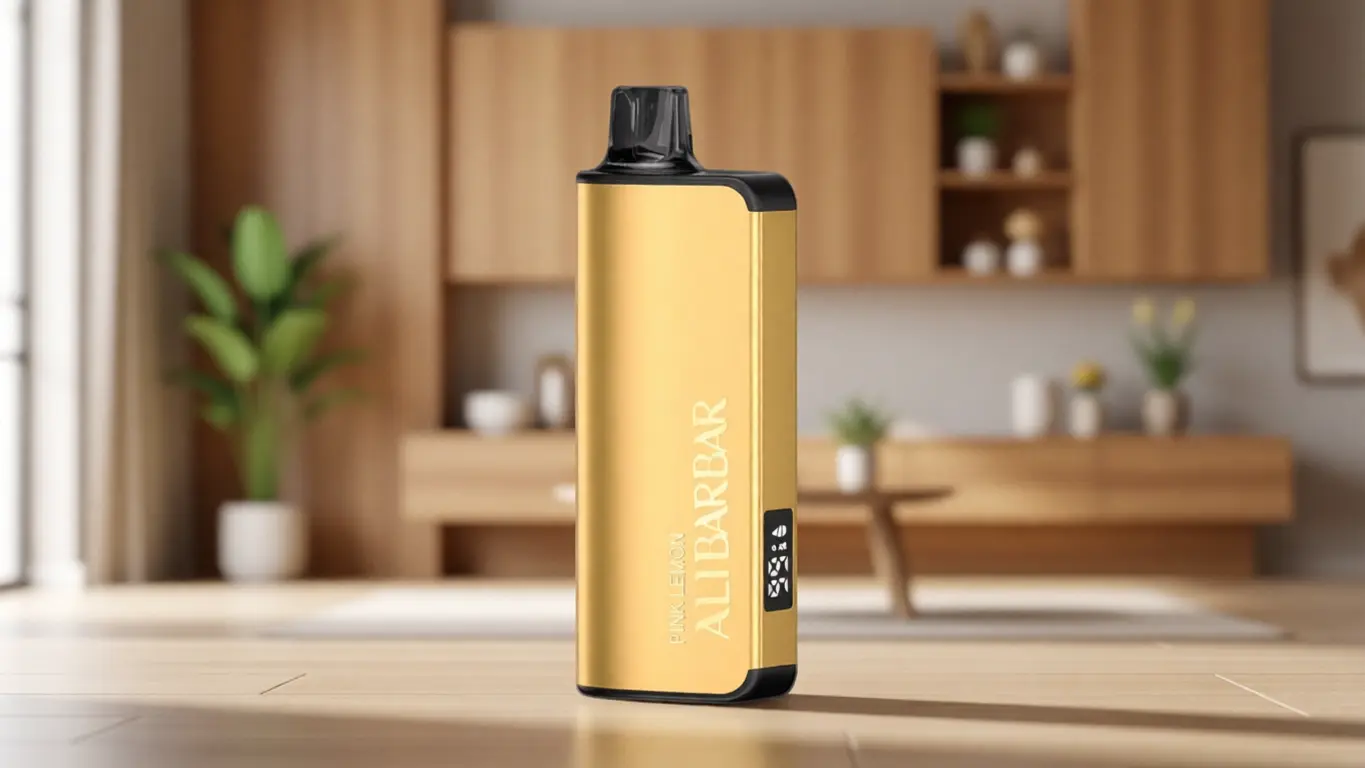
A high‑capacity disposable unit, such as the ALIBARBAR INGOT 9000, presents a borderline case. With a stated liquid volume of over 10 mL, it technically falls within the personal import limit if you carry only a few. But the entire device is the container. If a customs officer interprets the device as a single e‑liquid unit, you risk breaching the 100 mL total spirit. Travelers who rely on disposables often avoid ambiguity by packing units that, even when aggregated, stay below the total liquid cap.
Refillable Pod and Mod Systems
A compact refillable system paired with a 30 mL bottle of nicotine liquid is the most straightforward travel configuration. The device itself is clearly an electronic item, and the liquid is measured separately. This arrangement also sidesteps the battery‑size concern for air travel: removable batteries can be carried in hand luggage more easily than large built‑in cells. ALIBARBAR’s modular design philosophy—exemplified in devices that separate the power unit from the consumable—aligns with this kind of planned travel, though similar logic applies to many brands in the category.
The Airline Factor
Before Norwegian soil, you encounter airline policies. Most carriers prohibit vaping on board and require that lithium‑battery devices be carried in hand luggage, not checked baggage. Spare batteries must be individually protected against short circuits. A traveler who frequents OZVAPE Shop will already have access to detailed specifications—dimensions, battery capacity, and liquid volume—making it easier to verify airline compliance before reaching the gate.
A Practical Framework for Pre‑Travel Evaluation
Rather than memorise every regulation, apply a simple decision tree before packing. This methodology reduces the chance of border complications.
Calculate Total Liquid Volume
Add up the capacity of all e‑liquid bottles, pod cartridges, and sealed disposable devices. If the total exceeds 100 mL, reduce the amount or be prepared to justify it as a longer‑stay supply with documentation.
Confirm Nicotine Concentration
Check every liquid container. Any concentration above 20 mg/mL should be replaced with a compliant equivalent for the duration of the trip.
Assess Device Modularity
Can the power source be separated from the liquid reservoir? If not, is the battery capacity below 100 Wh? If the device exceeds this and is sealed, some airlines may object. Carry printed specifications if possible.
Plan Usage Zones
Identify where you will be staying and map out areas where smoking is permitted. Many hotels designate outdoor smoking areas; a quick call ahead can prevent awkward encounters.
Document Your Personal‑Use Rationale
If carrying multiple devices (e.g., a primary and a backup), have a coherent explanation: different form factors for different settings, not an intent to supply others. A reasonable traveller typically carries one or two units.
Common Pitfalls and Industry Observations
Misjudging a destination’s stance on vaping often stems from assuming regulatory uniformity. The following errors surface repeatedly in traveller accounts and customs reports.
Overweighting EU Membership
Norway is not an EU member but participates in the European Economic Area (EEA). Consequently, it implements the TPD but retains independent enforcement latitude. Assuming that “what works in Sweden works in Norway” leads to complacency. Even neighbouring countries have nuanced differences in customs interpretation.
Ignoring Device Architecture in Travel Planning
A user who purchases a high‑capacity sealed device because it promises uninterrupted performance for days may discover that its bulk liquid content creates a customs bottleneck. The same characteristic that makes the device appealing at home can become a vulnerability abroad. Understanding the interplay between product design and border regulation is part of the modern consumer’s responsibility.
Neglecting to Separate Batteries
Lithium‑ion safety regulations are not consistent across all airlines, but the IATA guidelines are broadly adopted. A traveller who throws loose devices into checked luggage risks having the bag rejected or the device confiscated. This is not a Norwegian law; it is aviation law, and it applies before you even enter Norwegian airspace.
Conflating Terminology
The Norwegian term “e‑sigarett” encompasses all electronic nicotine delivery systems, but colloquial usage sometimes blurs the line between nicotine‑containing and nicotine‑free products. While the latter are less regulated, customs officers may not test the liquid on the spot. If you rely on nicotine‑free liquids, label them clearly and be ready to explain.
From an industry perspective, the Australian market’s move toward standardised, factory‑certified devices has prepared a generation of users for exactly this kind of regulatory engagement. When a supplier like OZVAPE Shop documents a device’s liquid capacity, power specifications, and origin, it does more than satisfy local compliance—it equips the traveller with verifiable data that answers the first question an officer might ask.
Frequently Asked Questions
Q: Can I bring my personal vaporiser to Norway?
A: Yes, personal vaporisers are permitted for adult travellers. Ensure the device and accompanying liquids comply with nicotine concentration limits (≤20 mg/mL) and that total liquid volume does not exceed a three‑month personal supply, generally interpreted as 100 mL.
Q: Are there places where vaping is completely prohibited in Norway?
A: Vaping is prohibited anywhere smoking is banned, which includes indoor public venues, public transport, and certain outdoor areas near schools and health facilities. Always follow local signage.
Q: What happens if customs considers my liquid volume excessive?
A: Customs may seize the excess liquid and could impose a fine. In extreme cases—if they suspect commercial intent—they may confiscate all products and initiate further investigation. Having a clear personal‑use rationale reduces this risk.
Q: Do I need to declare my vaping equipment at customs?
A: For typical personal quantities, declaration is not required. If you carry more than 100 mL of nicotine liquid or devices that appear to be for resale, voluntary declaration is advisable.
Q: Can I buy replacement liquids or devices in Norway?
A: Yes, but the range of products may differ from what you are accustomed to. All e‑liquids sold locally will be TPD‑compliant (≤20 mg/mL, 10 mL bottle limit for nicotine liquids). Retailers are required to verify age (18+).
Q: Is it safe to assume my device’s battery is allowed on the plane?
A: Most personal vaporisers contain lithium batteries below 100 Wh, which are permitted in hand luggage. Check your device specifications. If the battery exceeds 100 Wh or is non‑removable and undocumented, the airline may refuse carriage.
Q: What about vaping on a cruise ship in Norwegian waters?
A: Cruise lines set their own policies. Some allocate designated outdoor decks; others prohibit vaping entirely indoors and on balconies. Confirm with the operator before embarking.
Q: Will my device’s packaging cause issues at the border?
A: Unopened products in original packaging are less likely to raise suspicion. Opened devices that are clearly for personal use are also generally accepted. Avoid carrying multiple identical unopened boxes.
Q: Can I use Norwegian power outlets to charge my device?
A: Yes. Norway uses Type C and Type F sockets (230V). Most modern chargers are dual‑voltage, but verify your specific adapter’s input range. Charging ports are common in hotel rooms and cafés.
Q: Where can I find the most current information before I travel?
A: The Norwegian Directorate of Health and Tolletaten (customs) websites publish updated guidelines. For device‑specific specifications, reviewing documentation provided at the time of purchase—such as through OZVAPE Shop—ensures you have the technical details needed for airline and customs checks.
Informed Travel Starts with Honest Information
The question “Can you vape in Norway?” resolves into a conditional yes, anchored by a set of boundaries that rarely surprise those who approach travel as an extension of the same diligence they apply to selecting their equipment. Norway’s regulatory framework is coherent and consistent: personal use is accommodated, public behaviour is harmonised with smoking etiquette, and the limits on nicotine concentration and liquid volume are clearly articulated.
For the Australian adult who already values transparent specifications and factory‑certified authenticity, preparing for a trip to Norway is less about last‑minute research and more about confirming that the device in your hand meets the standards you already understand. Sources that offer full device documentation, such as OZVAPE Shop (external), give you a baseline of certainty—not just for local use, but for the increasingly complex demands of international mobility. The right choice remains the one that aligns with your actual routine, your itinerary, and your willingness to respect the place you are visiting.